
As a home cook, having the right tools in the kitchen can make all the difference. One essential tool is a high-quality Japanese knife, and the Sakai Takayuki Santoku Knife is an excellent choice.
This premium knife is made from Top Class High Carbon Stainless Steel by Bohler-Uddeholm, with a hardness of HRC 61-62, ensuring a sharp and durable blade.
The 180mm blade length makes it ideal for a variety of tasks, from chopping vegetables to slicing meat. With its exceptional quality and performance, this Santoku knife is a valuable addition to any kitchen.
Key Takeaways
- A high-quality Japanese knife is essential for home cooks.
- The Sakai Takayuki Santoku Knife is made from premium materials.
- Its hardness of HRC 61-62 ensures a sharp and durable blade.
- The 180mm blade length is ideal for various kitchen tasks.
- This Santoku knife is a valuable addition to any kitchen.
What is a Santoku Knife?
The Santoku knife, a staple in traditional Japanese cutlery, has gained worldwide recognition for its versatility and precision. As a multifunctional tool, it is designed to handle various kitchen tasks with ease.
Origin and History of Santoku Knives
The Santoku knife has its roots in Japanese culinary history, evolving from traditional Japanese knives. Initially, these knives were designed for specific tasks, but over time, they evolved into the versatile Santoku knife we know today.
The name “Santoku” roughly translates to “three virtues” or “three uses,” referring to the knife’s ability to handle three primary tasks: slicing, dicing, and mincing.
Key Features of Santoku Knives
Santoku knives are characterized by their:
- Straight edge
- Flat, broad blade
- Typically, a length between 5 and 7 inches
- Often made from stainless steel for durability and resistance to corrosion
These features make Santoku knives ideal for a variety of kitchen tasks, from chopping vegetables to slicing meat.
Differences Between Santoku and Chef’s Knives
While both Santoku and Chef’s knives are versatile, there are key differences:
- Blade shape: Santoku knives have a straighter edge, whereas Chef’s knives often have a more curved edge.
- Size: Santoku knives tend to be shorter and more compact.
- Usage: Santoku knives are designed for more precise, chopping motions, whereas Chef’s knives are often used for more forceful, rocking motions.
Understanding these differences can help you choose the right knife for your cooking needs.
Why Choose a Sakai Takayuki Knife?
With a history spanning over 600 years, Sakai Takayuki knives are renowned for their exceptional craftsmanship and are a top choice among both home cooks and professional chefs. The brand’s long-standing tradition of producing high-quality knives has earned it a prestigious reputation in the culinary world.
Reputation of Sakai Takayuki
Sakai Takayuki’s reputation is built on its commitment to excellence and precision. The brand has been perfecting its craft since its inception in Sakai, Japan, a city known for its rich history of producing high-quality knives.
The brand’s dedication to using only the finest materials and techniques has resulted in knives that are not only functional but also works of art. As a result, Sakai Takayuki knives have become a staple in many professional kitchens and are highly sought after by cooking enthusiasts.
Craftsmanship and Quality
The craftsmanship that goes into making a Sakai Takayuki knife is unparalleled. Each knife is carefully handcrafted by skilled artisans who have spent years mastering their craft. The attention to detail and commitment to quality are evident in every aspect of the knife, from the balance and weight to the sharpness and edge retention.
| Feature | Description | Benefit |
|---|---|---|
| High-Carbon Steel | Made from high-quality steel for durability | Long-lasting sharpness and resistance to corrosion |
| Hand-Sharpened Edge | Carefully sharpened by skilled artisans | Exceptional cutting performance and precision |
| Ergonomic Handle | Designed for comfort and balance | Reduced fatigue and improved control during use |
Notable Features of Sakai Takayuki Santoku Knives
The Sakai Takayuki Santoku knife is a prime example of the brand’s commitment to quality and innovation. This versatile knife is designed for a variety of tasks, from chopping vegetables to slicing meat. Its straight edge and balanced design make it a favorite among chefs who value precision and control.
One of the notable features of the Sakai Takayuki Santoku knife is its sharpness. The knife is crafted with a high-carbon steel blade that is known for its ability to hold a sharp edge, making it ideal for tasks that require precision cutting.
Overall, the Sakai Takayuki Santoku knife is a premium kitchen knife that is designed to meet the needs of both professional chefs and home cooks. Its exceptional craftsmanship, quality, and notable features make it a valuable addition to any kitchen.
Benefits of Using a Santoku Knife in Your Kitchen
Incorporating a Santoku knife into your kitchen arsenal can significantly enhance your cooking experience. This versatile knife is designed to make food preparation easier and more efficient, making it a valuable addition to any home cook’s toolkit.
Versatility in Food Preparation
The Santoku knife is ideal for a variety of kitchen tasks, from chopping vegetables to slicing meat. Its straight edge and balanced design make it perfect for push-pull cutting, allowing for smooth, precise cuts. Whether you’re preparing a simple salad or a complex dish, the Santoku knife’s versatility makes it an essential tool.
Precision Cutting for Enhanced Cooking
One of the key benefits of using a Santoku knife is its ability to make precise cuts. The knife’s sharp edge and balanced weight enable you to slice ingredients with ease, ensuring that your dishes are not only delicious but also visually appealing. Precision cutting is especially important when preparing ingredients for dishes where texture and presentation matter.
Efficiency and Ease of Use
The Santoku knife is designed for efficiency and ease of use. Its ergonomic handle and balanced weight reduce fatigue during prolonged use, making it comfortable to hold and maneuver. Whether you’re a seasoned chef or a beginner in the kitchen, the Santoku knife’s ease of use makes it an accessible tool for cooks of all skill levels.
By incorporating a high-quality Santoku knife, such as the Sakai Takayuki, into your kitchen, you can enjoy the benefits of versatility, precision, and efficiency in your cooking. This top-rated Santoku knife is a valuable investment for any home cook looking to elevate their culinary skills.
How to Select the Right Sakai Takayuki Santoku Knife
The perfect Sakai Takayuki Santoku knife is within reach when you know what to look for in terms of blade length, material, and handle ergonomics. As a premium kitchen knife, the Sakai Takayuki Santoku knife is designed to offer exceptional performance and durability.
Important Specifications to Consider
When choosing a Sakai Takayuki Santoku knife, several key specifications can impact its performance and your overall satisfaction. The blade material is a crucial factor, with high-carbon stainless steel being a popular choice for its durability and resistance to corrosion.
Blade Material: High-carbon stainless steel is preferred for its ability to maintain sharpness and withstand the rigors of frequent use.
Recommended Blade Lengths
The blade length of a Santoku knife can vary, typically ranging from 5 to 7 inches. The right length for you depends on your cooking style and personal preference.
- A 5-inch blade is ideal for precision tasks and smaller kitchens.
- A 7-inch blade offers more versatility for a variety of cutting tasks.
Handle Materials and Ergonomics
The handle of your Sakai Takayuki Santoku knife is just as important as the blade. Look for handles made from durable, ergonomic materials that provide a comfortable grip.
Ergonomic design can significantly reduce fatigue during extended cooking sessions, making the cooking experience more enjoyable.
By considering these factors, you can find a Sakai Takayuki Santoku knife that meets your needs and enhances your cooking experience.
Care and Maintenance of Your Santoku Knife
Proper care and maintenance are vital to extending the life of your high-quality Japanese knife. As a valuable addition to your kitchen, your Sakai Takayuki Santoku knife deserves regular attention to maintain its performance and longevity.
Proper Cleaning Techniques
Cleaning your Santoku knife immediately after use is crucial. Avoid leaving it in the sink or dishwasher, as this can cause damage. Instead, gently wash the knife by hand with mild soap and dry it thoroughly with a soft cloth. For tougher residue, a soft-bristled brush can be used to clean the blade without scratching it.
Regular cleaning not only keeps your knife hygienic but also prevents the buildup of residue that can affect its cutting performance.
Sharpening Tips for Longevity
Sharpening is an essential part of maintaining your professional chef knife. To keep your Santoku knife in top condition, it’s recommended to sharpen it regularly using a whetstone or sharpening rod. Start with a coarse grit to repair the edge, then move to finer grits for polishing. The angle of sharpening is critical; for Santoku knives, a 15-20 degree angle is typically recommended.
Storing Your Knife Safely
Proper storage is vital to protect both your knife and yourself. Store your Sakai Takayuki Santoku knife in a dry place, away from children and pets. Consider using a knife block, magnetic strip, or protective case to keep the blade safe and prevent accidents. Avoid storing your knife loose in a drawer, as this can cause damage to the blade and other utensils.
By following these care and maintenance tips, you can ensure your traditional Japanese cutlery remains in excellent condition, providing you with years of reliable service.
Cooking Techniques Perfect for the Sakai Takayuki Santoku Knife
With its exceptional balance and sharpness, the Sakai Takayuki Santoku knife is ideal for multiple kitchen tasks. This premium kitchen knife is designed to make cooking easier and more efficient, allowing home cooks to explore various techniques with confidence.
Slicing and Dicing Vegetables
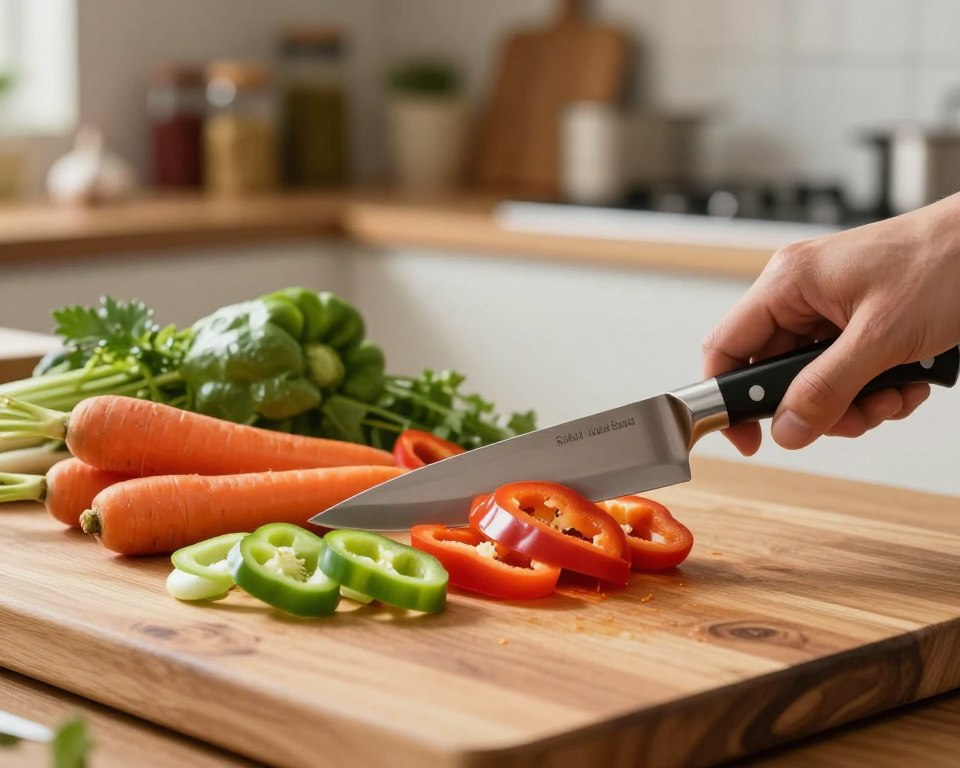
The Sakai Takayuki Santoku knife excels at slicing and dicing vegetables, making it a staple for any vegetable-centric dish. Its sharp edge glides through even the toughest vegetables with ease, ensuring clean cuts and minimal waste.
For instance, when preparing a stir-fry, the Santoku knife can quickly slice through bell peppers, carrots, and broccoli, ensuring uniform pieces that cook evenly. This not only enhances the presentation of the dish but also ensures that the vegetables retain their texture and flavor.
Preparing Fish and Poultry
Preparing fish and poultry requires precision and delicacy, both of which the Sakai Takayuki Santoku knife provides. Its balanced design allows for smooth, controlled cuts, making it easier to fillet fish or portion chicken breasts.
The knife’s sharpness is particularly beneficial when working with delicate fish, as it minimizes the risk of tearing the flesh. For poultry, the Santoku knife can effortlessly cut through meat and around bones, making it a valuable tool for preparing complex dishes.
Chopping Herbs and Aromatics
Chopping herbs and aromatics is another task where the Sakai Takayuki Santoku knife shines. Its sharp edge can finely chop herbs like basil, cilantro, or parsley, releasing their flavors and aromas without bruising them.
When chopping aromatics like onions or garlic, the knife’s balance and control help to prevent accidents and ensure consistent results. This is particularly important in dishes where the flavor of these ingredients is foundational.
| Cooking Technique | Benefit of Sakai Takayuki Santoku Knife | Example Dish |
|---|---|---|
| Slicing Vegetables | Uniform cuts, minimal waste | Stir-fry |
| Preparing Fish and Poultry | Precision, delicacy, and control | Grilled Salmon, Chicken Breast |
| Chopping Herbs and Aromatics | Releases flavors, consistent results | Pesto, Salsa |
In conclusion, the Sakai Takayuki Santoku knife is a versatile and essential tool for various cooking techniques. Its exceptional sharpness, balance, and control make it ideal for slicing, dicing, and chopping, enhancing both the preparation and presentation of dishes.
Popular Recipes to Try with Your Santoku Knife
The precision and ease of use of a Sakai Takayuki Santoku knife make it ideal for a range of culinary creations. With its high-quality stainless steel and balanced design, this knife is perfect for both novice cooks and experienced chefs looking to elevate their dishes.
Quick and Easy Vegetable Stir-Fry
A Santoku knife is perfect for chopping a variety of vegetables quickly and efficiently. To make a quick and easy vegetable stir-fry, start by slicing your favorite vegetables, such as bell peppers, carrots, and broccoli, into thin strips using your Sakai Takayuki Santoku knife.
Heat some oil in a wok or large skillet over medium-high heat, add the vegetables, and stir-fry until they are tender-crisp. Season with soy sauce and serve over rice or noodles.
Fresh Seafood Ceviche
The sharpness of a stainless steel Santoku knife makes it easy to dice fresh seafood for ceviche. Combine diced fish (such as halibut or tilapia) with lime juice, mixed with diced mango, red onion, and cilantro.
Refrigerate the mixture for at least 30 minutes to allow the flavors to meld together. Serve with tortilla chips or tostadas.
Herb-Crusted Chicken Breast
A high-quality Japanese knife like the Sakai Takayuki Santoku is also great for chopping fresh herbs for an herb-crusted chicken breast. Mix chopped herbs (such as parsley, thyme, and rosemary) with breadcrumbs, garlic, and grated Parmesan cheese.
| Recipe | Key Ingredients | Preparation Time |
|---|---|---|
| Quick and Easy Vegetable Stir-Fry | Vegetables, oil, soy sauce | 15 minutes |
| Fresh Seafood Ceviche | Fish, lime juice, mango, red onion, cilantro | 20 minutes |
| Herb-Crusted Chicken Breast | Chicken breast, herbs, breadcrumbs, garlic, Parmesan cheese | 30 minutes |
These recipes showcase the versatility of the Sakai Takayuki Santoku knife and how it can be used to prepare a variety of dishes, from simple stir-fries to more complex seafood and chicken recipes.
Reviews and User Experiences
Reviews from customers and professional chefs alike have consistently praised the Sakai Takayuki Santoku knife for its exceptional quality. As a top-rated Santoku knife, it has become a staple in many kitchens, both professional and home-based.
Real Customer Feedback
Many customers have shared their positive experiences with the Sakai Takayuki Santoku knife online. Common praises include its sharpness, balance, and durability. For instance, one customer noted, “This knife has become an indispensable tool in my kitchen. The balance is perfect, and it cuts through vegetables like butter.”
Another customer highlighted the knife’s versatility, stating, “I’ve used it for everything from slicing fish to chopping herbs, and it performs flawlessly every time.”
Professional Chefs’ Endorsements
Professional chefs have also weighed in on the Sakai Takayuki Santoku knife, often endorsing it for its precision and reliability. A renowned chef once said, “The Sakai Takayuki Santoku knife is a game-changer. Its sharp edge and comfortable handle make it a joy to use, even during long cooking sessions.”
Such endorsements underscore the knife’s value in professional kitchens, where performance and durability are paramount.
Comparison with Other Brands
When compared to other brands, the Sakai Takayuki Santoku knife stands out for its craftsmanship and quality. Unlike some competitors, it offers a unique blend of traditional Japanese techniques and modern materials, resulting in a truly exceptional product.
Users have noted that while other Santoku knives may offer similar features, the Sakai Takayuki model surpasses them in terms of overall performance and longevity.
Where to Buy a Sakai Takayuki Santoku Knife
Finding the right place to buy a Sakai Takayuki Santoku knife can be a daunting task, but I’m here to guide you through the process. With several retailers offering this premium kitchen knife, it’s essential to know where to look.
Authorized Retailers and Online Stores
The Sakai Takayuki Santoku knife is available at various authorized retailers, both online and in-store. Some of the most reputable sources include specialty kitchen stores and online marketplaces that specialize in traditional Japanese cutlery.
When shopping online, it’s crucial to ensure that you’re buying from an authorized dealer to avoid counterfeit products. Here are some online stores where you can find the Sakai Takayuki Santoku knife:
- Amazon
- Williams-Sonoma
- Sur La Table
- Specialty kitchen stores
Price Ranges and Budget Considerations
The price of a Sakai Takayuki Santoku knife can vary depending on the retailer, blade length, and handle material. Generally, you can expect to pay between $100 to $300 for a high-quality stainless steel Santoku knife.
| Blade Length | Price Range |
|---|---|
| 5 inches | $120-$200 |
| 7 inches | $150-$250 |
Special Promotions and Discounts
Keep an eye out for special promotions and discounts, especially during holiday sales or special culinary events. Some retailers may offer bundle deals or discounts on related kitchen products.
“I’ve found that purchasing kitchen knives during sales events can save you a significant amount of money. It’s worth waiting for the right moment to buy.”
To stay informed about upcoming promotions, consider signing up for newsletters from your preferred retailers or following them on social media.
Frequently Asked Questions About Santoku Knives
Santoku knives have gained popularity worldwide, but many still have questions about their unique features and benefits. As a versatile and essential tool in the kitchen, understanding the specifics of Santoku knives can enhance your cooking experience.
What Makes Santoku Knives Unique?
Santoku knives are known for their straight edge and flat blade, making them ideal for slicing, dicing, and chopping vegetables, meat, and fish. Their unique design allows for a more straightforward cutting motion, reducing the risk of tearing or crushing food. The best Santoku knives are crafted with high-quality materials, ensuring durability and a sharp edge that lasts.
- A balanced design that provides comfort and control
- A sharp, straight edge that allows for precise cuts
- A versatile size that is suitable for various kitchen tasks
Are Sakai Takayuki Knives Worth the Investment?
Investing in a high-quality Japanese knife like the Sakai Takayuki Santoku knife can be a game-changer for home cooks and professional chefs alike. The craftsmanship and attention to detail that go into making these knives result in a tool that is not only functional but also a joy to use.
“A good knife is like a good friend; it makes cooking easier and more enjoyable.” – Anonymous Chef
Sakai Takayuki knives are known for their exceptional quality, making them a worthwhile investment for anyone serious about cooking.
How Often Should I Sharpen My Knife?
To maintain the performance of your professional chef knife, regular sharpening is essential. The frequency of sharpening depends on how often you use your knife. As a general rule, it’s recommended to sharpen your knife every few months or when you notice a decrease in its cutting performance.
Here are some tips for sharpening your Santoku knife:
- Use a whetstone or sharpening steel to hone the edge
- Maintain the correct angle to avoid damaging the blade
- Test the sharpness regularly to determine when further sharpening is needed
Understanding Knife Weight and Balance
Understanding the importance of knife weight and balance can elevate your cooking skills and make meal preparation more enjoyable. The weight and balance of a knife are crucial for comfort and performance during cooking.
Importance of Knife Weight in Cooking
The weight of a premium kitchen knife affects its maneuverability and the precision with which you can perform tasks. A heavier knife may provide more momentum for chopping, but it can also lead to fatigue over time.
On the other hand, a lighter knife is easier to handle for intricate tasks but may lack the power needed for certain cutting operations. It’s essential to find a balance that suits your cooking style.
Finding the Right Balance for Comfort
A well-balanced stainless steel santoku knife feels like an extension of your hand, allowing for smooth, controlled movements. The balance point is typically located near the bolster or just in front of it, where the blade meets the handle.
To determine if a knife is well-balanced, hold it in your dominant hand and check how it feels. A top-rated santoku knife should not feel too heavy in the blade or too light, as this can cause strain during use.
Heavy vs. Light Knives: Which is Better?
The choice between a heavy or light knife depends on personal preference and the type of cooking you do most often. Here’s a comparison to help you decide:
| Characteristics | Heavy Knives | Light Knives |
|---|---|---|
| Chopping Power | More powerful for chopping through bones or hard vegetables | Less powerful, but still effective for most kitchen tasks |
| Precision | Can be more challenging for precise cuts | Easier to maneuver for delicate tasks |
| Fatigue | May cause more fatigue over extended use | Less strain, ideal for prolonged cooking sessions |
Ultimately, the best top-rated santoku knife for you is one that balances weight and functionality, making it a joy to use in the kitchen.
Conclusion: Elevate Your Cooking with the Sakai Takayuki Santoku Knife
Investing in a high-quality knife like the Sakai Takayuki Santoku can significantly impact one’s cooking experience and skills. As a piece of traditional Japanese cutlery, this knife embodies the craftsmanship and precision that Japanese knives are renowned for.
Precision and Craftsmanship
The Sakai Takayuki Santoku knife is a testament to the art of Japanese knife-making. Its high-carbon steel blade ensures a sharp edge that retains its effectiveness over time, making it a valuable addition to any kitchen.
Enhancing Culinary Skills
Using a sakai takayuki santoku knife, I find that my cooking has become more efficient and enjoyable. The balance and weight of the knife make it comfortable to use, allowing for precise cuts that enhance the overall quality of my dishes.
A Lasting Investment
A high-quality Japanese knife is not just a tool; it’s an investment in your culinary journey. With proper care, the Sakai Takayuki Santoku knife will remain a trusted companion in the kitchen for years to come, a true example of traditional Japanese cutlery.