
Japanese kitchen knives are renowned for their beauty and exceptional sharpness, making them a joy to use in various kitchen tasks. Their organic and ergonomic design contributes to their efficacy, allowing for precise cutting and minimal effort.
To maintain their peak performance, it’s crucial to keep the blade sharp at all times. A dull knife not only hampers your cooking experience but can also lead to accidents. Regular maintenance is key to ensuring your Japanese knives continue to perform optimally.
Key Takeaways
- Regular sharpening maintains the knife’s performance.
- Dull knives can lead to kitchen accidents.
- Proper maintenance extends the life of your knives.
- Sharp knives improve your overall cooking experience.
- Understanding the right sharpening frequency is crucial.
Understanding Japanese Knives and Their Unique Features
Understanding the nuances of Japanese knives is crucial for appreciating their value and maintaining their quality. Japanese knives are celebrated for their exceptional craftsmanship, precision, and the unique materials used in their construction.
The Significance of Blade Material
The material used for the blade is a critical factor in the performance and durability of Japanese knives. High-quality stainless steel, such as VG10, is often used because it offers excellent edge retention and corrosion resistance. The layer count of the blade can also indicate better strength and durability, as it suggests a more complex and robust construction.
Types of Japanese Knife Blades
Japanese knives come in various types, each designed for specific culinary tasks. The Gyuto and Santoku are versatile knives used for a wide range of kitchen duties, while the Nakiri and Usuba are specialized for vegetable preparation. Understanding the different types of blades helps in selecting the right knife for the job and maintaining its sharpness.
Why Sharpness Matters
Sharpness is paramount for the optimal performance of Japanese knives. A sharp knife not only makes cooking easier and more efficient but also enhances safety by reducing the force needed to cut through ingredients. Regular maintenance, including sharpening and honing, is essential to keep Japanese knives in their best condition.
Maintaining the sharpness of Japanese knives requires a combination of proper usage, regular sharpening, and appropriate storage. By understanding the unique features of these knives and following best practices for their care, users can enjoy a superior cooking experience.
Signs Your Japanese Knife Needs Sharpening
Sharpness is a hallmark of Japanese knives, and knowing when to sharpen them is key to maintaining their effectiveness. Ideally, prized Japanese kitchen knives should be sharpened when they still retain relative sharpness, as waiting until they become noticeably blunt can make the sharpening process more challenging.
Common Indicators of Dullness
Several signs indicate that your Japanese knife is losing its sharpness. These include:
- Increased effort required to cut through ingredients.
- Tearing or crushing of food instead of clean cuts.
- A visible dull edge or a reflection on the blade when held up to light.
Recognizing these signs early can help you maintain your knife’s performance.
Kitchen Tasks That Reveal Sharpness Issues
Certain kitchen tasks can highlight the dullness of your Japanese knife. For instance:
- Slicing through firm vegetables like carrots or beets can be difficult with a dull knife.
- Chopping herbs or mincing garlic may result in uneven cuts or bruising.
How Often Should You Sharpen Your Japanese Knives?
Maintaining the sharpness of your Japanese knives involves understanding the right sharpening frequency. Sharpening your knives regularly is crucial for optimal performance, but the frequency depends on various factors.
Frequency Based on Usage
The more you use your Japanese knives, the more often they need to be sharpened. For instance, professional chefs who use their knives daily may need to sharpen them every few days. On the other hand, home cooks who use their knives less frequently might only need to sharpen them every few months.
Usage Patterns:
- Daily usage: Sharpen every few days
- Frequent usage: Sharpen every few weeks
- Occasional usage: Sharpen every few months
Factors Influencing Sharpening Schedule
Several factors can influence how often you should sharpen your Japanese knives, including the type of knife, the material it’s made of, and how it’s used and stored.
Key Factors:
- Knife type and material
- Usage patterns and frequency
- Storage and maintenance habits
As noted by a professional chef, “The key to maintaining a sharp knife is regular honing and proper storage. I’ve found that using a whetstone weekly keeps my knives in top condition.”
“A sharp knife is a safe knife. Regular sharpening is not just about performance; it’s also about safety.”
Recommendations from Professional Chefs
Professional chefs emphasize the importance of regular sharpening and honing to maintain the sharpness of Japanese knives. They recommend using a whetstone for sharpening and a honing steel for daily maintenance.
By understanding your usage patterns and following the recommendations of professional chefs, you can keep your Japanese knives sharp and performing at their best.
Methods for Sharpening Japanese Knives
To maintain their exceptional quality, Japanese knives need to be sharpened using appropriate methods that preserve their edge and functionality. Sharpening is not just about restoring sharpness; it’s about understanding the nuances of the knife and applying the right technique.
Using a Whetstone
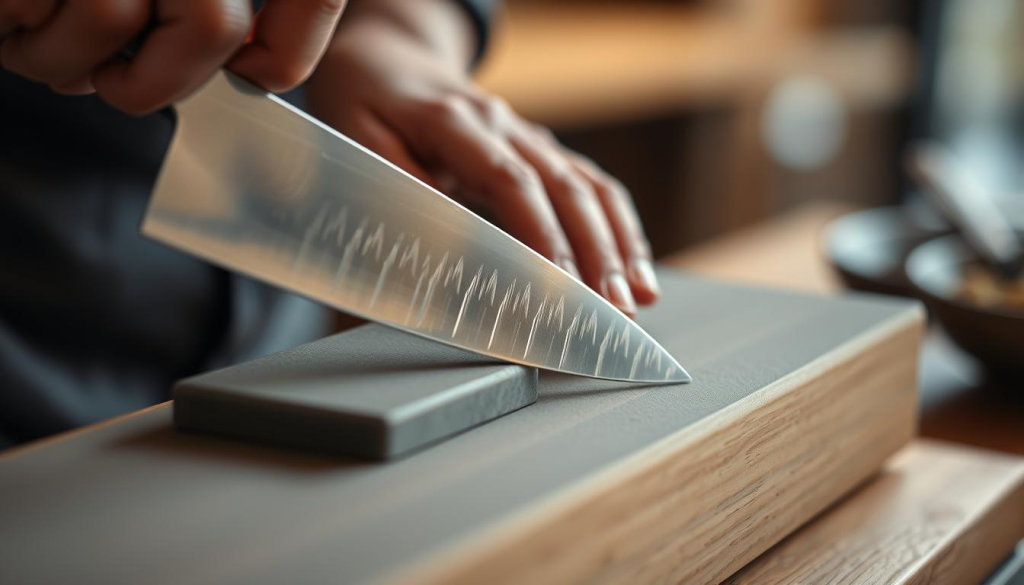
Both single-bevel and double-bevel Japanese kitchen knives must be sharpened by hand on whetstones. This traditional method allows for precise control over the sharpening process, ensuring that the knife’s original edge is restored. Whetstones come in various grit levels, each suited for different stages of the sharpening process, from coarse grit for repairing damaged edges to fine grit for polishing.
Electric vs. Manual Sharpeners
While whetstones are preferred for their precision, electric and manual sharpeners offer convenience. Electric sharpeners are quick and easy to use but may remove more metal than necessary, potentially shortening the knife’s lifespan. Manual sharpeners, on the other hand, provide more control than electric sharpeners but still lack the finesse of whetstone sharpening.
Honing vs. Sharpening
It’s crucial to distinguish between honing and sharpening. Honing involves realigning the knife’s edge to its original position, maintaining sharpness between sharpening sessions. Sharpening, however, involves removing metal to create a new edge. Regular honing can extend the time between sharpening, preserving the knife’s sharpness and longevity.
By understanding and applying these methods, individuals can maintain their Japanese knives effectively, ensuring they remain in optimal condition for culinary tasks.
The Right Techniques for Whetstone Sharpening
To keep your Japanese knives in top condition, understanding the technique of whetstone sharpening is crucial. Sharpening Japanese knives on a whetstone is a traditional method that, when done correctly, maintains the knife’s sharpness and extends its lifespan.
Understanding Grit Levels
The first step in whetstone sharpening is understanding the different grit levels of whetstones. Grit refers to the coarseness of the stone’s surface. Coarse grits (220-1000) are used for repairing damaged or very dull edges, while medium grits (1000-4000) are ideal for sharpening and refining the edge. Fine grits (4000-8000) are used for honing and polishing the edge to a razor-sharp finish.
Choosing the right grit level depends on the condition of your knife and your sharpening goals. For regular maintenance, starting with a medium grit is often sufficient.
Step-by-Step Sharpening Process
Sharpening a Japanese knife on a whetstone involves several steps:
- Prepare your whetstone by soaking it in water for about 10-15 minutes. Some stones may require oil; check the manufacturer’s instructions.
- Determine the best edge sharpening angle. For most Japanese knives, this is around 10-15 degrees per side.
- Place the whetstone on a stable surface and hold the knife at the chosen angle.
- Starting with the coarse grit side, if necessary, draw the knife across the stone in a smooth, even motion, as if slicing a thin layer off the top of the stone. Repeat this motion several times on both sides until you achieve the desired sharpness.
- Progress to finer grits for honing and polishing the edge.
Consistency is key when sharpening Japanese knives. Maintaining a consistent angle and applying even pressure ensures a sharp, even edge. Regular sharpening not only keeps your knives sharp but also prolongs their lifespan.
By mastering the technique of whetstone sharpening, you can maintain the sharpness of your Japanese knives and enhance your cooking experience.
Maintenance Tips for Keeping Your Knives Sharp
Maintaining the sharpness of your Japanese knives is not just about sharpening; it’s also about daily care and storage. To keep your knives in optimal condition, you need to adopt a few simple yet effective habits.
Importance of Regular Honing
Regular honing is a critical aspect of knife maintenance. Unlike sharpening, which removes metal to create a new edge, honing realigns the existing edge, maintaining the knife’s sharpness. Daily or weekly honing, depending on usage, can significantly extend the time between sharpening sessions. It’s a quick process that can be done with a honing steel, and it’s essential for keeping your Japanese knives performing at their best.
To hone your knife effectively, hold the honing steel vertically and draw the knife blade toward you in a smooth, sweeping motion, maintaining a consistent angle. This simple practice will help maintain the edge and prevent the knife from becoming dull.
Storing Your Knives Properly
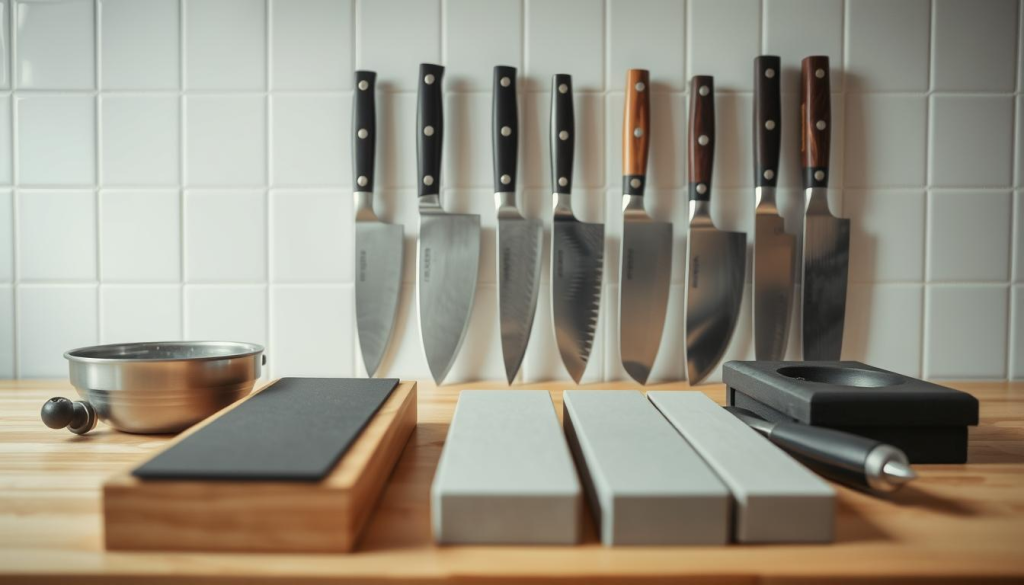
Proper storage is another vital aspect of knife care. Storing your Japanese knives correctly can protect the blade from damage and maintain its sharpness. Knife blocks and magnetic strips are excellent storage options as they keep the knives secure and prevent them from coming into contact with other utensils or hard surfaces that could cause damage.
When storing your knives, ensure they are clean and dry to prevent rust or corrosion. For added protection, consider using a knife bag or case if you need to store or transport your knives.
By incorporating regular honing into your routine and storing your knives properly, you can significantly extend the sharpness and lifespan of your Japanese knives. These simple care tips will help you get the most out of your investment in high-quality Japanese cutlery.
Mistakes to Avoid When Sharpening Japanese Knives
When it comes to sharpening Japanese knives, avoiding common mistakes is crucial for achieving optimal sharpness. Sharpening is not just a matter of technique; it’s also about understanding the nuances of your knife and the sharpening process.
Over-sharpening and Its Consequences
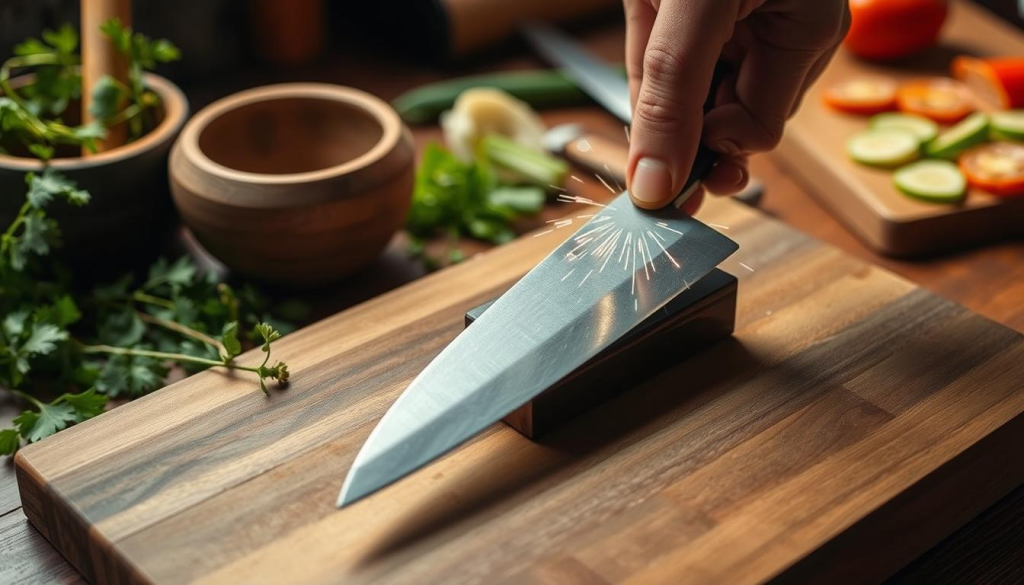
One of the most significant mistakes is over-sharpening. Over-sharpening can lead to a reduction in the knife’s lifespan by removing too much metal from the blade. It’s a common error that can result from using too much pressure or sharpening the knife too frequently.
To avoid over-sharpening, it’s essential to understand the knife’s material and its sharpening needs. For instance, a knife with a harder blade material may require less frequent sharpening compared to one with a softer material.
“A sharp knife is not just about the edge; it’s about maintaining the integrity of the blade.” –
Using Inappropriate Equipment
Another critical mistake is using the wrong sharpening equipment. Japanese knives often require specific types of whetstones or sharpeners designed for their unique blade angles and materials. Using a generic or inappropriate sharpener can damage the knife, leading to uneven edges or removing too much metal.
- Choose a whetstone that matches your knife’s grit requirements.
- Consider the angle of your knife and select a sharpener that accommodates it.
- Invest in a high-quality sharpener designed for Japanese knives.
By avoiding these common mistakes and following best practices for sharpening Japanese knives, you can maintain your knives’ sharpness and extend their lifespan. Regular maintenance, including honing and proper storage, is also crucial for keeping your knives in top condition.
Frequently Asked Questions About Knife Sharpening
As you navigate the world of Japanese knives, you’ll inevitably have questions about how to keep them sharp. Sharpening is an art that requires understanding the nuances of your knife and the techniques involved.
How do I know which sharpening method to choose?
Choosing the right sharpening method depends on the type of knife you’re using and your personal preference. For instance, a whetstone is a popular choice among chefs because it allows for precise control over the sharpening process. It’s essential to consider the grit level of your whetstone; a lower grit is used for repairing damaged blades, while higher grits are ideal for honing and polishing.
“The best sharpening method is one that you’re comfortable with and that meets the needs of your knife,” says a renowned knife expert.
“A good sharpening technique is not just about the tool, but also about understanding the knife’s material and its intended use.”
Can I use my Japanese knives on hard surfaces?
Using Japanese knives on hard surfaces like glass, metal, or stone can damage the blade. It’s recommended to use a cutting board made of wood or plastic to preserve the knife’s edge. Regular maintenance, including honing, is crucial for keeping your knives in top condition. Honing realigns the blade’s edge, ensuring it remains sharp and effective.
For more specific guidance on when to hone your Japanese knives, consider the frequency of use and the type of tasks you’re performing. Regular honing can significantly extend the time between sharpening sessions. By following these knife care tips for Japanese blades, you can maintain their performance and longevity.
Professional Services for Sharpening Japanese Knives
Expert sharpening services can help you maintain your Japanese knives in top condition, ensuring they remain sharp and effective. When your knives are too worn or damaged, or if you’re simply unsure about the sharpening process, professional services can provide the necessary expertise.
When to Consider Professional Help
If you’re struggling to maintain the sharpness of your Japanese knives or if they have become significantly dull, it may be time to seek professional help. Professional sharpening services have the tools and expertise to restore your knives to their original sharpness.
Some signs that indicate the need for professional sharpening include:
- Visible nicks or chips on the blade
- Difficulty in cutting through typical kitchen ingredients
- A noticeable decrease in the knife’s performance
Selecting a Quality Knife Sharpening Service
When choosing a professional knife sharpening service, it’s essential to consider their experience with Japanese knives. Look for services that specialize in Japanese knife sharpening and have positive reviews from other customers.
Here’s a comparison table to help you evaluate different sharpening services:
| Service | Experience with Japanese Knives | Customer Reviews | Turnaround Time |
|---|---|---|---|
| KnifeSharps | Yes | 4.5/5 | 3-5 days |
| SharpPro | Yes | 4.8/5 | 5-7 days |
| CuttingEdge | No | 4.0/5 | 2-3 days |
By choosing a reputable service, you can ensure that your Japanese knives are sharpened correctly and maintained properly.
Conclusion and Key Takeaways
Maintaining the sharpness of Japanese knives is crucial for optimal performance in the kitchen. By understanding the unique features of these knives and adopting best practices for sharpening, you can extend their lifespan and ensure they continue to deliver precise cuts.
Best Practices for Long-Term Sharpness
Regular maintenance, including sharpening and honing, is essential for maintaining sharpness. Using a whetstone and following the recommended sharpening techniques can help you achieve a razor-sharp edge. Additionally, storing your knives properly and avoiding hard surfaces can prevent damage and maintain their sharpness.
Regular Maintenance for Optimal Performance
To keep your Japanese knives in top condition, make regular maintenance a habit. By incorporating sharpening and honing into your routine, you can ensure your knives continue to perform at their best. By following best practices for sharpening Japanese knives, you can enjoy a lifetime of precise cuts and optimal performance.