Sharpening your Shun knives to the correct angle is crucial for maintaining their exceptional performance. Shun knives are renowned for their sharpness and precision, making them a favorite among chefs and home cooks alike.
To get the most out of your culinary tools, it’s essential to understand the importance of sharpening them correctly. The right technique ensures that your knife remains effective and continues to deliver high-quality cutting performance.
Key Takeaways
- Sharpening Shun knives requires precision and the right technique.
- The correct sharpening angle is crucial for maintaining knife performance.
- Shun knives are designed for high-quality cutting performance.
- Proper sharpening ensures the longevity of your knives.
- Using the right sharpening method is essential for optimal results.
Understanding Shun Knives and Their Design
Understanding the intricacies of Shun knives is crucial for maintaining their sharpness and performance. Shun knives are crafted with precision and care, making them a favorite among culinary professionals and enthusiasts alike.
How Shun Knives Are Crafted
Shun knives are renowned for their exceptional craftsmanship. The process involves multiple steps, including forging, sharpening, and finishing. Each knife is made from high-quality materials, ensuring durability and sharpness. The craftsmanship that goes into making Shun knives is a blend of traditional techniques and modern technology.
“The art of knife making is not just about creating a tool, it’s about crafting a piece of art that will be used to create other masterpieces.”
The Importance of Blade Angle
The blade angle of a Shun knife is critical to its performance. Typically, Shun knives have a blade angle of around 16 degrees per side, making them ideal for precise cutting tasks. The blade angle affects the knife’s sharpness and its ability to hold the edge.
| Knife Type | Blade Angle (per side) | Characteristics |
|---|---|---|
| Shun Classic | 16 degrees | Precision cutting, ideal for fine cuisine |
| Shun DM | 16 degrees | Straight-edge design for precise cuts |
Types of Steel Used in Shun Knives
Shun knives are made from high-carbon steel, known for its durability and ability to hold a sharp edge. The type of steel used can affect the knife’s performance and maintenance needs. Some Shun knives also feature additional coatings or materials for enhanced performance.
- High-carbon steel for durability and sharpness
- VG-MAX steel for enhanced edge retention
- Special coatings for corrosion resistance
By understanding the materials and design of Shun knives, users can better maintain their knives and achieve the optimal sharpening angle. This knowledge is key to ensuring that the knives continue to perform at their best.
Recommended Sharpening Angles for Shun Knives
Understanding the ideal sharpening angle for your Shun knives is essential for achieving optimal results in the kitchen. The sharpening angle can significantly impact the performance and longevity of your knives.
The traditional sharpening angle for Japanese knives, including many Shun models, is around 16 degrees per side. This angle is a result of centuries-old craftsmanship and is designed to provide a sharp edge that is also durable.
Traditional Japanese Knife Angle
The traditional Japanese knife angle is a key factor in the exceptional sharpness of these knives. Sharpening at 16 degrees per side allows for a very sharp edge, making precise cuts possible. However, it’s worth noting that some Western-style knives may be sharpened at a wider angle, typically around 20-22 degrees per side.
“A knife is only as good as its edge, and the edge is only as good as the angle at which it is sharpened.”
Differences Between Santoku and Chef Knives
Santoku and Chef knives, while both versatile kitchen tools, have different designs and uses that can affect their ideal sharpening angles. Santoku knives, with their straighter edge, may be sharpened slightly differently than Chef knives, which have a more curved profile.
| Knife Type | Recommended Sharpening Angle | Edge Characteristic |
|---|---|---|
| Santoku | 15-16 degrees per side | Straight edge, ideal for chopping |
| Chef Knife | 16-17 degrees per side | Curved edge, suitable for rocking motion |
Factors Influencing Sharpening Angle
Several factors can influence the optimal sharpening angle for your Shun knives, including the specific model, its intended use, and personal preference. For instance, if you use your knives primarily for delicate tasks, a sharper angle might be preferred.
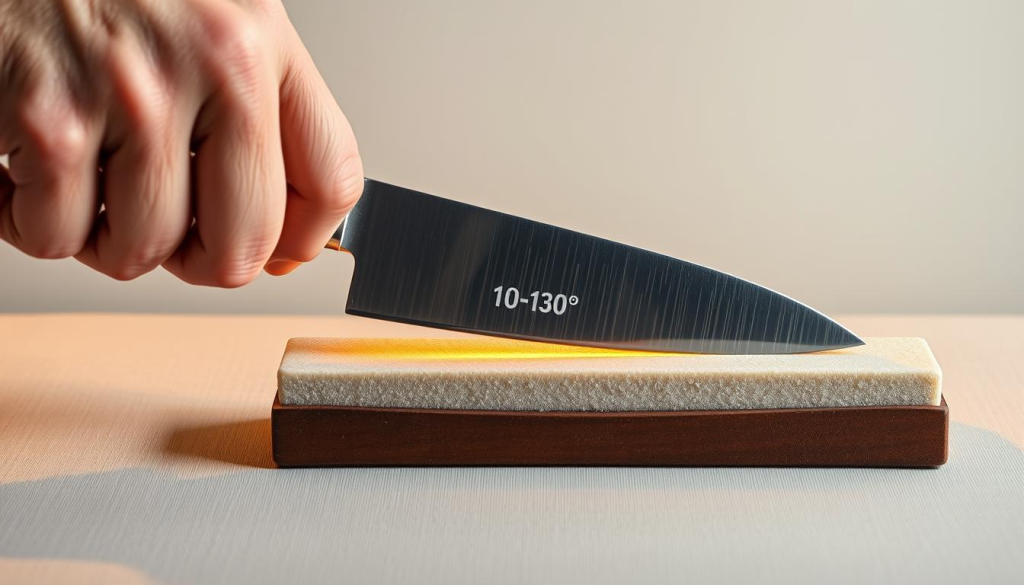
By understanding these factors and adjusting your sharpening technique accordingly, you can maintain your Shun knives in top condition, ensuring they continue to perform at their best.
Tools Needed for Sharpening
The art of sharpening Shun knives begins with understanding the tools of the trade. Sharpening is not just about maintaining your knife; it’s about enhancing its performance and prolonging its lifespan.
Whetstones vs. Electric Sharpeners
Whetstones and electric sharpeners are two popular options for sharpening knives. Whetstones offer a traditional method that allows for precise control over the shun knife sharpening angle, while electric sharpeners provide a quicker, more convenient alternative.
Whetstones require skill and patience but offer flexibility and precision. On the other hand, electric sharpeners are user-friendly and fast, making them ideal for those who are new to knife sharpening or prefer a hassle-free experience.
Essential Accessories for Knife Maintenance
In addition to the primary sharpening tool, several accessories can aid in maintaining your Shun knives. A honing steel is used to realign the blade’s edge, while a knife sharpening guide can help maintain the recommended angle for knife sharpening.
Choosing the Right Grit for Your Whetstone
Selecting the appropriate grit for your whetstone is crucial for effective sharpening. A coarse grit (about 1000) is used for repairing damaged edges, a medium grit (4000-6000) for sharpening, and a fine grit (8000-10000) for polishing.
| Grit Level | Purpose | Usage |
|---|---|---|
| Coarse (1000) | Repairing damaged edges | Initial sharpening or repair |
| Medium (4000-6000) | Sharpening | Regular sharpening |
| Fine (8000-10000) | Polishing | Final polishing |
Step-by-Step Guide to Sharpening
The art of sharpening Shun knives involves more than just a few strokes on a whetstone; it requires a precise angle and consistent technique. To achieve the perfect edge, follow these steps carefully.
Preparing Your Workspace
Before you begin sharpening, it’s crucial to prepare your workspace. Ensure your whetstone or sharpening tool is placed on a stable surface, and you have a comfortable position to work in. A stable workspace helps maintain the correct sharpening angle, which is vital for achieving a sharp edge.
As noted by expert chefs, “A well-prepared workspace is the foundation of effective knife sharpening.”
“The key to sharpening is not just the stone, but how you hold the knife and the angle you maintain.”
Proper Technique for Sharpening
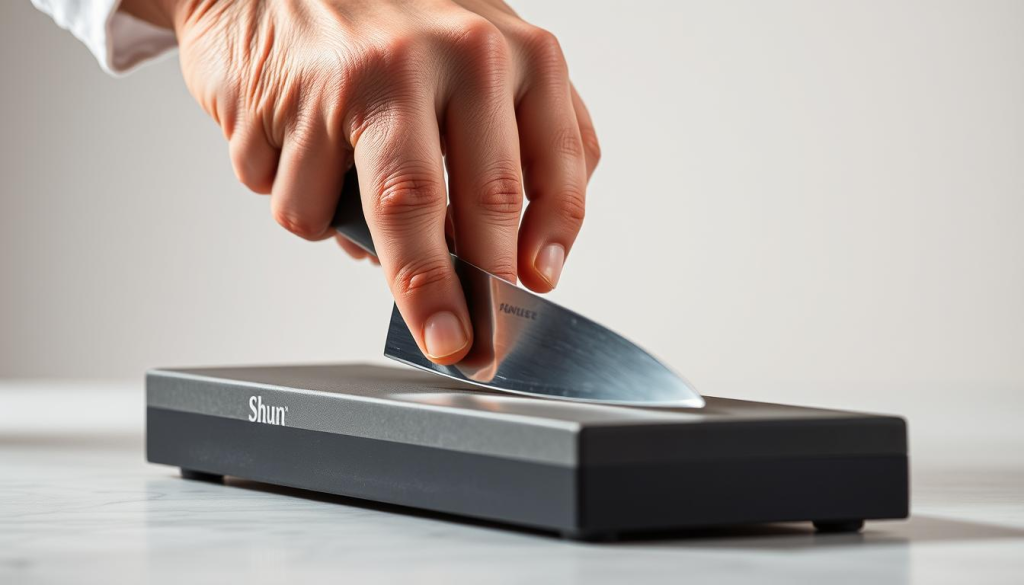
To sharpen your Shun knife, hold it at the recommended angle, typically around 16 degrees for straight-edge knives. Place the heel of the blade on the whetstone, and with a smooth, even motion, draw the knife across the stone, moving from the heel to the tip. Repeat this process on the other side of the blade. Maintaining the knife sharpening angle is crucial for a sharp, even edge.
Testing Sharpness After Sharpening
After sharpening, it’s essential to test the sharpness of your knife. You can do this by slicing through a piece of paper or a tomato. If the knife glides through smoothly, it has been sharpened correctly. If not, you may need to adjust your technique or the angle at which you’re sharpening.
- Check for any nicks or unevenness along the edge.
- Ensure the knife feels balanced in your hand.
- Test the sharpness on different materials to gauge its effectiveness.
By following these steps and maintaining the precise angle for sharpening Shun knives, you can keep your knives in optimal condition, ensuring they perform well in the kitchen.
Maintaining the Edge of Your Shun Knives
To keep your Shun knives performing at their best, regular maintenance is crucial. This involves a combination of proper sharpening, storage, and handling practices.
Importance of Regular Maintenance
Regular maintenance is essential for maintaining the edge of your Shun knives. Frequent honing helps to realign the blade’s edge, keeping it sharp and preventing it from becoming dull too quickly. It’s recommended to hone your knives before and after each use.
Regular cleaning is also vital. Residue and debris can accumulate on the blade, affecting its performance. Cleaning your knives regularly with mild soap and drying them thoroughly will help maintain their edge.
Best Practices for Knife Storage
Proper storage is critical to prevent damage to your Shun knives. Store your knives in a dry place, away from other utensils that could cause scratching or dulling. Using a knife block or magnetic strip can help keep your knives organized and protected.
Identifying When to Sharpen
Knowing when to sharpen your Shun knives is crucial for maintaining their performance. Signs that your knife needs sharpening include difficulty cutting through food, a dull appearance, or a noticeable decrease in performance.
| Signs Your Knife Needs Sharpening | Description | Action |
|---|---|---|
| Difficulty Cutting | The knife struggles to cut through food smoothly. | Sharpen the knife to restore its edge. |
| Dull Appearance | The blade appears dull or lacks its usual shine. | Hone the knife to realign the edge. |
| Decreased Performance | You notice a decrease in the knife’s cutting performance. | Sharpen or hone the knife as needed. |
By following these guidelines, you can maintain the edge of your Shun knives, ensuring they continue to perform optimally and last longer.
Common Mistakes in Sharpening
The art of sharpening Shun knives is nuanced, and knowing the common mistakes can make all the difference. Sharpening is not just about achieving a sharp edge; it’s also about maintaining the integrity of the blade.
Over-sharpening Your Knife
Over-sharpening can be detrimental to your Shun knives. It can lead to an uneven edge and potentially damage the blade. To avoid this, it’s crucial to check your knife’s sharpness regularly and stop sharpening once you’ve achieved the desired level of sharpness.
Neglecting Proper Angle
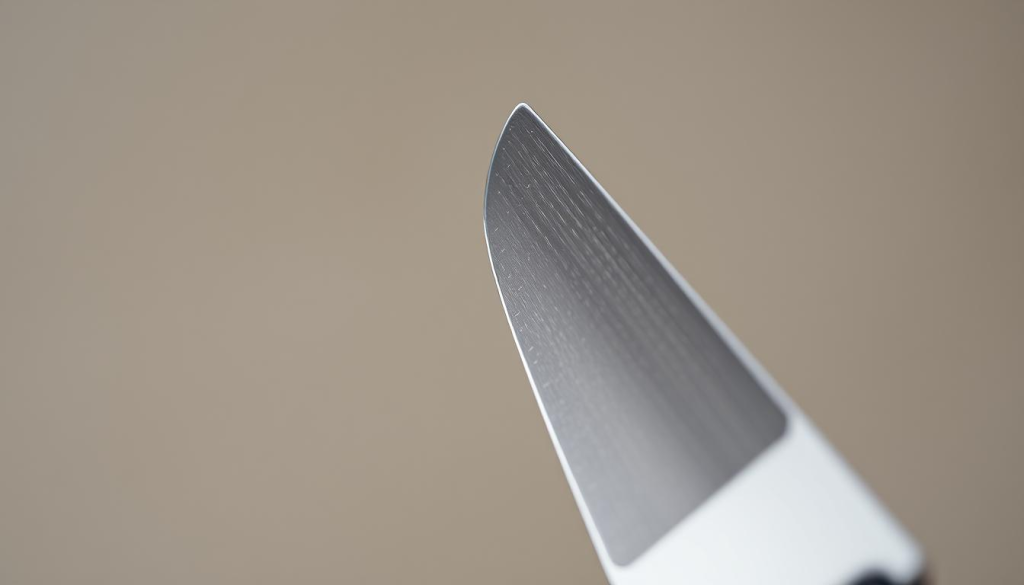
The sharpening angle is critical when it comes to Shun knives. The optimal angle for knife sharpening varies depending on the type of knife and its intended use. For Shun knives, maintaining the correct sharpening angle for Shun knives is vital for a sharp, even edge.
| Knife Type | Recommended Sharpening Angle | Edge Type |
|---|---|---|
| Santoku | 15-20 degrees | Straight Edge |
| Chef’s Knife | 20-25 degrees | Curved Edge |
Ignoring Blade Care Post-Sharpening
After sharpening, it’s essential to clean and dry your Shun knives thoroughly to prevent rust. Ignoring this step can lead to damage and reduce the lifespan of your knives. Regular maintenance is key to keeping your knives in optimal condition.
By being aware of these common mistakes and taking steps to avoid them, you can ensure your Shun knives remain sharp, effective, and in great condition for years to come.
Frequently Asked Questions About Shun Knives
The art of maintaining Shun knives is surrounded by several frequently asked questions. Understanding the proper care and sharpening techniques is crucial for extending the life of your knife and ensuring it performs optimally.
How Often Should I Sharpen My Shun Knife?
The frequency of sharpening your Shun knife largely depends on how often you use it. For professional chefs who use their knives daily, sharpening may be required every few weeks. For home cooks, sharpening every few months is typically sufficient. Regular maintenance, such as honing, can help keep the edge sharp between sharpenings.
Can I Use a Western-style Sharpener?
While it’s technically possible to use a Western-style sharpener on a Shun knife, it’s not always recommended. Shun knives are crafted with a specific blade angle, typically around 16 degrees per side, which is sharper than many Western knives. Using a sharpener designed for Western knives, which often have a more obtuse angle, might not provide the optimal sharpening angle for your Shun knife. It’s best to use a sharpener that allows for angle adjustment or is specifically designed for Japanese-style knives.
What Should I Do if My Knife is Damaged?
If your Shun knife is damaged, the first step is to assess the extent of the damage. For minor chips or nicks, you can often repair the knife through sharpening. However, if the damage is more severe, such as a bent or broken blade, it’s best to contact Shun’s customer service or a professional knife repair service. They can provide guidance on the best course of action, which may include returning the knife for repair or replacement.
To keep your Shun knife in top condition, remember to:
- Store it properly in a dry environment.
- Avoid cutting on hard surfaces.
- Hone the knife regularly.
- Sharpen it as needed based on usage.
By following these guidelines and understanding the specific needs of your Shun knife, you can enjoy a lifetime of exceptional performance from your knife.
Where to Purchase Quality Sharpening Tools
The art of sharpening Shun knives requires not only skill but also the right equipment. To achieve the recommended angle for knife sharpening, you’ll need to invest in quality sharpening tools that can help you maintain the precise angle for sharpening Shun knives.
Top Retailers for Sharpening Gear
Several retailers specialize in selling sharpening gear for high-quality knives like Shun. Some of the top retailers include:
- Amazon
- Williams-Sonoma
- Sur La Table
- Chef’s Catalog
These retailers offer a range of sharpening tools, from basic whetstones to advanced electric sharpeners. When shopping, look for products with good customer reviews and detailed product descriptions to ensure you’re getting the right tool for your needs.
Online Sources for Whetstones
Whetstones are a crucial tool for sharpening Shun knives. For those looking to purchase whetstones online, there are several reputable sources:
- eBay
- Amazon
- Specialty knife stores
When buying whetstones online, make sure to check the grit range and the material (e.g., water stone, oil stone) to ensure it suits your sharpening needs.
Brands to Consider for Quality Equipment
Some brands are renowned for producing high-quality sharpening equipment. These include:
- Waterstone
- Arkansas Stone
- Sharptek
- Nippon
These brands offer a range of sharpening tools that can help you achieve the precise edge you’re looking for on your Shun knives. When selecting a brand, consider factors like durability, ease of use, and customer support.
By sourcing quality sharpening tools from reputable retailers and brands, you’ll be well on your way to maintaining your Shun knives effectively and achieving the perfect sharpening angle.
Enhancing Your Cooking Experience with Sharp Knives
Sharp knives are the backbone of a enjoyable and safe cooking experience. By maintaining your Shun knives at the correct knife sharpening angle, you can ensure they continue to deliver the high-quality performance you expect from the brand.
Precision and Performance
Using sharp knives makes food preparation easier, allowing for precise cuts and reducing the risk of accidents. Understanding how to sharpen Shun knives is essential to unlocking their full potential.
Safety in the Kitchen
Sharp knives improve safety in the kitchen by reducing the force needed to cut through ingredients, minimizing the risk of slips and accidents. A sharp knife is a safer knife, and maintaining your Shun knives will ensure a secure cooking environment.
Appreciating Your Shun Knives
By keeping your Shun knives sharp, you can fully appreciate their performance and enjoy the cooking experience. Regular maintenance, including sharpening at the correct angle, will extend the life of your knives and enhance your overall cooking experience.