Cooking at home can be a delightful experience, and having the right tools is essential for elevating your culinary skills. Japanese knives are renowned for their precision, sharpness, and versatility, making them a valuable addition to any home cook’s arsenal.
For those wondering what Japanese knives they need, the good news is that you don’t need an extensive collection to start cooking effectively. A few essential Japanese knives can significantly enhance your cooking experience, allowing for more precise cuts and a more enjoyable time in the kitchen.
Key Takeaways
- Understanding the types of Japanese knives is crucial for home cooks.
- Essential Japanese knives can elevate your cooking experience.
- Investing in a few quality knives is more beneficial than buying many low-quality ones.
- Japanese knives are known for their precision and versatility.
- Having the right tools can make cooking more enjoyable.
Understanding Japanese Knives: An Overview
The art of Japanese knife-making is a centuries-old tradition that has evolved into a global phenomenon, captivating chefs and home cooks alike. Japanese knives are celebrated for their exceptional sharpness, precision, and craftsmanship, making them a valuable addition to any kitchen.
To truly appreciate Japanese knives, it’s essential to understand what sets them apart from their Western counterparts. One of the primary factors is the material used in their construction. Japanese knives are often made from high-carbon steel, which allows for a sharper edge and more precise cutting. This characteristic is particularly beneficial for delicate tasks such as slicing sashimi or preparing intricate vegetable cuts.
What Makes Japanese Knives Unique?
Several factors contribute to the uniqueness of Japanese knives. Firstly, the craftsmanship that goes into making these knives is unparalleled. Many Japanese knives are hand-forged, a process that involves carefully heating, shaping, and honing the steel to create a blade that is both beautiful and functional. This labor-intensive process results in a knife that is not only a tool but also a work of art.
Another distinguishing feature is the attention to detail in the sharpening process. Japanese knives are sharpened to a very fine edge, which is maintained through regular sharpening. This ensures that the knife remains effective and efficient over time.
Key Differences Between Japanese and Western Knives
When comparing Japanese knives to their Western counterparts, several key differences become apparent. The table below highlights some of the main distinctions:
| Characteristics | Japanese Knives | Western Knives |
|---|---|---|
| Material | Often made from high-carbon steel | Typically made from stainless steel |
| Edge Retention | Sharp edge that requires regular sharpening | More durable edge that resists corrosion |
| Craftsmanship | Often hand-forged and carefully honed | May be mass-produced with less emphasis on individual craftsmanship |
Understanding these differences is crucial for any home cook looking to invest in the right knives for their kitchen. Whether you’re preparing delicate sashimi or chopping robust vegetables, the right knife can make all the difference.
Essential Japanese Knives for Every Kitchen
For home cooks, the journey to culinary excellence begins with essential Japanese knives. These knives are designed to make cooking easier, more efficient, and enjoyable.
The Santoku Knife: A Versatile All-Rounder
The Santoku knife is a must-have for any kitchen. Its straight edge and balanced weight make it perfect for chopping, slicing, and mincing. Whether you’re preparing vegetables, meat, or fish, the Santoku knife is up to the task.
The Gyuto Knife: Your Reliable Chef’s Companion
The Gyuto knife is often considered the Japanese equivalent of a Western chef’s knife. It’s versatile and reliable, suitable for a wide range of cutting tasks. From slicing meat to chopping vegetables, the Gyuto knife is an indispensable tool.
The Nakiri Knife: Perfect for Vegetables
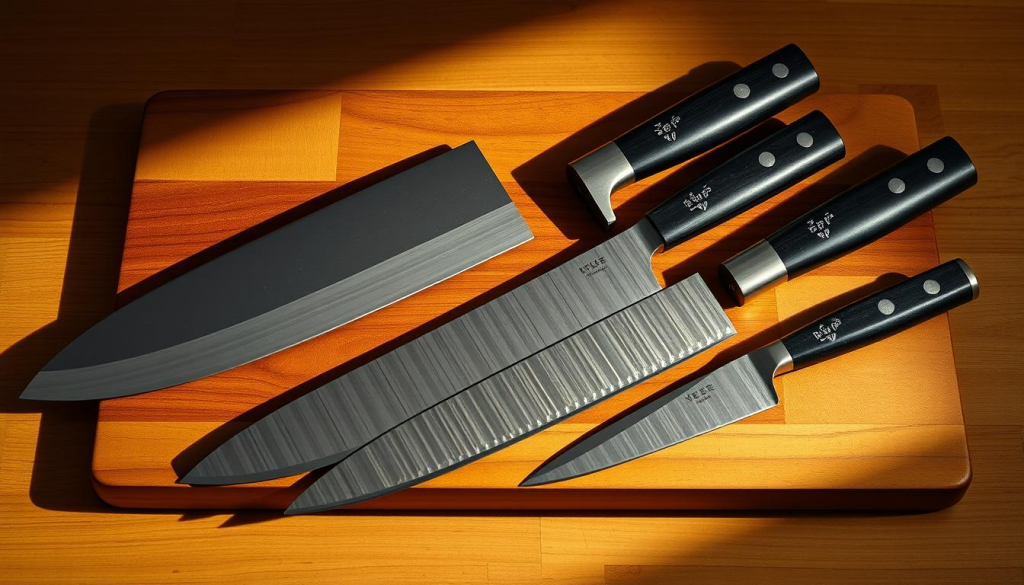
For those who love cooking with vegetables, the Nakiri knife is a must-have. Designed specifically for cutting and preparing vegetables with precision, this knife makes vegetable preparation a breeze.
| Knife Type | Primary Use | Key Features |
|---|---|---|
| Santoku | Chopping, slicing, mincing | Straight edge, balanced weight |
| Gyuto | Various cutting tasks | Versatile, reliable |
| Nakiri | Vegetable preparation | Precision cutting, vegetable specific |
Investing in these essential Japanese knives will elevate your cooking experience. Each knife is designed to perform specific tasks, making your time in the kitchen more efficient and enjoyable.
Specialized Japanese Knives
The world of Japanese knives extends far beyond the essentials, featuring specialized types for unique culinary requirements. These knives are designed to cater to specific cooking tasks, enhancing the overall cooking experience.
The Yanagiba: For Perfect Sashimi Slicing
The Yanagiba knife is a long, slender knife used primarily for slicing sashimi and sushi. Its unique design allows for precise, smooth cuts, making it an indispensable tool for sushi enthusiasts. The Yanagiba’s length and edge retention enable chefs to create uniform slices with minimal effort.
Using a Yanagiba knife requires a certain technique, but the result is well worth the practice. It’s perfect for those who appreciate the art of preparing sashimi and want to achieve professional-quality results at home.
The Deba Knife: Designed for Fish Preparation
The Deba knife is a sturdy, thick-bladed knife designed for fish preparation. It’s capable of handling a variety of tasks, from filleting fish to cutting through bones. The Deba’s robust construction makes it a reliable choice for chefs who frequently work with fish.
One of the key benefits of the Deba knife is its versatility. Whether you’re filleting delicate fish or cutting through thicker bones, the Deba knife is up to the task. Its durability and performance make it a valuable addition to any kitchen that regularly prepares fish dishes.
Exploring the world of specialized Japanese knives can elevate your cooking to new heights. By understanding the unique characteristics and uses of knives like the Yanagiba and Deba, home cooks can expand their culinary repertoire and achieve professional-quality results.
Choosing the Right Knife Based on Cooking Style
Your cooking style plays a crucial role in determining the most suitable Japanese knives for you. Whether you’re a vegetarian who focuses on vegetable dishes or a meat lover who frequently cooks steaks and roasts, having the right knife can make a significant difference in your cooking experience.
For Vegetarians: Must-Have Knives
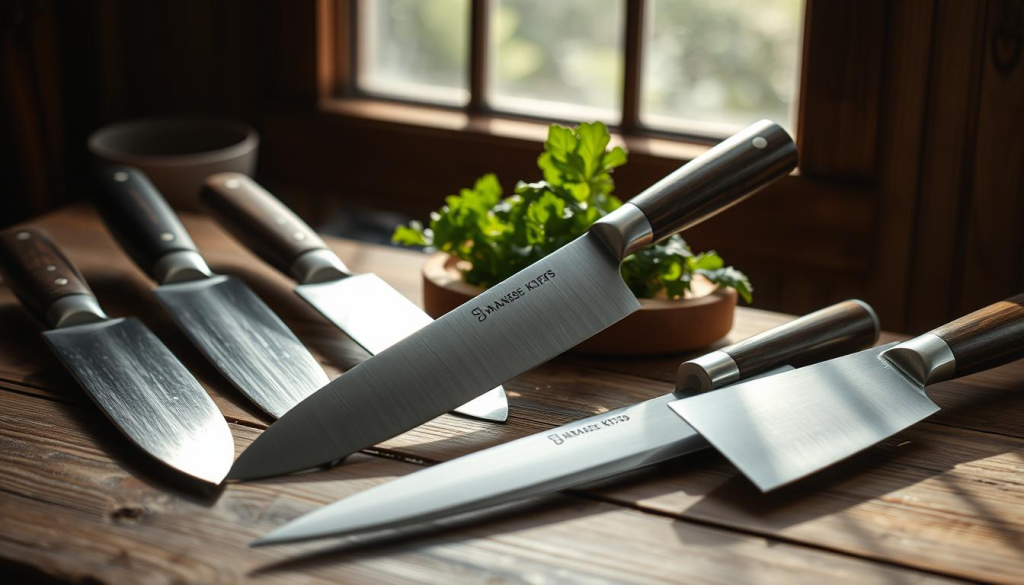
Vegetarians often find themselves preparing a variety of vegetable dishes. For this, a good Nakiri or Santoku knife is indispensable. The Nakiri knife, with its straight edge, is perfect for chopping vegetables, while the Santoku knife offers versatility for slicing, dicing, and mincing.
| Knife Type | Primary Use | Edge Type |
|---|---|---|
| Nakiri | Chopping Vegetables | Straight Edge |
| Santoku | Slicing, Dicing, Mincing | Curved Edge |
For Meat Lovers: Essential Cuts
For those who frequently cook meat, a Gyuto or Deba knife can be invaluable. The Gyuto knife, often considered the Japanese equivalent of a chef’s knife, is ideal for slicing and cutting meat, while the Deba knife is designed for fish preparation but can also be used for cutting meat.
“A good knife is the heart of any kitchen. For meat lovers, investing in a quality Gyuto or Deba knife is a step towards elevating their cooking.” –
When choosing between these knives, consider the type of meat you most often prepare and the tasks you perform most frequently.
Maintenance Tips for Japanese Knives
Extending the life of your Japanese knives and ensuring they remain sharp and effective requires a commitment to regular maintenance. Proper care not only preserves the quality of your knives but also enhances your cooking experience.
Sharpening Techniques
Sharpening is a critical aspect of knife maintenance. Japanese knives, known for their sharpness, require regular sharpening to maintain their edge. There are several sharpening techniques, including using a whetstone, which is a traditional method preferred by many chefs, or a sharpening rod for more convenience.
- Start with a coarse grit whetstone (about 1000 grit) to repair or reshape the edge.
- Progress to a finer grit (up to 6000 or 8000) for honing and polishing the edge.
- Use a sharpening rod for quick touch-ups between whetstone sharpenings.
Tip: Always sharpen your knife at the correct angle, typically around 10-15 degrees for Japanese knives, to maintain their sharpness and prevent damage.
Cleaning and Storage Best Practices
Cleaning and storing your Japanese knives properly is just as important as sharpening them. Here are some best practices:
- Hand wash your knives immediately after use with mild soap and dry them thoroughly.
- Avoid using a dishwasher, as the high heat and harsh detergents can damage the blade and handle.
- Store your knives in a dry place, such as a knife block or on a magnetic strip, to prevent rust and damage.
“A good knife is like a good friend; it requires care and attention to stand the test of time.”
By following these maintenance tips, you can ensure your Japanese knives remain in excellent condition, providing you with years of reliable service and enhancing your culinary endeavors.
Material Matters: Types of Steel Used
When it comes to Japanese knives, the type of steel is crucial for determining their sharpness, durability, and overall performance. The material used in making these knives significantly affects their ability to hold a sharp edge and resist corrosion.
The two most common types of steel used in Japanese knives are high-carbon steel and stainless steel. Each has its unique characteristics that cater to different needs and preferences.
High-Carbon Steel vs. Stainless Steel
High-carbon steel is prized for its ability to hold a sharp edge. It is ideal for those who value sharpness and are willing to perform regular maintenance to prevent rust. On the other hand, stainless steel offers resistance to corrosion, making it a great choice for those who want a low-maintenance option.
- High-Carbon Steel: Sharpness, edge retention, requires maintenance
- Stainless Steel: Corrosion resistance, durability, easier maintenance
The Benefits of Damascus Steel
Damascus steel combines the benefits of different steels, offering both sharpness and durability. It is known for its distinctive pattern and exceptional strength, making it highly sought after by chefs and knife enthusiasts.
The benefits of Damascus steel include:
- Exceptional sharpness and edge retention
- Durability and resistance to wear
- Aesthetic appeal due to its unique pattern
Understanding the characteristics of these materials can help you make informed decisions when selecting Japanese knives that fit your cooking style and preferences.
Finding the Right Handle: Comfort and Grip
A well-designed handle is essential for comfort and control when using Japanese knives. The handle’s material and design can significantly impact how the knife feels in your hand and its overall performance.
Different Types of Handles
Japanese knives come with various handle types, each with its unique characteristics. The most common types include:
- Traditional Japanese Handles: Often made from wood or bamboo, these handles are designed to provide a comfortable grip and are typically used for traditional Japanese knives.
- Western-Style Handles: Usually made from materials like stainless steel, wood, or synthetic materials, these handles are designed for durability and ease of maintenance.
The choice between these handle types largely depends on personal preference, cooking style, and the type of knife.
How Handle Material Affects Performance
The material used for the handle can affect the overall performance of the knife. For instance:
| Handle Material | Characteristics | Performance Impact |
|---|---|---|
| Wood | Comfortable grip, aesthetically pleasing | Can be prone to wear and tear, requires maintenance |
| Stainless Steel | Durable, easy to clean | Can be heavy, may cause fatigue during extended use |
| Synthetic Materials | Lightweight, resistant to wear | May not provide the same level of grip comfort as natural materials |
When choosing a Japanese knife, it’s crucial to consider the handle material and its implications for your cooking experience. A handle that complements the blade and suits your preferences can enhance your overall experience with the knife.
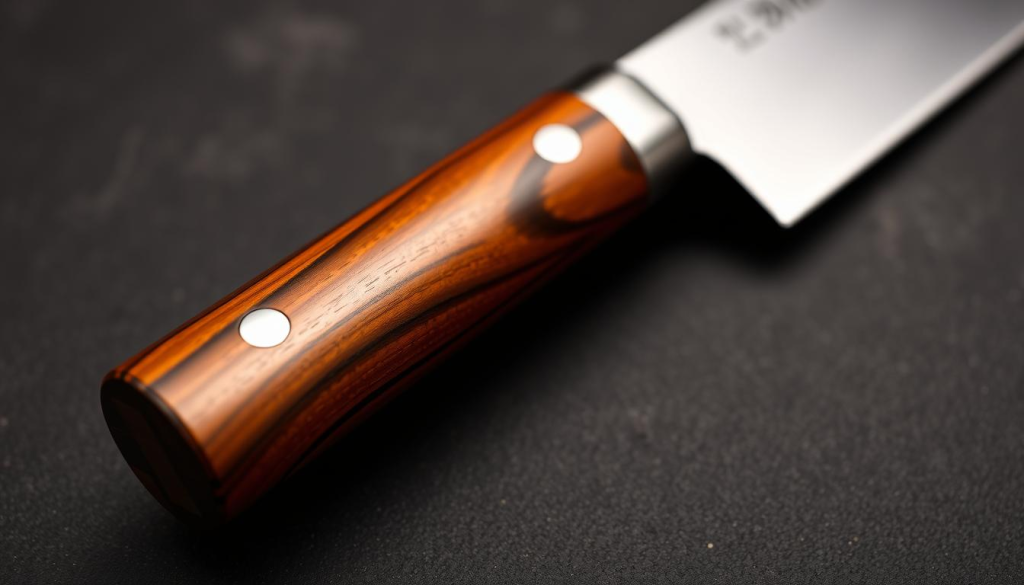
For home cooks looking to invest in the best Japanese knives, understanding the nuances of handle design and material is key to making an informed decision. Whether you’re a beginner or an experienced chef, the right handle can make all the difference in your cooking journey.
Caring for Your Japanese Knives
To ensure your Japanese knives remain in top condition, proper care is essential. Proper maintenance not only extends the life of your knives but also ensures they continue to perform at their best.
Regular Maintenance for Longevity
Regular maintenance is crucial for the longevity of your Japanese kitchen knives. This includes cleaning your knives after each use, storing them properly, and sharpening them regularly. Cleaning should be done by hand with mild soap and water, and the knives should be dried immediately to prevent rust.
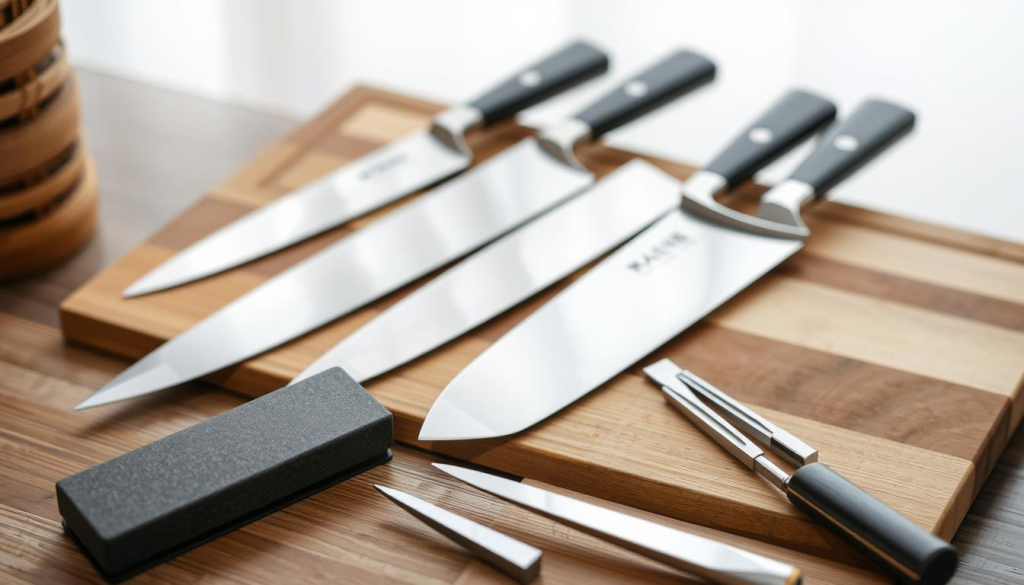
Sharpening is another critical aspect of maintaining your essential Japanese knives. Regular sharpening keeps the blade in optimal condition, ensuring clean cuts and preventing the knife from becoming too worn. You can use a whetstone or a sharpening tool designed for Japanese knives.
When to Seek Professional Sharpening
While regular maintenance can be done at home, there are times when seeking professional sharpening is necessary. If your knife has become significantly worn or has a damaged edge, a professional can restore it to its optimal condition. Professional sharpening services have the expertise and specialized equipment to sharpen even the most difficult blades.
For those who are not comfortable sharpening their knives themselves, or for knives that require a high level of precision, seeking professional sharpening is a good option. It’s also a good idea to have your knives professionally sharpened periodically to maintain their performance.
By following these care and maintenance tips, you can ensure that your Japanese knife set remains in excellent condition, providing you with years of reliable service.
Popular Brands of Japanese Knives
Japanese knives have gained worldwide recognition for their precision and durability, with certain brands leading the way. When it comes to buying Japanese knives, several factors come into play, including the brand’s reputation, the quality of the knives, and their suitability for various cooking tasks.
Top Makers to Consider
Some of the most renowned brands in the world of Japanese knives include:
| Brand | Description | Price Range |
|---|---|---|
| Sakai Takayuki | Known for high-quality blades and traditional craftsmanship | $100-$500 |
| Shun | Famous for premium knives with VG-MAX steel | $100-$600 |
| Global | Recognized for unique edge retention and comfortable handles | $100-$300 |
| Masamune | Celebrated for artisanal craftsmanship and high-carbon steel | $200-$1000 |
These brands are recognized for their commitment to quality and their ability to craft knives that meet the needs of both professional chefs and home cooks.
What to Look for When Buying
When purchasing Japanese knives, it’s crucial to consider several factors to ensure you find the right tool for your needs. Look for knives made from high-quality materials, such as high-carbon stainless steel, which offers both durability and resistance to corrosion.
Key Considerations:
- Material: High-carbon stainless steel is balance durability with corrosion resistance.
- Edge Retention: A good knife should hold its edge well, requiring less frequent sharpening.
- Balance: The weight and balance of the knife can affect its usability and comfort.
- Handle: The material and design of the handle should provide a secure grip and comfort during use.
By considering these factors and choosing a reputable brand, you can find a Japanese knife that will enhance your cooking experience and last for years to come.
Conclusion: Investing in Quality Knives
Investing in quality Japanese knives can significantly enhance your cooking experience. With the right knives, you can improve your performance in the kitchen, making meal preparation more efficient and enjoyable.
Choosing the Right Knives for Your Needs
When selecting Japanese knives, consider your cooking style and the tasks you perform most frequently. Whether you’re a vegetarian or a meat lover, having the right knives can make a significant difference. Essential Japanese knives, such as the Santoku and Gyuto, are versatile options that can handle a variety of kitchen tasks. Understanding what Japanese knives you need can elevate your culinary skills and enhance your overall cooking experience.
By considering your cooking habits and the types of dishes you prepare most often, you can determine the best knives for your needs, ensuring a more satisfying and cooking experience.