
The legendary swords forged by Goro Nyudo Masamune are highly prized for their exceptional craftsmanship and historical significance. One of the most renowned Masamune swords is the Honjo Masamune, considered one of the finest katana ever created. It served as a symbol of the Tokugawa Shogunate for generations, passed down through shoguns until World War II.
The Honjo Masamune is a testament to Masamune’s mastery in sword-making, showcasing exquisite craftsmanship and legendary sharpness. Despite its historical importance, the current whereabouts of many Masamune swords remain a mystery, sparking curiosity among historians and collectors alike.
Key Takeaways
- The Honjo Masamune is one of the most famous Masamune swords.
- Masamune swords are highly valued for their historical significance.
- The current existence of many Masamune swords is unknown.
- Goro Nyudo Masamune was a master swordsmith.
- The Tokugawa Shogunate prized the Honjo Masamune as a symbol.
Introduction to Masamune Swords
Masamune swords, with their intricate designs and exceptional sharpness, have become iconic symbols of Japanese history and culture. These swords are renowned for their superior beauty, exquisite craftsmanship, and exceptional sharpness.
What Makes Masamune Swords Unique?
Masamune swords are distinguished by their exceptional quality and the unique Soshu tradition of swordsmithing, which originated in Sagami Province. This tradition emphasized the creation of swords that were both practical and aesthetically pleasing.
The unique characteristics of Masamune swords include their hamon (the tempered edge), the shape, and the intricate hamon pattern, which together contribute to their rarity and value. The number of authentic Masamune swords remaining is a topic of great interest among historians and collectors.
The Art of Japanese Swordsmithing
Japanese swordsmithing is an art form that requires great skill and precision. The process involves folding and hammering the steel to create a blade that is both strong and beautiful. Masamune, as a master swordsmith, was particularly known for his ability to craft swords with a perfect balance between hardness and flexibility.
The art of swordsmithing during Masamune’s time was influenced by the Soshu tradition, which focused on creating swords that were not only functional but also works of art. This tradition contributed to the development of rare Masamune blades that are highly prized today.
Historical Significance of Masamune Swords
Masamune swords hold a significant place in Japanese history and culture. They were not only used as weapons but also revered as works of art and symbols of honor. The historical significance of these swords is closely tied to the history of the samurai class and the role they played in Japanese society.
Today, authentic Masamune swords are highly valued for their historical significance, craftsmanship, and rarity, making them highly sought after by collectors and museums.
The Legacy of Masamune
The legacy of Masamune, one of Japan’s most revered swordsmiths, continues to captivate historians and collectors alike. His work represents the pinnacle of Soshu swordmaking, a tradition known for its elegant shape and strong, resilient cutting edge.
Who Was Masamune?
Goro Nyudo Masamune is widely regarded as one of Japan’s greatest swordsmiths. His exceptional craftsmanship and innovative techniques set him apart from his contemporaries. Masamune’s background is shrouded in mystery, but it is believed that he worked during the late 13th to early 14th century.
Masamune’s swords are characterized by their beautiful hamon, the tempered edge that distinguishes a sword’s quality. The hamon on Masamune’s swords is particularly noteworthy for its intricate patterns and precision.
The Influence of Masamune’s Technique
Masamune’s technique had a profound influence on subsequent generations of swordsmiths. His innovative methods and attention to detail raised the bar for Japanese swordmaking. Many swordsmiths studied under Masamune or were inspired by his work, leading to a proliferation of high-quality swords.
“Masamune’s work is a testament to the artistry and skill of Japanese swordsmiths. His swords are not only functional weapons but also works of art that continue to inspire awe.”
Notable Swords from Masamune’s Workshop
Several famous Masamune swords have been attributed to Masamune’s workshop, including the Honjo Masamune, a genuine Masamune katana that is considered a national treasure in Japan. Other notable examples include the Kyojū Shōsen Masamune and the Futsu-no-Mitama, both of which showcase Masamune’s mastery of swordmaking.
Counting the Masamune Swords
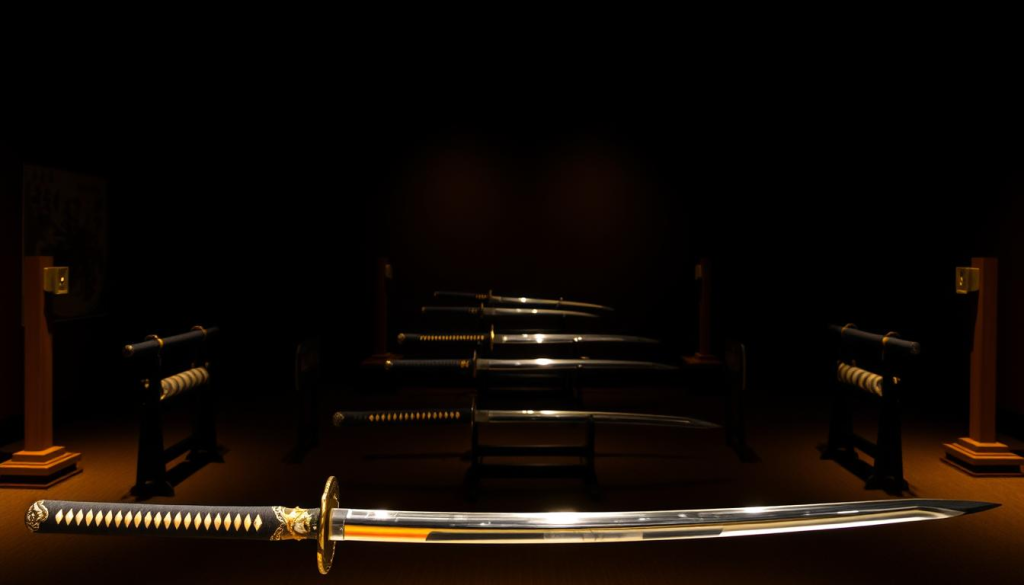
The precise count of Masamune swords remaining is shrouded in mystery. Despite their historical significance and cultural impact, the exact number of these swords that have survived to the present day is difficult to determine.
Estimating the Number of Existing Swords
Estimating the number of existing Masamune swords involves a combination of historical research, expert appraisal, and analysis of available records. Scholars and collectors rely on various methods to identify and verify the authenticity of Masamune swords, including:
- Examining the sword’s craftsmanship and signature style
- Analyzing historical documents and provenance
- Conducting metallurgical analysis to determine the sword’s composition
Factors that Influence the Count
Several factors complicate the task of counting Masamune swords. These include:
- The passage of time, which has led to the loss or destruction of many historical records
- The condition of the swords, as many have been damaged or restored over the centuries
- The presence of forgeries and replicas, which can be difficult to distinguish from authentic Masamune swords
The Role of Historical Documentation
Historical documentation plays a crucial role in estimating the number of existing Masamune swords. Records from the time period, such as those kept by temples, samurai families, and government archives, provide valuable insights into the production and ownership of Masamune swords. By analyzing these documents, researchers can reconstruct the history of individual swords and gain a better understanding of the overall count.
Despite these efforts, the count of Masamune swords remains an estimate. Ongoing research and new discoveries continue to refine our understanding of the number of these exceptional swords that have survived.
The Most Famous Masamune Swords
The legacy of Masamune is embodied in a handful of swords that are revered for their quality and provenance. These swords are not only testaments to Masamune’s skill as a craftsman but also embody the historical and cultural significance of Japanese swordsmithing.
Honjo Masamune
The Honjo Masamune is widely regarded as Masamune’s magnum opus and one of the greatest swords ever forged. This sword is celebrated for its exceptional craftsmanship, featuring a hamon that is both intricate and aesthetically pleasing. The Honjo Masamune has a storied history, having been passed down through generations of Japanese shoguns. Its provenance and the fact that it has been preserved in excellent condition make it a highly significant artifact.
Kyojū Shōsen Masamune
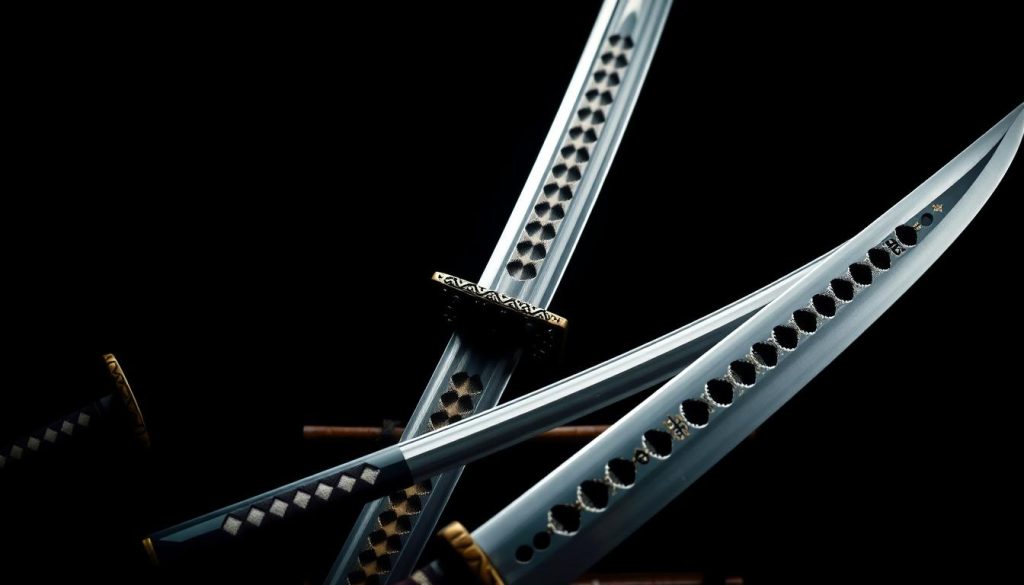
Another notable example is the Kyojū Shōsen Masamune, a sword that exemplifies the mastery of Masamune’s technique. This sword is characterized by its beautiful hamon and the high quality of its steel. The Kyojū Shōsen Masamune is not only a fine example of Masamune’s work but also a representation of the cultural and historical context in which it was created.
Other Noteworthy Examples
In addition to the Honjo Masamune and Kyojū Shōsen Masamune, there are other notable Masamune swords that are worth mentioning. The Kotegiri Masamune and the Musashi Masamune are examples of Masamune’s work that have gained recognition for their historical significance and craftsmanship. These swords demonstrate the range and consistency of Masamune’s skill, showcasing his ability to create blades that are both functional and beautiful.
The study and appreciation of these famous Masamune swords continue to be an important part of Japanese cultural heritage, with many collectors and historians seeking to learn more about these exceptional pieces.
Condition and Preservation of Masamune Swords
Preserving Masamune swords involves overcoming several challenges, including restoration and conservation. These swords are not only valuable historical artifacts but also considered works of art, making their preservation crucial.
The condition of Masamune swords can vary significantly due to factors like age, storage conditions, and handling. Some swords are well-preserved, while others show signs of wear and tear.
Challenges in Preservation
One of the primary challenges in preserving Masamune swords is maintaining their structural integrity. The materials used in their construction, such as tamahagane steel, can be prone to corrosion and damage over time.
Environmental factors like humidity and temperature play a significant role in the degradation process. High humidity can lead to rust, while extreme temperatures can cause the metal to expand and contract, potentially leading to cracks.
Restoration Efforts
Restoration efforts for Masamune swords are meticulous and require a deep understanding of historical swordsmithing techniques. Conservators must balance the need to preserve the sword’s original condition with the necessity of restoring its functionality and aesthetic appeal.
Traditional methods are often employed in the restoration process, including the use of authentic materials and techniques. This approach ensures that the restoration is sympathetic to the original craftsmanship.
Museums and Their Collections
Many Masamune swords are housed in museums, where they are preserved and made available for public viewing. These institutions play a vital role in the conservation of cultural heritage.
| Museum | Location | Notable Masamune Swords |
|---|---|---|
| Tokyo National Museum | Tokyo, Japan | Honjo Masamune |
| Japanese Sword Museum | Tokyo, Japan | Kyojū Shōsen Masamune |
| Metropolitan Museum of Art | New York, USA | Various Masamune swords |
The table above highlights some of the prominent museums that house Masamune swords, showcasing the global interest in these historical artifacts.
The Value of Masamune Swords
Masamune swords are considered treasures due to their historical significance, craftsmanship, and the mystery surrounding their creation. These swords are not only pieces of art but also historical artifacts that continue to captivate collectors and historians alike.
Market Demand and Prices
The demand for Masamune swords is high among collectors and institutions, driven by their rarity and historical importance. As a result, the prices for these swords can be substantial, often reaching into the millions at auctions. For instance, a genuine Masamune sword can fetch prices comparable to luxury real estate or high-end art pieces.
The market demand is fueled by the swords’ historical significance and the prestige associated with owning such a piece. The rarity of authentic Masamune swords means that when one becomes available, it can command a high price due to the competition among bidders.
Factors Affecting Value
Several factors contribute to the value of a Masamune sword, including its condition, provenance, and historical documentation. The condition of the sword, including its state of preservation and any restoration work, plays a significant role in determining its value. Additionally, swords with well-documented histories or those that have been owned by notable figures can command higher prices.
The authenticity of the sword is also a critical factor, as collectors and institutions are willing to pay a premium for swords that are verified as genuine Masamune works.
Investment in Historical Artifacts
Masamune swords are not only valuable for their historical and artistic significance but also as investment opportunities. Investors view rare historical artifacts like Masamune swords as a way to diversify their portfolios. The value of these swords can appreciate over time, making them a potentially lucrative investment for those willing to hold onto them for the long term.
However, investing in Masamune swords requires a deep understanding of the market, the ability to authenticate the swords, and a long-term perspective.
The Cultural Impact of Masamune Swords
Beyond their historical value, Masamune swords have become symbols of honor and discipline. These swords are not just weapons; they represent the pinnacle of Japanese swordsmithing and the cultural heritage of the samurai.
Masamune in Popular Culture
Masamune swords have appeared in various forms of media, from films to literature, often symbolizing power, honor, and the warrior spirit. Their presence in popular culture has contributed to a widespread fascination with these historical artifacts.
The depiction of Masamune swords in media often romanticizes their history, drawing audiences into the mystique surrounding these swords. This has led to a continued interest in genuine Masamune katana, with many collectors and enthusiasts seeking to own a piece of history.
The Symbolism of the Samurai Sword
The samurai sword, particularly those forged by Masamune, symbolizes the honor, discipline, and loyalty that were core to the samurai code. These swords are revered not just for their beauty and craftsmanship but for the values they represent.
In modern times, the symbolism of Masamune swords continues to influence Japanese culture and beyond. They are often seen as a connection to the past, embodying the traditions and values of the samurai era.
Influence on Modern Swordmaking
The techniques developed by Masamune and his school have had a lasting impact on swordmaking. Modern swordsmiths continue to study and emulate the methods used to create these legendary swords, ensuring that the legacy of Masamune lives on.
The influence of Masamune swords on modern swordmaking is evident in the continued demand for high-quality, traditionally crafted swords. This demand is driven by collectors and practitioners of martial arts who value the craftsmanship and historical significance of these swords.
Estimating the historical Masamune sword count is challenging due to the passage of time and the loss of many swords over the centuries. However, the impact of these swords on culture and history remains undeniable.
How to Identify a Masamune Sword
The art of identifying a Masamune sword involves examining its unique characteristics and historical provenance. Masamune swords are highly prized for their exceptional quality and historical significance, making the ability to verify their authenticity a valuable skill.
Distinctive Features
Masamune swords are known for their distinctive hamon, nie, and overall craftsmanship. The hamon is the tempered edge of the blade, and in Masamune swords, it is particularly noted for its beauty and the skillful way it is tempered. Nie refers to the small, rounded or polygonal particles of martensite or troostite that are visible in the tempered zone, adding to the sword’s aesthetic appeal.
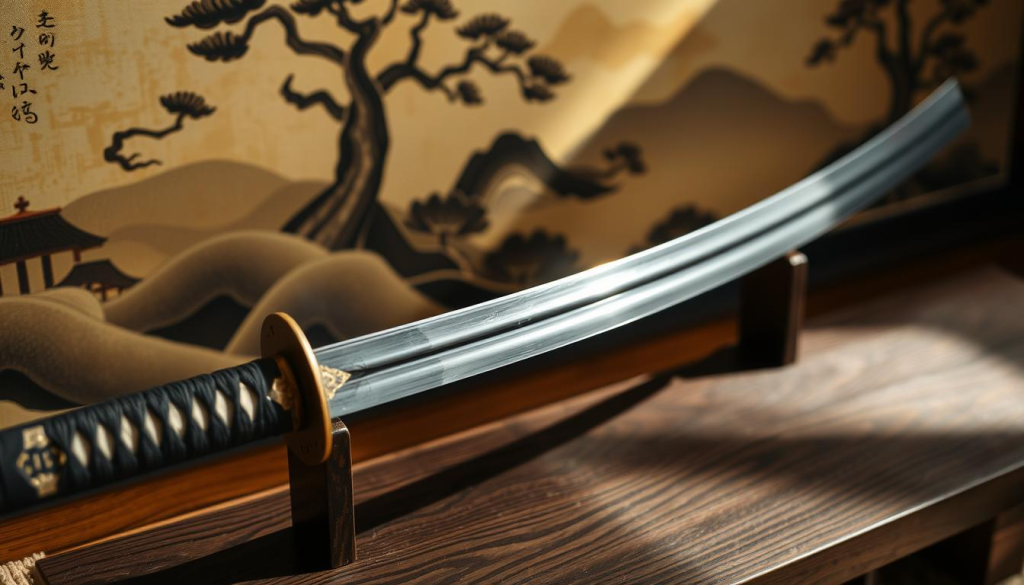
To identify a Masamune sword, one must carefully examine these features. The hamon should be well-defined and beautifully tempered, while the nie should be visible and contribute to the overall appearance of the blade.
Inscriptions and Signatures
Many Masamune swords are signed, and these signatures can be a crucial factor in verifying their authenticity. Masamune’s signature often includes his name, and sometimes, additional information such as the date or a dedication.
A genuine Masamune sword will typically have a signature that is consistent with the known signatures of Masamune. The inscription should be carefully examined for its style, content, and the way it is inscribed on the blade.
Authenticity Tests
Verifying the authenticity of a Masamune sword involves a combination of historical research, technical analysis, and expert opinion. Some of the key tests include:
| Test | Description | Significance |
|---|---|---|
| Visual Inspection | Examining the sword’s craftsmanship, hamon, and nie. | Provides initial clues about the sword’s authenticity. |
| Signature Verification | Comparing the signature with known examples. | Helps confirm if the sword is genuinely signed by Masamune. |
| Provenance Research | Investigating the sword’s history of ownership. | Establishes the sword’s historical significance and authenticity. |
By combining these tests, collectors and historians can gain a deeper understanding of a Masamune sword’s authenticity and value.
The Future of Masamune Swords
The legacy of Masamune swords continues to captivate collectors and historians alike. As we delve into the future of these historical artifacts, it’s essential to understand the factors that contribute to their enduring appeal.
Continuing Interest in Masamune
The fascination with Masamune swords is not merely a passing trend; it is a sustained interest driven by their historical significance, craftsmanship, and the mythology surrounding them. Collectors and enthusiasts are particularly drawn to the stories and legends associated with these swords.
Several factors contribute to the ongoing interest in Masamune swords:
- Their exceptional craftsmanship and historical importance
- The mythology and legends surrounding Masamune and his works
- The cultural significance of these swords in Japanese history
Preservation Efforts Today
Preserving Masamune swords for future generations is a complex task that involves meticulous care and conservation techniques. Museums, collectors, and conservators work together to ensure that these swords are maintained in their original condition as much as possible.
Some of the preservation efforts include:
| Method | Description | Benefits |
|---|---|---|
| Conservation Framing | Using acid-free materials and UV-filtering glass to protect the sword | Prevents damage from light and environmental factors |
| Controlled Environment | Maintaining a stable temperature and humidity level | Slows down the aging process of the materials |
| Restoration | Carefully restoring the sword to its original condition | Preserves the historical integrity of the sword |
The Role of Collectors and Enthusiasts
Collectors and enthusiasts play a crucial role in the preservation and appreciation of Masamune swords. Their passion drives the market and encourages further research and conservation efforts.
By supporting exhibitions, publications, and conservation projects, collectors and enthusiasts help to keep the legacy of Masamune swords alive. Their contributions ensure that these historical artifacts continue to be celebrated and studied.
Conclusion: The Rarity of Masamune Swords
The allure of Masamune swords lies not only in their historical significance but also in their rarity. Despite being crafted centuries ago, these swords continue to fascinate collectors and historians worldwide.
Estimating the Remaining Swords
The exact number of Masamune swords that exist is unknown, but their legacy continues to captivate historians and enthusiasts alike. Estimating the number of authentic Masamune swords is challenging due to the passage of time and the loss of historical records.
Legacy and Cultural Impact
Famous Masamune swords, such as the Honjo Masamune, are highly revered for their craftsmanship and historical importance. The question of how many Masamune swords exist remains a topic of interest among collectors and historians, who continue to study and appreciate these authentic Masamune swords.
As we reflect on the significance of Masamune swords, it becomes clear that their value extends beyond their rarity. They represent a connection to Japan’s rich cultural heritage and the art of traditional swordsmithing.