Renowned for their exceptional quality and craftsmanship, Shun knives have become a staple in kitchens worldwide. Originating from Japan, these precision-forged knives embody the country’s rich culinary heritage.
With a legacy built on tradition and innovation, Shun knives are crafted to deliver unparalleled performance. The precision involved in their forging process ensures a level of sharpness and durability that is hard to match.
Key Takeaways
- Shun knives are precision-forged in Japan, reflecting the country’s culinary expertise.
- They are known for their exceptional quality, craftsmanship, and performance.
- The forging process ensures a high level of sharpness and durability.
- Shun knives are a preferred choice among culinary professionals and home cooks alike.
- The brand’s legacy is built on a blend of traditional techniques and modern innovation.
The Art of Japanese Knife Making
The art of Japanese knife making is a revered tradition that has been perfected over centuries, with Shun knives embodying the pinnacle of this craft. This ancient art form requires a deep understanding of materials, techniques, and the subtle nuances that distinguish a great knife from a good one.
At the heart of Shun knife production is a tradition of craftsmanship that has been passed down through generations. Skilled artisans dedicate their lives to mastering the techniques and processes involved in creating these exceptional knives. The result is a blade that not only performs beautifully but also tells a story of heritage and dedication.
A Tradition of Craftsmanship
The tradition of Japanese knife making is built on a foundation of precision and patience. Artisans spend years honing their skills, learning the intricacies of different materials and the techniques required to shape them into works of art. This craftsmanship is evident in every detail of a Shun knife, from the balance of the blade to the ergonomic design of the handle.
The Role of Skilled Artisans
Skilled artisans are the backbone of Shun’s knife making process. Their expertise and attention to detail ensure that every knife meets the high standards set by Shun. From forging to sharpening, each step is carried out with a commitment to excellence that is rare in today’s mass-produced world. The role of these artisans is not just to create a functional tool but to craft a piece that reflects the artistry and tradition of Japanese knife making.
By combining traditional techniques with modern innovations, Shun continues to uphold the legacy of Japanese knife making while pushing the boundaries of what is possible. The result is a range of knives that are not only functional but also beautiful, reflecting the artistry and skill of the craftsmen who create them.
Understanding the Steel Used in Shun Knives
The exceptional quality of Shun knives is largely attributed to the high-grade materials used in their construction. The steel used in these knives is a critical component that contributes to their performance, durability, and aesthetic appeal.
VG-MAX: The Core of Shun Knives
At the heart of every Shun knife is VG-MAX, a high-carbon stainless steel alloy that is renowned for its exceptional sharpness, corrosion resistance, and durability. VG-MAX is a proprietary material developed by Hitachi Metals, Ltd., a leading manufacturer of high-performance steel alloys.
Key characteristics of VG-MAX include:
- High carbon content for enhanced sharpness and edge retention
- Excellent corrosion resistance due to its stainless steel composition
- Durable and resistant to wear and tear
VG-MAX is the core material used in Shun knives, providing the foundation for their exceptional performance and longevity.
Damascus Steel: An Aesthetic and Functional Layer
In addition to VG-MAX, many Shun knives feature a layer of Damascus steel, which is not only aesthetically pleasing but also provides additional functionality. Damascus steel is created through a process of folding and hammering multiple layers of steel to produce a distinctive pattern.
The benefits of Damascus steel include:
| Benefit | Description |
|---|---|
| Aesthetic appeal | The unique pattern created by the folding process adds visual appeal to the knife |
| Enhanced strength | The layered structure of Damascus steel contributes to the overall strength and durability of the knife |
| Improved edge retention | The combination of VG-MAX and Damascus steel helps to maintain a sharp edge over time |
As noted by a renowned culinary expert, “The use of Damascus steel in Shun knives is a testament to the brand’s commitment to combining form and function.”
“The beauty of Damascus steel lies not only in its visual appeal but also in its ability to enhance the performance of the knife.”
The combination of VG-MAX and Damascus steel in Shun knives results in a truly exceptional cutting experience. By understanding the materials used in these knives, users can appreciate the craftsmanship and attention to detail that goes into their production.
The Manufacturing Process Explained
The journey of creating a Shun knife begins with the selection of high-quality raw materials, followed by a precise forging process. This meticulous process is what sets Shun knives apart, ensuring each blade is not only aesthetically pleasing but also exceptionally sharp and durable.
From Raw Material to Blade
The manufacturing process starts with the selection of VG-MAX steel, known for its high carbon content and ability to hold a sharp edge. This material is crucial for the performance of Shun knives.
- Raw materials are carefully inspected for quality.
- The steel is then cut into the appropriate size for forging.
- Each piece is heated and forged to achieve the desired shape and hardness.
Shaping the Blade: Techniques Used
Shaping the blade involves several precise techniques:
- The blade is hammered into shape using a combination of traditional forging techniques and modern machinery.
- The Damascus steel pattern is created through a process of folding and hammering, which not only adds to the aesthetic appeal but also enhances the blade’s strength.
- Precision grinding ensures the blade achieves the perfect edge.
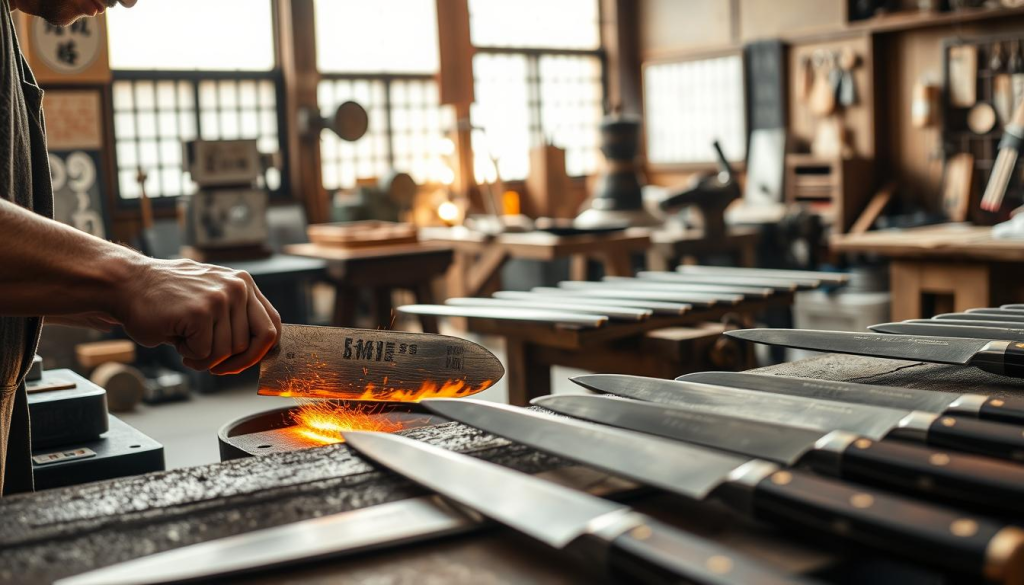
The result of this meticulous process is a knife that is both beautiful and functional, embodying the tradition of Japanese craftsmanship.
Heat Treatment and Hardening
To achieve optimal hardness, Shun knives are subjected to a rigorous heat treatment and hardening process. This critical step in their manufacturing enhances the knives’ performance, durability, and overall quality.
Achieving Optimal Hardness
The heat treatment process involves heating the steel to a precise temperature, typically between 1050°C to 1100°C, followed by rapid quenching. This process, known as austenitization, allows the steel to achieve the desired hardness. The exact temperature and quenching rate are carefully controlled to ensure that the steel achieves the optimal balance between hardness and flexibility.
Ensuring Durability and Performance
The hardening process is crucial for ensuring the durability and performance of Shun knives. By achieving the optimal hardness, typically measured on the Rockwell scale (HRC), Shun knives can maintain their sharpness and resist wear and tear. The table below illustrates the typical HRC values for different types of knives and highlights the exceptional hardness of Shun knives.
| Knife Type | HRC Value | Characteristics |
|---|---|---|
| Shun Knives | 64-66 | Exceptional hardness and sharpness retention |
| High-Carbon Knives | 60-62 | Good balance between hardness and flexibility |
| Stainless Steel Knives | 56-58 | Corrosion-resistant but less hard |
The precise control over the heat treatment and hardening process allows Shun to produce knives that are not only incredibly sharp but also durable and resistant to corrosion. This attention to detail contributes to the exceptional performance and longevity of Shun knives, making them a preferred choice among professional chefs and home cooks alike.
The Importance of Grinding and Sharpening
Grinding and sharpening are pivotal steps in the manufacturing of Shun knives, ensuring unparalleled cutting performance. The precision involved in these processes is what sets Shun knives apart in terms of edge retention and overall quality.
The technique used for grinding and sharpening Shun knives is a blend of traditional craftsmanship and modern technology. Skilled artisans utilize precision machinery to achieve a perfect edge, which is crucial for the knife’s performance. The machinery used is state-of-the-art, allowing for precise control over the sharpening angle and pressure applied.
Techniques for a Perfect Edge
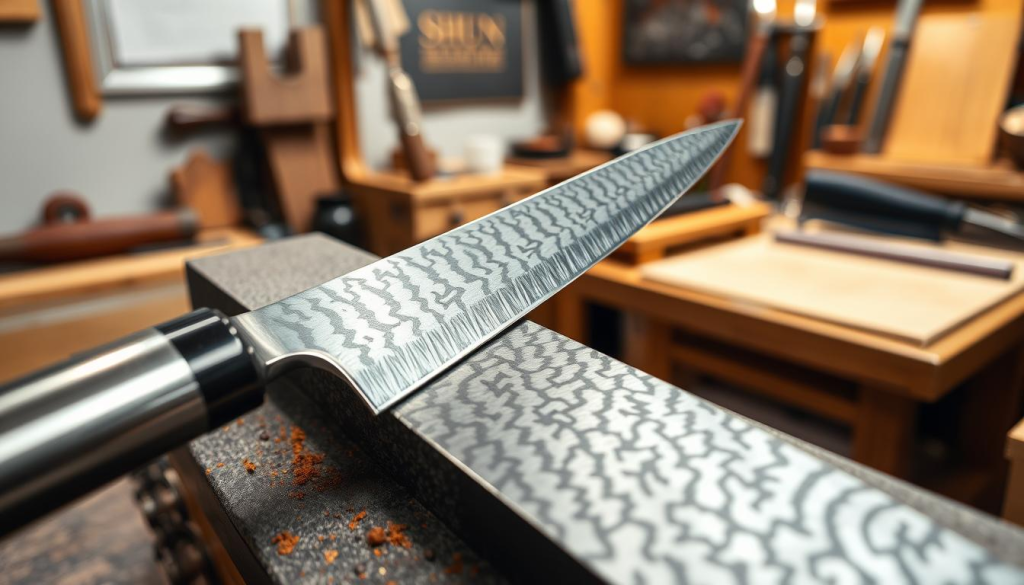
Achieving a perfect edge on a Shun knife involves several meticulous steps. First, the blade is ground to the desired shape using high-precision machinery. Then, it is sharpened using a series of whetstones of varying grit. This process not only sharpens the knife but also polishes it, removing any minor imperfections.
- The initial grinding process involves removing material from the blade to achieve the desired shape and angle.
- Subsequent sharpening stages refine the edge, using progressively finer grit whetstones.
- Each stage is crucial for achieving the characteristic sharpness and durability of Shun knives.
The Role of Precision Machinery
Precision machinery plays a vital role in the grinding and sharpening of Shun knives. This machinery allows for the precise control needed to achieve a consistently sharp edge. The use of advanced technology ensures that every Shun knife meets the brand’s high standards for quality and performance.
The combination of skilled artisans and precision machinery results in knives that are not only functional but also works of art. The attention to detail in the grinding and sharpening process is evident in the final product, making Shun knives a favorite among chefs and cooking enthusiasts alike.
Key benefits of Shun’s grinding and sharpening techniques include:
- Exceptional edge retention, reducing the need for frequent sharpening.
- A sharp, precise edge that enhances cutting performance.
- Durability and resistance to wear, ensuring a long lifespan for the knife.
In conclusion, the grinding and sharpening process is a critical aspect of Shun knife manufacturing, contributing significantly to their renowned quality and performance. By combining traditional techniques with modern precision machinery, Shun ensures that every knife meets the highest standards of sharpness and durability.
The Handle: Beautiful and Functional
The handle of a Shun knife is not just a place to hold; it’s an extension of the chef’s hand, crafted with precision and care. This attention to detail ensures that every Shun knife feels balanced and comfortable in the hand.
Shun knife handles are made from high-quality materials that not only provide durability but also contribute to the overall aesthetic of the knife. The choice of material is crucial as it affects the balance, feel, and overall performance of the knife.
Materials Used in Shun Knife Handles
Shun knives feature handles made from various materials, including Pakkawood, a dense, hardwood material that is both durable and resistant to wear. The use of such materials ensures that the handle remains comfortable and secure over time.
The handles are designed to be ergonomic, fitting comfortably in the hand to reduce fatigue during prolonged use. This ergonomic design is a hallmark of Shun’s commitment to creating knives that are both beautiful and functional.
Ergonomics in Design
The ergonomic design of Shun knife handles is a result of careful consideration of the chef’s needs. The contours of the handle are designed to fit the natural shape of the hand, allowing for a secure grip and precise control.
By combining beautiful design with functional ergonomics, Shun knives offer chefs a tool that enhances their cooking experience. Whether you’re a professional chef or an avid home cook, the handle of a Shun knife is designed to make your work easier and more enjoyable.
Quality Control at Shun Knives
At Shun Knives, quality control is not just a process, but a commitment to excellence. Every knife that bears the Shun name undergoes a rigorous series of tests to ensure it meets the brand’s high standards.
Rigorous Testing Procedures
The testing procedures at Shun are comprehensive, involving a series of checks to verify the quality and performance of each knife. This includes examining the sharpness, edge retention, and overall durability.
- Sharpness testing to ensure a precise cut
- Edge retention tests to verify durability
- Durability assessments under various conditions
Ensuring Consistency and Excellence
Consistency is key to Shun’s quality control. By implementing a standardized testing protocol, Shun ensures that every knife, regardless of its model or production batch, meets the same high standards.
| Test Category | Description | Criteria for Passing |
|---|---|---|
| Sharpness | Cutting through a standard material | Clean cut without tearing |
| Edge Retention | Repeated cutting without resharpening | Maintains sharpness over 50 cuts |
| Durability | Drop test and usage simulation | No damage or significant wear |
As noted by a renowned culinary expert, “The quality of a knife is not just about its performance but also its craftsmanship and the care it receives.” This philosophy is at the heart of Shun’s quality control process.
“A good knife is a chef’s best friend, and Shun Knives embody this friendship through their exceptional quality.”
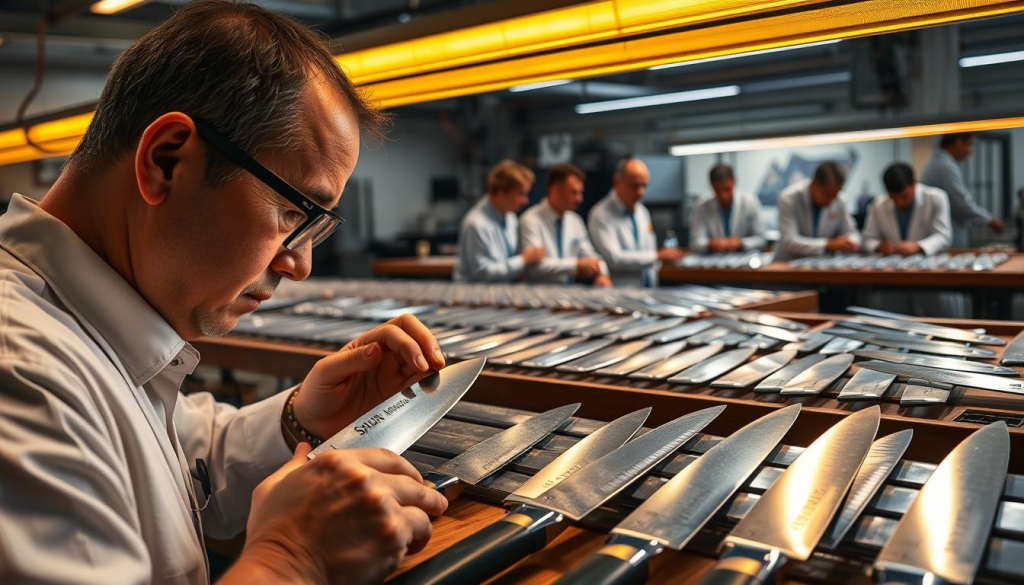
By focusing on quality control, Shun Knives not only ensures the excellence of its products but also reinforces its reputation as a leader in the culinary world.
The Finishing Touches
The journey of a Shun knife culminates in the precise processes of polishing and final assembly. These final stages are crucial in transforming a finely crafted blade into a masterpiece that is both functional and visually stunning.
Polishing and Final Assembly
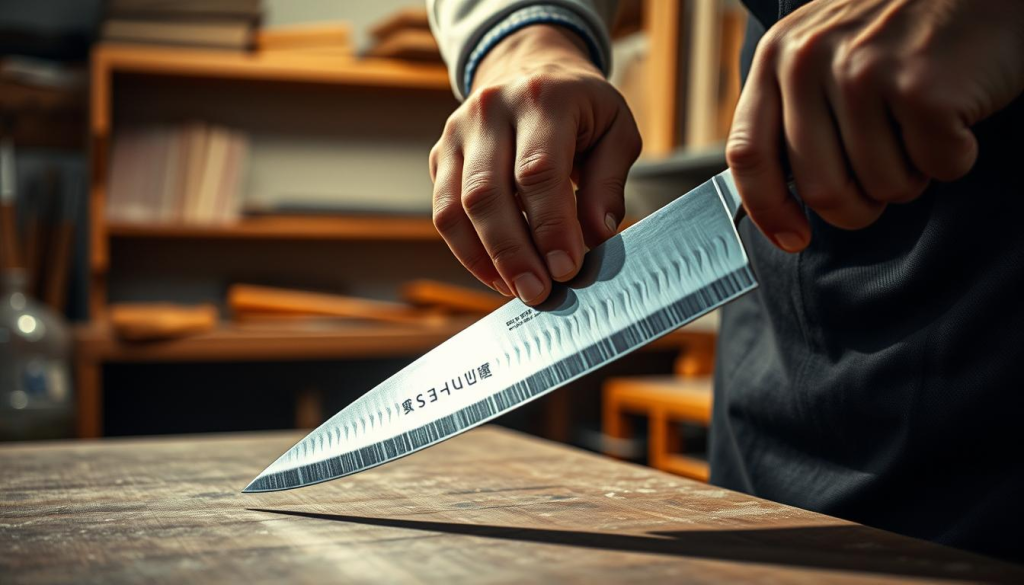
The polishing process for Shun knives involves multiple stages, each designed to refine the blade’s edge and surface. Skilled artisans use a series of progressively finer abrasives to achieve a mirror-like finish. This not only enhances the knife’s aesthetic appeal but also ensures a razor-sharp edge.
During final assembly, the blade is carefully fitted into its handle. The handle, crafted from premium materials, is designed to provide a comfortable grip and balance. The assembly process requires precision to ensure that the knife feels like an extension of the chef’s hand.
The Significance of Aesthetic Appeal
The aesthetic appeal of Shun knives is a significant factor in their popularity among chefs and culinary enthusiasts. The intricate patterns on the blade, achieved through the Damascus steel process, make each knife unique. The beauty of a Shun knife is not just in its appearance but also in the reflection of the craftsmanship and tradition behind it.
The visual appeal of these knives elevates the cooking experience, making them not just tools but also pieces of art that inspire chefs in their culinary journey.
The attention to detail in the finishing touches of Shun knives is what sets them apart. The combination of functionality, achieved through precise polishing and assembly, and aesthetic appeal, through the beautiful patterns and premium materials, makes Shun knives truly exceptional.
Cultural Significance of Shun Knives
The art of knife-making in Japan is deeply intertwined with the country’s culinary identity. Shun knives, with their precision and craftsmanship, embody the spirit of Japanese cuisine, reflecting a tradition that values both form and function.
Symbolism in Japanese Cooking
In Japanese culture, knives are not just tools; they are symbols of a chef’s skill and artistry. The craftsmanship that goes into making a Shun knife is a testament to the importance of precision and quality in Japanese cooking. A well-made knife is considered an extension of the chef, a tool that requires dedication and practice to master.
“A good knife is like a good friend; it helps you navigate the complexities of cooking with ease and precision.” This saying reflects the reverence with which Japanese chefs regard their knives, highlighting the symbolic role these tools play in the kitchen.
| Aspect | Significance |
|---|---|
| Craftsmanship | Represents the skill and dedication of the craftsman |
| Precision | Essential for the intricate techniques used in Japanese cooking |
| Quality | Reflects the high standards of Japanese cuisine |
Influences on Culinary Arts
Shun knives have significantly influenced culinary arts, not just in Japan but globally. Their sharpness, durability, and aesthetic appeal have set a new standard for professional chefs and home cooks alike. The influence of Shun knives can be seen in the precision and creativity they bring to various cooking techniques.
The Impact on Modern Cuisine
The use of Shun knives has encouraged a more nuanced approach to cooking, emphasizing the importance of the right tool for the task. This focus on quality and precision has elevated the art of cooking, making it more accessible and enjoyable for those who appreciate the finer details of culinary preparation.
In conclusion, Shun knives are more than just cutting instruments; they are a bridge between tradition and innovation, embodying the cultural significance of Japanese cooking and its influence on global culinary arts.
Caring for Your Shun Knife
To ensure your Shun knife remains a trusted companion in the kitchen, proper care is essential. A Shun knife is not just a tool; it’s an investment in your culinary journey. With the right maintenance, it will continue to perform optimally, making cooking a joy rather than a chore.
Proper Maintenance Techniques
Maintaining your Shun knife involves regular cleaning, proper storage, and occasional sharpening. Cleaning your Shun knife after each use is crucial. Hand wash the knife with mild soap and dry it immediately to prevent water spots. Avoid using a dishwasher, as the high heat and harsh detergents can damage the blade.
When it comes to storage, using a knife block or a magnetic strip is recommended. This not only keeps your knives organized but also protects the blades from damage. If you prefer to store your knives in a drawer, consider using a knife guard or sheath to prevent the blades from coming into contact with other utensils.
Tips for Long-Lasting Performance
To keep your Shun knife in top condition, regular sharpening is necessary. The frequency of sharpening depends on how often you use the knife. A general rule of thumb is to sharpen your knife every few months, or when you notice it’s not cutting as smoothly as it should.
Here are some additional tips for long-lasting performance:
- Use a sharpening stone or a honing rod specifically designed for high-carbon knives like Shun.
- Avoid cutting on hard surfaces like glass or granite, as this can damage the blade.
- Store your sharpening stone properly to maintain its effectiveness.
| Maintenance Task | Frequency | Tips |
|---|---|---|
| Cleaning | After each use | Mild soap, dry immediately |
| Sharpening | Every few months | Use a sharpening stone or honing rod |
| Storage | Ongoing | Use a knife block, magnetic strip, or knife guard |
By following these care and maintenance tips, you can ensure that your Shun knife remains a valuable and reliable tool in your kitchen for years to come.
Where to Buy Authentic Shun Knives
To avoid counterfeit products, it’s essential to buy Shun knives from authorized retailers. Shun knives are highly regarded for their quality and craftsmanship, making them a significant investment for any serious chef or cooking enthusiast.
Authorized Retailers
Shun has a network of authorized retailers across the United States where customers can purchase their products. These retailers are vetted by Shun to ensure that customers receive genuine products along with excellent customer service.
Some of the authorized retailers include well-known kitchen supply stores and department stores. Buying from these retailers not only guarantees the authenticity of the product but also provides the opportunity to see the knives in person and get a feel for their quality.
| Retailer | Location | Products Available |
|---|---|---|
| Williams-Sonoma | Multiple Locations | Shun Knives, Accessories |
| Sur La Table | Multiple Locations | Shun Knives, Cooking Classes |
| Amazon | Online | Shun Knives, Knife Sharpeners, Accessories |
Online Shopping Options
For those who prefer shopping online, Shun knives are available on various e-commerce platforms. It’s crucial to ensure that the online retailer is authorized by Shun to avoid counterfeit products.
Buying online from authorized retailers like Amazon or directly from Shun’s official website ensures that you receive a genuine product with a warranty. Always check for the “Authorized Dealer” or “Verified Purchase” tags when shopping online.
By purchasing from authorized retailers, either online or in-store, you can be confident that your Shun knife is authentic and backed by the manufacturer’s warranty.
Conclusion: The Legacy of Shun Knives
The legacy of Shun knives is built on a foundation of exceptional craftsmanship and a passion for creating high-quality kitchen tools. For decades, Shun has been perfecting the art of Japanese knife making, resulting in products that are both beautiful and functional.
Crafting Excellence
The meticulous attention to detail and commitment to excellence have earned Shun a loyal following among chefs and home cooks alike. The brand’s dedication to craftsmanship is evident in every aspect of its products, from the VG-MAX steel used in the blades to the ergonomic design of the handles.
Becoming Part of the Shun Community
By choosing Shun, you’re not just acquiring a high-quality knife; you’re becoming part of a community that values precision, quality, and the joy of cooking. Join the Shun community today and experience the difference that exceptional craftsmanship can make in your culinary journey. The shun knives legacy continues to inspire chefs everywhere, and with its strong craftsmanship, it remains a leader in the industry, fostering a sense of belonging among its customers within the shun community.