A well-maintained knife edge is crucial for any culinary enthusiast looking to elevate their cooking skills. The precision and sharpness of a knife can significantly impact the quality of food preparation.
The Shun Premier 8-Inch Chef’s Knife is a highly-rated tool among chefs, boasting a 4.5 out of 5-star rating with over 1,104 reviews. Its exceptional craftsmanship and sharpness make it a valuable asset in the kitchen.
This article will explore the significance of maintaining the optimal edge degree for culinary excellence and provide insights into how it can enhance your cooking experience.
Key Takeaways
- Understanding the importance of a well-maintained knife edge.
- Exploring the features of the Shun Premier 8-Inch Chef’s Knife.
- Learning how to maintain the optimal edge degree.
- Discovering how a sharp knife can elevate culinary skills.
- Tips for choosing the right knife for your needs.
Understanding the Shun Knife Edge Degree
Shun knives, renowned for their exceptional craftsmanship, owe their cutting prowess to their precisely engineered edge degree. The edge degree refers to the angle at which the blade is sharpened, a critical factor that influences the knife’s cutting performance and overall usability.
What is Knife Edge Degree?
The knife edge degree is the angle between the two sides of the blade that meet at the edge. For Shun knives, this angle is carefully crafted to balance sharpness and durability. For instance, the Shun Classic Nakiri Knife features a hand-sharpened Japanese double-bevel blade angle of 16° on each side, contributing to its exceptional cutting capabilities.
A sharper edge degree, such as that found on many Japanese knives, allows for more precise cuts but may be more prone to damage. Conversely, a wider edge degree can offer greater durability but may not cut as finely. The ideal edge degree depends on the intended use of the knife and the preferences of the user.
Importance of Knife Edge Degree in Culinary Arts
In culinary arts, the edge degree of a knife is paramount because it directly affects the quality of cuts made during food preparation. A well-crafted edge degree enables chefs to perform delicate tasks with precision, such as slicing vegetables or filleting fish. Moreover, it influences the overall efficiency of kitchen operations, as a sharp knife requires less force and time to make cuts.
The edge degree also impacts the longevity of the knife. A properly maintained edge degree ensures that the knife remains effective over time, reducing the need for frequent sharpening. This is particularly important for professional chefs who rely on their knives daily.
How Edge Degree Affects Performance
The performance of a Shun knife is significantly influenced by its edge degree. A precise edge degree enhances the knife’s ability to cut through various ingredients smoothly, from tender herbs to tougher meats. The Rockwell Hardness of 60-61 for the Shun Classic Nakiri Knife, for example, indicates a high level of hardness that, combined with the optimal edge degree, results in outstanding cutting performance.
Furthermore, the edge degree affects the user’s experience, as it determines the amount of effort required to make cuts. A knife with an optimal edge degree reduces fatigue and improves control, allowing for more intricate and precise cuts. This is crucial in both professional kitchens, where efficiency and precision are paramount, and home kitchens, where ease of use is valued.
Types of Shun Knives and Their Edge Degrees
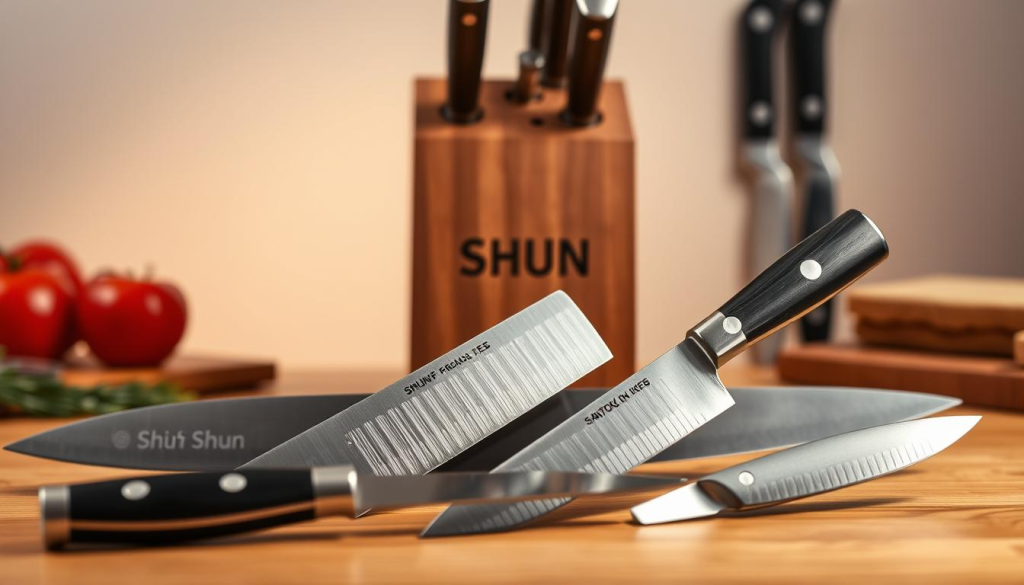
With a legacy of craftsmanship, Shun produces an array of knives, from traditional Japanese styles to Western designs, each with its own edge degree tailored to specific cooking techniques. The variety in Shun’s lineup caters to the diverse needs of chefs and home cooks, ensuring that there’s a Shun knife for every culinary task.
Traditional Japanese Knives
Traditional Japanese Shun knives are known for their precision and the artistry that goes into their creation. These knives often feature a more acute edge degree, typically between 10 to 15 degrees per side, making them ideal for delicate tasks that require finesse.
Characteristics: Lightweight, highly sharpened, and designed for precision cutting.
Western-Style Shun Knives
Western-style Shun knives, on the other hand, are designed with a slightly different approach. They usually have a more robust construction and an edge degree that ranges from 20 to 25 degrees per side, making them versatile for a variety of kitchen tasks.
Characteristics: Durable, versatile, and suitable for a wide range of cutting tasks.
Specialty Knives and Unique Edges
Shun also offers specialty knives that are designed for specific tasks, such as filleting fish or slicing bread. These knives often have unique edge geometries that are optimized for their intended use.
| Knife Type | Edge Degree (per side) | Characteristics |
|---|---|---|
| Traditional Japanese | 10-15 degrees | Lightweight, highly sharpened, precision cutting |
| Western-Style | 20-25 degrees | Durable, versatile, wide range of cutting tasks |
| Specialty Knives | Varies | Unique edge geometries for specific tasks |
The Science Behind Knife Edges
The effectiveness of a Shun knife lies in the sophisticated science behind its cutting edge. The combination of high-quality materials, precise edge geometry, and optimal hardness makes Shun knives stand out in the culinary world.
Materials Used in Shun Knife Edges
Shun knives are crafted with VG-MAX steel, a high-carbon stainless steel known for its exceptional sharpness, durability, and resistance to corrosion. The use of VG-MAX steel in Shun knives ensures a strong, sharp edge that withstands the rigors of frequent use.
Key characteristics of VG-MAX steel include:
- High carbon content for hardness and durability
- Stainless properties for resistance to corrosion
- Ability to hold a sharp edge
How Edge Geometry Influences Cutting
The geometry of a knife’s edge significantly influences its cutting performance. Shun knives are designed with a precise edge angle that optimizes cutting efficiency while maintaining durability.
The edge geometry affects:
- The sharpness of the knife
- The ease of cutting through various materials
- The overall performance and longevity of the edge
The Role of Hardness in Edge Performance
Shun knives have a Rockwell Hardness of 60-61, which is a measure of the material’s resistance to deformation. This level of hardness is crucial for maintaining a sharp edge over time.
The benefits of this hardness level include:
- Excellent edge retention
- Resistance to wear and tear
- Optimal performance in various cutting tasks
Benefits of a Properly Sharpened Edge
The benefits of a sharp edge on Shun knives are multifaceted, impacting everything from cut quality to kitchen efficiency. A properly sharpened edge is crucial for achieving culinary excellence, as it directly influences the performance of the knife in various kitchen tasks.
Enhanced Cut Quality
A sharp edge ensures clean cuts and reduces the risk of tearing or crushing ingredients. This is particularly important when working with delicate foods such as fish or herbs. The precision offered by a sharp Shun knife allows for more consistent results in food preparation.
As noted by culinary experts, “A sharp knife is a chef’s best friend,” emphasizing the importance of edge quality in professional and home kitchens alike.
Improved Precision and Control
With a properly sharpened edge, users experience improved precision and control over their knife movements. This is crucial for intricate tasks such as filleting fish or slicing vegetables thinly. The balance between the knife’s sharpness and its ergonomic design enhances the overall cutting experience.
- Increased accuracy in cutting
- Better control over knife movements
- Enhanced overall cutting experience
Reducing Prep Time in the Kitchen
A sharp knife significantly reduces preparation time by making cutting tasks easier and faster. This efficiency is invaluable in both professional kitchens, where time is of the essence, and in home cooking, where it makes meal preparation less daunting.
“Sharpening your knife is not just about maintaining it; it’s about enhancing your cooking experience.”
By maintaining a sharp edge on your Shun knife, you can streamline your kitchen workflow, making cooking more enjoyable and less time-consuming.
How to Maintain Your Shun Knife’s Edge
A well-maintained Shun knife edge is the key to precision and efficiency in cooking. To achieve this, it’s essential to understand the techniques and tools required for maintaining the edge.
Regular Sharpening Techniques
Regular sharpening is vital to keep your Shun knife in optimal condition. The frequency of sharpening depends on usage, but a general rule is to sharpen your knife every few months. Sharpening involves removing metal to create a new edge, and it’s crucial to use the right angle and technique to avoid damaging the knife.
For Shun knives, a sharpening stone is recommended. Start with a coarse grit stone (about 1000) to repair any damage, then move to a finer grit (6000 or higher) for polishing the edge. Maintaining the correct angle is crucial; for most Shun knives, this is between 15 to 20 degrees per side.
Honing vs. Sharpening
Many people confuse honing with sharpening, but they serve different purposes. Honing realigns the edge of your knife, maintaining its sharpness and direction. It’s a quicker process than sharpening and can be done more frequently, ideally before or after each use.
Sharpening, on the other hand, involves removing metal to create a new edge. While sharpening is necessary periodically, honing can be done regularly to keep your knife performing optimally.
Best Tools for Edge Maintenance
The right tools are essential for effective edge maintenance. For Shun knives, the following tools are recommended:
- Sharpening stones: Water stones or oil stones are preferred for their effectiveness.
- Honing rods: Steel or ceramic rods can be used for honing.
- Sharpening systems: Guided sharpening systems can help maintain the correct angle.
Here’s a comparison of some popular sharpening tools:
| Tool | Purpose | Recommended For |
|---|---|---|
| Sharpening Stone | Sharpening | Repairing and sharpening edges |
| Honing Rod | Honing | Maintaining edge alignment |
| Sharpening System | Sharpening | Guided sharpening for precise angles |
By incorporating regular sharpening and honing into your routine, you can extend the life of your Shun knife and ensure it continues to perform at its best. Remember, the key to maintaining a sharp edge is consistency and using the right techniques and tools.
Common Myths About Knife Edge Degrees
Understanding the truth behind knife edge degrees can significantly enhance your culinary experience. Many chefs and home cooks alike harbor misconceptions about the impact of knife edge degrees on their cooking techniques and overall kitchen performance.
Debunking Misconceptions
One common myth is that a sharper knife edge degree always results in better performance. While a sharp edge is crucial, the degree of the edge can affect the knife’s durability and cutting efficiency. For instance, a more acute edge may be sharper but can also be more prone to damage.
- A sharper edge doesn’t always mean better cutting performance.
- The material of the knife influences how well it retains its edge.
- Different edge degrees are suited for various cutting tasks.
Edge degree myths can lead to confusion among cooks. Some believe that a single edge degree is suitable for all tasks, which is not the case. Different tasks require different edge degrees for optimal performance.
The Real Impact on Your Cooking Experience
The edge degree of your knife can significantly impact your cooking experience. A properly chosen edge degree can enhance precision, reduce fatigue, and improve overall cut quality. For example, a chef’s knife with a 16-degree edge per side is ideal for precision tasks, while a more robust edge might be better for chopping through tough ingredients.
By understanding the science behind knife edges and debunking common misconceptions, cooks can make informed decisions about their knives. This knowledge can lead to improved cooking techniques and a more enjoyable culinary experience.
- Choose the right edge degree for your specific cooking tasks.
- Regularly maintain your knife’s edge to ensure optimal performance.
- Consider the type of material your knife is made from and its impact on edge retention.
Choosing the Right Shun Knife for Your Needs
Shun knives are renowned for their quality, but selecting the right model depends on several key factors. With a diverse range of knives available, understanding your specific needs is crucial for making an informed decision.
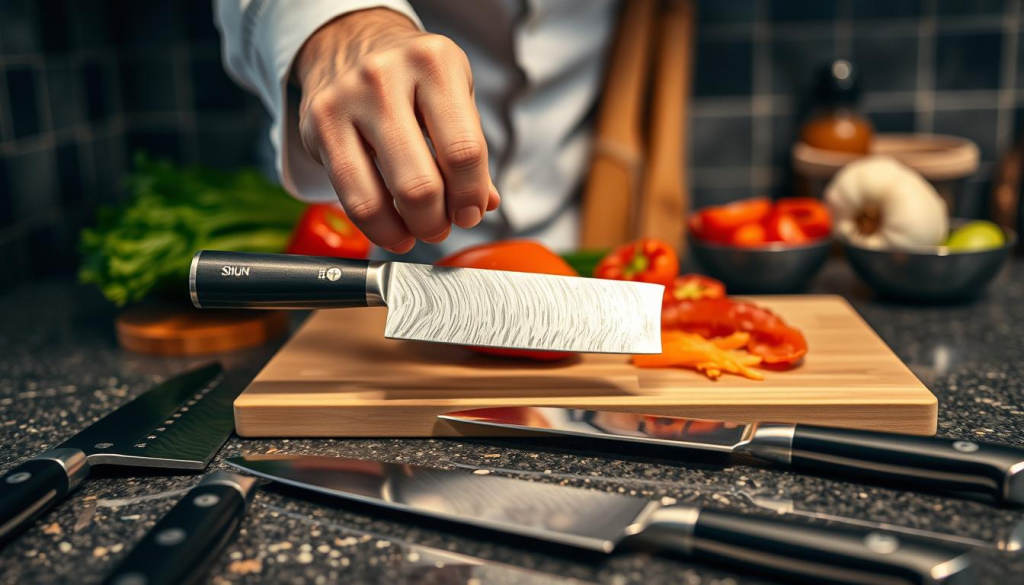
Factors to Consider
When choosing a Shun knife, several factors come into play. The first is the type of cuisine you most frequently prepare. Different cuisines require different types of knives. For instance, if you often cook Japanese dishes, a traditional Japanese-style knife might be more suitable.
Another critical factor is the material and construction of the knife. Shun knives are known for their high-quality materials, including high-carbon steel and advanced coatings that enhance durability and performance.
- The size and weight of the knife are also important. A larger, heavier knife might be better for chopping hard vegetables, while a smaller, lighter knife is ideal for precision tasks.
- The edge geometry and sharpness are vital for the knife’s performance. A more acute edge angle can provide a sharper cut but may be more prone to damage.
Matching Knife Type with Cooking Style
Your cooking style plays a significant role in determining the most appropriate Shun knife for you. For example, if you are a professional chef who spends a lot of time chopping and slicing, a Chef’s Knife or a Santoku might be your go-to choice.
For those who enjoy preparing delicate dishes, a paring knife or a boning knife could be more appropriate. It’s essential to consider the tasks you perform most often and choose a knife that excels in those areas.
| Cooking Style | Recommended Knife Type |
|---|---|
| General Cooking | Chef’s Knife |
| Precision Tasks | Paring Knife |
| Japanese Cuisine | Santoku or Nakiri |
Expert Tips for Sharpening Your Knife
A sharp knife is the backbone of any kitchen, and Shun knives are no exception. Maintaining the edge of your Shun knife is crucial for optimal performance and longevity.
When to Sharpen Your Knife
Knowing when to sharpen your knife is as important as the sharpening process itself. A dull knife can lead to increased fatigue and decreased precision, making cooking a chore rather than a pleasure. Here are some signs that it’s time to sharpen your Shun knife:
- The knife is having trouble slicing through ingredients smoothly.
- The edge is visibly worn or damaged.
- You notice that you’re applying more pressure than usual to make cuts.
Regular sharpening not only maintains the knife’s effectiveness but also prolongs its lifespan.
Step-by-Step Sharpening Guide
Sharpening your Shun knife can be a straightforward process if you have the right tools and follow the correct technique. Here’s a step-by-step guide:
- Choose a sharpening stone suitable for your Shun knife’s material.
- Position the knife at the correct angle, typically around 16 degrees for Shun knives.
- Draw the knife across the stone in a smooth, consistent motion.
- Repeat the process on the other side of the blade.
- Check the edge for sharpness and repeat as necessary.
Consistency is key when sharpening; maintaining a steady angle and motion will yield the best results.
Professional vs. Home Sharpening
While some chefs prefer to sharpen their knives at home, others opt for professional sharpening services. Both methods have their advantages. Professional sharpening ensures a high level of precision and can be more convenient, but it may require sending your knife away. Home sharpening, on the other hand, allows for immediate results and can be more cost-effective in the long run.
“A well-sharpened knife is a chef’s best friend. It’s not just about cutting; it’s about creating.” –
Ultimately, the choice between professional and home sharpening depends on your personal preference and sharpening skills.
Understanding the Shun Brand Legacy
Shun’s heritage is built on a foundation of exceptional craftsmanship, innovative design, and a passion for culinary arts. With a history that spans centuries, the brand has established itself as a pinnacle of quality in the culinary world.
History and Philosophy of Shun
The history of Shun is deeply rooted in Japanese tradition and the art of sword-making. The brand’s philosophy centers around the pursuit of perfection in every detail, from the selection of materials to the final sharpening of the knife. This philosophy is encapsulated in the brand’s commitment to using only the finest materials and techniques passed down through generations.
Shun’s dedication to excellence is not just about creating knives; it’s about crafting tools that enhance the culinary experience. The brand’s focus on precision and quality reflects its deep respect for the culinary arts and the chefs who use its knives.
“Craftsmanship is not just about the skill of the craftsman, but also about the tools they use and the environment in which they work.”
Craftsmanship in Every Knife
Every Shun knife is a testament to the brand’s commitment to craftsmanship. From the forging of the blade to the final assembly, each step is carried out with meticulous attention to detail. The use of high-quality materials, such as high-carbon steel, ensures that Shun knives are not only beautiful but also durable and effective.
The craftsmanship involved in making Shun knives is a blend of traditional techniques and modern technology. This blend allows for the creation of knives that are both functional and aesthetically pleasing.
Innovation and Technology in Knife Design
Shun’s approach to knife design combines traditional craftsmanship with innovative technology. The brand continuously seeks to improve its designs and manufacturing processes, ensuring that its knives meet the evolving needs of chefs and home cooks alike.
Innovations such as the VG-MAX steel used in Shun’s premium knives offer superior sharpness and durability. The brand’s commitment to innovation is also reflected in its ergonomic handle designs, which provide comfort and control for users.
By embracing both tradition and innovation, Shun continues to set the standard for excellence in the world of culinary knives.
Cooking Techniques That Benefit from a Sharp Edge
The art of cooking is elevated when using knives with a sharp, precise edge. A sharp knife is not just a tool; it’s an extension of the chef’s hand, allowing for precision, control, and finesse in various cooking techniques.
Precision Slicing Techniques
Precision slicing is a fundamental skill in cooking that requires a sharp edge. A sharp knife enables smooth, even cuts, which are crucial for both the presentation and cooking of ingredients. To achieve precise slices, it’s essential to hold the knife at the correct angle and apply gentle, consistent pressure.
Dicing and Chopping Tips
Dicing and chopping are other cooking techniques that greatly benefit from a sharp edge. A sharp knife reduces the pressure needed to cut through ingredients, minimizing the risk of accidents and improving the uniformity of the cuts. Uniformity in size is key for even cooking and enhancing the overall dish’s appearance.
Enhancing Food Presentation
A sharp edge also plays a significant role in food presentation. The precision and cleanliness of cuts directly impact how the dish is perceived. Clean cuts and neatly sliced ingredients can transform a simple dish into a visually appealing meal. Moreover, a sharp knife allows for creative freedom in garnishing and plating.
In conclusion, a sharp edge is indispensable for various cooking techniques, from precision slicing to enhancing food presentation. By maintaining a sharp knife, cooks can improve their skills, reduce cooking time, and elevate the overall quality of their dishes.
Customer Experiences with Shun Knives
Customer experiences with Shun knives highlight the brand’s dedication to delivering high-quality cutting tools that meet the demands of both professional chefs and cooking enthusiasts. The loyalty of Shun customers is a testament to the brand’s commitment to excellence.
Testimonials and Reviews
Many customers have shared their positive experiences with Shun knives, praising their exceptional edge performance and durability. For instance, a professional chef noted that their Shun knife remained sharp even after extensive use, significantly improving their cooking efficiency.
Home cooks have also expressed satisfaction with Shun knives, highlighting their ease of use and the precision they bring to meal preparation. One customer mentioned that their Shun knife became an indispensable tool in their kitchen, making tasks like chopping and slicing effortless.
User Insights on Edge Performance
Users have provided valuable insights into the edge performance of Shun knives, noting that the sharpness is maintained over time. This is attributed to the high-quality materials and craftsmanship that Shun is known for.
The edge geometry of Shun knives has been praised for its ability to make clean cuts, reducing the effort required for various kitchen tasks. This feature is particularly appreciated by professional chefs who rely on their knives for demanding culinary preparations.
Long-term Benefits of Shun Knives
The long-term benefits of using Shun knives are evident in the durability and consistent performance they offer. Customers have reported that their Shun knives continue to perform well even after years of use, making them a worthwhile investment.
Furthermore, the brand’s commitment to quality ensures that Shun knives remain a valuable asset in the kitchen, providing cooks with the confidence to tackle a wide range of culinary tasks. Whether for professional or personal use, Shun knives are recognized for their ability to enhance cooking experiences.
Conclusion: Elevating Culinary Skills with Shun Knives
As we have explored throughout this article, the edge degree of a knife plays a crucial role in its performance and overall culinary experience. Shun knives, with their exceptional craftsmanship and attention to detail, offer a range of high-quality options for chefs and home cooks alike.
Key Takeaways
The key points to remember are that the edge degree affects the knife’s cutting performance, precision, and control. Shun knives are designed to provide optimal edge retention and ease of sharpening. Understanding the different types of Shun knives and their edge degrees can help you choose the right tool for your cooking needs.
Exploring Shun Products
With a deeper understanding of knife edge degree and its importance, you can now explore the world of Shun products with confidence. Whether you’re a professional chef or an enthusiastic home cook, Shun knives can help elevate your culinary skills. Visit the Shun website or authorized retailers to discover the perfect knife for your kitchen.
Final Considerations
In conclusion, investing in a high-quality Shun knife is a step towards enhancing your cooking experience. By choosing the right knife and maintaining its edge, you can achieve precision, control, and consistency in your culinary endeavors. Explore Shun products today and take the first step towards elevating your culinary skills.