Achieving razor-sharp precision with Shun knives is heavily dependent on understanding and maintaining the optimal edge angle. The edge angle plays a crucial role in determining the knife’s performance and cutting efficiency.
Shun knives, renowned for their exceptional sharpness and durability, require precise maintenance to uphold their professional-level cutting capabilities. The edge angle significantly affects the knife’s ability to slice through ingredients smoothly and accurately.
Maintaining the correct edge angle is essential for ensuring that your Shun knife continues to deliver optimal performance. In this article, we will explore the significance of the edge angle in Shun knives and provide insights into how to maintain it for precision cutting.
Key Takeaways
- Understanding the importance of the edge angle in Shun knives.
- The impact of the edge angle on knife performance.
- Tips for maintaining the optimal edge angle.
- The role of edge angle in achieving precision cutting.
- Best practices for sharpening Shun knives.
Understanding Shun Knives and Their Design
The art of knife-making reaches new heights with Shun knives, where precision meets elegance. Shun Cutlery, a renowned brand owned by the KAI Group, has been perfecting the craft of knife-making for years, with their knives being handmade by skilled artisans in Seki City, Japan.
Shun knives are not just tools; they are a culmination of tradition, craftsmanship, and innovative design. The philosophy behind Shun knives is rooted in the pursuit of perfection, combining traditional Japanese techniques with modern technology to create knives that are both beautiful and functional.
The Philosophy Behind Shun Knives
The philosophy of Shun knives revolves around the idea of creating a seamless connection between the chef, the knife, and the food. This is achieved through:
- Attention to detail in every aspect of the knife’s design
- Use of high-quality materials that ensure durability and performance
- Innovative manufacturing techniques that enhance the knife’s functionality
This approach results in knives that are not only effective but also a joy to use, making the cooking experience more enjoyable and efficient.
Craftsmanship and Materials Used
The craftsmanship that goes into making Shun knives is exceptional. Each knife is handmade by skilled artisans who have spent years mastering their craft. The materials used are of the highest quality, including:
- High-carbon steel that provides strength and retains sharpness
- Premium handle materials that offer comfort and durability
The combination of these materials and expert craftsmanship results in knives that are both durable and precise, capable of maintaining their best shun knife angle for optimal performance. Proper shun knife edge maintenance further ensures that the knife remains in top condition, ready for any culinary task.
Importance of Edge Angle in Knife Performance
The edge angle of a knife is a critical factor that determines its overall performance and cutting efficiency. A well-sharpened knife with an optimal edge angle can make a significant difference in various cutting tasks, from chopping vegetables to slicing meat.
How Edge Angle Affects Cutting Efficiency
The edge angle of a knife directly affects its cutting efficiency. A sharper angle typically results in a more precise cut, but it may also increase the risk of chipping or damage to the blade. On the other hand, a more obtuse angle can provide greater durability but may compromise on cutting precision.
Here are some key points to consider when evaluating the impact of edge angle on cutting efficiency:
- A sharper edge angle (around 15-20 degrees) is ideal for precision cutting tasks, such as slicing sashimi or filleting fish.
- A more obtuse edge angle (around 25-30 degrees) is better suited for heavy-duty cutting tasks, such as chopping through bones or thick vegetables.
- The type of steel used in the knife also plays a role in determining the optimal edge angle.
The Role of Angle in Precision Slicing
Precision slicing requires a high degree of control and accuracy, which is heavily influenced by the edge angle of the knife. A knife with a well-maintained edge angle can help achieve consistent and precise slices, making it an essential tool for chefs and home cooks alike.
Some key benefits of a precise edge angle for slicing include:
- Consistent results: A precise edge angle ensures that slices are consistent in thickness and quality.
- Reduced waste: By achieving precise slices, you can minimize waste and optimize the use of ingredients.
- Enhanced presentation: Uniform slices can elevate the presentation of dishes, making them more visually appealing.
In conclusion, understanding the importance of edge angle is crucial for optimizing knife performance and achieving precise slices. By considering the type of cutting task, the material of the knife, and the desired level of precision, you can determine the ideal edge angle for your Shun knife.
Standard Edge Angles for Shun Knives
The precision of Shun knives is partly due to their carefully designed edge angles, which vary by model and intended use. Shun knives are crafted with a deep understanding of how edge angles impact cutting performance.
Typical Angles for Different Knife Types
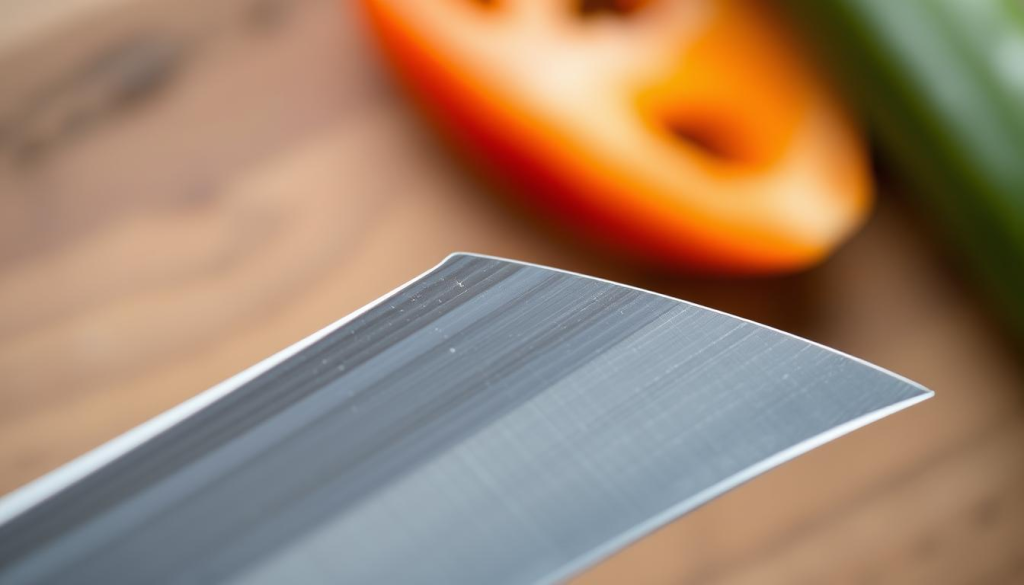
Shun knives typically have an edge angle between 15 to 20 degrees per side. The exact angle can vary depending on the specific model and its intended use. For instance, chef’s knives often have an edge angle closer to 20 degrees per side for durability and versatility, while slicing knives might be sharpened to a finer angle, around 15 degrees, for precision slicing.
Edge Angle Variations by Knife Type:
- Chef’s Knives: 18-20 degrees per side
- Slicing Knives: 15-18 degrees per side
- Utility Knives: 15-20 degrees per side
Comparing Shun’s Angles with Other Brands
When comparing Shun knives to other high-end brands, it’s evident that Shun’s edge angles are competitive. Many premium knife manufacturers also adhere to similar edge angle ranges, prioritizing both sharpness and durability. However, Shun’s meticulous craftsmanship and attention to detail set their knives apart, offering exceptional edge retention and a superior cutting experience.
To maintain the optimal performance of Shun knives, it’s essential to follow proper shun knife care tips, including regular sharpening and storage in a dry environment. Proper care enhances shun knife edge retention, ensuring that the knives remain effective over time.
How to Determine the Right Edge Angle for You
To get the most out of your Shun knife, it’s essential to determine the right edge angle for your needs. The ideal edge angle can significantly impact your cutting experience, making it crucial to consider various factors.
Personal Preferences: What to Consider
Personal preference plays a significant role in choosing the right edge angle. Some users prefer a sharper angle for more precise cuts, while others might opt for a slightly more obtuse angle for durability. When deciding, consider your cutting style and the tasks you perform most often with your knife.
For instance, if you’re involved in delicate tasks such as filleting fish or slicing vegetables thinly, a sharper edge angle might be more suitable. On the other hand, if you’re doing heavy-duty cutting like chopping through bones or thick meat, a slightly more obtuse angle could be more appropriate.
Types of Food Preparation and Edge Angle
The type of food preparation you engage in most frequently is another critical factor. Different edge angles can enhance or hinder your knife’s performance depending on the task. For example, a sharper edge angle is beneficial for precision cutting, such as when preparing sashimi or slicing herbs.
Conversely, for tasks that require more force, like cutting through tough ingredients, a slightly less sharp edge might be preferable to maintain durability and prevent damage to the knife.
By considering both your personal preferences and the types of food preparation you do, you can determine the most suitable edge angle for your Shun knife, ensuring it meets your needs effectively.
Maintenance of Shun Knife Edge Angles
Maintaining the edge angle of your Shun knife is crucial for optimal performance. The edge angle is a critical factor in a knife’s cutting efficiency and precision. Regular sharpening is essential to maintain this angle and ensure your knife continues to perform at its best.
Sharpening Techniques to Preserve Angle
There are several sharpening techniques that can help preserve the edge angle of your Shun knife. Using a whetstone is a traditional method that allows for precise control over the sharpening process. It’s essential to choose the right grit whetstone for your needs; a finer grit is used for honing and polishing, while a coarser grit is used for repairing damaged edges.
Another technique is using a sharpening steel, which helps to realign the edge and maintain its sharpness. However, it’s crucial to use the correct angle when sharpening to avoid damaging the knife. The ideal sharpening angle for Shun knives typically ranges between 15 to 20 degrees per side.
“A sharp knife is a safe knife, and maintaining the correct edge angle is key to achieving this.” –
| Sharpening Method | Description | Ideal Angle |
|---|---|---|
| Whetstone | Precise control over sharpening | 15-20 degrees |
| Sharpening Steel | Realignment of the edge | 15-20 degrees |
When to Seek Professional Sharpening Services
While regular maintenance can be done at home, there are times when seeking professional sharpening services is advisable. If your knife has a significantly damaged edge or you’re unsure about the correct sharpening technique, it’s best to consult a professional. They have the expertise and equipment to restore your knife to its optimal condition.
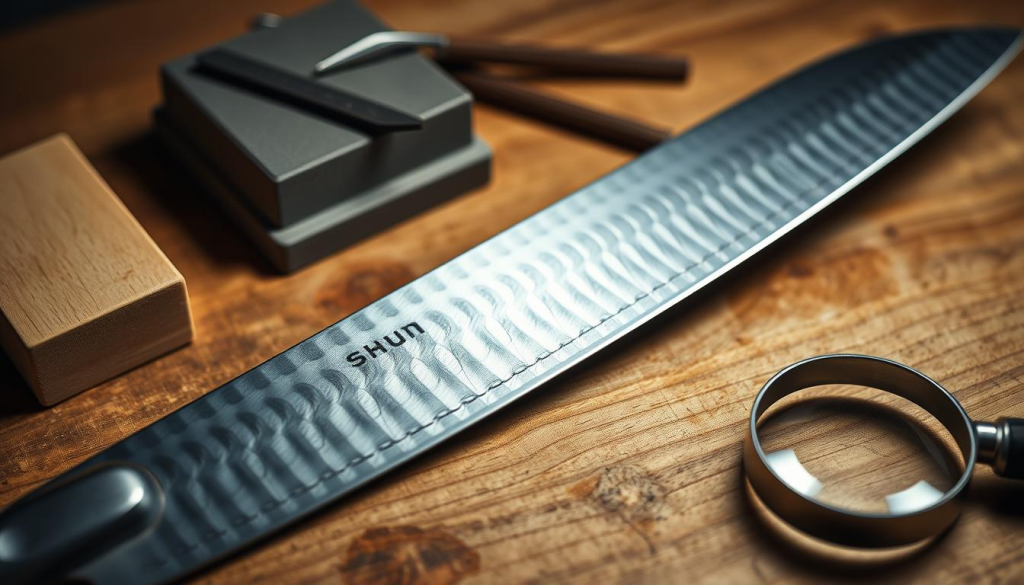
Regular maintenance and proper sharpening techniques will extend the life of your Shun knife and ensure it continues to deliver exceptional performance. By understanding when to sharpen and how to maintain the edge angle, you can enjoy a superior cutting experience.
Tools to Measure Edge Angle Accurately
To ensure your Shun knife is performing at its best, accurate edge angle measurement is essential. The edge angle significantly affects the knife’s cutting efficiency and precision. Therefore, having the right tools to measure this angle is crucial for maintaining your knife’s performance.
Recommended Angle Finders
Angle finders are specialized tools designed to measure the edge angle of knives accurately. They come in various forms, including mechanical and digital models. For Shun knives, a high-quality angle finder can help you achieve the precise edge angle recommended by the manufacturer. Using an angle finder ensures consistency in your knife maintenance routine.
Some popular angle finders include:
- Mechanical angle finders with protractors
- Digital angle finders with LCD displays
- Specialized knife edge angle gauges
When choosing an angle finder, consider the level of precision you need and the ease of use. A good angle finder should be both accurate and user-friendly.
“The precision of your knife is only as good as the tools you use to measure it.” – Knife Maintenance Expert
Using Digital Tools for Accuracy
Digital tools have revolutionized the way we measure and maintain knife edge angles. These tools offer high precision and are often easier to use than traditional mechanical methods. For instance, digital angle gauges can provide exact readings, eliminating guesswork. Digital tools are particularly useful for professionals who require exacting standards in their kitchen.
Some benefits of using digital tools include:
- High accuracy and precision
- Ease of use, even for novice users
- Quick readings, saving time in knife maintenance
When using digital tools, it’s essential to follow the manufacturer’s instructions for calibration and operation to ensure accurate results.
Pros and Cons of Different Edge Angles
Understanding the pros and cons of different edge angles is essential for maximizing the potential of your Shun knife. The edge angle significantly influences the knife’s cutting efficiency, precision, and durability. A sharper angle can offer more precise cuts but may also be more prone to chipping. Therefore, it’s crucial to weigh these factors based on individual needs and preferences.

Advantages of a Sharper Angle
A sharper edge angle provides several benefits, including enhanced precision and improved cutting efficiency. Knives with sharper angles are ideal for delicate tasks that require finesse, such as slicing vegetables or filleting fish. The sharper the angle, the cleaner and more precise the cut will be, making it easier to achieve professional-grade results in the kitchen.
Moreover, sharper angles are particularly advantageous when working with soft or fragile foods that can be easily damaged. The precision offered by a sharper edge angle minimizes the risk of tearing or crushing, ensuring that the food retains its texture and presentation.
Disadvantages of Sharper Edges
While sharper edge angles offer several advantages, they also have some drawbacks. One of the primary concerns is the increased susceptibility to chipping or damage. A sharper edge is more delicate and can be easily damaged if it comes into contact with hard surfaces or is used to cut through tough materials.
Additionally, knives with sharper angles may require more frequent maintenance, including sharpening to maintain their effectiveness. This can be a consideration for those who prefer a low-maintenance approach to knife care. Proper shun knife edge maintenance is crucial to extend the life of the knife and ensure it continues to perform optimally.
Understanding how to sharpen a Shun knife correctly is vital to preserving the edge angle and maintaining the knife’s performance. Regular sharpening and proper care can help mitigate some of the disadvantages associated with sharper edges.
Customizing Your Shun Knife’s Edge Angle
To get the most out of your Shun knife, understanding how to adjust its edge angle is essential. Customizing the edge angle can enhance the knife’s performance for specific cutting tasks or personal preferences.
When and Why to Adjust Edge Angles
Adjusting the edge angle of your Shun knife is necessary when you find that the current angle is not meeting your cutting needs. For instance, a sharper angle may be required for delicate slicing, while a slightly wider angle might be better for chopping through tougher ingredients.
Key reasons to adjust the edge angle include:
- Improving cutting efficiency for specific tasks
- Enhancing precision for delicate cuts
- Adapting the knife for different types of ingredients
According to expert chefs, “The edge angle is crucial for the overall performance of the knife. Adjusting it can make a significant difference in the cutting experience.” – Chef’s Insight
Step-by-Step Guide to Customizing
Customizing the edge angle of your Shun knife involves several steps:
- Determine the ideal edge angle for your specific needs. This can be done by considering the type of cutting you do most often.
- Use a whetstone or sharpening tool designed for adjusting edge angles. It’s crucial to choose a tool that matches the material of your Shun knife.
- Carefully sharpen the knife, maintaining the desired angle. It’s recommended to use a sharpening guide to ensure accuracy.
- Check the edge angle regularly during the sharpening process to avoid over-sharpening.
- Once the desired angle is achieved, hone the knife to refine the edge.
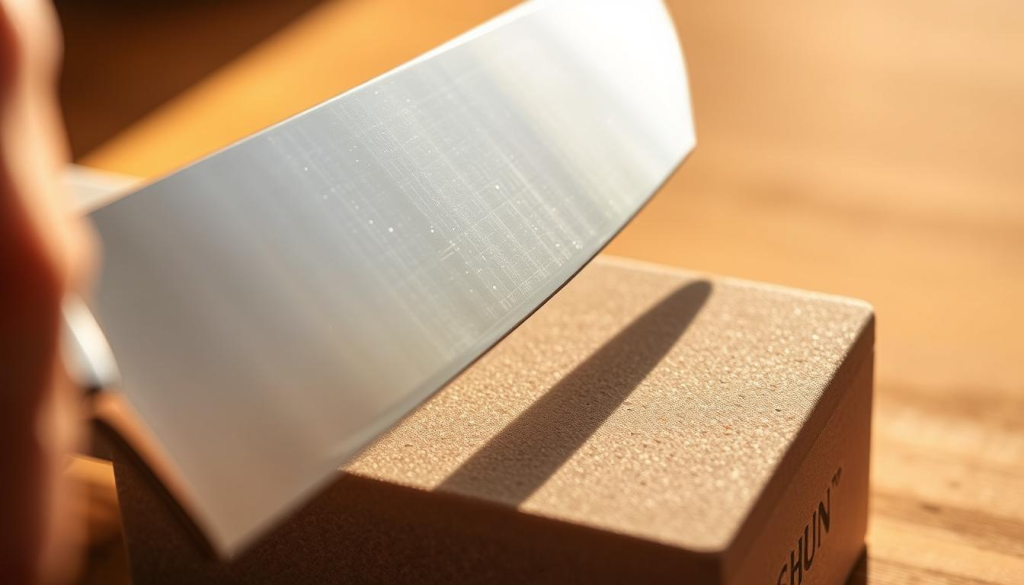
By following these steps and considering your specific needs, you can customize your Shun knife’s edge angle to optimize its performance.
For more complex adjustments or if you’re unsure about the process, consider seeking professional sharpening services. Proper care and maintenance, including regular sharpening, are key to extending the life of your Shun knife.
Caring for Your Shun Knives
To keep your Shun knives in optimal condition, it’s essential to understand the best practices for their care. Proper maintenance not only ensures they remain sharp but also preserves their edge angle, crucial for optimal performance.
Best Practices for Knife Care
Caring for your Shun knives begins with regular cleaning and drying. It’s recommended to hand wash your knives with mild soap and dry them immediately to prevent water spots and bacterial growth. Avoid putting your Shun knives in the dishwasher, as the high heat and harsh detergents can damage the blade and handle.
Regular sharpening is also vital to maintain the sharpness level of your Shun knives. Using a whetstone or a sharpening steel specifically designed for high-carbon knives like Shun can help maintain their edge retention. It’s also important to store your knives properly to prevent damage and maintain their sharpness.
Storage Solutions to Maintain Sharpness
Storage is a critical aspect of knife care. Using a knife block or a magnetic strip can help keep your Shun knives organized and prevent them from coming into contact with other utensils that might damage the blades. For those who prefer to store their knives in a drawer, using a knife roll or individual blade covers can protect the edges and prevent accidents.
When it comes to maintaining the sharpness and edge angle of your Shun knives, the storage method you choose can make a significant difference. Here is a comparison of different storage methods and their impact on knife sharpness:
| Storage Method | Impact on Sharpness | Ease of Access |
|---|---|---|
| Knife Block | High – protects edge | Easy |
| Magnetic Strip | Medium – edge exposure | Very Easy |
| Drawer Storage with Covers | High – protects edge | Moderate |
| Knife Roll | High – protects edge | Moderate |
By adopting these best practices and storage solutions, you can significantly enhance the longevity and performance of your Shun knives, ensuring they continue to provide a superior cutting experience.
Common Mistakes to Avoid with Shun Knives
To get the most out of your Shun knives, it’s crucial to avoid certain pitfalls that can hinder their performance. Shun knives are precision instruments designed for specific tasks, and understanding their proper use is key to maintaining their effectiveness.
Misunderstanding Knife Types and Angles
One of the most common mistakes is misunderstanding the appropriate knife type and edge angle for specific tasks. Shun knives come in various types, each designed for particular cutting tasks. For instance, a chef’s knife is versatile and used for chopping, slicing, and mincing, while a paring knife is ideal for peeling and coring fruit and vegetables.
Using the wrong type of knife or edge angle can lead to inefficient cutting and may damage the knife. For example, using a very sharp angle for chopping hard vegetables might result in the edge rolling or becoming damaged. Understanding the professional Shun knife edge angle guidance can help in choosing the right angle for the task at hand.
Ignoring Maintenance and Care Needs
Another critical mistake is ignoring the maintenance and care needs of Shun knives. Regular sharpening is essential to maintain the edge angle and ensure the knife remains effective. Neglecting to sharpen the knife can lead to a dull edge, making it more difficult to cut and potentially causing accidents.
- Regularly sharpen your Shun knives to maintain the optimal edge angle.
- Clean and dry your knives after use to prevent rust and corrosion.
- Store your knives properly in a dry place, away from other utensils that could damage them.
By avoiding these common mistakes, you can extend the life of your Shun knives and ensure they continue to perform at their best. Proper care and understanding of the knife’s design and edge angle are crucial for optimal performance.
Expert Tips for Maximizing Knife Performance
Expert chefs know that the secret to exceptional cooking lies not just in the knife itself, but in how it’s used and maintained. Maximizing knife performance is a multifaceted approach that involves understanding the intricacies of your Shun knife, honing your cutting technique, and experimenting with different edge angles to achieve the desired culinary outcome.
Enhancing Your Cutting Technique with Shun
To truly leverage the quality of Shun knives, it’s crucial to develop a cutting technique that complements their precision and sharpness. This involves adopting proper grip and stance, practicing different cutting motions, and understanding how to apply the right amount of pressure. As Chef Yukio Hattori, a renowned culinary expert, once said,
“The knife is an extension of the chef’s hand; its performance is directly tied to the chef’s skill and understanding of the tool.”
Here are some key techniques to enhance your cutting skills with Shun knives:
- Practice the “pinch grip” to control the blade better
- Use a gentle, smooth motion when cutting to maintain edge integrity
- Keep your fingers curled under and out of the way of the blade
Experimenting with Edge Angles in Cooking
The edge angle of your Shun knife can significantly impact its performance in various cooking tasks. Experimenting with different edge angles can help you discover the best angle for specific tasks, such as slicing, dicing, or mincing. For instance, a more acute edge angle may be ideal for delicate slicing, while a slightly wider angle might be better suited for chopping through tougher ingredients.
| Edge Angle | Culinary Task | Performance Benefit |
|---|---|---|
| Acute (15°-20°) | Slicing, filleting | Precision and delicacy |
| Medium (20°-25°) | Chopping, mincing | Balance between sharpness and durability |
| Wide (25°-30°) | Heavy chopping, bone cutting | Enhanced durability and strength |
To illustrate the impact of edge angles, consider this quote from Chef Thomas Keller:
“The edge angle is not just a technical detail; it’s a critical factor that influences the overall performance of the knife and the quality of the cut.”
By understanding and experimenting with different edge angles, you can optimize your Shun knife’s performance for various culinary tasks, ensuring that you’re always getting the best out of your knife.
Conclusion: Embrace the Precision of Shun Knives
Understanding the edge angle of your Shun knife is crucial for unlocking its full potential. The sharpness level of a Shun knife directly impacts its performance, making it essential to choose the right angle for your needs.
Precision Cutting with Shun Knives
The sharpness level of a Shun knife is a key factor in its cutting efficiency. By maintaining the optimal edge angle, you can ensure precise cuts and extend the life of your knife.
Exploring Culinary Possibilities
With a Shun knife, the possibilities are endless. Experiment with different edge angles and techniques to discover new ways of preparing your favorite dishes. The precision and quality of Shun knives make them an invaluable tool in any kitchen.
By embracing the precision of Shun knives, you can elevate your cooking experience and explore new culinary horizons. Whether you’re a professional chef or an avid home cook, the right edge angle and maintenance can make all the difference in your cooking journey.