Shun knives are renowned for their exceptional Japanese quality and performance. However, even the finest blades will eventually lose their edge over time. Maintaining sharp knives is crucial for both professional chefs and home cooks, as it ensures precise cutting and enhances overall cooking safety.
Sharpening your Shun knives at home can seem daunting, but with the right guidance, it’s a straightforward process. This tutorial will walk you through the simple steps to restore your blades to their original sharpness, saving you time and money.
Key Takeaways
- Learn the importance of maintaining sharp Shun knives.
- Discover a simple, step-by-step guide to sharpening your knives at home.
- Understand the benefits of DIY knife sharpening.
- Explore the tools needed for effective knife sharpening.
- Gain confidence in sharpening your Shun knives yourself.
Understanding the Importance of Knife Sharpening
Maintaining sharp knives is crucial for both safety and efficiency in the kitchen. A sharp knife is not only more effective but also safer to use, as it requires less force and is less likely to slip and cause accidents.
Why Sharp Knives Matter in the Kitchen
Sharp knives are essential for precise cutting, which is vital for both presentation and cooking consistency. When knives are sharp, they make clean cuts, reducing the risk of tearing or crushing food, which can affect the texture and appearance of dishes.
Moreover, sharp knives enhance the overall cooking experience. They make tasks like chopping, slicing, and mincing easier and faster, allowing cooks to focus on other aspects of meal preparation.
The Risks of Dull Knives
Dull knives, on the other hand, pose significant risks. They require more force to cut through food, increasing the likelihood of accidents. The extra pressure needed can cause the knife to slip, potentially leading to cuts or other injuries.
Using dull knives can be dangerous and lead to accidents, making regular sharpening a critical part of kitchen maintenance.
Benefits of Regular Maintenance
Regular knife maintenance, including sharpening, is essential for keeping your knives in top condition. Sharpening not only improves the performance of your knives but also extends their lifespan.
By incorporating a shun knife maintenance guide into your routine, you can ensure that your knives remain sharp and effective. Following best practices for shun knife sharpening will help you achieve professional results at home.
Regular maintenance also includes cleaning and storing your knives properly, further contributing to their longevity and performance.
Tools You’ll Need for Sharpening Shun Knives
The art of sharpening Shun knives begins with selecting the appropriate tools for the task. Sharpening these high-quality knives requires precision and the right equipment to maintain their exceptional edge.
Choosing the Right Knife Sharpener
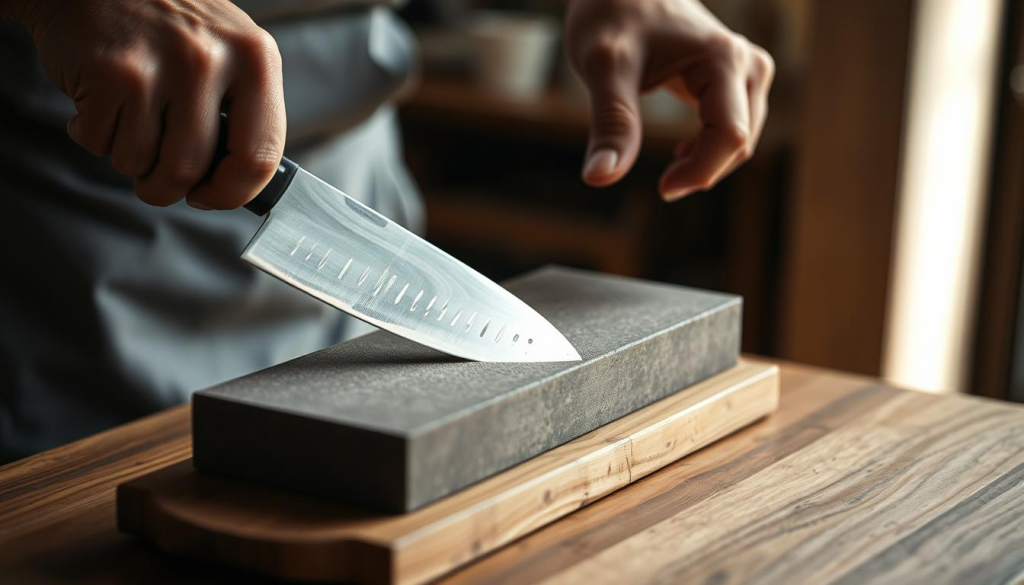
When it comes to sharpening Shun knives, the sharpener you choose is crucial. A whetstone is highly recommended for sharpening Shun knives, as it allows for precise control over the sharpening angle and edge quality. Whetstones come in different grits, ranging from coarse to fine, and are suitable for various stages of the sharpening process.
For those who prefer a more modern approach, electric sharpeners are also an option. However, they require careful adjustment to avoid damaging the knife.
Essential Accessories for Safe Sharpening
In addition to a sharpener, several accessories can enhance your sharpening experience. A honing steel is useful for maintaining the knife’s edge between sharpening sessions. It’s also important to have a stable sharpening environment, which can be achieved with a sharpening guide or a non-slip mat.
Alternative Sharpening Tools
While whetstones are preferred by many professionals for professional Shun knife sharpening, other tools like diamond stones and ceramic sharpeners offer alternative solutions. Each has its own advantages and can be chosen based on personal preference and the specific needs of your knives.
Regardless of the tool you choose, the key to successful sharpening lies in understanding the technique and maintaining consistency.
Preparing Your Shun Knife for Sharpening
Sharpening a Shun knife begins long before you touch a sharpening stone; it starts with preparation.
Cleaning Your Knife Properly
To ensure your Shun knife is sharpened effectively, it must be free from debris and residue. Cleaning your knife properly involves more than just wiping it down. Use mild soap and warm water to clean the blade, and dry it thoroughly to prevent water spots.
A clean knife not only sharpens more evenly but also reduces the risk of damage to the sharpening tool. For tougher residue, a soft-bristled brush can be used to gently scrub the blade.
Inspecting for Damage or Wear
Before sharpening, inspect your Shun knife for any signs of damage or wear. Check the edge for nicks or chips, and examine the blade for any rust or corrosion. Regular inspection can help identify issues early, making the sharpening process easier and more effective.
| Inspection Point | What to Look For | Action Required |
|---|---|---|
| Edge Condition | Nicks, chips, or unevenness | Address nicks or chips before sharpening |
| Blade Surface | Rust, corrosion, or stubborn stains | Clean or restore the blade as needed |
| Handle and Bolster | Loose handle, damage to bolster | Repair or replace handle or bolster if necessary |
By following these steps, you’ll be able to sharpen your Shun knife more effectively, maintaining its quality and extending its lifespan.
The Best Techniques for Sharpening Shun Knives
For chefs and home cooks alike, sharpening Shun knives is a vital skill that enhances cooking performance. Sharpening your Shun knives regularly not only improves their effectiveness but also prolongs their lifespan. In this section, we’ll explore the most effective techniques for sharpening your Shun knives, ensuring they remain in top condition.
Using a Whetstone: Step-by-Step Guide
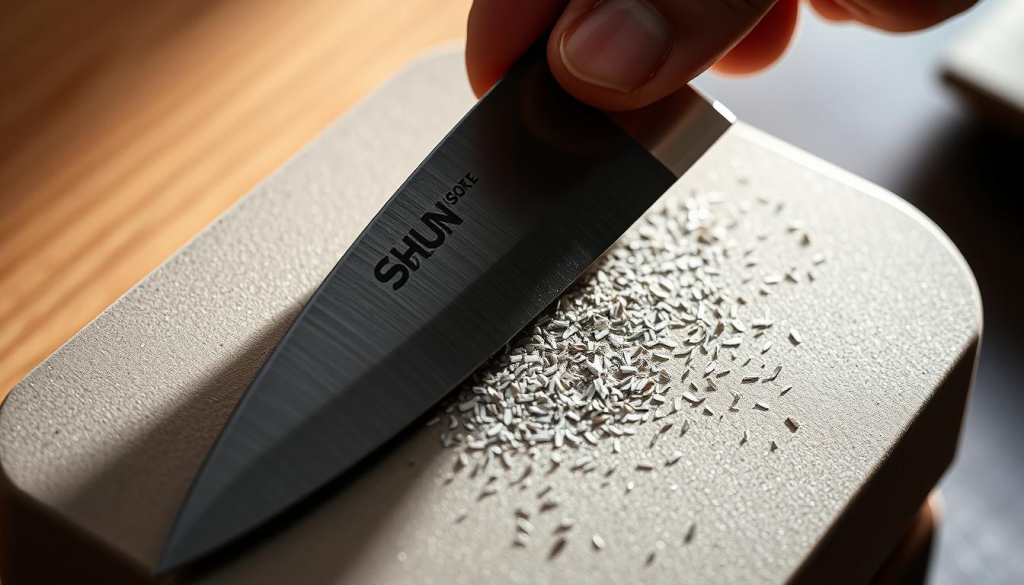
Using a whetstone is one of the most traditional and effective methods for sharpening knives. To start, you’ll need to select a whetstone with the appropriate grit for your Shun knife. A grit of 1000 to 3000 is typically recommended for sharpening high-carbon knives like Shun.
Begin by soaking your whetstone in water for about 10-15 minutes. This step is crucial as it ensures the stone is properly saturated, allowing for smooth sharpening. Once soaked, place the whetstone on a stable surface and hold your Shun knife at the desired angle.
The angle you’ll need to maintain depends on the type of edge you’re trying to achieve, but for most Shun knives, a 15-20 degree angle is recommended. Slowly draw the knife across the whetstone, moving from the heel to the tip, and repeat this process several times on each side until you achieve the desired sharpness.
How to Use a Honing Rod
A honing rod, often confused with a sharpening tool, is actually used to realign the edge of your knife, maintaining its sharpness between sharpenings. To use a honing rod effectively, hold it vertically with the tip on a stable surface.
Draw your Shun knife down the rod at the same angle you used for sharpening, typically 15-20 degrees, and repeat this motion several times on each side. This process helps to realign any micro-tears or bends in the edge, keeping your knife sharp and ready for use.
Electric Sharpeners: Pros and Cons
Electric sharpeners offer a convenient and quick way to sharpen your Shun knives. They come with preset angles and can sharpen knives rapidly. However, they can also remove more metal than necessary, potentially shortening the lifespan of your knife.
The main advantage of electric sharpeners is their ease of use and speed. They’re ideal for those who are new to sharpening or prefer a hassle-free experience. On the downside, they can be less precise and may not be suitable for all types of knives.
When using an electric sharpener, follow the manufacturer’s instructions carefully to avoid damaging your Shun knives. It’s also worth noting that while electric sharpeners are convenient, they should not replace regular honing and occasional whetstone sharpening.
How to Achieve the Perfect Angle
Sharpening a Shun knife requires precision, and the most critical aspect of this process is achieving the perfect angle. The angle at which you sharpen your knife significantly affects its performance and longevity.
When it comes to sharpening Shun knives, the ideal angle is typically between 15 and 20 degrees. This range allows for a sharp edge while maintaining durability. However, the exact angle may vary depending on the specific model of your Shun knife and its intended use.
Understanding the Ideal Sharpening Angle
The ideal sharpening angle is a balance between sharpness and durability. A more acute angle will result in a sharper knife but may make it more prone to damage. Conversely, a wider angle will make the edge more durable but may not provide the desired sharpness.
| Knife Type | Ideal Sharpening Angle | Characteristics |
|---|---|---|
| Straight Edge | 15-20 degrees | Sharp, precise cutting |
| Serated Edge | 20-25 degrees | Durable, good for tough cuts |
Tips for Consistency and Accuracy
Achieving consistency and accuracy when sharpening your Shun knife is crucial. Here are some tips to help you:
- Use a sharpening guide to maintain the correct angle.
- Practice regularly to develop your sharpening skills.
- Check the edge frequently to avoid over-sharpening.
By understanding the ideal sharpening angle and following these tips, you can achieve a perfectly sharpened Shun knife that will enhance your cooking experience.
Common Mistakes to Avoid When Sharpening
The art of sharpening a Shun knife lies in avoiding the errors that can compromise its quality. Sharpening is not just about making your knife sharper; it’s about maintaining its integrity and ensuring it continues to perform optimally.
Over-Sharpening Your Knife
One of the most common mistakes when sharpening a Shun knife is over-sharpening. Over-sharpening can lead to a reduction in the knife’s lifespan by wearing away the metal unnecessarily. It’s crucial to sharpen your knife just enough to restore its edge.
To avoid over-sharpening, it’s recommended to use a sharpening stone with a fine grit. This allows for a more controlled sharpening process. Additionally, checking the knife’s edge frequently during sharpening can help prevent over-sharpening.
Neglecting Knife Maintenance
Neglecting regular maintenance is another critical mistake. Regular maintenance includes cleaning your knife after use and storing it properly. Proper storage, such as in a dry place or in a protective case, can prevent damage and corrosion.
| Maintenance Task | Frequency | Benefits |
|---|---|---|
| Cleaning | After each use | Prevents corrosion and bacterial growth |
| Sharpening | Every 1-3 months | Maintains the knife’s edge and performance |
| Storage Check | Monthly | Ensures the knife is stored correctly, preventing damage |
By avoiding common mistakes like over-sharpening and neglecting maintenance, you can ensure your Shun knife remains in excellent condition. Regular care and attention to detail are key to maintaining the quality and longevity of your knife.
Caring for Your Shun Knives Post-Sharpening
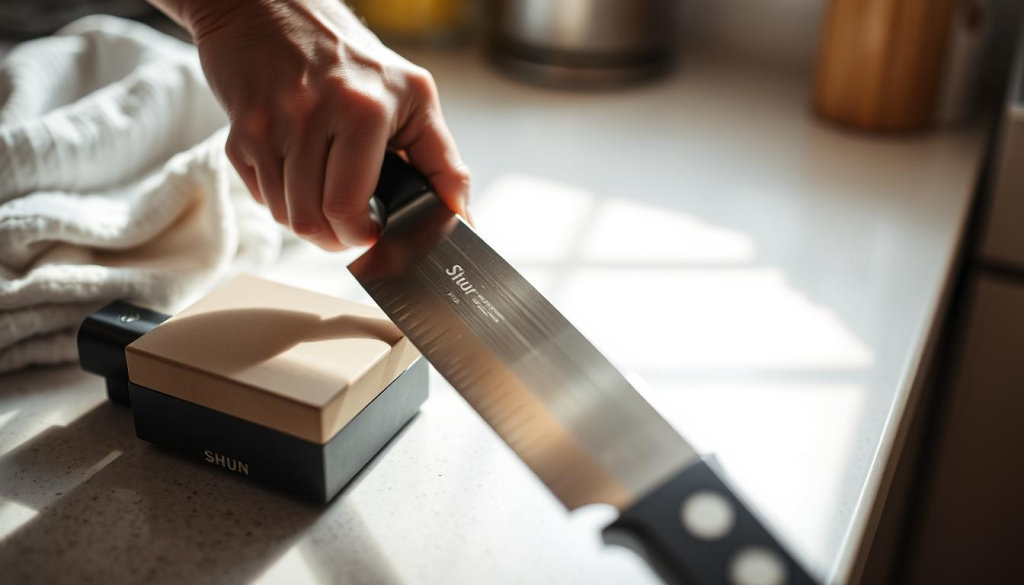
To keep your Shun knife in top condition, it’s vital to follow a proper care routine after sharpening. This not only maintains the knife’s sharpness but also ensures its longevity and performance in the kitchen.
Proper Storage Techniques
Storing your Shun knife correctly is crucial to prevent damage and maintain its sharp edge. Here are some tips for proper storage:
- Store your knife in a dry place, away from moisture that can cause rust.
- Use a knife block or a magnetic strip to keep the knife secure and prevent it from coming into contact with other utensils.
- Consider using a knife case or pouch for additional protection when not in use.
Tip: Avoid storing your Shun knife in a drawer with other utensils, as this can cause damage to the blade.
Cleaning After Use
Cleaning your Shun knife after each use is essential to prevent the buildup of residue and bacteria. Here’s how to do it right:
- Wash the knife by hand with mild soap and warm water. Avoid using abrasive cleaners or scourers.
- Dry the knife thoroughly with a towel to prevent water spots and rust.
- For tougher residue, you can use a soft sponge or cloth to gently clean the blade.
Remember, a well-maintained knife is not just about sharpness; it’s also about cleanliness and care.
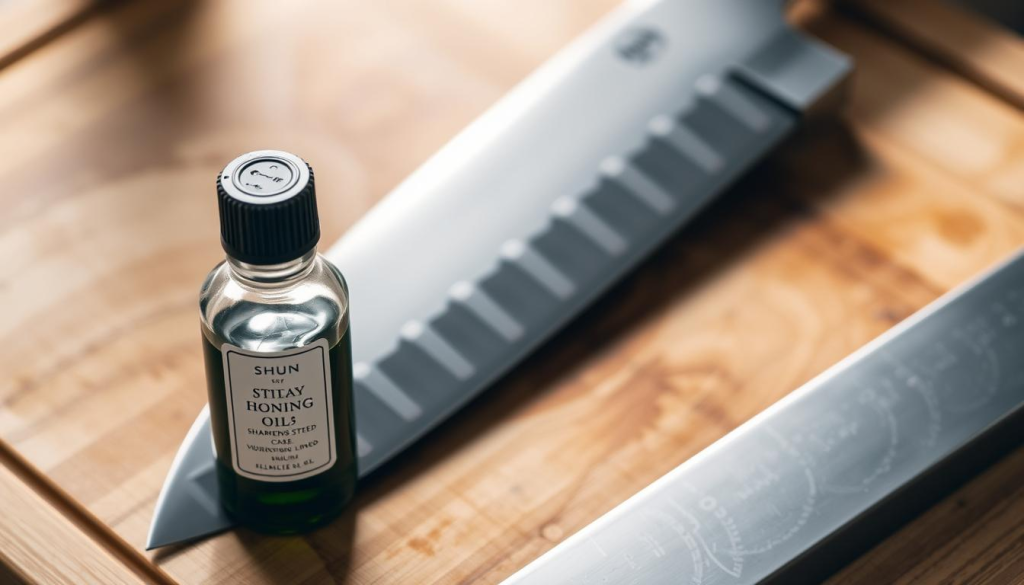
By following these simple care and maintenance tips, you can ensure your Shun knife remains in excellent condition, providing you with years of reliable service in the kitchen.
Troubleshooting Sharpening Issues
Troubleshooting sharpening issues is an essential skill for any chef or cooking enthusiast who uses Shun knives. Even with the right techniques and tools, problems can arise that affect the performance of your knife.
Dealing with Uneven Edge Profiles
An uneven edge profile can significantly impact the effectiveness of your Shun knife. This issue can occur due to improper sharpening techniques or using the wrong sharpening tool. To address this, it’s crucial to first identify the cause of the unevenness.
- Inspect the edge of your knife under good lighting to identify any inconsistencies.
- Use a whetstone to carefully sharpen the uneven areas, maintaining the correct sharpening angle.
- For professional Shun knife sharpening, consider using a high-quality whetstone that is designed for sharpening high-carbon steel knives.
When sharpening Shun knives with whetstone, it’s essential to apply gentle, consistent pressure to avoid further damaging the edge.
What to Do If Your Knife Won’t Sharpen
If your Shun knife won’t sharpen, it could be due to several reasons, including a damaged or excessively worn edge. Here are some steps to troubleshoot the issue:
- Check the knife for any visible damage or wear that might be preventing it from sharpening properly.
- Try using a different sharpening tool or technique to see if the issue persists.
- If the problem continues, it may be necessary to consult a professional sharpener who specializes in professional Shun knife sharpening.
In some cases, a knife may require more than just sharpening; it might need repair or maintenance. Regular maintenance can prevent many sharpening issues, ensuring your Shun knife remains in optimal condition.
By following these troubleshooting tips, you can address common sharpening issues and keep your Shun knives performing at their best.
Frequently Asked Questions About Knife Sharpening
As we explore the world of knife sharpening, it’s essential to address some of the most frequently asked questions that home cooks and professional chefs have about maintaining their knives, particularly high-end brands like Shun.
How Often Should You Sharpen Your Shun Knife?
The frequency of sharpening your Shun knife largely depends on how often you use it. For regular users, sharpening every 1-3 months is typically recommended. However, if you notice your knife is not cutting as smoothly as it should, it might be time to sharpen it, regardless of the time elapsed.
Factors that influence sharpening frequency include:
- The type of material you are cutting
- The knife’s angle and edge geometry
- Storage and maintenance practices
Can I Sharpen Other Brands of Knives the Same Way?
While the techniques for sharpening Shun knives can be applied to other high-quality knives, the specific sharpening method may vary depending on the knife’s material and edge type. For instance, knives with a straight edge can usually be sharpened using a whetstone, whereas serrated knives may require a different tool.
It’s also worth noting that some knife manufacturers recommend specific sharpening methods, so it’s always a good idea to check the manufacturer’s guidelines.
To help you better understand the sharpening process and its nuances, here’s a comparison of different sharpening methods:
| Sharpening Method | Best For | Skill Level Required |
|---|---|---|
| Whetstone | Straight-edge knives, precision sharpening | Advanced |
| Honing Rod | Maintaining edge between sharpenings | Beginner |
| Electric Sharpener | Quick sharpening, convenience | Beginner |
By understanding the best practices for sharpening your knives and addressing common questions, you can extend the life of your Shun knife and ensure it continues to perform at its best.
Conclusion: Mastering Knife Sharpening at Home
Sharpening your Shun knives at home can be a rewarding experience, allowing you to maintain their exceptional quality and performance. With practice and patience, you can master the art of sharpening your Shun knives, ensuring they remain a valuable asset in your kitchen.
Practicing for Perfection
To achieve the best results, it’s essential to practice regularly and follow best practices for Shun knife sharpening. By doing so, you’ll develop the skills and confidence needed to sharpen your knives effectively, maintaining their sharpness and extending their lifespan.
Tips for Continued Improvement
As you continue to sharpen your Shun knives at home, remember to stay focused on the sharpening angle and technique. Regularly inspect your knives for damage or wear, and adjust your sharpening approach as needed. By combining these skills with the right tools and a bit of patience, you’ll become proficient in sharpening Shun knives, enjoying the benefits of a sharper, safer, and more efficient kitchen experience.