Shun knives are renowned for their exceptional Japanese quality and performance, making them a favorite among culinary professionals and enthusiasts alike. However, even the finest knives will eventually lose their edge over time.
As a proud owner of Shun knives, you understand the importance of maintaining their sharpness. Dull knives not only hinder your cooking experience but also pose a risk of accidents. In this article, we’ll share expert tips and tricks on how to keep your Shun knives in top condition using the best sharpening techniques.
Key Takeaways
- Understand the importance of maintaining Shun knives’ sharpness.
- Learn the best sharpening techniques for optimal results.
- Discover expert tips for keeping your knives in top condition.
- Explore the benefits of regular knife maintenance.
- Improve your cooking experience with sharp knives.
Understanding Shun Knives and Their Unique Design
With their high-quality steel and unique blade geometry, Shun knives offer a cutting experience like no other. The distinctiveness of Shun knives lies not only in their performance but also in their aesthetic appeal, making them a favorite among culinary enthusiasts.
The Importance of High-Quality Steel
Shun knives are crafted from high-carbon steel, known for its durability and ability to hold a sharp edge. This material choice is crucial for maintaining the knife’s effectiveness over time. High-quality steel resists corrosion and wear, ensuring that your Shun knife remains a reliable tool in the kitchen.
Unique Blade Geometry
The blade geometry of Shun knives is designed to optimize cutting efficiency. The precise angle and curvature of the blade allow for smooth, effortless cuts, reducing the strain on your hand and improving overall performance. This unique design is a hallmark of Shun’s commitment to excellence in knife craftsmanship.
Benefits of the Damascus Pattern
Some Shun knives feature the beautiful Damascus pattern, which is not only visually striking but also indicative of the knife’s high quality. The Damascus pattern is achieved through a process of layering different types of steel, resulting in a blade that is both strong and flexible. This pattern also helps to reduce the visibility of stains and minor scratches, maintaining the knife’s appearance over time.
| Feature | Benefit | Result |
|---|---|---|
| High-Quality Steel | Durability and Resistance to Corrosion | Long-Lasting Performance |
| Unique Blade Geometry | Efficient Cutting and Reduced Strain | Improved Cutting Experience |
| Damascus Pattern | Aesthetic Appeal and Strength | Enhanced Visual Appeal and Durability |
Understanding these aspects of Shun knives highlights the importance of proper care and maintenance. By appreciating the craftsmanship and materials that go into these knives, users can better maintain their sharpness and overall condition, ensuring a lifetime of culinary excellence.
Signs That Your Shun Knife Needs Sharpening
A dull Shun knife can be a significant hindrance in the kitchen, so it’s essential to know the signs that indicate it’s time for sharpening. Maintaining the sharpness of your Shun knives is crucial for optimal performance and safety.
Difficulty in Cutting
One of the most apparent signs that your Shun knife needs sharpening is when it struggles to cut through ingredients smoothly. If you find yourself applying more pressure than usual or the knife is tearing rather than slicing, it’s likely dull. Regular sharpening can restore the knife’s cutting ability, making cooking easier and more efficient.
Visible Nicks or Dullness
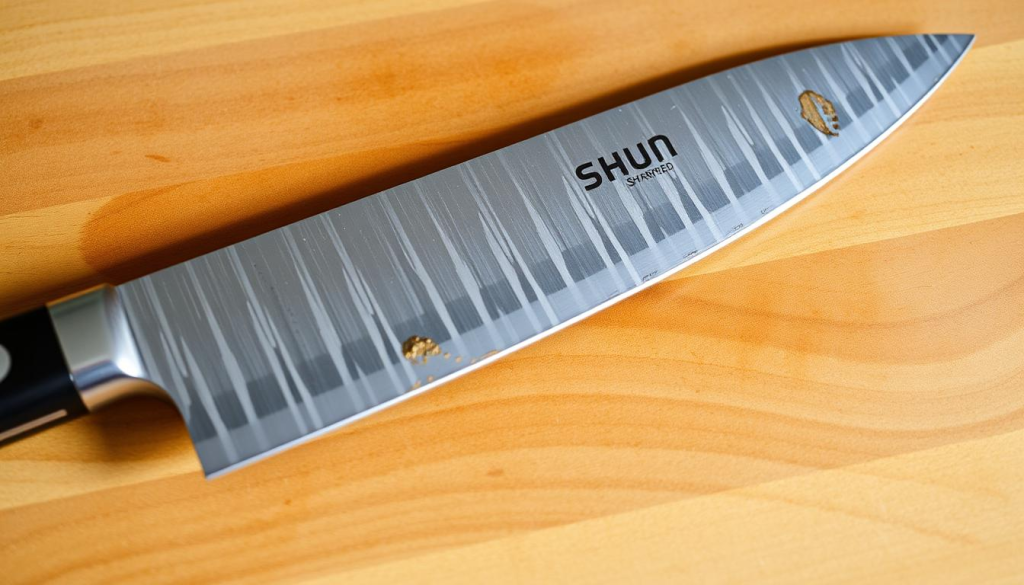
Inspecting your Shun knife visually can also reveal signs that it needs sharpening. Look for visible nicks or a dull edge. If the blade appears worn or has developed a wire edge (a tiny curl of metal along the edge), it’s a clear indication that sharpening is required. Regular inspection can help you catch these signs early, preventing further damage.
A Tugging Sensation
Another indicator that your Shun knife needs sharpening is a tugging or pulling sensation when cutting. This occurs because a dull blade doesn’t glide smoothly through food, instead, it drags, causing the sensation. If you experience this, it’s time to sharpen your knife to restore its smooth cutting action.
By being aware of these signs, you can keep your Shun knives in optimal condition, ensuring they continue to perform at their best. Regular sharpening is a simple yet effective way to maintain your knives and enhance your cooking experience.
Tools You’ll Need for Sharpening Shun Knives
The art of sharpening Shun knives begins with selecting the appropriate tools for the job. To achieve a razor-sharp edge, you’ll need to familiarize yourself with the various options available.
Whetstones vs. Sharpening Systems
Whetstones are a traditional choice for sharpening knives, offering a high degree of control over the sharpening process. Sharpening systems, on the other hand, provide a more guided approach, which can be beneficial for those new to sharpening. Both methods can be effective for Shun knives, depending on your preference and skill level.
When deciding between whetstones and sharpening systems, consider your experience level and the amount of time you’re willing to dedicate to sharpening. For those who prefer a more precise angle, sharpening systems can offer consistency.
Selecting the Right Grit
The grit of your sharpening stone is crucial for achieving the desired sharpness. For Shun knives, it’s recommended to start with a medium-grit stone (around 1000 grit) and progress to finer grits (up to 6000 or 8000 grit) for polishing. The choice of grit depends on the knife’s condition and your desired level of sharpness.
A coarse grit (about 220-400) can be used to repair damaged edges, while a finer grit is ideal for maintenance and polishing the edge to a high shine.
Honing Rods: A Quick Maintenance Tool
Honing rods are not a replacement for sharpening but serve as a valuable maintenance tool. They help realign the knife’s edge between sharpenings, keeping your Shun knife performing optimally. Regular use of a honing rod can extend the time between sharpenings.
To get the most out of your honing rod, it’s essential to use it correctly. Hold the rod vertically and move the knife down the rod at the same angle you use for sharpening, maintaining light contact.
Step-by-Step Guide to Sharpening Shun Knives with Whetstones
The process of sharpening Shun knives using whetstones involves several key steps that ensure a razor-sharp edge. Sharpening your Shun knives regularly not only maintains their performance but also extends their lifespan.
Preparing Your Whetstone
Before you start sharpening, it’s essential to prepare your whetstone. Begin by soaking the whetstone in water for about 10 to 15 minutes. This step is crucial as it ensures the stone is properly saturated, allowing for smoother sharpening.
Once soaked, place the whetstone on a stable surface. You can use a whetstone holder or a damp cloth to prevent it from slipping during the sharpening process.
The Correct Angle for Sharpening
Maintaining the correct sharpening angle is vital for achieving a sharp edge. For Shun knives, the recommended sharpening angle is between 15 to 20 degrees. Using a sharpening guide can help you maintain this angle consistently.
It’s also important to understand that the sharpening angle may vary slightly depending on the specific model of your Shun knife and its intended use.
Sharpening Techniques to Use
To sharpen your Shun knife effectively, start by holding the knife at the correct angle against the whetstone. Move the knife in a smooth, even motion along the stone, ensuring that you cover the entire length of the blade.
Repeat this process several times, checking the edge for sharpness after each stroke. It’s also beneficial to switch sides periodically to maintain even sharpening.
| Sharpening Technique | Description | Benefits |
|---|---|---|
| Smooth, Even Motion | Move the knife along the whetstone in a consistent motion. | Ensures even sharpening and reduces the risk of damaging the blade. |
| Angle Consistency | Maintain the sharpening angle between 15 to 20 degrees. | Results in a sharper edge and prolongs the knife’s lifespan. |
| Periodic Side Switching | Alternate sharpening sides to maintain balance. | Prevents uneven wear and ensures the knife remains balanced. |
Maintaining Your Shun Knives After Sharpening
To keep your Shun knives sharp and in excellent condition, proper maintenance after sharpening is essential. This involves a combination of proper cleaning techniques, safe storage practices, and regular maintenance checks.
Proper Cleaning Techniques
Cleaning your Shun knives regularly is vital to prevent the buildup of residue and bacteria. Hand washing with mild soap and warm water is recommended. Avoid using abrasive cleaners or putting your knives in the dishwasher, as this can damage the blade and handle. After washing, dry your knives immediately to prevent rust.
Storing Your Knives Safely
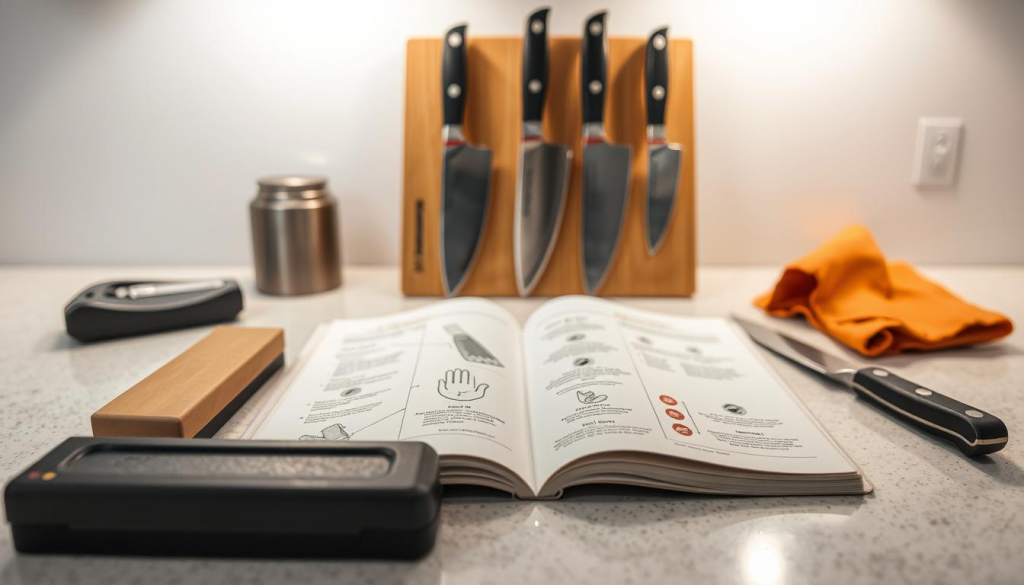
Proper storage is crucial to maintaining the sharpness and integrity of your Shun knives. Consider using a knife block or a magnetic strip to store your knives. These storage options keep the blades separate from other utensils, reducing the risk of damage. If you prefer to store your knives in a drawer, use knife guards or sheaths to protect the blades.
Regular Maintenance Tips
Regular maintenance is key to keeping your Shun knives in top condition. This includes regular honing to maintain the edge and occasional sharpening as needed. It’s also important to inspect your knives regularly for signs of wear or damage. By following these simple maintenance tips, you can ensure your Shun knives remain sharp and perform optimally for years to come.
Maintaining your Shun knives is a straightforward process that requires attention to detail and a commitment to regular care. By following the guidelines outlined above, you can enjoy the benefits of your sharp and well-maintained Shun knives for a long time.
Common Mistakes to Avoid When Sharpening
Achieving a razor-sharp edge on your Shun knives starts with understanding and avoiding typical sharpening blunders. Sharpening is not just about removing dullness but doing so in a way that preserves the knife’s integrity and enhances its performance.
When it comes to sharpening Shun knives, several common mistakes can compromise the outcome. Being aware of these pitfalls is the first step towards mastering the sharpening process.
Applying Too Much Pressure
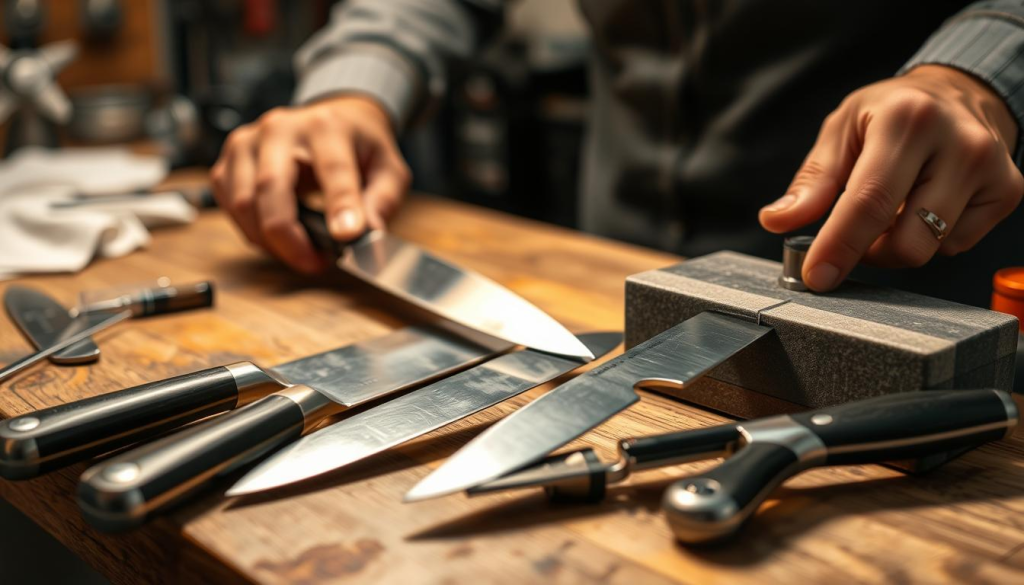
One of the most common errors is applying too much pressure during sharpening. This can lead to uneven edges and potentially damage the blade. Instead, use light, consistent pressure, allowing the whetstone to do the work.
Not Maintaining Angle Consistency
Maintaining a consistent angle is crucial for achieving a sharp edge. Inconsistencies can result in a dull or uneven blade. Practice maintaining the correct angle to ensure optimal sharpening.
Skipping the Honing Step
Honing is often overlooked but is a critical step in the sharpening process. It realigns the edge, ensuring it’s sharp and even. Skipping this step can lead to suboptimal performance from your Shun knives.
To further illustrate the importance of avoiding these mistakes, consider the following comparison:
| Common Mistake | Consequence | Correct Approach |
|---|---|---|
| Applying Too Much Pressure | Uneven edges, potential blade damage | Use light, consistent pressure |
| Not Maintaining Angle Consistency | Dull or uneven blade | Practice maintaining the correct angle |
| Skipping the Honing Step | Suboptimal knife performance | Include honing as a regular step |
By being mindful of these common mistakes and adopting the correct sharpening techniques, you can significantly enhance the performance and longevity of your Shun knives.
Professional vs. At-Home Sharpening
The choice between at-home sharpening and professional sharpening for Shun knives depends on various factors, including expertise and cost. While some prefer the convenience and control of sharpening at home, others may opt for the precision and assurance that comes with professional sharpening.
Sharpening your Shun knives at home can be a cost-effective and rewarding experience, allowing you to maintain your knives regularly. However, it requires a certain level of skill and the right equipment. On the other hand, professional sharpening services offer expertise and high-quality results, but at a cost.

When to Consider Professional Sharpening
If you’re new to sharpening knives or feel uncertain about your ability to sharpen your Shun knives effectively, it’s wise to consider professional sharpening. Additionally, if your knives are very dull or have damaged blades, a professional can restore them to their optimal condition.
As Chef John Doe, a renowned culinary expert, once said, “A sharp knife is not just a tool, it’s an extension of the chef’s hand.” Professional sharpening ensures that your Shun knives are treated with the care and precision they deserve.
Cost Considerations
The cost of professional sharpening can vary significantly depending on the service provider, the type of knives, and the level of sharpening required. On average, you can expect to pay between $5 to $20 per knife. While this may seem like an added expense, it’s essential to consider the long-term benefits of maintaining your knives in optimal condition.
- Basic sharpening services: $5-$10 per knife
- Advanced sharpening services (including edge refinement): $10-$20 per knife
- Package deals for multiple knives or regular maintenance: discounted rates
Finding a Certified Blade Specialist
When seeking professional sharpening, it’s crucial to find a certified blade specialist. Look for professionals who have undergone training and have experience with high-end knives like Shun. You can check for certifications from reputable organizations or ask for referrals from fellow chefs or culinary enthusiasts.
By choosing a certified professional, you can trust that your Shun knives are in good hands. As emphasized by Knife Care Expert Jane Smith, “The right sharpener can make all the difference in the longevity and performance of your knives.”
Recommendations for Maintaining the Life of Shun Knives
Proper maintenance is key to preserving the performance and longevity of your Shun knives. By following a few simple guidelines, you can ensure that your knives remain in excellent condition for years to come.
Regularly Inspecting Your Knives
Regular inspection of your Shun knives is crucial for identifying any potential issues early on. Check for signs of wear, such as dullness or nicks, and address these problems promptly. Inspecting your knives regularly can help prevent minor issues from becoming major problems.
Cooking Habits That Affect Knife Longevity
Certain cooking habits can significantly impact the longevity of your Shun knives. For example, using your knives on hard surfaces, such as glass or granite, can cause damage to the blade. Being mindful of how you use your knives can help extend their lifespan.
Avoid cutting through bones or frozen foods, as this can cause unnecessary stress on the blade. Additionally, refrain from using your Shun knives to pry open cans or perform other tasks that are not related to cutting.
Investing in Knife Guards or Sheaths
Investing in knife guards or sheaths is a simple and effective way to protect your Shun knives when they are not in use. These accessories can help prevent accidents and reduce the risk of damage to the blade. By storing your knives properly, you can help maintain their condition and ensure they remain sharp and ready for use.
Conclusion: Elevate Your Cooking with Sharp Shun Knives
Maintaining sharp Shun knives is crucial for elevating your cooking performance and enjoyment. By mastering the best sharpening techniques, you can ensure your knives remain in top condition.
Key Techniques for Sharpening
To sharpen Shun knives effectively, it’s essential to use the right tools, such as whetstones, and to maintain the correct angle during sharpening. Regular honing also plays a critical role in keeping your knives sharp.
Regular Maintenance for Longevity
Regular maintenance is vital to extend the life of your Shun knives. By regularly inspecting your knives and adopting proper cleaning and storage techniques, you can prevent damage and maintain their sharpness.
The Joy of Cooking with Sharp Knives
Cooking with sharp Shun knives not only makes food preparation easier but also enhances the overall cooking experience. Sharp knives allow for precise cuts, making cooking more enjoyable and efficient. By following the tips outlined in this article, you can enjoy the benefits of sharpening your Shun knives like a pro.