Maintaining your Shun knives is crucial for optimal performance. Dull blades can be frustrating and affect the quality of your cuts. Fortunately, with the right techniques and tools, you can keep your Shun knives razor-sharp without relying on professional services.
This guide will walk you through the process of sharpening your Shun knives in the comfort of your own home. By following our step-by-step instructions, you’ll be able to enjoy precise cutting and maintain your knives’ longevity.
Key Takeaways
- Learn the essential steps for sharpening Shun knives at home.
- Discover the right techniques and tools needed for the task.
- Understand the importance of maintaining your Shun knives.
- Improve your cutting performance with razor-sharp blades.
- Extend the longevity of your Shun knives with proper care.
Understanding Your Shun Knife Design
Understanding the intricacies of your Shun knife’s design is key to sharpening it correctly. Shun knives are crafted with precision and attention to detail, making them highly regarded among chefs and cooking enthusiasts. To maintain their exceptional performance, it’s essential to comprehend the different elements that make up your Shun knife.
Types of Shun Knives
Shun knives come in various series, including the Classic and Premier lines, each with its unique characteristics. The Classic line is known for its traditional Japanese design, while the Premier line features a more contemporary style with a VG-MAX steel core. Knowing which type of Shun knife you have is crucial for determining the best sharpening approach.
Blade Material and Function
The material and function of your Shun knife’s blade play a significant role in its sharpening. Shun knives are typically made from high-carbon steel, known for its durability and ability to hold a sharp edge. The blade’s function, whether it’s for slicing, chopping, or precision cutting, also influences the sharpening technique. For instance, a chef’s knife may require a slightly different sharpening angle than a paring knife.
A sharp knife is a safe knife, and understanding your Shun knife’s blade material is the first step towards maintaining its edge.
Importance of Proper Sharpening
Proper sharpening is vital to maintain your Shun knife’s performance and extend its lifespan. A dull knife not only hampers your cooking experience but can also lead to accidents. Regular sharpening ensures that your knife remains effective and safe to use. As Shun’s own guidelines suggest, regular maintenance is key to preserving the quality of your knife.
- Maintains the knife’s performance
- Extends the lifespan of the knife
- Ensures safety during use
Essential Tools for Sharpening Shun Knives
To keep your Shun knives in top condition, it’s essential to have the proper sharpening tools. Sharpening your Shun knives effectively requires understanding the available options and their respective advantages.
Whetstone vs. Honing Rod
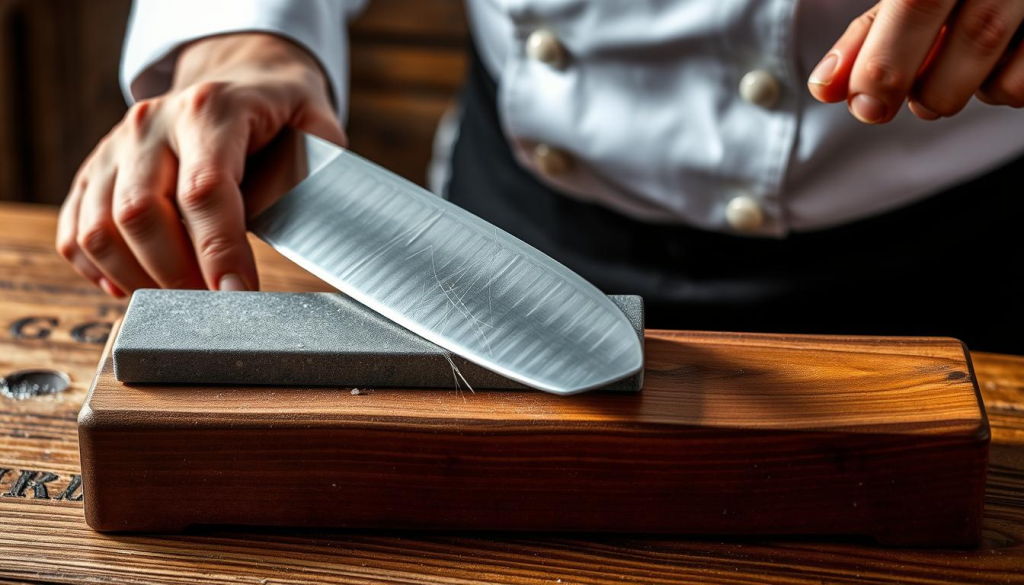
A whetstone is a popular choice among knife enthusiasts for sharpening Shun knives. It allows for precise control over the sharpening angle and can be used to repair damaged edges. On the other hand, a honing rod is used more for maintaining the knife’s edge rather than sharpening a dull blade.
The choice between a whetstone and a honing rod depends on your specific needs. If you’re looking to sharpen a dull knife, a whetstone is the better option. For regular maintenance, a honing rod can be sufficient.
Electric Sharpeners: Pros and Cons
Electric sharpeners offer a convenient and quick way to sharpen Shun knives. They are particularly useful for those who are new to sharpening knives or prefer a hassle-free experience.
However, electric sharpeners can have their downsides. They may not offer the same level of precision as manual sharpening methods, and some models can wear down the knife’s edge more quickly.
Cleaning Supplies for Maintenance
Maintaining your Shun knives involves not just sharpening but also cleaning. Cleaning supplies such as mild soap, water, and a soft cloth are essential for keeping your knives in good condition.
| Tool | Purpose | Skill Level Required |
|---|---|---|
| Whetstone | Sharpening and repairing edges | High |
| Honing Rod | Maintaining edge sharpness | Medium |
| Electric Sharpener | Quick sharpening | Low to Medium |
Understanding the tools available for sharpening your Shun knives is the first step towards maintaining their quality. By choosing the right tool for your needs, you can ensure your knives remain in top condition.
Preparing to Sharpen Your Shun Knife
To sharpen your Shun knife effectively, you need to start with the right preparation. This involves understanding the importance of a clean and safe workspace, as well as preparing your knife for the sharpening process.
Safety First: Best Practices
When sharpening a knife, safety should always be your top priority. Here are some best practices to follow:
- Use a stable workspace that won’t move around while you’re sharpening.
- Keep your fingers curled under and out of the way of the blade.
- Use a sharpening stone with a coarse grit to begin with, especially if your knife is very dull.
- Maintain focus and avoid distractions while sharpening.
Cleaning Your Knife Before Sharpening
Before you start sharpening, it’s essential to clean your Shun knife thoroughly. Any debris or residue on the blade can interfere with the sharpening process and potentially damage your whetstone or other sharpening tools.
To clean your knife, use mild soap and warm water. Avoid using abrasive materials that could scratch the blade. After cleaning, dry your knife completely to prevent any water spots or rust.
By following these steps and ensuring your knife is clean and your workspace is safe, you’ll be well-prepared to sharpen your Shun knife effectively. This preparation is key to achieving a sharp edge and maintaining the longevity of your knife.
Step-by-Step: Using a Whetstone
The art of sharpening a Shun knife using a whetstone involves several key steps. To begin, it’s essential to understand the basics of whetstone sharpening and how it can help maintain your knife’s performance.
Choosing the Right Grit
Selecting the appropriate grit for your Shun knife is crucial. For dull knives, start with a coarse grit (around 1000) to repair the edge. Then, move to a finer grit (6000 or higher) for polishing and achieving a sharp finish. The right grit ensures effective sharpening and helps maintain the knife’s longevity.
Angle Consistency is Key
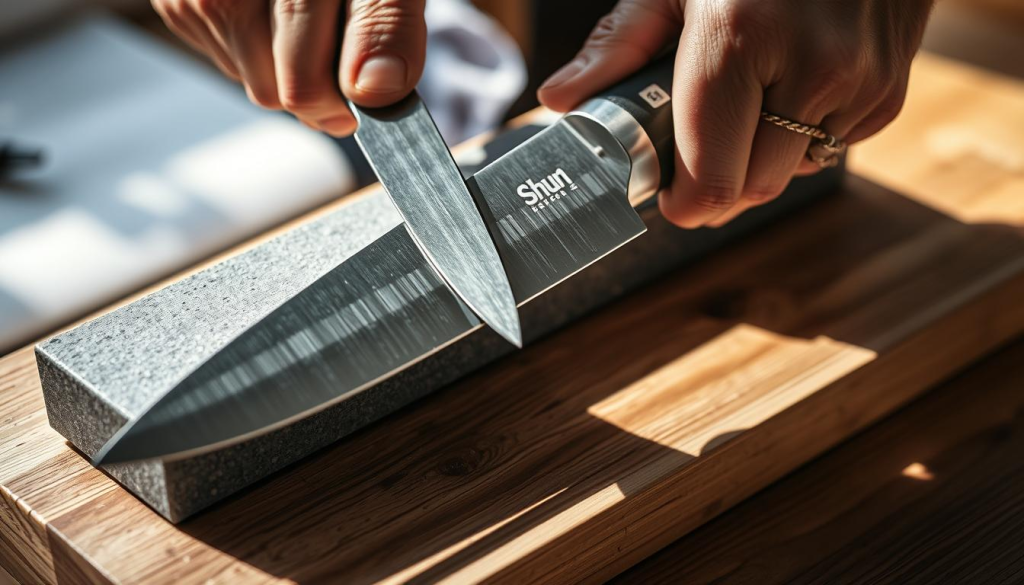
Maintaining a consistent angle is vital when sharpening with a whetstone. The ideal angle for Shun knives is typically between 15 to 20 degrees. Use a sharpening guide or practice holding the knife at the correct angle to ensure precision and consistency.
Sharpening Technique
To sharpen effectively, place the whetstone on a stable surface and hold the knife at the chosen angle. Gently draw the knife across the stone in a smooth, even motion, moving from the heel to the tip. Repeat this process on both sides of the blade until you achieve the desired sharpness. Consistency and patience are key to mastering this technique.
By following these steps and practicing regularly, you’ll be able to sharpen your Shun knife to perfection, ensuring it remains a reliable tool in your kitchen.
Alternative Sharpening Methods
If whetstones aren’t your preference, you can still achieve a razor-sharp edge on your Shun knife with other sharpening tools.
While whetstones are highly effective, some users may find alternative methods more suitable for their needs. Two popular alternatives are honing rods and electric sharpeners.
Using a Honing Rod
A honing rod is not a sharpening tool per se, but rather a means to realign the edge of your knife. Regular honing can keep your Shun knife performing optimally between sharpenings.
- Holding the rod vertically, sweep the knife down the rod at the same angle as your sharpening angle.
- Repeat on the other side to maintain evenness.
- Use light pressure to avoid damaging the blade.
Electric Sharpeners: A Quick Guide
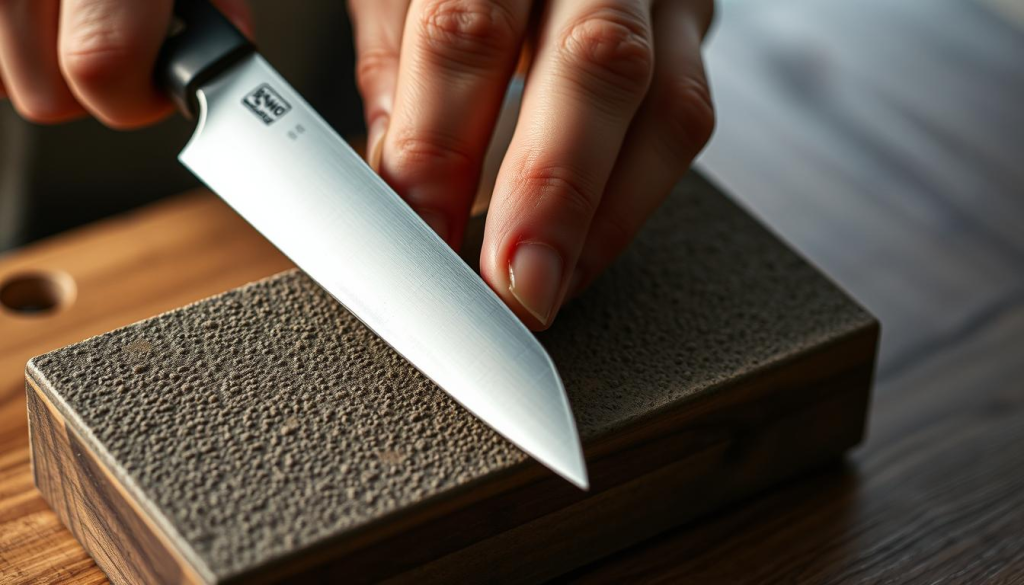
Electric sharpeners offer a quick and easy way to sharpen your Shun knife, especially for those less experienced with manual sharpening techniques.
- Choose an electric sharpener designed for high-carbon or Japanese-style knives.
- Follow the manufacturer’s instructions for the sharpening process.
- Be cautious not to over-sharpen, as this can damage the knife.
By understanding these alternative sharpening methods, you can keep your Shun knives in top condition, ensuring they continue to perform well in the kitchen.
Maintenance Tips for Shun Knives
To keep your Shun knives performing at their best, regular maintenance is not just recommended, it’s essential. Proper care ensures that your knives continue to provide the precision and ease of cutting that Shun is known for.
Regular Honing vs. Sharpening
Understanding the difference between honing and sharpening is crucial for maintaining your Shun knives. Honing involves realigning the blade’s edge to maintain its sharpness, whereas sharpening removes metal to create a new edge. Regular honing with a honing rod can significantly extend the time between sharpenings.
For optimal results, hone your Shun knife before and after each use. This practice not only keeps the blade sharp but also helps in maintaining its overall performance. Sharpening, on the other hand, should be done when the knife has become noticeably dull, typically after extensive use.
Proper Storage Techniques
Proper storage is vital to prevent damage to your Shun knives. Store your knives in a dry place, away from other utensils that could cause scratching or dulling. Consider using a knife block or a magnetic strip specifically designed for knife storage. These options keep your knives organized and protect their edges.
For added protection, you can also use blade guards or covers when storing your knives in a drawer. This extra precaution helps prevent accidental cuts and maintains the integrity of the blade.
By following these maintenance tips, you can ensure that your Shun knives remain in excellent condition, providing you with years of reliable service in the kitchen.
Troubleshooting Common Sharpening Issues
Even experienced chefs can encounter problems when sharpening their Shun knives, but knowing how to address these issues can make all the difference. Sharpening can sometimes be tricky, and issues may arise that affect the performance of your knife.
Dull Spots and Uneven Edges
Dull spots and uneven edges are common problems that can occur when sharpening a Shun knife. These issues can be caused by inconsistent sharpening angles or using the wrong grit whetstone.
- Check your sharpening angle to ensure it’s consistent. A deviation in angle can lead to uneven edges.
- Use a whetstone with the appropriate grit for your knife’s condition. A coarse grit can remove metal quickly but may leave a rough edge.
- Inspect your knife under good lighting to identify any dull spots or uneven areas.
Tip: Regularly honing your knife between sharpening sessions can help maintain an even edge.
What to Do if You Over-sharpen
Over-sharpening can be a problem, especially if you’re new to sharpening Shun knives. It can lead to a weakened blade or an uneven edge.
- Stop sharpening immediately if you notice any signs of over-sharpening, such as a wire edge or excessive metal removal.
- Use a finer grit whetstone to gently refine the edge and remove any burrs.
- Check the edge frequently to avoid further over-sharpening.
Remember, patience is key when sharpening your Shun knife.
| Issue | Cause | Solution |
|---|---|---|
| Dull Spots | Inconsistent sharpening angle or wrong grit | Check angle, use appropriate grit, inspect under good lighting |
| Uneven Edges | Inconsistent sharpening technique | Maintain consistent angle, hone regularly |
| Over-sharpening | Excessive sharpening | Stop sharpening, use finer grit to refine edge |
As noted by renowned knife expert,
“The key to maintaining a sharp edge is not just sharpening, but also honing and proper storage.”
This emphasizes the importance of a comprehensive approach to knife care.
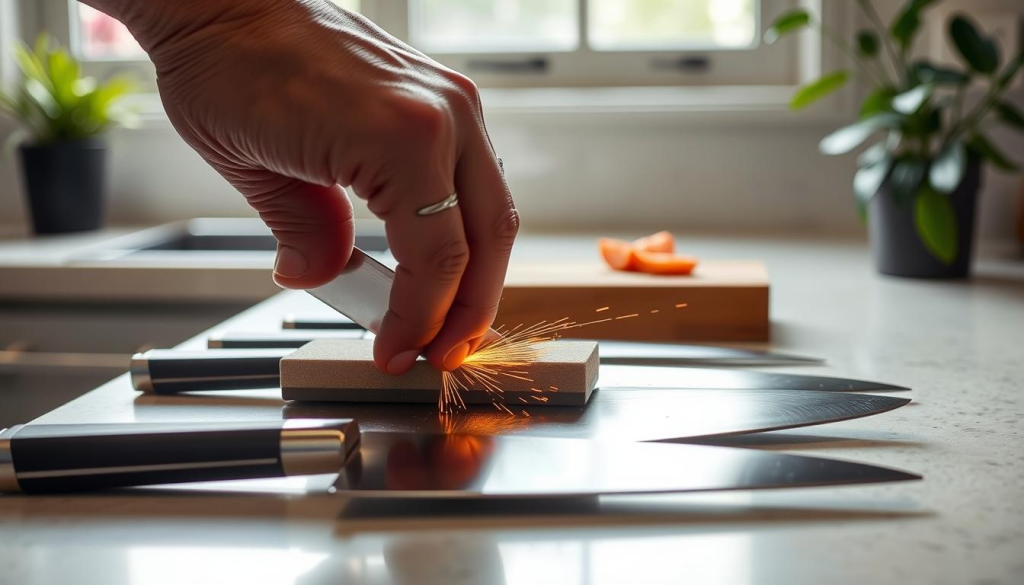
By understanding and addressing common sharpening issues, you can keep your Shun knife in optimal condition, ensuring it continues to perform at its best.
When to Seek Professional Help
If you’re unsure about the sharpening process or if your Shun knife is severely damaged, it’s time to consider professional sharpening services. While DIY shun knife sharpening can be cost-effective and satisfying, there are instances where the expertise of a professional is invaluable.
Signs Your Knife Needs Expert Attention
Several signs indicate that your Shun knife requires professional attention. These include:
- A significantly dull edge that doesn’t respond to home sharpening for shun knives
- Visible damage to the blade, such as chips or cracks
- Uncertainty about the sharpening angle or technique
If you notice any of these issues, it’s wise to seek help from a professional to restore your knife to its optimal condition.
Finding a Reputable Knife Sharpener
Once you’ve determined that your Shun knife needs professional sharpening, the next step is to find a reputable service. Here are some tips:
- Look for sharpeners who specialize in high-quality knives like Shun
- Check reviews and testimonials from other customers
- Ask about their sharpening techniques and the equipment they use
By choosing a skilled and experienced sharpener, you can ensure that your Shun knife receives the care it deserves, maintaining its performance and longevity.
Conclusion: Enjoying Your Sharpened Shun Knife
Now that you’ve sharpened your Shun knife, you can enjoy precise cutting and cooking with confidence. A well-maintained Shun knife is a joy to use, and with regular maintenance, you’ll be able to extend its lifespan.
Precision in the Kitchen
Cooking with a sharp Shun knife makes a significant difference in your culinary experience. The precision and ease of cutting that come with a sharp blade allow for more efficient meal preparation. By mastering sharpening techniques for Shun knives, you’ll be able to tackle even the most delicate ingredients with ease.
Maintaining Your Knife’s Longevity
To keep your Shun knife in top condition, regular maintenance is essential. This includes proper storage, regular honing, and occasional sharpening. By following these simple steps, you can enjoy years of precise cutting and cooking with your Shun knife. Learning to sharpen Shun knives at home and performing Shun knife maintenance at home will become second nature, ensuring your knife remains a trusted companion in the kitchen.