
I have always been fascinated by the art of knife-making, and Sakai Takayuki carbon steel knives stand out as a testament to exceptional craftsmanship. With a rich history spanning over 600 years, Sakai City has been the hub for skilled artisans who handcraft kitchen knives using traditional and modern techniques.
The result is a collection of handmade kitchen knives that are not only beautiful but also incredibly sharp. As a knife enthusiast, I appreciate the attention to detail and the care that goes into creating each knife, making them a trusted choice among professionals and home chefs worldwide.
Key Takeaways
- Renowned for their exceptional sharpness and beauty
- Crafted using traditional and modern techniques
- Trusted by professionals and home chefs worldwide
- Rich history and heritage in blade-making
- Handcrafted with attention to detail and care
Introduction to Sakai Takayuki Carbon Steel
The art of crafting exceptional knives has been perfected by Sakai Takayuki, a brand synonymous with quality and precision. With a legacy that spans generations, Sakai Takayuki has established itself as a leading manufacturer of high-quality, high-carbon steel knives.
What Sets Sakai Takayuki Apart?
Sakai Takayuki’s commitment to excellence is evident in every detail of their knives. From the selection of premium materials to the meticulous craftsmanship, each knife is a testament to the brand’s dedication to quality. The use of high-carbon steel ensures that their knives are not only sharp but also durable, making them a favorite among professional chefs and serious home cooks.
The brand’s focus on traditional Japanese techniques, combined with modern innovations, results in knives that are both functional and beautiful. Whether you’re preparing delicate sashimi or chopping robust vegetables, Sakai Takayuki knives are designed to perform flawlessly.
Brief History of Sakai Takayuki
Sakai Takayuki continues the legacy of Sakai City, a place renowned for producing samurai swords for centuries. The brand collaborates with generations of master artisans to create blades that are used by professional chefs worldwide. This heritage is reflected in the quality and craftsmanship of their knives, which are designed to meet the demands of modern cooking while honoring traditional techniques.
The history of Sakai Takayuki is deeply intertwined with the history of Japanese sword-making. The brand’s artisans have adapted the skills and techniques used in crafting samurai swords to create exceptional kitchen knives.
Importance of Carbon Steel in Japanese Knives
Carbon steel is a critical component of Japanese knives, known for its ability to hold a sharp edge and its durability. Sakai Takayuki’s use of high-carbon steel ensures that their knives are capable of achieving a razor-sharp edge, making them ideal for precise cutting tasks.
| Material | Sharpness | Durability |
|---|---|---|
| High-Carbon Steel | Excellent | High |
| Stainless Steel | Good | Very High |
| Low-Carbon Steel | Fair | Low |
The table above highlights the advantages of high-carbon steel in knife construction, particularly in terms of sharpness and durability, making it an ideal choice for Japanese knives.
The Art of Knife Making in Sakai
Sakai Takayuki knives embody the perfect blend of traditional Japanese craftsmanship and modern steel technology. This blend is a hallmark of the brand’s commitment to producing high-quality, handmade kitchen knives that cater to both professional chefs and culinary enthusiasts.
Traditional Techniques Used
The art of knife making in Sakai is deeply rooted in traditional techniques that have been passed down through generations. Forging is a critical process where the steel is heated and shaped to create the desired form. This traditional method ensures that each knife is not only functional but also a work of art.
The use of high-carbon steel is another traditional aspect that Sakai Takayuki adheres to, providing the knives with the necessary hardness and edge retention for precise cutting.
Modern Innovations in Craftsmanship
While traditional techniques form the backbone of Sakai Takayuki’s craftsmanship, the brand also incorporates modern innovations to enhance the performance and durability of its knives. Advanced steel technologies are used to improve the knives’ resistance to corrosion and wear.
Moreover, modern manufacturing techniques allow for precise control over the sharpening process, ensuring that each knife meets the high standards of professional chef tools.
Sakai’s Unique Aesthetic Appeal
Sakai Takayuki knives are not just functional tools but also pieces of art that reflect the brand’s unique aesthetic appeal. The attention to detail in the craftsmanship, from the balance of the knife to the finish of the handle, contributes to their distinctive beauty.
The aesthetic appeal of these knives is a testament to the brand’s commitment to kitchenware craftsmanship that combines form and function seamlessly.
Understanding Carbon Steel: The Material
Carbon steel is a material that has been revered for centuries in the craft of knife making. Its exceptional qualities make it a preferred choice among craftsmen and chefs alike. The unique combination of iron and carbon gives carbon steel its remarkable strength and durability.
Benefits of Carbon Steel in Knives
One of the primary benefits of using carbon steel in knives is its ability to achieve and maintain a sharp edge. High carbon steel knives are known for their blade sharpness and durability, making them ideal for precise cutting tasks. Additionally, carbon steel knives can be sharpened to a finer edge compared to other materials, enhancing their performance.
- Excellent sharpness and edge retention
- Durable and resistant to wear
- Easy to sharpen
Carbon Steel vs. Stainless Steel
When choosing a knife, one of the key decisions is between carbon steel and stainless steel. While stainless steel offers resistance to corrosion, carbon steel provides superior sharpness and durability. However, carbon steel requires more maintenance to prevent rust. Understanding the differences is crucial in making an informed decision.
| Material | Sharpness | Durability | Maintenance |
|---|---|---|---|
| Carbon Steel | High | High | High |
| Stainless Steel | Medium | Medium | Low |
How to Care for Carbon Steel Knives
Caring for your top quality kitchen knives made from carbon steel is essential to maintain their performance. To preserve their quality, it’s recommended to hand wash and dry them immediately after use. Avoid cutting on hard surfaces, and never put your carbon steel knives in the dishwasher. Regular maintenance will ensure they remain in optimal condition.
- Hand wash with mild soap and dry immediately
- Avoid cutting on hard surfaces like glass or stone
- Store in a dry place, consider a knife roll or block
- Regularly oil the blade to prevent rust
Popular Sakai Takayuki Knife Models
Among the most revered knives in the culinary world are those crafted by Sakai Takayuki. Renowned for their exceptional craftsmanship and high-quality materials, Sakai Takayuki knives have become a staple in many professional kitchens.
Gyuto: The Versatile Chef’s Knife
The Gyuto is a versatile chef’s knife that excels in various cutting tasks, from slicing meat to chopping vegetables. Its balanced design and sharp edge make it a favorite among chefs.
Key Features of Gyuto:
- Sharp, durable edge
- Balanced weight distribution
- Versatile for various cutting tasks
Nakiri: The Vegetable Specialist
Nakiri knives are designed specifically for vegetable preparation, offering a straight edge that allows for precise, push-cutting motions. This makes them ideal for tasks like slicing and dicing vegetables.
Key Features of Nakiri:
- Straight edge for push-cutting
- Thin, sharp blade for precision
- Ideal for vegetable preparation
Santoku: The All-Purpose Knife
The Santoku is an all-purpose knife that combines the benefits of both Gyuto and Nakiri knives. It is designed for a variety of kitchen tasks, making it a valuable addition to any chef’s toolkit.
Key Features of Santoku:
- Combines the versatility of Gyuto and Nakiri
- Sharp, straight edge
- Suitable for a wide range of kitchen tasks
| Knife Model | Primary Use | Key Features |
|---|---|---|
| Gyuto | Versatile chef’s knife | Sharp edge, balanced design |
| Nakiri | Vegetable preparation | Straight edge, thin blade |
| Santoku | All-purpose knife | Combines Gyuto and Nakiri features |
As
“A good knife is not just a tool, it’s an extension of the chef’s hand.”
This quote resonates with the philosophy behind Sakai Takayuki’s craftsmanship, where every knife is designed to feel like an extension of the chef, providing precision, comfort, and reliability.
In conclusion, Sakai Takayuki’s popular knife models, including Gyuto, Nakiri, and Santoku, are highly regarded for their quality and performance. Whether you’re a professional chef or an avid home cook, these knives are sure to enhance your culinary experience.
Choosing the Right Sakai Takayuki Knife
The world of Sakai Takayuki knives offers a diverse range of options, making it essential to understand what to look for when making a selection. With a rich history and exceptional craftsmanship, these handmade kitchen knives are designed to cater to various culinary needs.
Factors to Consider When Buying
When buying a Sakai Takayuki knife, several factors come into play. First, consider the type of knife needed, as Sakai Takayuki offers a variety of models such as Gyuto, Nakiri, and Santoku, each designed for specific tasks. The material is another crucial factor; Sakai Takayuki knives are renowned for their high-carbon steel blades, which offer top quality kitchen knives performance.
The handle type is also important, as it affects the comfort and usability of the knife. Sakai Takayuki offers various handle designs, ensuring that there’s a knife to suit every user’s preference. Additionally, consider the balance and weight of the knife, as these factors significantly impact its handling and performance.
Personalized vs. Standard Options
Sakai Takayuki offers both personalized and standard knife options. Personalized knives allow for customization in terms of design, material, and other features, making them unique pieces that reflect the user’s personal style. Standard options, on the other hand, are crafted with traditional techniques and designs, embodying the essence of kitchenware craftsmanship.
While personalized knives offer a tailored experience, standard knives are often preferred for their authenticity and adherence to traditional craftsmanship. The choice between personalized and standard options depends on individual preferences and needs.
Where to Buy Authentic Sakai Takayuki Knives
To ensure authenticity, it’s crucial to purchase Sakai Takayuki knives from authorized dealers or directly from the manufacturer’s website. Be cautious of counterfeit products, especially when shopping online. Authorized retailers can provide guarantees of authenticity and often offer after-sales support.
When purchasing, look for detailed product descriptions, high-quality images, and customer reviews. These can provide valuable insights into the product’s quality and the seller’s reliability. By being diligent, you can acquire a genuine Sakai Takayuki knife that exemplifies the brand’s commitment to top quality kitchen knives.
Maintenance and Care of Your Sakai Takayuki Knife
The longevity and performance of your Sakai Takayuki carbon steel knife depend heavily on proper care and maintenance. As a valuable addition to your kitchenware, it’s essential to understand the best practices for keeping it in optimal condition.
Sharpening Techniques for Carbon Steel
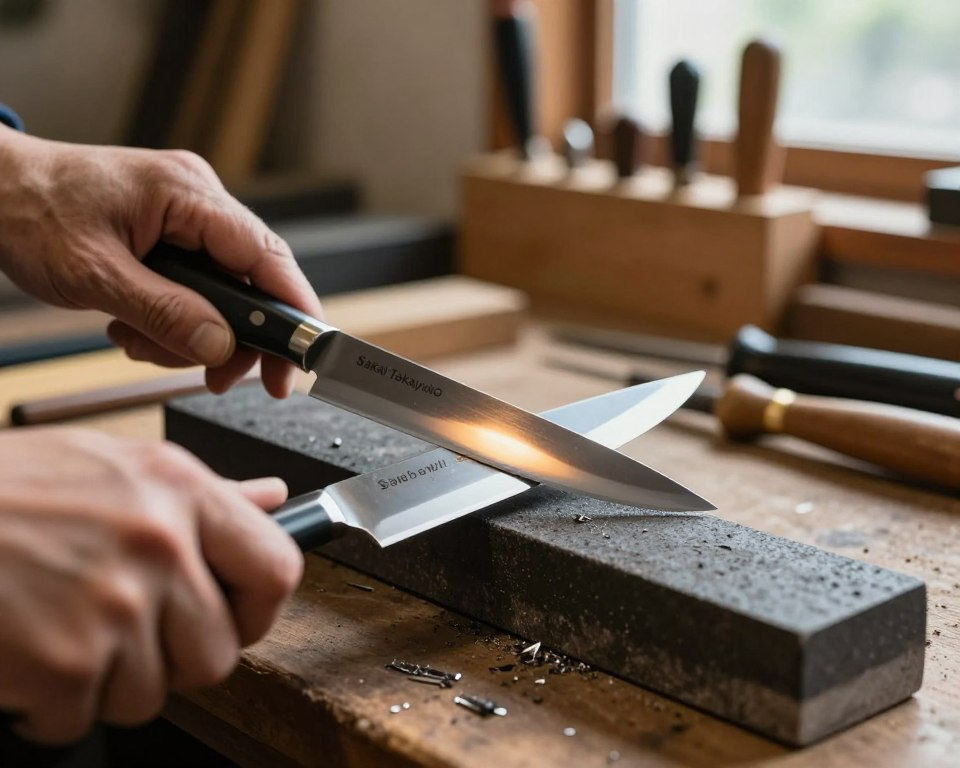
Regular sharpening is vital to maintaining the edge of your Sakai Takayuki knife. Using a high-quality Japanese sharpening stone is recommended, as it allows for precise control over the sharpening angle and technique. I find that a consistent sharpening routine not only enhances the blade’s sharpness but also contributes to its overall durability.
To sharpen your knife effectively, follow these steps:
- Select a sharpening stone with a grit suitable for your knife’s condition.
- Position the knife at the desired angle, typically around 10-15 degrees for Japanese knives.
- Gently draw the knife across the stone, maintaining the angle, and repeat on the other side.
Cleaning and Storage Tips
Cleaning your Sakai Takayuki knife after each use is crucial to prevent rust and maintain its appearance. I recommend hand washing with mild soap and drying immediately to prevent water spots. For storage, consider using a knife block or a dry storage container to protect the blade from damage and exposure to moisture.
| Cleaning Method | Storage Recommendation |
|---|---|
| Hand wash with mild soap | Store in a knife block |
| Dry immediately after washing | Use a dry storage container |
Signs of Wear and When to Replace
Even with proper care, your Sakai Takayuki knife will eventually show signs of wear. Look for nicks, rust spots, or a significant decrease in sharpness. If your knife is beyond sharpening or repair, it may be time to consider replacing it. I have found that regular inspection helps in identifying these signs early, ensuring that your knife remains a valuable tool in your kitchen.
By following these maintenance and care tips, you can enjoy your Sakai Takayuki carbon steel knife for years to come, appreciating its craftsmanship and the value it brings to your culinary endeavors.
Sakai Takayuki in Professional Kitchens
In the culinary world, Sakai Takayuki knives are revered for their precision and durability. These exceptional tools have become indispensable in many professional kitchens, where chefs demand the highest quality to deliver outstanding dishes.
Chef Endorsements and Testimonials
Many renowned chefs have endorsed Sakai Takayuki knives for their superior craftsmanship and performance. For instance, Chef Masaharu Morimoto, a celebrated figure in the culinary world, praises Sakai Takayuki for its exceptional sharpness and balance. Such endorsements underscore the trust that professionals place in these Japanese chef knives.
“Sakai Takayuki knives have been my go-to choice for years. The carbon steel is unbeatable in terms of sharpness and durability.”
Use Cases in Culinary Schools
Sakai Takayuki knives are not only favored by experienced chefs but are also widely used in culinary schools. These institutions recognize the importance of training students with high-quality, professional chef tools that can withstand the rigors of a demanding curriculum.
| Culinary School | Location | Knife Model Used |
|---|---|---|
| The Culinary Institute | New York | Sakai Takayuki Gyuto |
| Le Cordon Bleu | Paris | Sakai Takayuki Santoku |
| Tokyo Cooking Academy | Tokyo | Sakai Takayuki Nakiri |
Popularity Among Home Cooks
Beyond professional kitchens, Sakai Takayuki carbon steel knives have gained popularity among home cooks who appreciate the value of high-quality kitchen tools. The durability and performance of these knives make them a worthwhile investment for anyone serious about cooking.
The widespread adoption of Sakai Takayuki knives among both professionals and home cooks is a testament to their exceptional quality and the trust they inspire. Whether in a Michelin-starred restaurant or a home kitchen, these knives continue to deliver outstanding performance.
The Value of Investing in Quality Knives
For those who value precision and durability in their cooking tools, Sakai Takayuki carbon steel knives are a worthwhile investment. The craftsmanship that goes into each knife is a testament to the brand’s commitment to quality.
Long-Term Benefits of Quality Blade
A high-quality knife like those from Sakai Takayuki is not just a tool; it’s an investment in your culinary journey. The durability of carbon steel ensures that with proper care, these knives can last for decades, maintaining their sharpness and performance.
Long-term benefits include reduced need for frequent replacements and the development of a personal connection with the tool as it molds to the user’s hand.
Cost-Effectiveness of Sakai Takayuki Knives
While the initial cost of a Sakai Takayuki knife may be higher than that of a mass-produced knife, its longevity and performance make it cost-effective in the long run. The value lies not just in the material but in the craftsmanship and the brand’s heritage.
- Durable construction reduces the need for frequent replacements.
- Excellent performance enhances cooking efficiency and enjoyment.
- The timeless design ensures the knife remains a valuable asset in the kitchen for years to come.
Environmental Considerations and Sustainability
In an era where sustainability is increasingly important, investing in high-quality, long-lasting products like Sakai Takayuki knives aligns with eco-friendly values. By choosing a knife that can be maintained and used for a long time, consumers can reduce waste associated with disposable or low-quality kitchen tools.
The focus on sustainability is not just about the product itself but also about the practices of the manufacturer, including sourcing materials responsibly and promoting a culture of longevity over disposability.
Sakai Takayuki and Japanese Culinary Philosophy
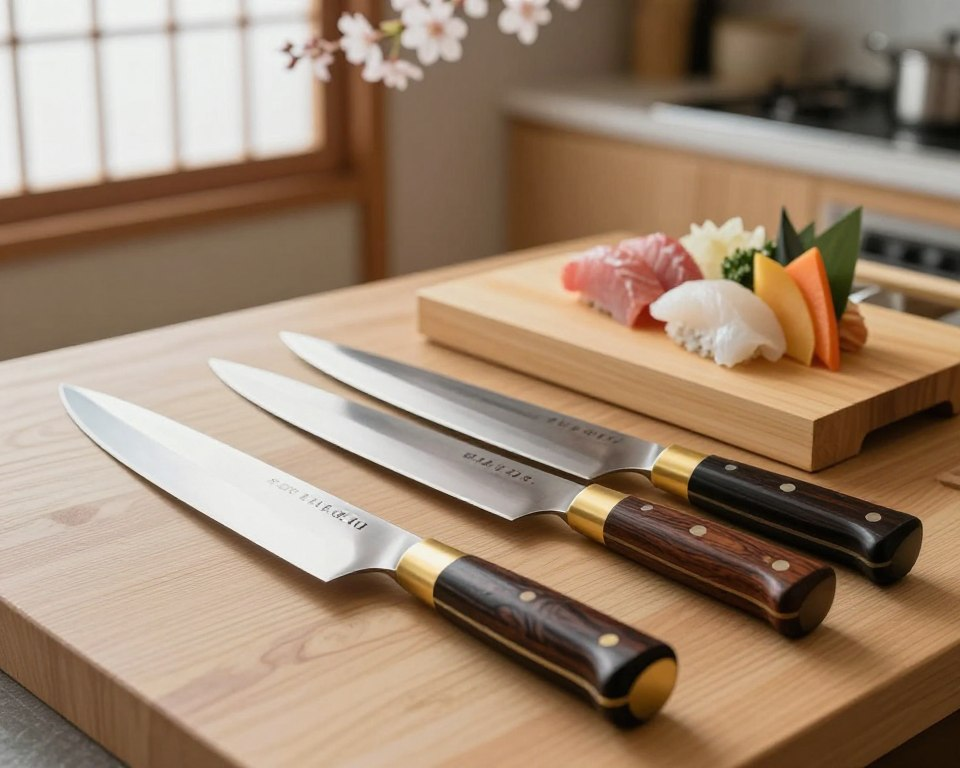
At the heart of Sakai Takayuki’s craftsmanship lies a deep respect for Japanese culinary traditions and the spirit of ‘Monozukuri.’
The Concept of “Monozukuri”
‘Monozukuri,’ or the spirit of craftsmanship, is a Japanese philosophy that emphasizes the importance of quality and detail in the creation of goods. Sakai Takayuki embodies this concept through their meticulous attention to detail in crafting traditional Japanese cutlery. Every knife is a testament to the craftsman’s skill and dedication to their art.
A Deeper Look into Japanese Cooking Tools
Japanese cooking tools, particularly Japanese chef knives, are renowned for their precision and quality. These tools are not just instruments for preparing food; they are an extension of the chef’s creativity and technique. Sakai Takayuki’s commitment to producing high-quality knives reflects a broader appreciation for the art of cooking and the importance of kitchenware craftsmanship.
How Heritage Shapes Modern Cooking
The heritage of Japanese culinary practices has a profound impact on modern cooking. Techniques passed down through generations, combined with the use of exceptional tools like those crafted by Sakai Takayuki, shape the way chefs approach their craft today. This blend of tradition and innovation is what sets Japanese cuisine apart, making it both timeless and contemporary.
In conclusion, Sakai Takayuki’s adherence to Japanese culinary philosophy is evident in their exceptional craftsmanship and attention to detail. By embracing the spirit of ‘Monozukuri’ and honoring traditional techniques, Sakai Takayuki continues to play a significant role in shaping the world of Japanese cuisine.
Common Misconceptions About Carbon Steel Knives
Carbon steel knives have been surrounded by myths and misconceptions, often deterring cooks from experiencing their superior performance. While they require more maintenance than stainless steel knives, proper care can significantly enhance their longevity and performance.
Debunking Myths Around Rust and Maintenance
One of the most prevalent misconceptions about carbon steel knives is that they are prone to rust and require excessive maintenance. However, with regular cleaning and drying, the risk of rust can be minimized. It’s also worth noting that many modern carbon steel knives come with a protective coating that further reduces the risk of rust.
- Regularly clean and dry your carbon steel knives after use.
- Apply a thin layer of oil to the blade to prevent rust.
- Store your knives in a dry place, away from moisture.
The Truth About Price and Quality
Another common misconception is that the price of a carbon steel knife is directly correlated with its quality. While it’s true that high-quality carbon steel knives can be more expensive, the price is often influenced by factors such as craftsmanship, materials, and brand reputation. It’s possible to find affordable carbon steel knives that offer excellent performance and durability.
Key factors influencing the price of carbon steel knives include:
- The quality of the carbon steel used.
- The level of craftsmanship involved in making the knife.
- The reputation of the brand.
Understanding Knife Performance Over Time
Some cooks believe that carbon steel knives lose their sharpness and performance over time. However, with proper care and maintenance, these knives can retain their sharpness for a long time. In fact, many chefs prefer carbon steel knives because they can be easily sharpened to maintain their edge.
To ensure your carbon steel knife performs optimally, remember to:
- Sharpen your knife regularly.
- Use the correct sharpening technique.
- Store your knife properly to prevent damage.
Customer Reviews and Feedback
Sakai Takayuki’s commitment to excellence is reflected in the glowing reviews from satisfied customers. The brand’s handmade kitchen knives have set a new standard in the culinary world, praised for their exceptional sharpness, balance, and craftsmanship.
Real User Experiences with Sakai Takayuki Knives
Many users have shared their positive experiences with Sakai Takayuki knives, highlighting their durability and performance. For instance, professional chefs appreciate the precision and control offered by these professional chef tools, while home cooks value their ease of use and maintenance.
- Users praise the knives for their exceptional sharpness and ability to retain their edge.
- The balanced design of Sakai Takayuki knives makes them comfortable to use for extended periods.
- The aesthetic appeal of these knives, reflecting kitchenware craftsmanship, is also frequently mentioned.
Ratings and Rankings in the Market
Sakai Takayuki knives consistently receive high ratings across various platforms, reflecting their standing among professional chef tools. Customers appreciate the value for money, citing the knives’ longevity and performance as key factors.
- Amazon ratings frequently highlight the knives’ quality and durability.
- Culinary forums and review sites praise Sakai Takayuki for its commitment to craftsmanship.
- The brand’s customer service and warranty offerings also contribute to its positive reputation.
What Customers Love Most About Them
At the heart of Sakai Takayuki’s success is its dedication to producing high-quality, handmade kitchen knives that meet the needs of both professionals and enthusiasts. Customers love the attention to detail and the heritage behind each knife, reflecting the brand’s commitment to kitchenware craftsmanship.
In conclusion, Sakai Takayuki knives have earned their place in kitchens worldwide, thanks to their exceptional quality and the positive experiences of their users.
Conclusion: Why Choose Sakai Takayuki Carbon Steel?
Sakai Takayuki carbon steel knives embody a perfect blend of heritage and innovation, crafted with precision and artistry that reflects centuries of Japanese knife-making tradition. For those seeking top quality kitchen knives, Sakai Takayuki offers an unparalleled culinary experience.
Key Benefits Recap
The exceptional craftsmanship of Sakai Takayuki knives ensures durability and performance. Japanese chef knives, such as the Gyuto and Santoku, are designed to meet the demands of professional kitchens while remaining accessible to home cooks. The use of carbon steel provides a sharp edge and excellent cutting performance.
Experience the Difference
For anyone looking to elevate their cooking, Sakai Takayuki carbon steel knives are an excellent choice. I encourage you to explore the range of Sakai Takayuki knives and experience the difference that centuries of craftsmanship can make in your kitchen.
Craftsmanship and Legacy
The commitment to quality and tradition is evident in every Sakai Takayuki knife. As a testament to Japanese culinary philosophy, these knives represent a dedication to the art of cooking and the joy of creating delicious meals with top quality kitchen knives.