Understanding the quality of Shun knives is crucial for both professionals and enthusiasts. One key factor that determines their quality is the Rockwell hardness, a measure that indicates the knife’s resistance to wear and deformation.
The Rockwell scale provides a convenient way to compare the hardness of different materials, such as types of steel. According to Shun FAQs, it measures hardness based on the depth of penetration of a diamond cone pressed into the material at a constant pressure.
For knife enthusiasts, knowing the Rockwell hardness of Shun knives is essential to appreciate their craftsmanship and durability.
Key Takeaways
- The Rockwell hardness scale measures the resistance of materials to deformation.
- Shun knives are known for their high-quality steel and precise craftsmanship.
- Understanding Rockwell hardness helps in appreciating the durability of Shun knives.
- The hardness of a knife affects its sharpness and overall performance.
- Shun knives are designed to maintain their sharpness over time.
Understanding Rockwell Hardness
The hardness of a knife, as measured by the Rockwell scale, plays a pivotal role in its cutting performance and longevity. Rockwell hardness is a critical factor that determines a knife’s ability to retain its sharpness and withstand wear and tear.
What is Rockwell Hardness?
Rockwell hardness is a measure of a material’s resistance to indentation, which in the context of knives, translates to its ability to hold an edge. The Rockwell scale is used to quantify the hardness of a knife’s blade, with higher ratings indicating greater hardness. Shun, a renowned knife manufacturer, hardens their VG10 and VG-Max steel to 60-61 Rockwell and SG2 to 61-62 Rockwell, as stated in their FAQs.
“A higher Rockwell hardness rating generally means a knife will stay sharper longer, but it can also make the blade more prone to chipping,” notes a leading knife expert. This highlights the importance of understanding the balance between hardness and durability in knives.
Importance of Hardness in Knives
The hardness of a knife is crucial because it directly affects its performance and maintenance. A knife with the right level of hardness will not only cut more efficiently but also be easier to sharpen and maintain. The Rockwell rating of Shun knives is particularly noteworthy, as it reflects the brand’s commitment to producing high-quality cutlery.
- A harder knife retains its edge longer.
- A softer knife is easier to sharpen but may lose its edge more quickly.
The Shun cutlery Rockwell scale ratings demonstrate the brand’s attention to detail in crafting knives that balance hardness with durability. Understanding these ratings can help consumers make informed decisions when selecting a knife that meets their needs.
Rockwell Hardness Scale Explained
To appreciate the craftsmanship of Shun knives, it’s essential to understand the Rockwell hardness scale and its implications. The Rockwell hardness scale is a method used to measure the hardness of materials, particularly metals like those used in knife blades.
How the Scale Works
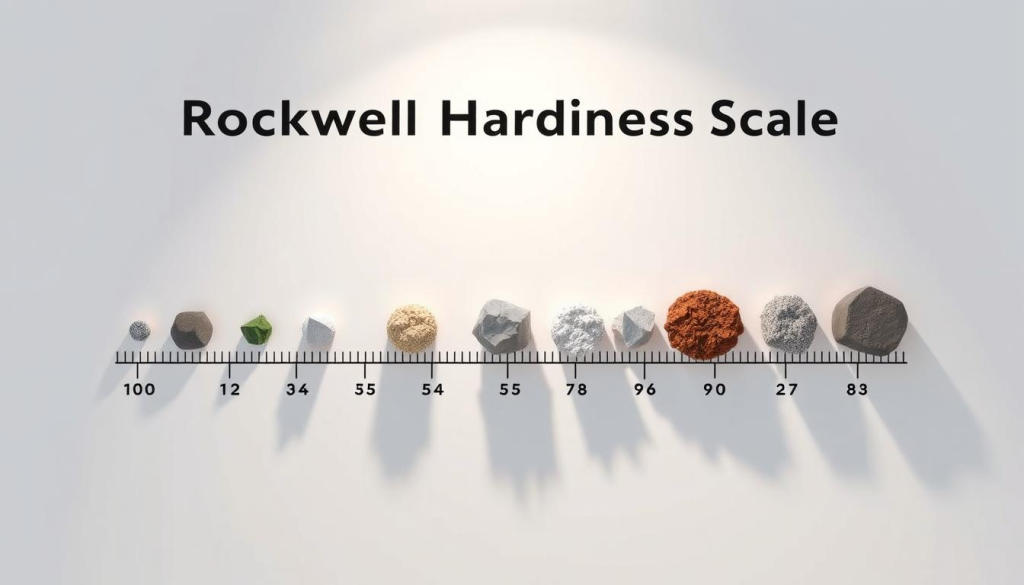
The Rockwell hardness test involves indenting the material with a diamond or tungsten carbide ball and measuring the depth of the indentation. The scale is calibrated such that a higher Rockwell hardness number indicates a harder material. For knife blades, this hardness is crucial as it directly affects their durability and edge retention.
An increase of one degree Rockwell equates to an increase in hardness of about 10%, as well as an increase in edge-holding ability, according to Shun’s FAQs. This correlation highlights the significance of the Rockwell hardness scale in evaluating knife performance.
Different Hardness Values
Different knife manufacturers produce blades with varying Rockwell hardness values. For Shun knives, their typical hardness ratings are a key factor in their reputation for quality. Understanding these values helps in comparing Shun knives with other brands.
| Rockwell Hardness | Characteristics | Implications for Shun Knives |
|---|---|---|
| 58-60 HRC | High hardness, excellent edge retention | Ideal for precision cutting, maintains sharpness |
| 60-62 HRC | Very high hardness, superior durability | Enhanced performance, suitable for heavy use |
| 62+ HRC | Extremely high hardness, potential for brittleness | May require more careful handling to avoid damage |
The table above illustrates how different Rockwell hardness values can affect the characteristics and performance of Shun knives. By understanding these differences, users can better appreciate the craftsmanship and quality that goes into making these knives.
The Rockwell Hardness of Shun Knives
Understanding the Rockwell hardness of Shun knives can help users appreciate the craftsmanship and material quality behind these premium kitchen tools. Shun knives are made from various types of steel, including VG10, VG-MAX, and SG2, each with its own hardness characteristics.
Typical Hardness Ratings
Shun knives are known for their high-carbon content and precise construction, which results in a specific Rockwell hardness that contributes to their edge retention and overall performance. The typical Rockwell hardness rating for Shun knives ranges from 60 to 64 HRC (Hardness Rockwell C), depending on the specific model and steel type used.
For instance, Shun knives made from VG-MAX steel are known for their exceptional hardness and corrosion resistance, typically achieving a Rockwell hardness of around 64 HRC. This high hardness level ensures that the knives maintain their sharpness over time, making them ideal for professional chefs and home cooks alike.
Factors Affecting Hardness
Several factors can affect the hardness of Shun knives, including the type of steel used, the heat treatment process, and the knife’s construction. The quality of the steel and the precision of the heat treatment process play crucial roles in determining the final hardness of the knife.
Additionally, the design and construction of the knife, including the shape and thickness of the blade, can influence how well the knife retains its edge and resists wear. Shun’s attention to detail in these areas contributes to the consistent hardness and performance of their knives.
By understanding the factors that affect the hardness of Shun knives, users can better appreciate the value and quality that these knives bring to their kitchen. Whether you’re a professional chef or an avid home cook, knowing the Rockwell hardness of your Shun knife can help you maintain it properly and ensure it continues to perform at its best.
Why Rockwell Hardness Matters for Shun Knives
When it comes to Shun knives, their Rockwell hardness is a key determinant of their durability and effectiveness. The hardness of a Shun knife directly influences its ability to perform under various kitchen conditions.
Durability and Edge Retention
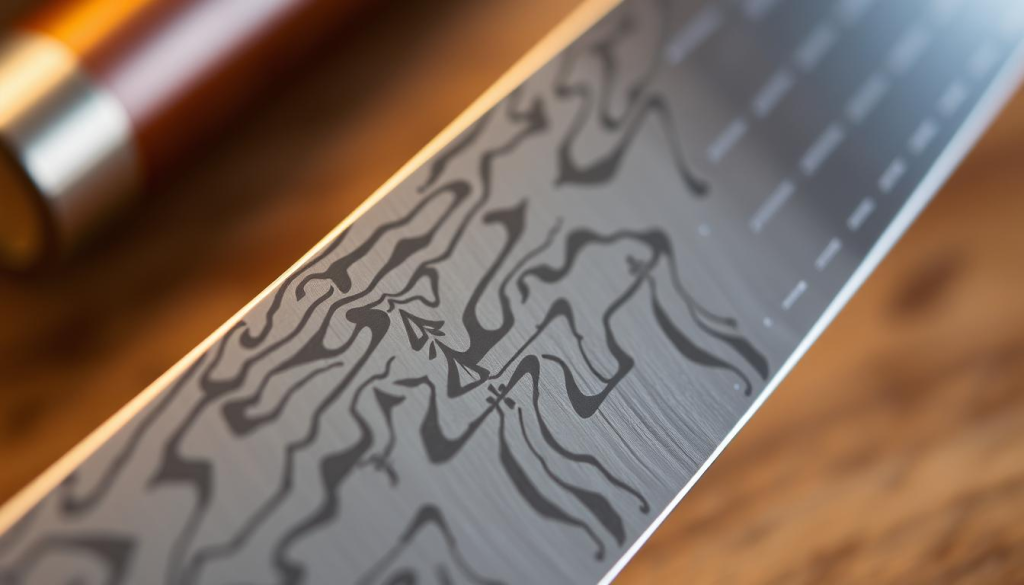
The Rockwell hardness rating of Shun knives contributes significantly to their durability and edge retention. A higher Rockwell hardness rating typically indicates that the knife will maintain its sharpness longer and withstand wear and tear better.
- A harder knife tends to have better edge retention, making it more efficient for cutting tasks.
- Shun knives, known for their high-quality materials, offer excellent durability, ensuring they remain a valuable kitchen companion for years.
Ease of Sharpening
While a harder knife retains its edge well, it’s also important to consider the ease of sharpening. Shun knives, with their specific Rockwell hardness rating, strike a balance between being hard enough for durability and soft enough to be sharpened with relative ease.
- Proper sharpening techniques can enhance the performance of Shun knives.
- Regular maintenance is crucial to preserving the hardness and overall quality of the knife.
By understanding the importance of Rockwell hardness in Shun knives, users can better appreciate the craftsmanship and material quality that goes into making these exceptional kitchen tools.
Comparing Shun Knives to Other Brands
Shun knives are renowned for their exceptional hardness and performance, but how do they stack up against other brands? When evaluating kitchen knives, understanding the differences in Rockwell hardness is crucial for making an informed decision.
Hardness Ratings of Competitors
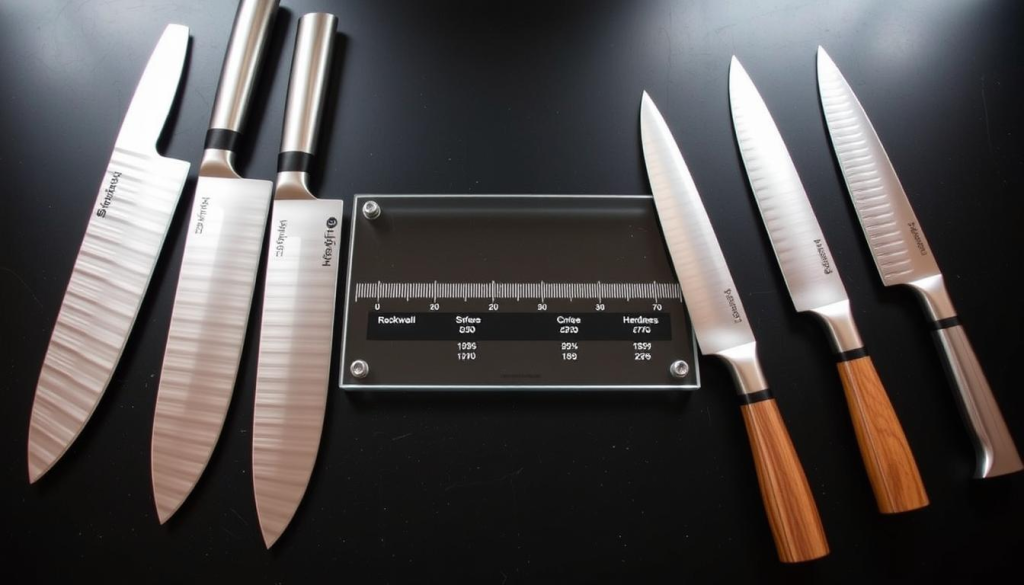
Shun knives are known for their high Rockwell hardness, typically rated between 60-64 on the Rockwell scale. This is significantly higher than some other brands, which can range from 52 to 58. For instance, a comparison of major knife brands reveals the following hardness ratings:
| Brand | Rockwell Hardness |
|---|---|
| Shun | 60-64 |
| Wüsthof | 54-58 |
| Global | 56-60 |
| Zwilling J.A. Henckels | 54-56 |
As shown, Shun knives have a higher Rockwell hardness compared to many competitors, indicating a superior ability to retain their edge.
Performance in Kitchen Use
The performance of Shun knives in kitchen use is a testament to their high-quality manufacturing and material selection. Chefs and home cooks alike praise Shun knives for their durability and ease of sharpening. According to a review by a professional chef,
“Shun knives are a joy to use, maintaining their sharpness even after extensive use.”
In terms of performance, Shun knives excel due to their high Rockwell hardness, which ensures a sharp edge that lasts. This is particularly beneficial for tasks that require precision, such as filleting fish or slicing vegetables.
Key advantages of Shun knives include:
- Exceptional edge retention
- Durability and resistance to wear
- Ease of sharpening
While other brands may offer similar benefits, Shun’s commitment to achieving high Rockwell hardness sets it apart in the market.
Maintenance Tips for Shun Knives
Proper maintenance is key to extending the life of your Shun knives and ensuring they continue to perform at their best. Regular honing and sharpening are crucial for maintaining the edge of these high-quality knives, as emphasized in Shun’s FAQs.
Proper Sharpening Techniques
To maintain the Rockwell hardness of Shun knives, it’s essential to use the correct sharpening techniques. Start by using a whetstone with a fine grit, typically around 6000-8000 grit, to hone the edge. Hold the knife at the recommended angle, usually around 16 degrees for Shun knives, and gently draw it across the stone in a smooth, consistent motion.
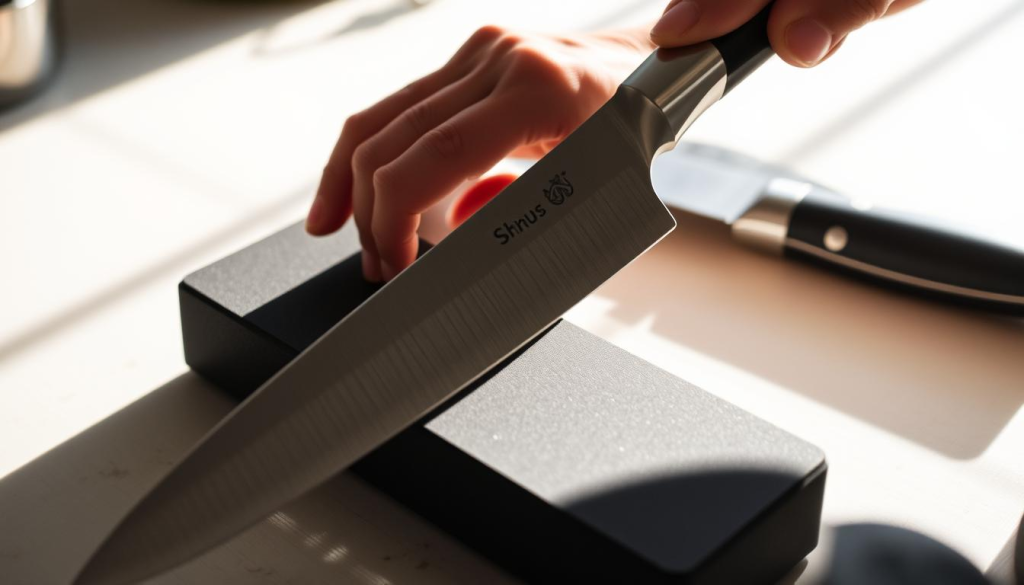
For those new to sharpening, it’s advisable to practice on a less expensive knife or consider using a sharpening service. Regular sharpening not only maintains the knife’s sharpness but also contributes to its overall shun knife durability.
Best Practices for Care
In addition to proper sharpening, there are several best practices to follow for caring for your Shun knives. Always hand wash your knives and dry them immediately to prevent rust. Store your knives in a dry place, such as a knife block or on a magnetic strip, to protect the blades.
- Clean your knives after each use to prevent the buildup of residue.
- Avoid cutting on hard surfaces like glass or stone, as this can damage the blade.
- Regularly honing your knife with a steel will help maintain its edge between sharpenings.
By following these care practices, you can help preserve the shun blade hardness and ensure your knives remain in excellent condition for years to come.
Choosing the Right Shun Knife
Shun knives are renowned for their exceptional quality, but to choose the right one, it’s essential to consider their Rockwell hardness and how it aligns with your cooking needs. The Rockwell hardness of a Shun knife significantly impacts its durability, edge retention, and ease of sharpening.
Knife Types and Their Hardness
Shun offers a variety of knife models, each with its unique characteristics and hardness levels. For instance, the Classic line is known for its balance of hardness and flexibility, typically featuring a Rockwell hardness rating that ensures durability without compromising on sharpness.
Different Shun Knife Models and Their Hardness:
- Classic Line: Known for a balance of hardness and flexibility.
- DM0706 Series: Offers a higher Rockwell hardness for enhanced edge retention.
- K Classic Line: Features a VG-MAX steel alloy for superior sharpness and hardness.
Matching Knives to Cooking Styles
Your cooking style plays a crucial role in determining the most suitable Shun knife. For example, if you frequently chop hard vegetables, a knife with a higher Rockwell hardness rating might be more appropriate due to its enhanced durability.
Cooking Style Considerations:
- For delicate tasks, a knife with a slightly lower hardness might be preferable for its ease of sharpening.
- For heavy-duty use, a harder knife is recommended for its durability and resistance to wear.
By understanding the Rockwell hardness of Shun knives and matching it to your cooking style, you can make an informed decision that enhances your culinary experience.
Common Misconceptions About Knife Hardness
Knife hardness is a critical factor in a knife’s performance, but it’s often surrounded by misconceptions. The Rockwell hardness scale is used to measure the hardness of knives, including those made by Shun. Understanding the facts about knife hardness can help you make informed decisions when choosing a knife.
Hard vs. Soft Knives
One common misconception is that harder knives are always better. While a harder knife retains its edge longer, it can be more prone to chipping. On the other hand, softer knives are easier to sharpen but may require more frequent sharpening. Shun knives, known for their high-quality steel, typically have a Rockwell hardness rating that balances durability and sharpening ease.
The ideal hardness depends on the intended use of the knife and personal preference. For instance, a chef who frequently cuts through bones may prefer a harder knife, while a chef who prioritizes ease of sharpening may prefer a slightly softer one.
Myths About Shun Knives
Some myths surround Shun cutlery, particularly regarding their Rockwell hardness rating. One myth is that Shun knives are too hard and thus brittle. However, Shun knives are crafted to achieve a balance between hardness and flexibility, ensuring they are durable without being overly brittle.
Another misconception is that a higher Rockwell rating always means better performance. While the Rockwell rating is important, it’s just one factor among many that contribute to a knife’s overall performance. Shun knives are designed to offer excellent edge retention and durability, thanks in part to their carefully selected Rockwell hardness rating.
By understanding the facts about knife hardness and dispelling common myths, you can better appreciate the craftsmanship that goes into making high-quality knives like those from Shun.
Customer Reviews and Experiences
Shun knife users worldwide share their satisfaction and concerns about the knives’ hardness, creating a rich repository of real-world feedback. This collective insight offers a comprehensive understanding of how Shun knives perform in various kitchen environments.
Insights from Chefs
Professional chefs praise Shun knives for their exceptional durability and edge retention, attributes directly linked to their Rockwell hardness. “I’ve used my Shun knife for years, and it still performs like new,” says Chef Thompson. “The hardness is just right – not too hard to be brittle, not too soft to lose its edge quickly.”
“The balance between hardness and flexibility in Shun knives is unparalleled. It’s a game-changer for any serious chef.” – Chef Alex
User Testimonials on Hardness
Home cooks and professional chefs alike share their experiences with Shun knives, often highlighting their satisfaction with the knives’ shun blade hardness. “I’ve tried several brands, but Shun knives stand out for their consistent performance and durability,” notes a satisfied customer.
Many users appreciate the shun knife durability that comes with the precise Rockwell hardness rating. “My Shun knife has withstood the rigors of daily use in a busy kitchen, maintaining its sharpness and integrity,” reports another user.
To summarize, customer reviews and testimonials consistently praise Shun knives for their hardness, durability, and overall performance, making them a preferred choice among both professional chefs and home cooks.
Industry Standards for Knife Hardness
Understanding industry standards for knife hardness is crucial, especially when evaluating premium brands like Shun. The Rockwell hardness scale is a widely accepted measure for assessing the hardness of knife materials.
The Rockwell hardness scale provides a standardized way to compare the hardness of different knives. For high-carbon steel knives like those produced by Shun, a Rockwell hardness rating between 58 and 62 is considered optimal for balancing durability and sharpness.
Comparing Shun to Global Averages
Shun knives are known for their exceptional hardness, typically rated between 60 and 62 on the Rockwell scale. This rating is significantly higher than the global average for kitchen knives, which often ranges between 54 and 58.
The higher hardness of Shun knives contributes to their durability and edge retention. According to industry reports, Shun’s commitment to using high-quality materials and precise manufacturing processes results in knives that outperform many competitors in terms of hardness.
The Role of Materials in Hardness
The choice of materials plays a critical role in determining the hardness of a knife. Shun knives are made from high-carbon steel, a material known for its ability to achieve high Rockwell hardness ratings.
The use of high-carbon steel, combined with advanced heat treatment processes, enables Shun to produce knives with exceptional hardness. This not only enhances the performance of the knives but also contributes to their longevity.
In conclusion, Shun knives exceed global averages in terms of hardness, thanks to their high-quality materials and manufacturing processes. Understanding these industry standards helps consumers make informed decisions when selecting premium knives.
Conclusion: The Value of Rockwell Hardness for Shun Knives
The Rockwell hardness of Shun knives plays a crucial role in their performance and durability. Understanding the significance of this measurement can help you make informed decisions when selecting the right knife for your needs.
Investing in Quality
Investing in high-quality knives like Shun can be beneficial in the long run due to their durability and performance. The rockwell hardness of Shun knives ensures they retain their edge and withstand the rigors of frequent use.
When choosing a Shun knife, considering the shun knife hardness and shun kitchen knife hardness can help you select a tool that meets your cooking style and preferences. The value of a high-quality knife lies in its ability to perform consistently over time.
Long-Term Benefits
While the initial investment in a Shun knife may seem significant, the long-term benefits far outweigh the costs. With proper care and maintenance, a Shun knife can remain a trusted companion in the kitchen for years to come, making it a worthwhile investment for any serious cook or chef.