Shun knives are renowned for their exceptional quality and precision, making proper storage crucial to maintaining their performance and longevity. Proper care is essential to protect the blade’s edge and prevent accidental injuries.
Effective knife storage not only safeguards the knives but also maintains their overall quality. Various storage options and techniques can be employed to ensure that Shun knives remain in optimal condition.
Key Takeaways
- Proper storage maintains the quality and longevity of Shun knives.
- Protecting the blade’s edge is crucial for maintaining performance.
- Various storage options are available for Shun knives.
- Effective storage prevents accidental injuries.
- Maintaining overall knife quality is essential for optimal performance.
Why Proper Knife Storage is Essential
The importance of proper knife storage cannot be overstated, as it directly impacts the longevity and performance of your Shun knives. Proper storage is not just about keeping your knives organized; it’s about maintaining their quality and ensuring safety in the kitchen.
Protecting the Blade’s Edge
One of the primary reasons for proper knife storage is to protect the blade’s edge. When knives are stored improperly, they can come into contact with other utensils or hard surfaces, leading to premature dulling or damage. Using knife storage ideas such as magnetic strips or individual slots in a knife block can help keep your Shun knives sharp and ready for use.
Preventing Accidental Injuries
Another critical aspect of knife storage is preventing accidental injuries. Loose knives in a drawer or on a countertop can be hazardous, especially in a busy kitchen. By utilizing best knife storage solutions like drawer inserts or wall-mounted magnetic strips, you can keep your knives out of reach of children and prevent accidents.
Maintaining Overall Knife Quality
Proper storage also plays a significant role in maintaining the overall quality of your Shun knives. Exposure to moisture or storing knives in a humid environment can lead to rust or corrosion. By storing your knives in a dry, secure location, you can ensure they remain in excellent condition. This is particularly important when safely storing Shun knives, as it helps preserve their craftsmanship and performance.
In conclusion, proper knife storage is essential for protecting the blade’s edge, preventing accidental injuries, and maintaining the overall quality of your Shun knives. By choosing the right storage solutions, you can enjoy your knives for years to come.
Types of Shun Knives
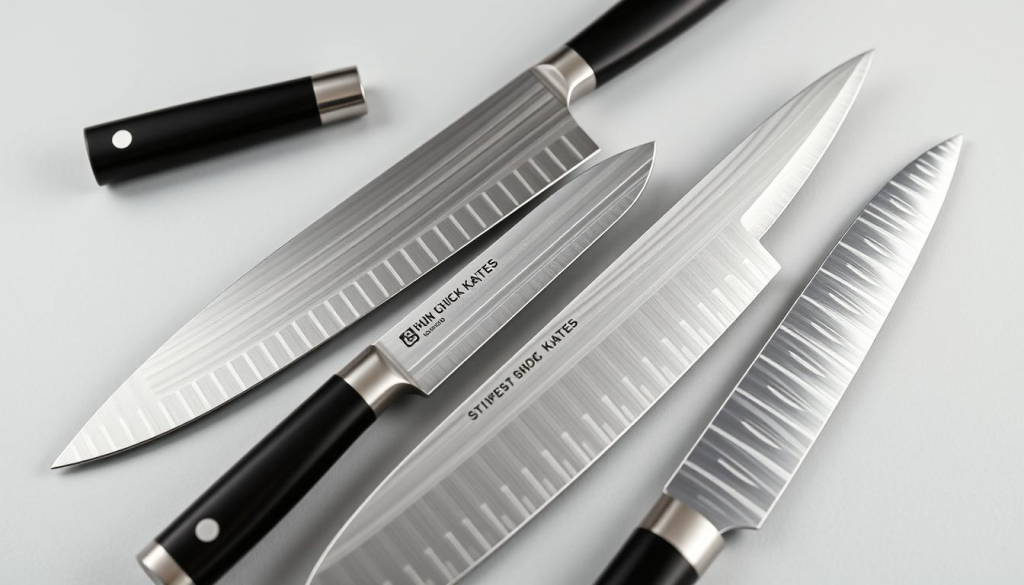
Shun knives come in several varieties, including chef knives, paring knives, and Santoku knives, each with its unique characteristics. Understanding these differences is essential for determining the best storage solutions for your Shun knives.
Chef Knives
Chef knives, also known as cook’s knives, are versatile tools used for a variety of kitchen tasks, from chopping vegetables to slicing meat. Shun chef knives are crafted with precision, featuring curved blades that facilitate a rocking motion, ideal for mincing and chopping.
Storage Considerations: Due to their size and shape, chef knives require storage that protects their curved edges. A well-designed knife block or a magnetic strip with adequate spacing can be suitable options.
Paring Knives
Paring knives are small, agile knives used for tasks that require precision, such as peeling fruits and vegetables or trimming fat from meat. Shun paring knives have short, straight blades that are easy to maneuver.
Storage Considerations: Paring knives, due to their small size, can be stored in smaller compartments or protective cases to prevent them from getting lost or damaged.
Santoku Knives
Santoku knives are Japanese-style knives that have gained popularity worldwide for their straight-edge design and versatility. They are used for slicing, dicing, and mincing. Shun Santoku knives feature a straight blade with a flat edge, ideal for push-cutting motions.
Storage Considerations: The straight edge of Santoku knives requires storage that keeps them flat and secure. Drawer inserts or magnetic strips that hold them firmly in place are good storage options.
| Knife Type | Primary Use | Storage Considerations |
|---|---|---|
| Chef Knives | Chopping, slicing, mincing | Knife block, magnetic strip with adequate spacing |
| Paring Knives | Peeling, trimming, precision tasks | Small compartments, protective cases |
| Santoku Knives | Slicing, dicing, mincing | Drawer inserts, magnetic strips |
Best Storage Options for Shun Knives
To keep your Shun knives in top condition, it’s vital to explore the various storage options available. The right storage solution not only protects your knives but also enhances your kitchen’s efficiency and safety.
Magnetic Knife Strips
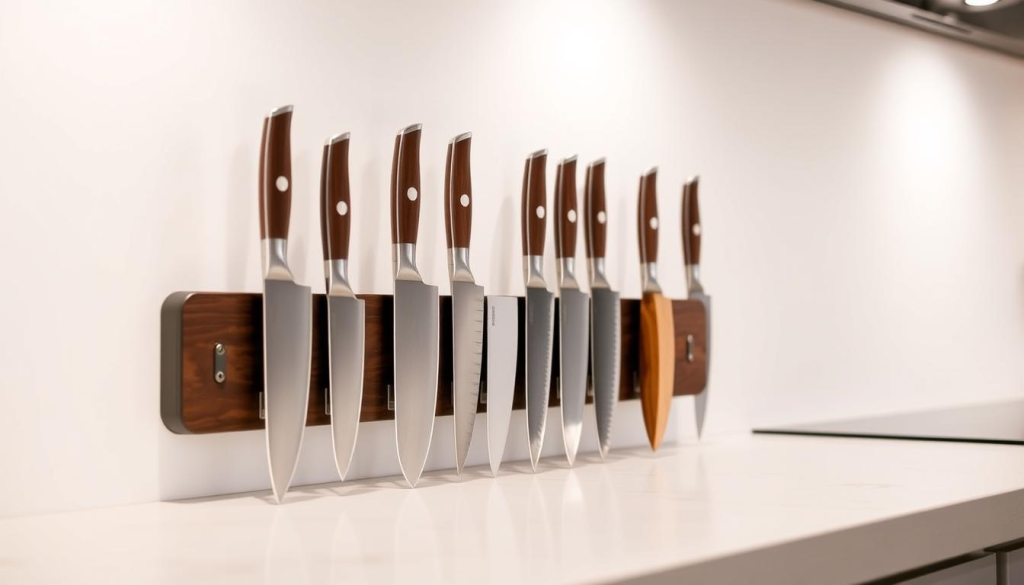
Magnetic knife strips are a popular choice for storing knives as they keep them within easy reach while maximizing kitchen space. This storage option is ideal for kitchens with limited counter space, as it utilizes the wall area, keeping your countertops clear.
https://www.youtube.com/watch?v=8wgc7rv5WJc
Knife Blocks
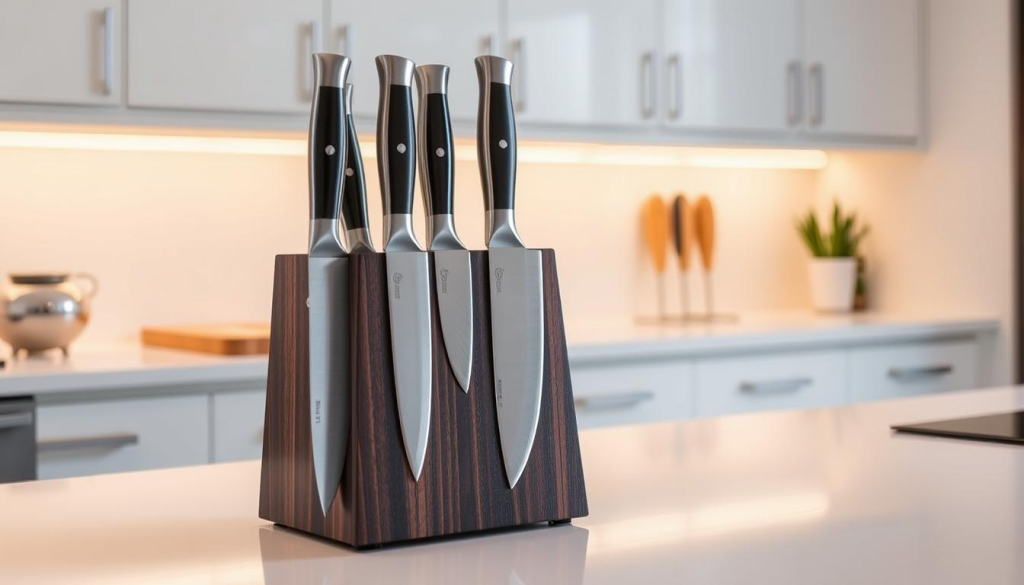
Knife blocks are another effective way to store your Shun knives. They come in various sizes and can be placed on countertops, offering easy access to your knives. A well-chosen knife block can also add to the aesthetic of your kitchen, making it a functional and stylish element.
Drawer Inserts
For those who prefer a more discreet storage solution, drawer inserts are an excellent option. They keep your knives organized and protected within a drawer, preventing accidental injuries and damage to the blades. Drawer inserts can be customized to fit your specific knife collection, making them a versatile storage solution.
Each of these storage options has its advantages and can be chosen based on your personal preference, kitchen layout, and the type of knives you own. By selecting the right storage method, you can ensure your Shun knives remain in excellent condition, ready for use whenever needed.
Magnetic Knife Strips: Pros and Cons
The use of magnetic knife strips is a contemporary approach to knife storage, presenting both benefits and drawbacks. This storage method has gained popularity for its sleek design and ability to keep knives within easy reach.
Space-Saving Benefits
One of the primary advantages of magnetic knife strips is their ability to save space in the kitchen. By mounting the strip on a wall or the side of a cabinet, you can keep your countertops clear and your knives organized. This is particularly beneficial in smaller kitchens where counter and drawer space is limited.
Maximizing kitchen space is a significant concern for many home cooks and professional chefs alike. Magnetic strips offer a practical solution by utilizing vertical space that would otherwise be unused.
Visibility and Accessibility
Magnetic knife strips also offer the advantage of keeping your knives visible and easily accessible. This can be particularly useful in a busy kitchen environment where time is of the essence. Being able to quickly grab the right knife can make a significant difference in efficiency.
However, it’s worth noting that having knives on display can also be a safety concern, especially in households with children. It’s essential to consider the placement of the magnetic strip carefully to ensure it’s out of reach of children.
Potential for Blade Damage
While magnetic knife strips offer several benefits, there is also a potential downside to consider: the risk of damage to the blade. If not used correctly, the magnetic force can cause the knives to collide or be pulled against the strip with enough force to cause dulling or chipping.
To mitigate this risk, it’s crucial to handle your knives with care when storing them on a magnetic strip. Ensuring that the knives are not overcrowded on the strip and that they are properly aligned can help prevent damage.
In conclusion, magnetic knife strips are a viable storage option for Shun knives, offering a space-saving and accessible solution. However, they require careful use to avoid potential blade damage. When deciding between a magnetic strip and other storage options like a knife block, consider your specific needs and kitchen layout to make the best choice for your Shun knife storage.
Using a Knife Block Effectively
A knife block is a traditional and effective way to store your knives, keeping them organized and within reach. This storage method can be particularly beneficial in maintaining the quality and accessibility of your Shun knives.
Choosing the Right Block Size
Selecting a knife block that is the right size for your knives is crucial. A block that is too small can cause your knives to be cramped, potentially damaging the blades, while a block that is too large may take up unnecessary space on your countertop.
To choose the ideal size, consider the number and size of your knives. If you have a large collection, you may need a larger block or multiple blocks. For smaller collections, a compact block can be more appropriate.
| Block Size | Ideal for | Counter Space |
|---|---|---|
| Compact | Small knife collections | Minimal |
| Standard | Average knife collections | Moderate |
| Large | Extensive knife collections | Generous |
Cleaning and Maintenance Tips
To keep your knife block in good condition, regular cleaning is essential. Remove the knives and gently wash the block with soap and warm water, then dry it thoroughly to prevent moisture buildup.
It’s also a good practice to occasionally sanitize your knife block to prevent bacterial growth. You can do this by mixing equal parts water and white vinegar in the block and letting it sit for a few minutes before rinsing.
Positioning Your Block for Safety
The placement of your knife block can significantly impact safety in your kitchen. Position the block in a stable location where it won’t be easily knocked over, and consider placing it away from the edge of the counter to prevent accidents.
Additionally, ensure that the block is not too close to the edge of the counter or in a high-traffic area to minimize the risk of it being knocked over or disturbed.
Drawer Inserts: A Hidden Gem
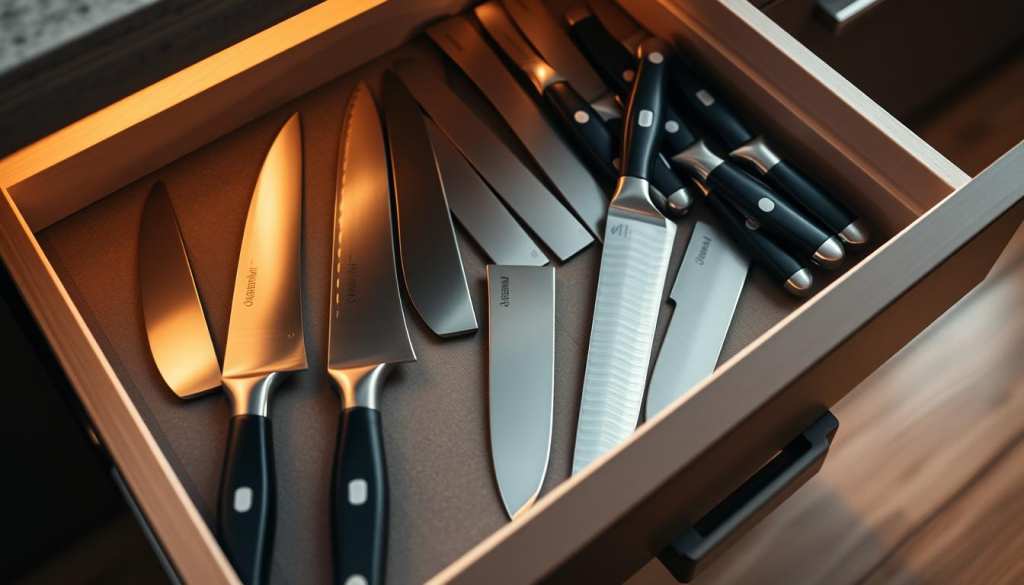
Drawer inserts are a versatile storage option that can be tailored to fit the specific needs of your kitchen. By providing a customizable and organized way to store your Shun knives, these inserts help maintain the quality and accessibility of your knives.
Customizable Options
One of the key benefits of drawer inserts is their ability to be customized according to your kitchen’s layout and your personal preferences. You can choose from various materials and designs to ensure that your knives are stored in a way that suits your needs. Whether you prefer a simple, straightforward design or a more complex system with multiple compartments, there’s a drawer insert that can meet your requirements.
Maximizing Drawer Space
Drawer inserts are designed to maximize the available space in your drawers, ensuring that your knives are stored efficiently without cluttering the drawer. By organizing your knives in a dedicated insert, you can also make the most of the space you have, keeping your kitchen countertops clear and your drawers tidy.
Keeping Knives Organized
Keeping your Shun knives organized is crucial for both safety and convenience. Drawer inserts help by providing individual slots for each knife, preventing them from coming into contact with each other and reducing the risk of damage. This organized approach also makes it easier to select the knife you need, streamlining your workflow in the kitchen.
By incorporating drawer inserts into your kitchen storage strategy, you can enjoy a more organized, efficient, and safe cooking environment. Whether you’re a professional chef or an avid home cook, the benefits of using drawer inserts for your Shun knives are undeniable.
The Role of Blade Guards
Blade guards are an essential accessory for anyone looking to store their Shun knives safely and effectively. These guards provide a protective covering for the blade, preventing accidental cuts and damage during storage. By using blade guards, you can ensure that your knives remain in pristine condition, ready for their next use.
Protecting the Blades in Storage
The primary function of blade guards is to protect the blades of your Shun knives from damage. Whether you’re storing them in a drawer or on a magnetic strip, blade guards act as a barrier between the blade and any other objects that could potentially cause harm. This is particularly important for high-quality knives like Shun, as their sharp edges are both a blessing and a curse – they cut through ingredients with ease but are also more susceptible to damage.
Using blade guards can significantly extend the life of your knives by preventing nicks and dings that can occur when blades come into contact with other kitchen utensils or hard surfaces.
Choosing the Right Blade Guards
When selecting blade guards for your Shun knives, it’s essential to choose guards that fit snugly over the blade. Guards that are too loose may not provide adequate protection, while those that are too tight can be difficult to put on and take off. Look for guards made from high-quality materials that are designed specifically for your type of knife. Some blade guards are made from soft materials like silicone, while others are more rigid; the choice depends on your storage needs and preferences.
Easy Installation Tips
Installing blade guards on your Shun knives is typically a straightforward process. For soft guards, simply slide the guard over the blade, ensuring it’s centered and fully covers the edge. For more rigid guards, you may need to gently snap them into place.
“A good blade guard is one that is easy to put on and take off, providing protection without hassle.”
Always follow the manufacturer’s instructions for the best results.
By incorporating blade guards into your knife storage routine, you can enjoy peace of mind knowing that your Shun knives are well-protected and ready for use whenever you need them.
How to Clean Knives Before Storage
The first step to optimal knife storage is thorough cleaning. Cleaning your Shun knives before storing them is not just about removing food residue; it’s about maintaining the integrity and longevity of the blades.
Recommended Cleaning Methods
To clean your Shun knives, start by washing them by hand with mild soap and warm water. Avoid using abrasive materials or harsh chemicals that can damage the blade or harm the handle. A soft sponge or cloth is ideal for cleaning the blade, and gentle scrubbing can help remove stubborn food particles.
For tougher residue, you can soak the knives in warm soapy water for a few minutes before cleaning. However, be cautious not to leave them soaking for too long, as this can lead to water spots or rust on certain materials.
Preventing Rust and Corrosion
After cleaning, it’s essential to dry your knives thoroughly to prevent rust and corrosion. Moisture is a significant enemy of knife longevity, so ensuring your knives are dry is crucial. For high-carbon knives like Shun, a light coating of oil after drying can provide additional protection against rust.
Drying Techniques
Drying your knives requires care. Use a towel to dry the blades immediately after washing, paying extra attention to the area around the handle and any crevices where water might accumulate. For an extra layer of protection, you can also use a soft cloth to buff the blades, removing any remaining moisture and polishing the metal.
By following these steps, you can ensure your Shun knives remain in excellent condition, ready for their next use. Proper cleaning and drying before storage not only protect the knives but also make maintenance easier, ensuring they continue to perform optimally.
Tips for Storing Shun Knives in Small Spaces
Maximizing storage for Shun knives in compact kitchens is achievable with the right strategies. In small kitchens, every inch counts, and finding the perfect spot for your knives can be challenging.
Vertical Storage Ideas
One effective way to store Shun knives in small kitchens is by utilizing vertical space. Magnetic knife strips are a great option as they can be mounted on walls or on the side of a cabinet, keeping your knives organized and easily accessible. This not only saves counter space but also adds a touch of professionalism to your kitchen decor.
Under-Shelf Solutions
Under-shelf storage is another innovative solution for storing Shun knives. By attaching an under-shelf basket or a slide-out drawer under your kitchen counter or shelf, you can create additional storage for your knives. This keeps them out of the way but still within easy reach, making it a practical solution for small kitchens.
Utilizing Wall Space
Utilizing wall space is crucial in small kitchens. Hanging a pegboard or installing hooks on a wall can provide ample storage for your Shun knives. You can also consider a wall-mounted knife rack, which not only stores your knives but also keeps them visible and easily accessible. This approach helps in maintaining a clutter-free countertop while keeping your knives organized.
By implementing these storage ideas, you can efficiently organize your Shun knives even in the most compact kitchens. The key is to be creative with the space you have and to choose storage solutions that fit your kitchen’s layout and your personal preferences.
Seasonal Storage Considerations
The changing seasons require adjustments in how you store your kitchen knives. As humidity and temperature fluctuate, it’s essential to consider how these changes might affect your Shun knife storage. Proper storage is crucial to maintaining the quality and longevity of your knives.
Preparing Knives for Long-Term Storage
Before storing your Shun knives for an extended period, ensure they are clean and dry. Any residual moisture can lead to rust or corrosion. Use a soft cloth to dry the knives thoroughly, paying extra attention to the area where the blade meets the handle.
Climate Control and Knife Care
Climate control is vital when storing knives. Avoid storing your Shun knives in areas with extreme temperatures or humidity levels. A dry, cool environment is ideal for preserving the integrity of your knives. Consider using a dehumidifier in humid climates to maintain a stable storage environment.
Handling Damp Conditions
In damp conditions, it’s crucial to take extra precautions. Store your knives in a well-ventilated area or use a storage method that allows for airflow, such as a magnetic strip. Regularly inspect your knives for signs of rust or corrosion, and address any issues promptly.
By considering the seasonal changes and adjusting your storage methods accordingly, you can ensure your Shun knives remain in optimal condition. This thoughtful approach to Shun knife storage will help extend the life of your knives.
Regular Maintenance for Longevity
Regular upkeep is essential for extending the life of your Shun knives. To ensure they remain in top condition, it’s crucial to perform regular maintenance tasks. This includes sharpening, inspecting for damage, and knowing when to replace your knives.
Sharpening Your Shun Knives
Sharpening is a critical aspect of knife maintenance. Dull knives are not only less effective but can also be dangerous, as they require more force to cut, increasing the risk of accidents. To sharpen your Shun knives, you can use a whetstone or a sharpening steel. It’s recommended to sharpen your knives regularly, ideally every few months, depending on usage.
Sharpening Techniques:
- Use a whetstone with a coarse grit (about 1000) to repair the edge.
- Progress to a finer grit (6000 or higher) for polishing.
- Maintain the correct angle, typically around 20 degrees for Shun knives.
Inspecting for Damage
Regular inspection is vital to identify any damage or wear on your Shun knives. Check the blade for signs of rust, corrosion, or chipping. Inspect the handle for any looseness or cracks. Early detection of damage can prevent further deterioration and ensure your knives remain safe to use.
| Inspection Area | What to Look For | Action Required |
|---|---|---|
| Blade | Rust, corrosion, chipping | Clean, sharpen, or replace |
| Handle | Looseness, cracks | Tighten or replace handle |
| Edge | Dullness, nicks | Sharpen or repair |
When to Replace Knives
Knowing when to replace your Shun knives is as important as maintaining them. If your knife is beyond sharpening, shows significant wear, or is damaged beyond repair, it’s time to consider replacing it. Additionally, if you find that you’re having to sharpen your knife too frequently, it might be more cost-effective to replace it with a new one.
By following these maintenance tips, you can ensure your Shun knives remain in excellent condition, providing you with years of reliable service. Regular maintenance not only extends the life of your knives but also enhances your cooking experience by ensuring your tools are always ready and performing at their best.
Conclusion: Choosing the Best Storage Method
Selecting the ideal storage method for your Shun knives depends on various factors, including your kitchen layout and personal preference. By considering these elements, you can ensure your knives remain in excellent condition and continue to perform optimally.
Assessing Your Kitchen’s Layout
Evaluate your kitchen’s layout to determine the best storage solution. Consider the available space, the frequency of use, and the type of knives you own. This assessment will help you choose the most suitable storage method, whether it’s a magnetic knife strip, a knife block, or a drawer insert.
Prioritizing Safety and Knife Care
When storing your Shun knives, prioritize safety and accessibility. Proper storage will prevent accidental injuries and maintain the quality of your knives. By following the tips outlined in this article, you can ensure your Shun knives are stored securely and remain in top condition, providing you with the best knife storage solutions for your shun knife storage needs.