Maintaining sharp Shun knives is crucial for optimal performance and safety in the kitchen. According to the Shun Cutlery Blog, understanding the anatomy of a Shun knife is vital for effective sharpening.
Sharp knives are not only more efficient, but they also reduce the risk of accidents. In this article, we will explore the best sharpening techniques for Shun knives and provide tips on how to keep your blades in top condition.
Key Takeaways
- Understanding the anatomy of a Shun knife is crucial for effective sharpening.
- Regular sharpening maintains optimal performance and safety.
- Using the right sharpening technique is essential for extending the life of your Shun knives.
- Proper care and maintenance can prevent damage to your Shun knives.
- Sharpening your Shun knives regularly can improve your overall cooking experience.
Understanding Shun Knives and Their Unique Edge
Understanding the intricacies of Shun knives is crucial for maintaining their edge. Shun knives are crafted with precision and care, using high-quality materials that set them apart in the culinary world.
The Importance of the VG-MAX Steel
The VG-MAX steel used in Shun knives is a significant factor in their exceptional sharpness and durability. This high-carbon steel is known for its ability to hold a sharp edge, making it ideal for precision cutting. The high carbon content also contributes to the knife’s strength and resistance to wear.
According to the Shun Cutlery Blog, the VG-MAX steel provides exceptional sharpness and durability, making it a preferred choice among chefs. The steel’s properties make it particularly suited for the demands of professional kitchens.
| Steel Property | Benefit |
|---|---|
| High Carbon Content | Enhanced Strength and Durability |
| Sharpness Retention | Longer Periods Between Sharpening |
| Corrosion Resistance | Easy Maintenance and Care |
Benefits of the Damascus Cladding
The Damascus cladding on Shun knives not only adds to their aesthetic appeal but also provides additional strength and durability. The pattern-welded cladding is made from layers of steel that are forged together, creating a strong and resilient material.
This cladding also helps in reducing the knife’s susceptibility to corrosion, as the layers of steel provide an additional barrier against moisture. Proper care and maintenance, including the use of appropriate sharpening stones for Shun knives, can further enhance the longevity of the blade.
For those looking to maintain their Shun knives, understanding the benefits of professional knife sharpening for Shun knives is also crucial. Regular maintenance, including honing and sharpening, ensures that the knives remain in optimal condition.
By combining the VG-MAX steel with Damascus cladding, Shun knives offer a unique blend of performance, durability, and beauty. Proper shun knife care and maintenance are essential to preserving these qualities over time.
When to Sharpen Your Shun Knives
To keep your Shun knives in top condition, it’s vital to understand the signs that indicate they need sharpening. According to the Shun Cutlery Blog, regular sharpening is essential to maintain the performance of Shun knives. This not only ensures they remain effective but also prolongs their lifespan.
Signs Your Knife Needs Sharpening
Recognizing when your Shun knife needs sharpening can be straightforward if you know what to look for. A dull knife is more dangerous than a sharp one because it requires more force, increasing the risk of accidents. Some key signs include:
- Difficulty in cutting through food smoothly
- A visible dull edge or nicks on the blade
- Tearing or crushing food instead of cleanly slicing it
As Shun suggests, maintaining your knives regularly can prevent these issues. “A sharp knife is a safe knife,” and regular sharpening is key to achieving this.
Frequency of Sharpening Based on Use
The frequency of sharpening your Shun knives largely depends on how often you use them. For professional chefs or heavy users, sharpening may be required every few weeks. For home cooks who use their knives less frequently, sharpening every few months may suffice.
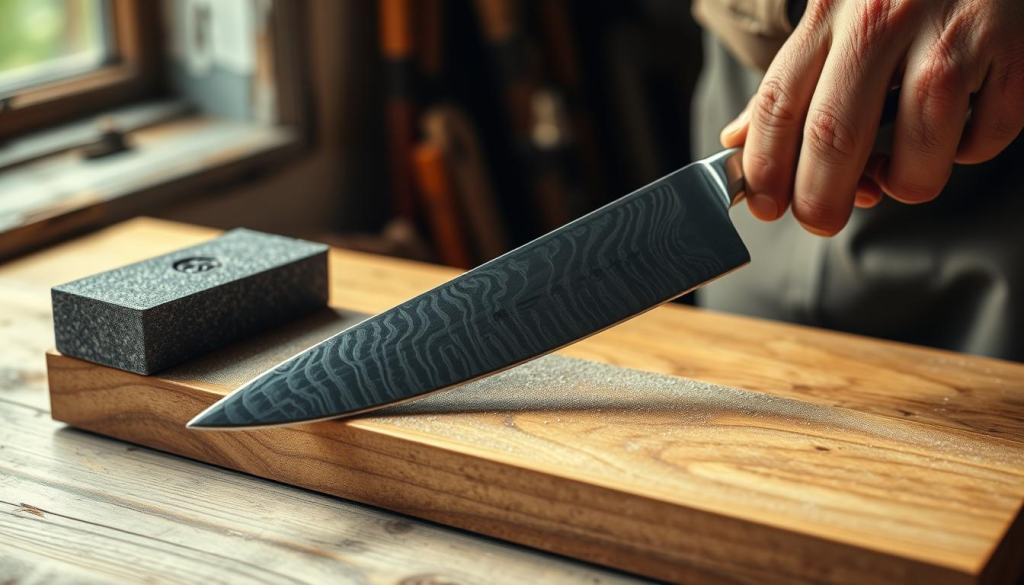
As a general guideline, if you use your Shun knives daily, consider sharpening them every 1-3 months. For less frequent use, sharpening every 6-12 months is typically adequate. Regular honing between sharpenings can also help maintain the knife’s edge.
“Regular maintenance is the key to extending the life of your knives,” says a renowned culinary expert. Proper care and sharpening techniques can significantly impact the longevity and performance of your Shun knives.
Selecting the Right Sharpening Tools
Choosing the right sharpening tool is crucial for maintaining the exceptional quality of your Shun knives. The right tool not only ensures a sharp edge but also preserves the integrity of the blade.
Whetstone vs. Professional Sharpening Service
When it comes to sharpening Shun knives, two popular options are whetstones and professional sharpening services. Whetstones offer a hands-on approach, allowing you to sharpen your knife at home. According to the Shun Cutlery Blog, whetstones are recommended for sharpening Shun knives, as they provide a high level of control over the sharpening process.
On the other hand, professional sharpening services can be a convenient option for those who prefer not to sharpen their knives themselves. These services use specialized equipment to restore your knife’s edge to its original condition.
| Sharpening Method | Control Level | Convenience |
|---|---|---|
| Whetstone | High | Moderate |
| Professional Sharpening Service | Low | High |
Recommended Shun Products for Sharpening
Shun offers a range of sharpening tools designed specifically for their knives. The Shun Whetstone is a popular choice among enthusiasts, providing a fine grit for honing and sharpening.
“A good whetstone is an investment for any serious knife user. It allows for precision sharpening and maintenance, ensuring your Shun knives remain in top condition.”
Additionally, Shun’s sharpening guides and honing steels are valuable tools for maintaining your knife’s edge between sharpenings.
- Shun Whetstone for precise sharpening
- Shun Sharpening Guide for maintaining the correct angle
- Shun Honing Steel for regular edge maintenance
Preparing Your Workspace for Sharpening
Before you start sharpening your Shun knives, it’s crucial to prepare your workspace to ensure a safe and effective sharpening process. According to the Shun Cutlery Blog, a stable and secure workspace is essential for safe and effective sharpening.
Necessary Safety Precautions
When sharpening your Shun knives, safety should be your top priority. Wear protective gear, such as cut-resistant gloves and safety glasses, to protect yourself from potential accidents. Ensure your workspace is well-lit and free from distractions to maintain focus on the sharpening process.
It’s also important to keep your workspace clean and dry to prevent any accidents caused by slipping. Secure your knife properly on a stable surface to avoid any movement during sharpening.
Tools and Accessories You’ll Need
To sharpen your Shun knives effectively, you’ll need the right tools and accessories. Start with a high-quality whetstone that is suitable for sharpening high-carbon steel knives like Shun. You may also need a sharpening guide to help maintain the correct sharpening angle.
Other useful accessories include a honing steel for maintaining the edge between sharpening sessions, a cutting board for testing the sharpness, and a cleaning cloth for keeping your tools and workspace clean.
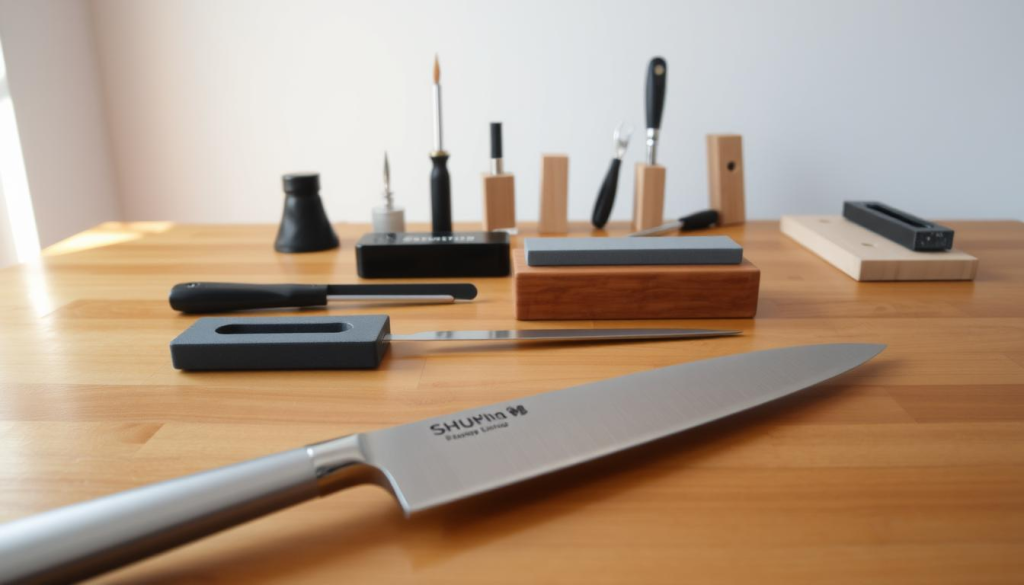
By preparing your workspace properly and having the necessary tools and safety precautions in place, you’ll be able to sharpen your Shun knives with confidence and precision.
Techniques for Hand Sharpening Shun Knives
To keep your Shun knives in top condition, understanding the proper hand sharpening techniques is essential. Hand sharpening allows for a level of precision and control that is crucial for maintaining the high quality of Shun knives.
Using a Whetstone Effectively
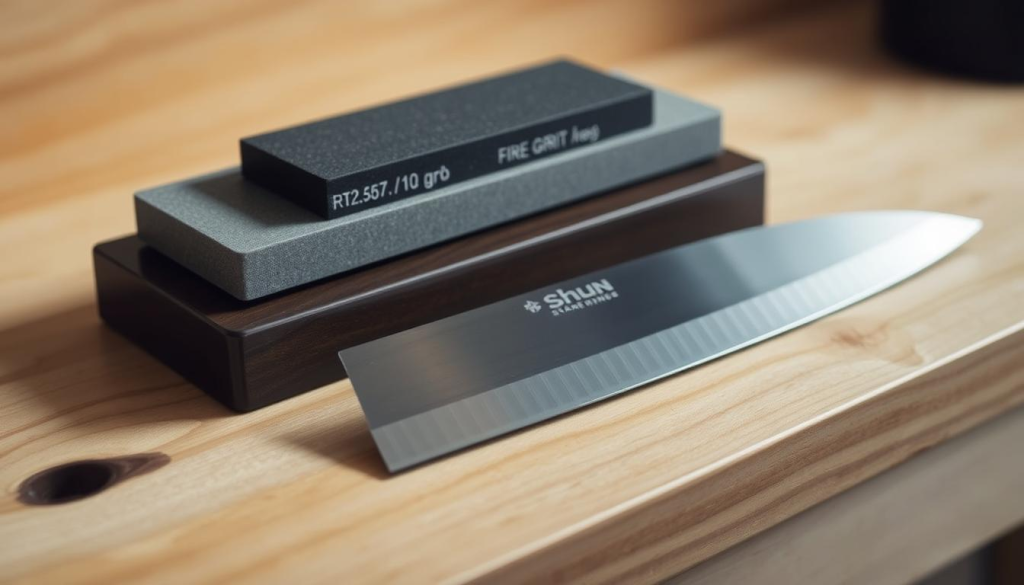
Using a whetstone is a traditional method for sharpening knives, and with practice, it can be very effective for Shun knives. The first step is to select the right whetstone. According to the Shun Cutlery Blog, a water stone or a combination stone is recommended for sharpening Shun knives.
Step-by-Step Guide:
- Soak the whetstone in water for about 10 minutes before use.
- Place the whetstone on a stable surface.
- Hold the Shun knife at the recommended angle, typically around 16 degrees for Shun knives.
- Gently draw the knife across the stone, moving from the heel to the tip.
- Repeat this process on both sides of the blade until sharp.
Honing vs. Sharpening: Know the Difference
Many people confuse honing with sharpening, but they serve different purposes. Sharpening involves removing metal to create a new edge, while honing realigns the existing edge. As an expert tip, regular honing can reduce the need for frequent sharpening.
“Honing is not sharpening; it’s more like realigning the teeth of a fine saw, which is exactly what you’re doing with a honing steel,” says a renowned knife sharpening expert.
Understanding the difference between these two processes is crucial for maintaining your Shun knives. By incorporating both into your maintenance routine, you can keep your knives in optimal condition.
Using a Honing Steel for Maintenance
Regular honing is essential for maintaining the precision and sharpness of Shun knives. According to the Shun Cutlery Blog, regular honing is crucial to maintain the sharpness of Shun knives. This process realigns the edge of the blade, ensuring it remains sharp and effective.
Proper Technique for Honing
To use a honing steel properly, hold the steel vertically with the tip on a stable surface. Draw the knife down the steel at a consistent angle, typically around 15-20 degrees for Shun knives, in a smooth, gentle motion. Repeat this process on both sides of the blade to maintain even sharpness.
Benefits of Regular Honing
Regular honing not only maintains the sharpness of Shun knives but also extends their lifespan. By realigning the blade’s edge, honing reduces the need for frequent sharpening, which can wear down the blade over time. Regular maintenance with a honing steel is a simple yet effective way to keep your Shun knives performing at their best.
Incorporating a honing steel into your regular knife care routine can significantly enhance the longevity and performance of your Shun knives. By dedicating a few minutes to honing your knives regularly, you can ensure they continue to deliver the precision and sharpness that Shun is known for.
Understanding Angle and Pressure During Sharpening
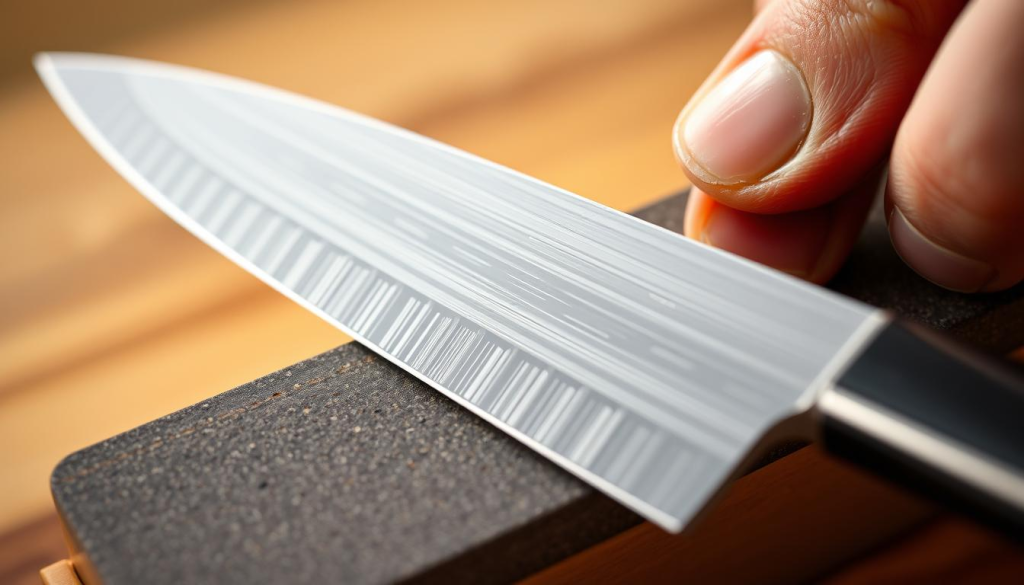
To sharpen a Shun knife effectively, it’s crucial to grasp the importance of the sharpening angle and the pressure applied. The precision required for sharpening these high-quality knives can significantly impact their performance and longevity.
Recommended Sharpening Angle for Shun Knives
The recommended sharpening angle for Shun knives typically ranges between 15 to 20 degrees per side. Maintaining this angle is crucial for achieving a sharp edge without damaging the blade. According to the Shun Cutlery Blog, adhering to this angle ensures the knife’s VG-MAX steel is utilized to its full potential.
- For straight-edge Shun knives, a consistent angle is key.
- For serrated knives, focus on the serrations themselves.
How Pressure Affects Blade Sharpness
Pressure during sharpening is another critical factor. Too much pressure can lead to an uneven edge or even damage the blade, while too little may not effectively sharpen the knife. The ideal approach is to use light, consistent strokes, allowing the sharpening tool to do the work.
- Start with light pressure to establish the edge.
- Gradually increase as needed, checking the edge frequently.
- Use a honing steel regularly to maintain the edge.
By mastering the correct sharpening angle and applying appropriate pressure, you can significantly enhance the performance of your Shun knives. This not only ensures they remain sharp but also prolongs their lifespan, making them a joy to use in the kitchen.
Troubleshooting Common Sharpening Issues
Troubleshooting is a crucial step in mastering the art of sharpening Shun knives. Even with the right techniques, issues can arise that affect the performance of your blade. According to the Shun Cutlery Blog, common sharpening issues can be addressed with the right techniques.
Dealing with a Dull Edge
A dull edge is one of the most common issues encountered when sharpening Shun knives. To restore sharpness, it’s essential to identify the cause. If your knife has been used extensively without proper maintenance, it may require a more thorough sharpening process. Using a whetstone is an effective method for sharpening a dull edge. Start with a coarse grit stone to repair the edge, then progress to finer grits for polishing.
Expert tips for sharpening Shun knives suggest maintaining a consistent angle and applying gentle pressure to avoid damaging the blade. Regular honing with a honing steel can also help maintain the edge between sharpenings.
Fixing Chips and Nicks on the Blade
Chips and nicks on the blade can compromise the performance of your Shun knife. To fix these issues, carefully inspect the blade to identify the damaged areas. Using a whetstone, carefully grind away the chips or nicks, working from the coarse grit to finer grits. It’s crucial to maintain the original bevel angle to ensure the knife sharpens evenly.
Professional knife sharpening for Shun knives often involves using specialized equipment to repair damaged blades. However, with the right techniques and tools, you can effectively repair minor chips and nicks at home.
By understanding how to troubleshoot common sharpening issues, you can maintain your Shun knives in optimal condition. Regular maintenance, including sharpening and honing, is key to extending the life of your blades.
Caring for Your Shun Knives Post-Sharpening
Proper care and maintenance are crucial to maintaining the sharpness and longevity of your Shun knives. The Shun Cutlery Blog recommends proper storage and care to ensure your knives remain in optimal condition.
Storage Best Practices
To prevent damage and maintain the edge, store your Shun knives in a protective environment. Use a knife block, magnetic strip, or a protective case to prevent the blades from coming into contact with other objects.
Longevity through Proper Care
Regularly cleaning and drying your Shun knives will help prevent rust and corrosion. Avoid exposing your knives to extreme temperatures or acidic substances. By following these guidelines, you’ll be able to enjoy your Shun knives for years to come, maintaining their sharpness and performance. Effective shun knife care and maintenance involve regular sharpening, proper storage, and gentle handling, all of which contribute to maintaining the sharpness of Shun knives.