Mastering the art of cooking begins with essential knife skills. Efficient and safe cooking relies heavily on the ability to handle a chef’s knife with precision and confidence. Proper knife usage not only enhances the cooking experience but also reduces the risk of accidents in the kitchen.
By learning the essential chef knife tips, home cooks and professional chefs alike can improve their technique, making meal preparation faster and more enjoyable. This article will guide you through the fundamentals of mastering the chef knife, covering the basics of knife handling, cutting techniques, and maintenance.
Key Takeaways
- Improve your cooking efficiency with proper knife skills
- Enhance kitchen safety by mastering knife handling
- Learn essential cutting techniques for various ingredients
- Understand the importance of knife maintenance
- Discover tips for choosing the right chef’s knife
Understanding Your Chef Knife
At the heart of every kitchen lies the chef knife, a versatile instrument that demands respect and understanding. A chef knife is not just a tool; it’s an essential partner in the culinary process, facilitating various tasks from chopping and slicing to mincing ingredients.
What Makes a Chef Knife Special?
A chef knife stands out due to its balanced design, sharpness, and the material it’s made from. The balance between the blade and the handle is crucial, as it affects the knife’s maneuverability and comfort during use. The sharpness of the blade is another key factor, as it determines the efficiency and safety of the knife. A sharp knife requires less force, reducing the risk of accidents.
“A good knife is like a good friend; it helps you through thick and thin,” says a renowned chef. This quote underscores the importance of selecting a chef knife that feels like an extension of your hand.
Different Types of Chef Knives
Chef knives come in various shapes, sizes, and materials, each designed for specific tasks or preferences. The most common types include:
- The classic French chef knife, known for its curved blade that facilitates a rocking motion.
- The Japanese Santoku knife, which is straight-edged and ideal for push-cutting motions.
- Specialty knives, such as those designed for filleting fish or carving meat.
How to Choose the Right Chef Knife
Choosing the right chef knife involves considering your cooking style, the tasks you perform most often, and your personal comfort with the knife’s weight and balance. It’s essential to hold the knife before purchasing, if possible, to gauge its feel in your hand. Additionally, the material of the blade and handle should be durable and easy to maintain.
By understanding the characteristics of a chef knife and the various types available, you can make an informed decision that enhances your cooking experience.
Basic Knife Skills for Beginners
For beginners, understanding the basics of knife skills is crucial for kitchen confidence. Mastering these fundamental skills not only enhances your cooking experience but also ensures safety in the kitchen. In this section, we will explore the essential techniques and tips that every aspiring chef or home cook should know.
Proper Grip Techniques
The way you hold your chef knife can significantly impact your cutting performance and safety. There are primarily two grip techniques recommended for beginners: the pinch grip and the handle grip. The pinch grip involves holding the blade between your thumb and index finger, providing control and precision. The handle grip, on the other hand, involves holding the handle with all your fingers, offering stability and power.
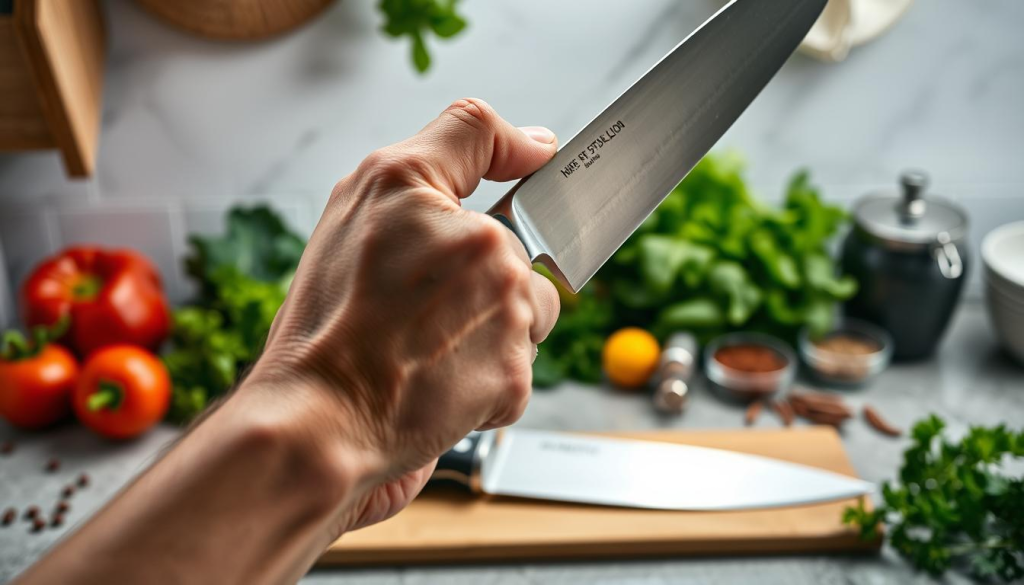
To achieve the pinch grip, place the blade in your hand so that it rests on the pad of your index finger and the thumb is on the other side of the blade. This grip allows for precise control over the knife. For the handle grip, wrap your fingers around the handle, ensuring a firm but not overly tight hold. Practice switching between these grips to understand which feels more comfortable for you.
Cutting Techniques You Should Know
Once you’ve mastered the grip, it’s time to learn basic cutting techniques. These include chopping, slicing, dicing, and mincing. Chopping involves cutting ingredients into larger pieces, while slicing requires cutting into thinner, more uniform pieces. Dicing is cutting into small, cube-shaped pieces, and mincing involves cutting into very fine pieces.
- Chopping: Hold the knife at a slight angle and bring it down through the ingredient in a smooth, controlled motion.
- Slicing: Use a gentle, back-and-forth motion, keeping the knife in contact with the cutting board.
- Dicing: First, slice the ingredient, then cut it into strips, and finally, cut the strips into cubes.
- Mincing: Use a rocking motion with the knife tip pivoting on the cutting board.
Safety Tips When Using a Chef Knife
Safety is paramount when handling a chef knife. Always keep your fingers curled under and use a claw grip on the ingredient you’re cutting to avoid accidental cuts. Ensure your cutting board is stable and won’t move during use. Regularly sharpening your knife is also crucial, as a dull knife is more likely to slip and cause injury.
Additionally, always cut away from your body, and be mindful of your surroundings. Store your knives in a safe place, such as a knife block or on a magnetic strip, to prevent accidents.
Essential Knife Maintenance
A well-maintained chef knife is the backbone of any kitchen, ensuring precision and safety. To keep your chef knife performing at its best, regular maintenance is crucial.
Sharpening Your Chef Knife
Sharpening is one of the most critical aspects of knife maintenance. A dull knife is not only less effective but also more dangerous, as it requires more force and can lead to accidents. To sharpen your chef knife, you can use a whetstone, sharpening steel, or electric sharpener. The key is to maintain the correct angle and apply gentle, consistent pressure.
For beginners, starting with a sharpening steel is often recommended as it’s easier to use and helps realign the blade’s edge. For more significant sharpening needs, a whetstone provides a more thorough sharpening. It’s essential to practice and be patient, as sharpening a knife is a skill that develops over time.
Proper Knife Storage Solutions
How you store your chef knife is just as important as how you use it. Proper storage protects the blade, prevents accidents, and keeps your knife in good condition. There are several storage options available, including knife blocks, magnetic strips, and drawer organizers.
- A knife block is a traditional and effective storage method, keeping your knives organized and within reach.
- Magnetic strips offer a space-saving solution, ideal for smaller kitchens.
- Drawer organizers provide a safe and secure way to store your knives, protecting both the blades and the user.
Cleaning and Care Tips
Cleaning your chef knife after each use is vital for hygiene and to prevent the buildup of residue that can damage the blade. Hand washing with mild soap and drying immediately is recommended. Avoid putting your chef knife in the dishwasher, as the high heat and harsh detergents can damage the handle and blade.
Regularly oiling your knife, especially if it has a carbon steel blade, will help prevent rust. For knives with wooden handles, occasional oiling can help maintain the wood’s condition.
Knife Skills for Precision Cutting
To achieve culinary excellence, mastering precision cutting techniques is essential. Precision cutting is not just about making clean cuts; it’s about understanding the techniques that make a difference in the presentation and cooking of your dishes.
Julienne vs. Chiffonade
Two fundamental techniques in precision cutting are julienne and chiffonade. Julienne involves cutting vegetables into long, thin strips, typically used in dishes like stir-fries and salads. On the other hand, chiffonade is a technique used primarily for herbs, where you roll the leaves together and slice them into thin strips. This technique is great for adding fresh flavor to dishes.
As celebrated chef Jacques Pépin once said, “The knife is your most important tool in the kitchen. How you use it will determine the quality of your cooking.”
“The way you cut your ingredients can affect not just the presentation, but the cooking process itself.”
Dicing, Mincing, and Slicing Techniques
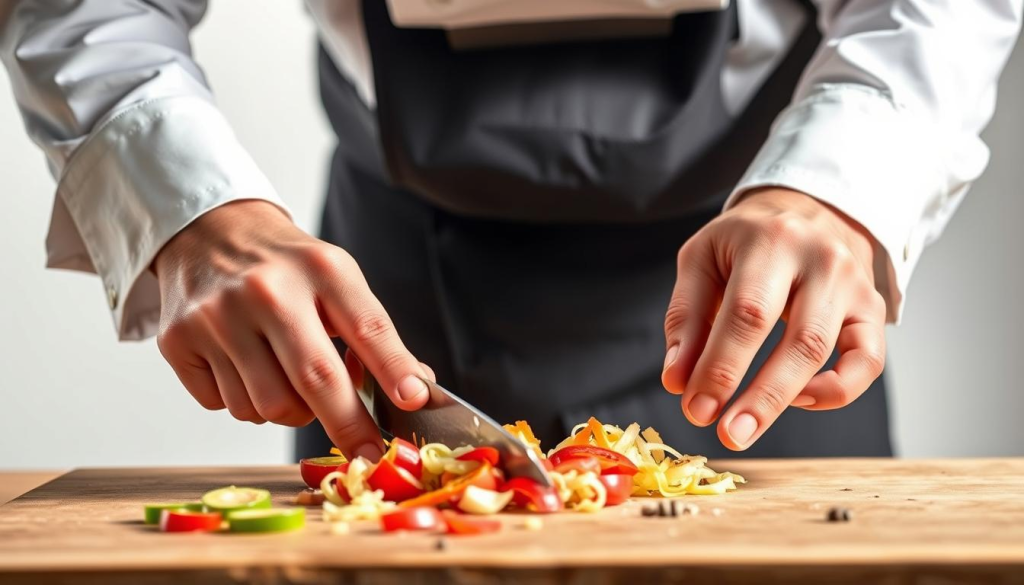
Precision cutting also involves mastering dicing, mincing, and slicing. Dicing means cutting ingredients into small, uniform cubes, which is crucial for even cooking. Mincing involves cutting ingredients into very fine pieces, often used for garlic, ginger, or herbs. Slicing is about cutting ingredients into thin pieces, which can be used in a variety of dishes, from sandwiches to salads.
- Dicing: Uniform cubes for even cooking.
- Mincing: Fine pieces for flavor distribution.
- Slicing: Thin pieces for texture and presentation.
The Rock Chop Method Explained
The rock chop method is a technique used for chopping ingredients coarsely. It involves holding the knife at a slight angle and using a rocking motion to chop through the ingredients. This method is particularly useful for chopping herbs, nuts, or vegetables coarsely.
Mastering these precision cutting techniques will significantly enhance your cooking skills, allowing you to prepare dishes more efficiently and present them more attractively.
Advanced Knife Techniques
Advanced knife techniques are the backbone of professional chef knife usage, enabling cooks to prepare ingredients with speed and accuracy. Mastering these techniques is crucial for anyone looking to improve their culinary skills.
The French Knife Hold
The French knife hold is a fundamental technique that provides control and precision. To achieve this hold, place the blade in your dominant hand, with your thumb on the blade’s spine and your index finger on the blade’s edge. This grip allows for precise cuts and is essential for various cutting techniques.
Techniques for Filleting Fish
Filleting fish requires a combination of skill and the right technique. Start by making a cut behind the gills and continue along the spine to release the fillet. Use long, smooth strokes to remove the fillet from the bones. Practice is key to mastering this chef knife cutting technique.
Using a Chef Knife for Butchering Meat
Butchering meat with a chef knife involves breaking down larger cuts into smaller portions. Begin by removing excess fat and then cut along the natural seams of the meat. This technique requires patience and a sharp knife to achieve clean cuts.
| Technique | Description | Skill Level |
|---|---|---|
| French Knife Hold | Provides control and precision for cutting. | Intermediate |
| Filleting Fish | Requires skill for smooth, boneless fillets. | Advanced |
| Butchering Meat | Involves breaking down larger cuts into smaller portions. | Advanced |
Mastering these advanced knife techniques is a step towards mastering the chef knife. With practice, cooks can significantly improve their efficiency and precision in the kitchen.
The Importance of Knife Weight and Balance
The weight and balance of a chef knife are crucial factors that can significantly impact your cutting performance. A well-balanced knife not only enhances your cutting technique but also reduces fatigue, making it an essential tool for any chef.
How Weight Affects Cutting
The weight of a chef knife can greatly influence your cutting style. A heavier knife can provide more momentum, making it easier to chop through tougher ingredients. However, it may also lead to quicker fatigue if not balanced properly.
On the other hand, a lighter knife offers more agility and control, ideal for precision cuts and delicate ingredients. The key is finding a knife whose weight complements your cutting style and the tasks at hand.
Finding the Right Balance for Comfort
A well-balanced knife is one where the weight of the blade is evenly distributed with the handle, creating a feeling of harmony in your hand. This balance is crucial for comfort, as it reduces strain on your wrist and hand during extended use.
To achieve this balance, manufacturers often use various materials and design techniques. For instance, some knives feature a bolster that adds weight and balance, while others use ergonomic handle designs to enhance comfort.
Testing a Knife Before Purchase
Before buying a chef knife, it’s essential to test it to ensure it meets your needs in terms of weight and balance. Hold the knife in your hand, feeling its weight distribution and how it balances.
- Check if the knife feels too heavy or too light for your comfort.
- Notice how the weight is distributed between the blade and the handle.
- Perform a few cutting motions to gauge its balance and comfort in use.
By taking the time to test a knife before purchase, you can ensure that you find a tool that not only performs well but also feels comfortable in your hand, enhancing your overall cooking experience.
Common Mistakes to Avoid
Mastering the art of using a chef knife requires more than just technique; it demands awareness of common pitfalls that can hinder your progress. Whether you’re a novice in the kitchen or an experienced cook, understanding these mistakes can significantly improve your cooking experience.
Using a Dull Knife
One of the most significant mistakes you can make is using a dull knife. A dull knife requires more force, which can lead to accidents and injuries. It also makes cutting more difficult, potentially resulting in uneven cuts and a lack of precision. Regularly sharpening your knife is essential to maintaining its effectiveness and ensuring safety in the kitchen.
Improper Cutting Board Choices
The choice of cutting board can also significantly impact your knife skills. Using a cutting board that is too hard or too soft can damage your knife or cause it to slip, leading to potential injuries. Wooden or plastic cutting boards are generally recommended as they provide a good balance between durability and gentleness on the knife.
Incorrect Grip Techniques
Finally, adopting the correct grip technique is vital for both safety and efficiency. An incorrect grip can lead to loss of control over the knife, potentially causing accidents. It’s crucial to learn and practice a grip that feels comfortable and secure, allowing for precise control over the knife’s movements.
By being aware of these common mistakes and taking steps to avoid them, you can enhance your chef knife skills and make your cooking experiences more enjoyable and safe. Practicing chef knife techniques with the right mindset and tools will lead to more efficient and effective cooking.
Where to Use Your Chef Knife
From the kitchen to outdoor cooking, a chef knife is a valuable asset. Its versatility makes it an essential tool for various culinary tasks.
In the Kitchen: Everyday Use Cases
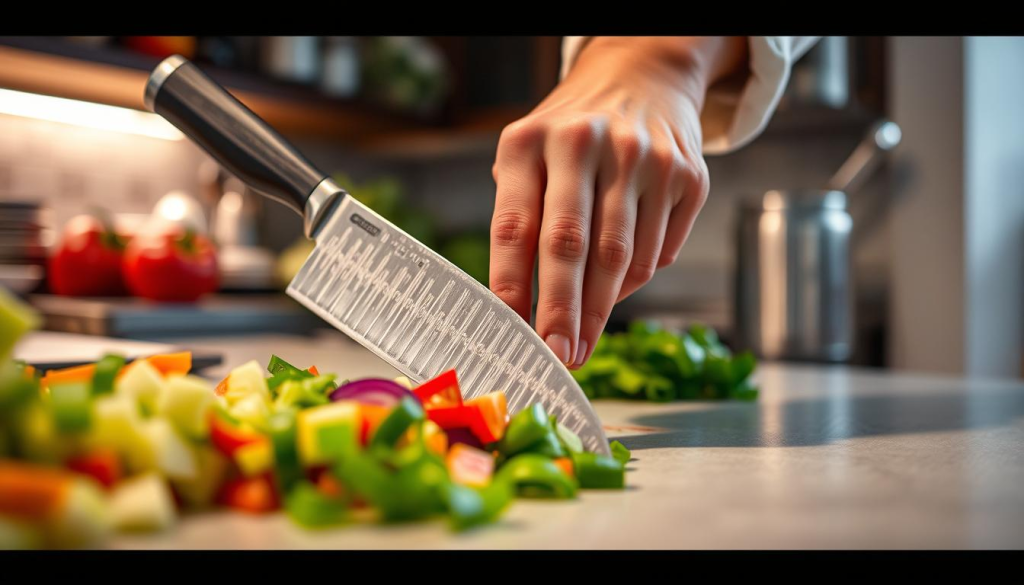
In the kitchen, a chef knife is used for a multitude of tasks, from chopping vegetables to slicing meat. Proper knife skills can significantly reduce preparation time and improve the overall quality of your dishes.
- Chopping vegetables for salads or stews
- Slicing meat for sandwiches or main courses
- Mincing herbs for added flavor
Outdoor Cooking Scenarios
Outdoor cooking, whether it’s camping, grilling, or participating in outdoor events, often requires a reliable and versatile knife. A chef knife can be used for preparing ingredients in outdoor settings.
- Preparing ingredients for grilling
- Cutting meat or vegetables for outdoor meals
- Assisting in food preparation during outdoor events
Choosing the Right Knife for Other Tasks
While a chef knife is incredibly versatile, there are situations where other types of knives might be more appropriate. Understanding the task at hand can help you choose the right knife for the job.
- Using a paring knife for detailed work
- Opting for a serrated knife for cutting through tough or fibrous materials
- Selecting a fillet knife for delicate fish preparation
How to Integrate Your Knife Skills Into Cooking
Efficient cooking starts with the basics, and integrating your knife skills is fundamental to achieving culinary excellence. Mastering the chef knife is not just about cutting ingredients; it’s about how you incorporate those skills into your cooking routine to enhance efficiency and quality.
Timing Your Cuts for Efficiency
Timing is everything when it comes to cooking. Knowing when to chop, slice, or dice ingredients can significantly impact the final dish. For instance, chopping vegetables too early can lead to loss of texture and flavor. Timing your cuts ensures that each component is prepared at the optimal moment, preserving its integrity and contributing to a harmonious dish.
To illustrate the importance of timing, consider the following table that outlines the preparation sequence for a simple stir-fry:
| Ingredient | Preparation Time | Cooking Time |
|---|---|---|
| Vegetables | 5 minutes | 3-5 minutes |
| Protein (Chicken) | 3 minutes | 5-7 minutes |
| Garlic and Ginger | 1 minute | 1 minute |
Combining Knife Skills with Other Techniques
Combining your knife skills with other cooking techniques is crucial for creating complex and layered dishes. For example, mastering the julienne cut allows you to cook vegetables uniformly, which is essential for dishes like stir-fries and salads. Similarly, learning to dice ingredients properly can enhance the texture of sauces and stews.
“The way you chop your ingredients can affect not just the presentation but the cooking process itself. A well-chopped onion, for instance, will sauté more evenly than a roughly chopped one.” –
Meal Prep Made Easy with Your Chef Knife
Meal preparation is significantly simplified when you have mastered your chef knife. Being able to quickly chop, slice, or mince ingredients means you can prepare meals more efficiently. This skill is particularly valuable for meal prep, where you need to prepare multiple components in advance.
To make meal prep easier, consider the following tips:
- Prepare your ingredients in batches to maintain efficiency.
- Store chopped ingredients in airtight containers to keep them fresh.
- Label your containers so you can easily identify what’s inside.
By integrating your knife skills into your cooking routine, you’ll not only become more efficient but also enhance the quality of your dishes. Whether it’s timing your cuts, combining knife skills with other techniques, or simplifying meal prep, your chef knife is an indispensable tool in your culinary journey.
Exploring Global Culinary Techniques
Global culinary techniques are as diverse as the cultures they originate from, with knife skills being a common thread. The way a chef knife is used can significantly vary from one region to another, reflecting local traditions, ingredients, and cooking methods.
Traditional Knife Skills from Around the World
Different cultures have developed unique knife skills that are often tied to their specific culinary practices. For instance, Japanese cuisine is renowned for its precision cutting techniques, such as julienne and sashimi preparations, which require a high level of skill and attention to detail.
In contrast, Indian cuisine often involves more robust cutting techniques, with knives being used to chop through tougher ingredients like certain cuts of meat and root vegetables. The chopper style knife commonly used in Indian kitchens is a testament to this.
How Different Cultures Use Chef Knives
The use of chef knives varies significantly across cultures, not just in terms of technique but also in the type of knife preferred. For example:
- In France, the couteau de chef is a staple in professional kitchens, known for its balanced weight and versatile use.
- In China, the cleaver is a dominant tool, used for a wide range of tasks from chopping vegetables to filleting fish.
- In Japan, the santoku knife is popular for its ability to perform multiple cutting tasks with precision.
These differences highlight the adaptability of the chef knife to various culinary traditions.
Learning from Professional Chefs
Professional chefs around the world can offer valuable insights into the nuances of knife skills and how they are applied in different culinary contexts. For instance, a quote from Chef Masaharu Morimoto, a renowned Japanese chef, emphasizes the importance of knife skills:
‘The knife is the most important tool for a chef. It’s an extension of your hand, and you must master it.’
By studying the techniques of professional chefs and understanding the cultural context of their knife skills, one can gain a deeper appreciation for the art of cooking and improve their own culinary abilities.
Trends in Chef Knife Designs
The world of chef knives is evolving, with innovative designs that enhance both functionality and user experience. As culinary techniques continue to advance, the tools of the trade are also undergoing significant transformations.
Innovative Materials and Technology
One of the most significant trends in modern chef knife design is the incorporation of innovative materials and technology. Manufacturers are now using advanced materials such as high-carbon stainless steel, titanium, and ceramic to create knives that are not only durable but also resistant to corrosion.
- High-carbon stainless steel offers a perfect balance between hardness and flexibility.
- Titanium knives are known for their lightweight and corrosion-resistant properties.
- Ceramic knives provide an exceptionally sharp edge that retains its sharpness over time.
Ergonomic Designs for Comfort
Ergonomic design is another critical trend in chef knife development. Knives are now being designed with comfort and usability in mind, featuring handles that are contoured to fit comfortably in the hand, reducing fatigue during prolonged use.
Key features of ergonomic chef knives include:
- Contoured handles that fit the natural shape of the hand.
- Balanced weight distribution to reduce strain on the wrist and arm.
- Textured grip surfaces to prevent slipping, even when wet.
The Rise of Customized Chef Knives
Customization is becoming increasingly popular in the world of chef knives. Many manufacturers now offer customization options, allowing chefs to personalize their knives according to their preferences.
Customization options may include:
- Personalized engravings or monograms.
- Choice of handle materials and designs.
- Blade customization, such as different edge types or lengths.
Conclusion: Elevate Your Culinary Game
Mastering the chef knife is a journey that can elevate your cooking to new heights. By understanding the techniques and skills outlined in this article, you’ll be well on your way to becoming a proficient cook.
Key Takeaways
Recapping the essential chef knife tips, we’ve covered the basics of knife skills, including proper grip techniques, cutting methods, and safety tips. We’ve also explored advanced techniques, such as the French knife hold and filleting fish.
Continuing Your Education
To further hone your chef knife skills, consider exploring online tutorials, cooking classes, or workshops. Renowned chefs and culinary experts often share their techniques and insights, providing valuable resources for those looking to improve.
Practice Makes Perfect
Regular practice is essential to mastering the chef knife. As you continue to cook and experiment with new recipes, you’ll develop your skills and become more confident in the kitchen. By incorporating essential chef knife tips into your daily cooking routine, you’ll be well on your way to mastering the chef knife and elevating your culinary game.