
For over 150 years, Masamoto Sohonten has been perfecting the art of crafting high-quality kitchen knives. Established towards the end of the Edo period by Minosuke Matsuzawa, this venerable brand has a rich history rooted in traditional Japanese knife craftsmanship.
The brand’s commitment to excellence is evident in every detail of their masamoto knife making process. With a focus on precision, sharpness, and durability, Masamoto knives have become renowned in the culinary world.
Key Takeaways
- Crafted with precision and sharpness in mind
- Rooted in traditional Japanese craftsmanship
- Over 150 years of history and expertise
- Known for durability and high quality
- A preferred choice among culinary professionals
The History of Masamoto Knife Making
For over six generations, Masamoto Sohonten has refined its crafting techniques, setting a high standard in artisan knife production. Founded by Minosuke Matsuzawa, the brand has a rich history that is deeply rooted in traditional Japanese knife-making methods.
Origins and Evolution of the Brand
Masamoto’s journey began with a commitment to quality and tradition. Over the years, the brand has evolved, incorporating modern precision engineering with its traditional techniques. This blend of old and new has enabled Masamoto to produce exclusive knife forging techniques that are highly regarded in the culinary world.
The evolution of Masamoto is marked by its ability to adapt while maintaining its heritage. Key milestones include:
- The founding by Minosuke Matsuzawa
- Innovations in handcrafted cutlery
- Expansion into global markets while maintaining traditional craftsmanship
Traditional Techniques and Craftsmanship
Masamoto is known for its dedication to traditional knife-making techniques. The craftsmanship involved in creating each knife is meticulous, ensuring that every piece meets the brand’s high standards. Some of the traditional techniques include:
- Forging: Using high-quality materials and precise heat control to forge the blades.
- Sharpening: Employing traditional sharpening methods to achieve a razor-sharp edge.
- Finishing: Attending to every detail in the finishing process to ensure durability and aesthetic appeal.
The exclusive knife forging techniques used by Masamoto involve a deep understanding of metallurgy and craftsmanship. This expertise is passed down through generations, ensuring that each knife is not only functional but also a work of art.
The Art of Knife Making
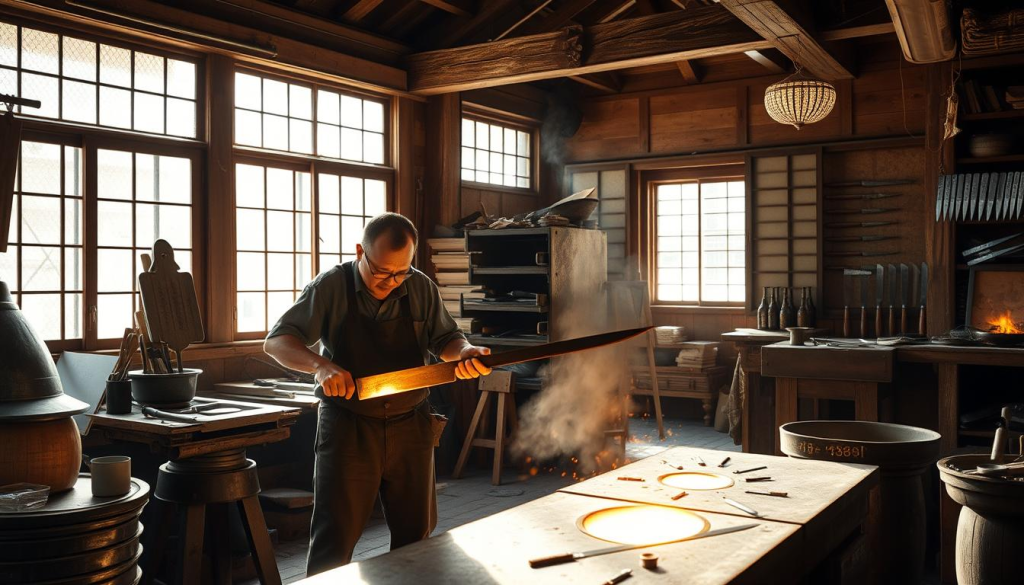
Crafting a Masamoto knife is an art form that requires skill, patience, and a deep understanding of materials and techniques. The process of creating these premium chef knives involves a combination of traditional Japanese methods and modern manufacturing processes.
Materials Used in Masamoto Knives
Masamoto knives are made from high-grade materials, including carbon steel and Hyper Molybdenum Vanadium stainless steel. The choice of material is crucial as it affects the knife’s sharpness, durability, and resistance to corrosion. Carbon steel, for instance, is prized for its ability to hold a sharp edge, while Hyper Molybdenum Vanadium stainless steel offers excellent corrosion resistance and strength.
The Forge Process: Heat and Precision
The forge process is a critical step in crafting Masamoto knives. It involves heating the steel to precise temperatures to achieve the desired hardness and flexibility. This process requires great skill and attention to detail to ensure that the blade is both strong and sharp. The forge process is what sets Masamoto knives apart, making them heirloom-quality blades that are passed down through generations.
Blade Design and Geometry
The design and geometry of Masamoto knives are tailored to specific culinary tasks, ensuring optimal performance. Whether it’s a sushi knife or a chef’s knife, the blade’s shape, edge angle, and balance are carefully considered. The specialized knife manufacturing process ensures that each knife meets the high standards of Masamoto, providing chefs with tools that enhance their cooking experience.
Understanding Knife Types
Understanding the different types of Masamoto knives is crucial for any culinary enthusiast. Masamoto offers a diverse range of high-quality kitchen knives that cater to various cooking needs, from preparing sushi to general cooking tasks.
The variety in Masamoto knives is a testament to the brand’s commitment to traditional Japanese knife craftsmanship. Each type of knife is designed with precision and care, ensuring that it meets the specific demands of different culinary tasks.
Sushi and Sashimi Knives
Masamoto’s sushi and sashimi knives are crafted with the utmost precision, reflecting the brand’s dedication to traditional Japanese knife craftsmanship. These knives are designed to make precise cuts, essential for preparing sashimi and sushi.
- Sushi knives are typically used for preparing sushi rolls and nigiri.
- Sashimi knives are designed for slicing raw fish into thin pieces.
Chef’s Knives and Utility Knives
Chef’s knives and utility knives from Masamoto are versatile tools in the kitchen. They are designed for a variety of tasks, from chopping vegetables to slicing meat.
| Knife Type | Primary Use | Characteristics |
|---|---|---|
| Chef’s Knife | General cooking tasks | Versatile, balanced, and sharp |
| Utility Knife | Smaller tasks, precision cutting | Smaller size, agile, and precise |
Cleavers and Specialty Knives
Cleavers and specialty knives are also part of Masamoto’s extensive range. Cleavers are used for heavy-duty tasks such as chopping through bones, while specialty knives are designed for specific tasks.
Masamoto’s commitment to quality and craftsmanship is evident across their range of knives, making them a preferred choice among chefs and home cooks alike.
Choosing the Right Masamoto Knife
The art of choosing a Masamoto knife involves understanding your culinary needs. With a range of handcrafted cutlery available, Masamoto offers premium chef knives that cater to various cooking styles and preferences.
Factors to Consider When Buying
When selecting a Masamoto knife, several factors come into play. The type of cuisine you prepare most often, your personal comfort with the knife’s weight and balance, and the specific tasks you’ll be using it for are all crucial considerations.
For instance, if you’re a sushi enthusiast, you’ll want a knife that’s designed for precision and delicacy. On the other hand, if you’re a chef who frequently chops tough ingredients, a more robust knife might be necessary.
- Consider the blade material and its durability.
- Think about the handle comfort and ergonomics.
- Reflect on the balance between the blade and handle.
Matching Knives with Culinary Styles
Masamoto’s range includes both traditional Japanese and Western-style knives, making it essential to match your knife with your culinary style. For example, a Santoku knife is versatile and suitable for a variety of kitchen tasks, while a Yanagiba knife is ideal for slicing sashimi.
| Knife Type | Culinary Use | Key Feature |
|---|---|---|
| Santoku | General cooking, chopping vegetables | Balanced weight, versatile |
| Yanagiba | Sashimi, slicing fish | Long, narrow blade for precision |
| Deba | Filleting fish, cutting meat | Thick, sturdy blade for heavy-duty tasks |
“A good knife is not just a tool, it’s an extension of the chef’s hand.” –
By considering these factors and matching your Masamoto knife to your culinary needs, you’ll be able to unlock the full potential of your cooking and enjoy the benefits of using premium chef knives.
Maintenance and Care of Masamoto Knives
The longevity of Masamoto knives depends on proper care and maintenance techniques. As heirloom-quality blades crafted with specialized knife manufacturing techniques, they require attention to detail to maintain their performance and extend their lifespan.
Sharpening Techniques for Longevity
Sharpening is a critical aspect of maintaining your Masamoto knife. Regular sharpening ensures that the blade remains sharp and effective. To sharpen your Masamoto knife, you can use a whetstone, which is a traditional method preferred by many chefs. Start with a coarse grit stone to repair any damage to the edge, then move to a finer grit stone to hone the blade to a sharp finish.
Tips for Sharpening:
- Use a consistent angle to maintain the blade’s geometry.
- Sharpen in a smooth, even motion, applying gentle pressure.
- Check the edge frequently to avoid over-sharpening.
Proper Cleaning and Storage Tips
Cleaning your Masamoto knife is straightforward but crucial for maintaining its quality. After each use, wash the knife by hand with mild soap and dry it immediately to prevent rust. Avoid putting your Masamoto knife in the dishwasher, as the high heat and harsh detergents can damage the blade and handle.
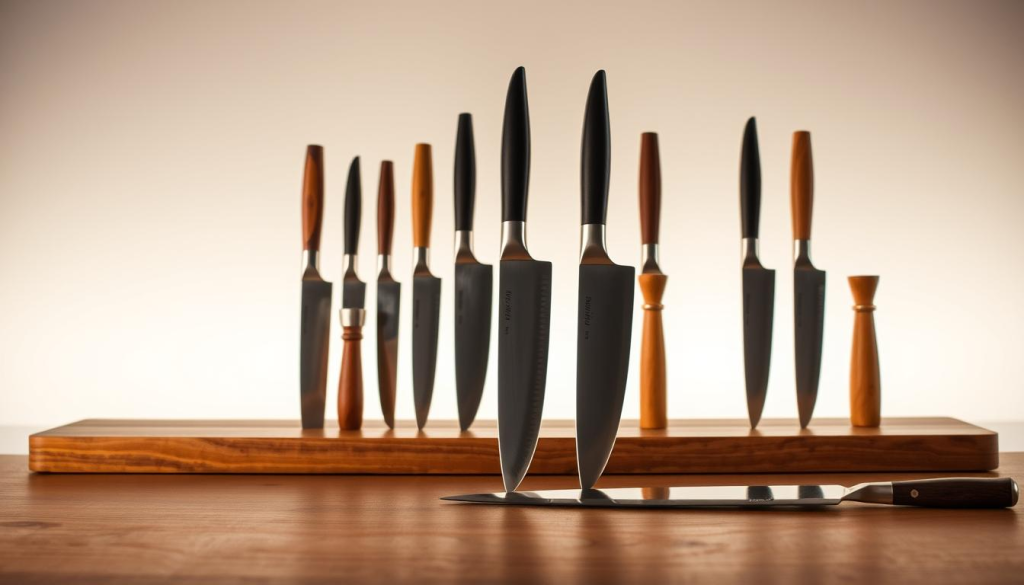
Storage is equally important. Store your Masamoto knife in a dry place, away from other utensils that could cause damage. Many users prefer to store their knives in a wooden block or on a magnetic strip, which keeps the blade accessible while protecting it from damage.
Storage Recommendations:
- Use a wooden knife block or a magnetic strip.
- Keep the knife dry and away from humid environments.
- Avoid storing the knife in a sheath or container that can cause moisture buildup.
The Role of Masamoto Knives in Japanese Cuisine
The art of Japanese cuisine is deeply intertwined with the use of Masamoto knives, which are revered for their quality and performance. These knives are not just tools; they are an integral part of the culinary tradition that defines Japanese cooking.
Importance of Knives in Sushi Preparation
In Japanese cuisine, particularly in sushi preparation, Masamoto knives play a crucial role. The precision and sharpness of these knives are essential for creating authentic sushi and sashimi. The sharp edge of a Masamoto knife allows for clean cuts through fish and other ingredients, preserving the texture and integrity of the food.
“A good knife is like a good friend; it helps you in times of need and makes your work easier.” – Japanese Proverb
The craftsmanship that goes into making Masamoto knives ensures that they remain sharp and durable, even with frequent use. This durability is vital in a professional kitchen where knives are used constantly.
Influence on Japanese Culinary Traditions
Masamoto knives have a significant influence on Japanese culinary traditions. They are used in various cooking techniques, from slicing and dicing to chopping and mincing. The traditional Japanese knife craftsmanship that Masamoto embodies is a testament to the country’s rich culinary heritage.
| Culinary Technique | Knife Type | Masamoto Feature |
|---|---|---|
| Slicing | Sashimi Knife | Straight Edge |
| Chopping | Chef’s Knife | Durable Blade |
| Minicing | Utility Knife | Sharp Point |
The use of Masamoto knives in Japanese cuisine not only reflects the importance of quality kitchen tools but also highlights the cultural significance of food preparation in Japanese culture. By using these high-quality knives, chefs can create dishes that are both visually appealing and delicious.
Masamoto Knives in the Modern Kitchen
Professional chefs and home cooks alike swear by Masamoto knives for their precision, durability, and overall performance. These premium chef knives have become an essential tool in many kitchens, thanks to their high-quality craftsmanship and attention to detail.
Popularity Among Professionals
Masamoto knives are highly regarded among professional chefs for their exceptional sharpness and balanced design. The high-carbon steel used in these knives ensures a sharp edge that lasts, making them ideal for demanding kitchen tasks.
The precision and control offered by Masamoto knives are particularly valued in professional kitchens, where the quality of the knife can significantly impact the cooking process.
Recommendations for Home Cooks
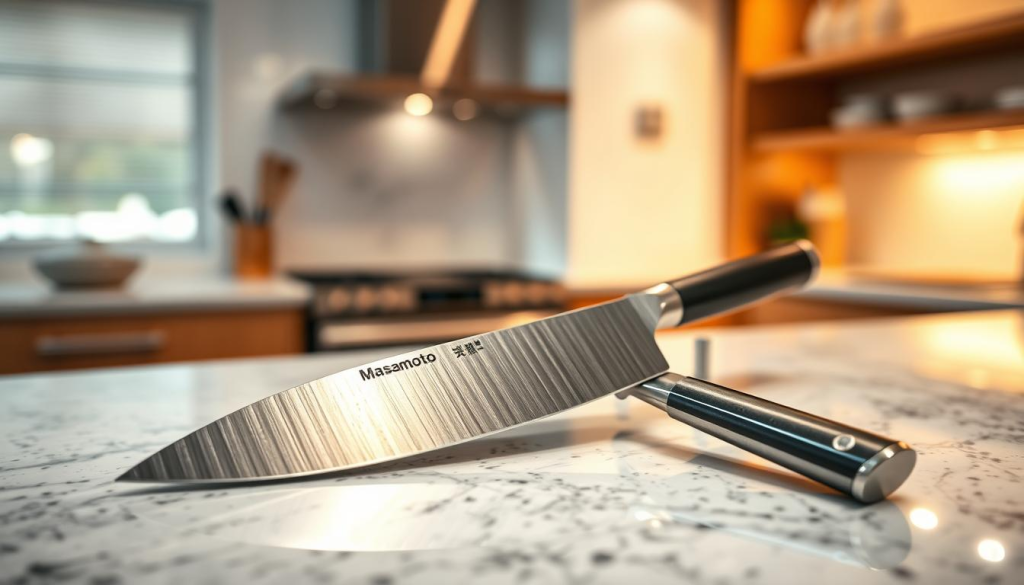
For home cooks, Masamoto knives offer a similar level of quality and performance found in professional kitchens. When choosing a Masamoto knife, consider the type of cooking you do most often.
For example, a Santoku knife is versatile and suitable for a variety of tasks, while a Gyuto knife is ideal for those who frequently prepare meat dishes.
| Knife Type | Primary Use | Edge Type |
|---|---|---|
| Santoku | Chopping vegetables, mincing herbs | Straight edge |
| Gyuto | Slicing meat, chopping vegetables | Curved edge |
| Nakiri | Chopping vegetables | Straight edge |
By selecting the right Masamoto knife for your cooking needs, you can enhance your cooking experience and achieve professional-level results in the comfort of your own kitchen.
Where to Buy Authentic Masamoto Knives
The quest for an authentic Masamoto knife can be daunting, but knowing where to look can make all the difference. With the rise of online shopping, it’s easier than ever to find a genuine Masamoto knife, but it’s crucial to be aware of the potential pitfalls, such as counterfeit products.
To ensure you’re getting a high-quality, authentic Masamoto knife, it’s essential to purchase from authorized dealers or reputable online retailers. These sources guarantee that the knives are genuine products of specialized knife manufacturing, crafted with the care and precision that Masamoto is known for.
Authorized Dealers and Online Retailers
Authorized dealers are the best place to start your search for an authentic Masamoto knife. They offer handcrafted cutlery that has been inspected for quality and authenticity. Some well-known authorized dealers include specialty kitchen stores and Japanese cultural centers.
Online retailers can also be a convenient option, offering a wide range of Masamoto knives. When shopping online, look for retailers that provide detailed product descriptions and have a good reputation among customers. It’s also a good idea to check for any certifications or guarantees that the knives are authentic.
| Authorized Dealer | Location | Products |
|---|---|---|
| Kitchen Pro | New York | Masamoto Santoku, Masamoto Gyuto |
| Japanese Knife Co. | California | Masamoto Deba, Masamoto Yanagiba |
| Cutlery World | Online | Masamoto Chef’s Knife, Masamoto Utility Knife |
Recognizing Counterfeit Knives
Counterfeit knives can be identified by their poor quality and lack of attention to detail. Genuine Masamoto knives are made with high-carbon steel and are known for their sharpness and durability. When examining a knife, look for any signs of cheap materials or craftsmanship, such as uneven edges or a flimsy feel.
Another way to verify authenticity is to check for any documentation or packaging that comes with the knife. Genuine Masamoto knives usually come with a certificate of authenticity or are packaged in a box with the Masamoto logo.
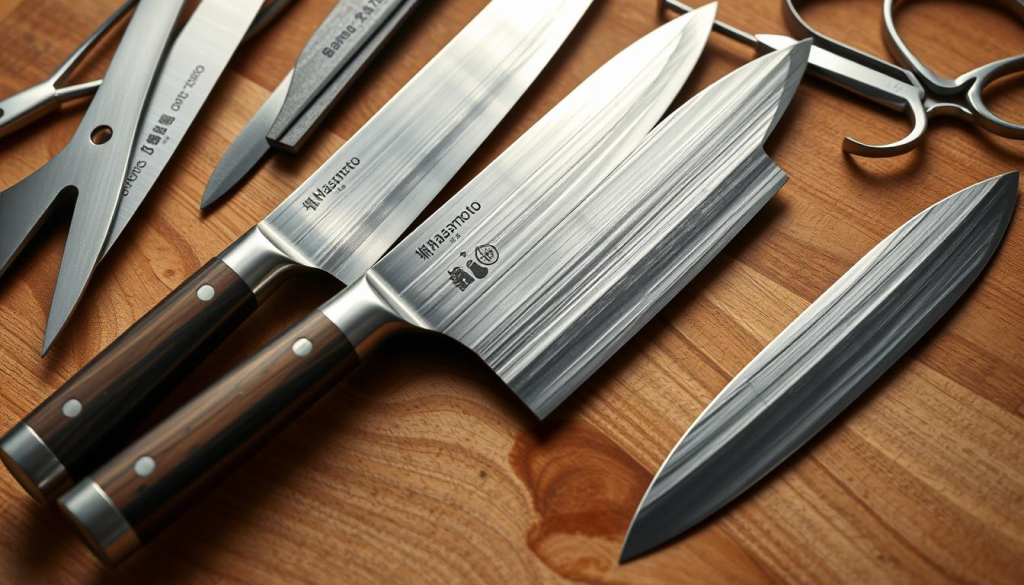
By being mindful of these factors and purchasing from authorized dealers, you can ensure that you’re getting a genuine Masamoto knife that will serve you well in your culinary endeavors.
Customer Reviews and Experiences
Masamoto knives have garnered a loyal following among chefs and home cooks alike, with many praising the brand’s commitment to artisan knife production and exclusive knife forging techniques. The quality and performance of these knives have been consistently highlighted in customer reviews.
Praise from Professionals
Professional chefs appreciate the precision and craftsmanship that goes into each Masamoto knife. The attention to detail in the artisan knife production process results in a superior cutting experience, making these knives a staple in many professional kitchens.
Home Cook Enthusiasts’ Feedback
Home cooking enthusiasts also rave about Masamoto knives, citing their durability and ease of use. The exclusive knife forging techniques employed by Masamoto ensure that each knife remains sharp and reliable over time, making them a valuable addition to any home kitchen.
By combining traditional craftsmanship with modern techniques, Masamoto continues to deliver exceptional knives that meet the needs of both professionals and home cooks, as evident from the overwhelmingly positive customer reviews.