Maintaining your Shun knives is crucial for optimal performance and longevity. Regular maintenance involves two key processes: honing and sharpening. Honing realigns the edge of the blade, ensuring it remains straight and effective, while sharpening removes metal to restore the knife’s sharpness.
By incorporating these practices into your routine, you’ll not only extend the life of your Shun knives but also ensure they continue to perform at their best. Proper care is essential for maintaining the quality and effectiveness of your knives.
Key Takeaways
- Regular honing and sharpening are crucial for maintaining Shun knives.
- Honing realigns the blade’s edge, while sharpening restores sharpness.
- Proper maintenance extends the life of your Shun knives.
- Regular care ensures optimal performance and longevity.
- Shun knives require consistent maintenance to remain effective.
Why Honing is Important for Shun Knives
Honing is a vital process for Shun knife owners, ensuring their blades remain sharp and effective. Regular honing maintains the knife’s edge, keeping it aligned and ready for precise cutting tasks.
Benefits of Regular Honing
Regular honing offers several benefits for Shun knife owners. It realignment of the blade’s edge ensures that the knife remains sharp, improving cutting performance and reducing the risk of accidents caused by dull blades. Moreover, honing is a quick and straightforward process that can be performed frequently, maintaining the knife’s optimal condition.
By incorporating honing into their routine, users can enjoy a more efficient cooking experience. The precision and sharpness maintained through honing allow for smoother cuts and better control over the knife, making culinary tasks more manageable.
Differences Between Honing and Sharpening
Understanding the difference between honing and sharpening is crucial for proper knife maintenance. Honing involves realigning the edge of the blade to maintain its sharpness, whereas sharpening involves removing metal to restore the edge. Honing is a more frequent process that keeps the knife in optimal condition between sharpenings.
While sharpening is necessary to restore a dull edge, regular honing can significantly reduce the frequency of sharpening needed. This not only extends the life of the knife but also preserves its sharpness and performance over time.
How Honing Extends Knife Life
Honing plays a significant role in extending the life of Shun knives. By regularly realigning the blade’s edge, users can prevent excessive wear and tear that occurs when a knife is used in a dull or misaligned state. This preventive maintenance reduces the need for more aggressive sharpening, which can remove more metal than necessary, potentially shortening the knife’s lifespan.
Furthermore, maintaining a sharp edge through honing reduces the pressure and force needed to cut, minimizing the risk of damaging the knife or causing it to chip. This careful handling and maintenance contribute to a longer, more effective life for the knife.
Understanding Shun Knives
To truly appreciate Shun knives, it’s essential to understand their features, types, and proper usage. Shun knives are celebrated for their exceptional craftsmanship, precision, and the value they bring to both professional chefs and home cooks.
Features of Shun Knives
Shun knives are distinguished by several key features that contribute to their high quality and performance. These include:
- High-Carbon Steel Blades: Known for their durability and ability to hold a sharp edge.
- Precision Forging: Ensures a strong, balanced knife that performs well.
- Ergonomic Handles: Designed for comfort and to reduce fatigue during extended use.
- Sharpness and Edge Retention: Shun knives are renowned for their sharpness and the ability to maintain their edge.
Different Types of Shun Knives
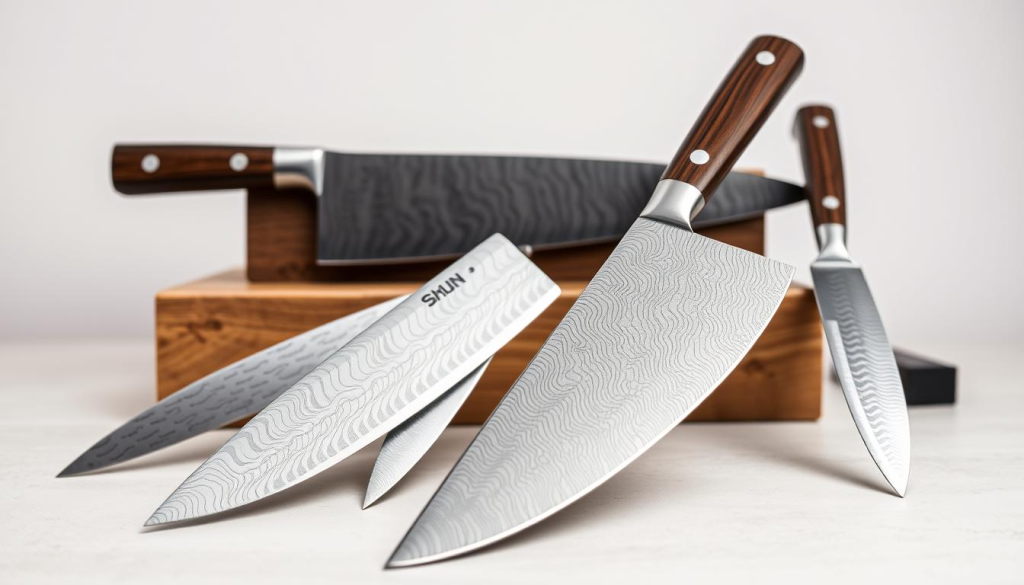
Shun offers a variety of knives designed for specific tasks, ensuring that there’s a Shun knife for every culinary need. Some of the most popular types include:
- Chef’s Knives: Versatile and essential for a wide range of kitchen tasks.
- Paring Knives: Ideal for peeling and coring fruit and vegetables.
- Serrated Utility Knives: Perfect for cutting through tough or fibrous materials.
- Boning Knives: Designed for precision and control when removing bones from meat, poultry, and fish.
Proper Use of Shun Knives
Caring for and using Shun knives correctly is crucial to maintaining their quality and extending their lifespan. Here are some tips:
- Always cut on a suitable surface, such as a wooden or plastic cutting board, to protect the blade.
- Avoid cutting through bones or hard objects, as this can damage the knife.
- Regularly clean and dry your Shun knives to prevent rust and maintain hygiene.
- Store your knives in a dry place, preferably in a block or on a magnetic strip, to protect the edges.
By understanding the features, types, and proper care of Shun knives, you can enhance your cooking experience and enjoy the benefits of these exceptional tools for years to come.
Selecting the Right Honing Tools
The right honing tool can make all the difference in maintaining the sharpness of your Shun knives. With various options available, understanding the characteristics of each can help you make an informed decision.
Types of Honing Rods
Honing rods are essential tools for maintaining the edge of your Shun knives. There are primarily two types: diamond-coated and ceramic rods.
- Diamond-coated rods are known for their durability and effectiveness in sharpening.
- Ceramic rods are gentler on the knife edge and ideal for regular maintenance.
Benefits of Diamond vs. Ceramic Rods
When deciding between diamond and ceramic rods, consider the following benefits:
| Feature | Diamond Rods | Ceramic Rods |
|---|---|---|
| Durability | High | Medium |
| Sharpening Effectiveness | High | Medium |
| Gentleness on Edge | Medium | High |
Other Honing Tools to Consider
Apart from honing rods, other tools can aid in maintaining your Shun knives. These include:
- Sharpening steels for realigning the knife edge.
- Whetstones for more thorough sharpening.
Choosing the right honing tool depends on your specific needs and preferences. Whether you opt for a diamond or ceramic rod, or another type of honing tool, regular maintenance is key to keeping your Shun knives sharp.
Step-by-Step Guide to Honing Shun Knives
For chefs and home cooks alike, honing Shun knives is a vital skill that enhances cooking precision and safety. Honing ensures that your knives remain sharp and effective, making a significant difference in your cooking experience.
Preparing Your Workspace
Before you start honing your Shun knives, it’s crucial to prepare your workspace. Ensure that your work surface is stable and clear of any clutter. You’ll need a honing rod, a cloth or towel for cleaning, and a comfortable, well-lit workspace.
Choosing the Right Honing Rod: Select a honing rod that matches the size and type of your Shun knife. For most Shun knives, a diamond or ceramic rod is recommended due to their durability and effectiveness.
Correct Technique for Honing
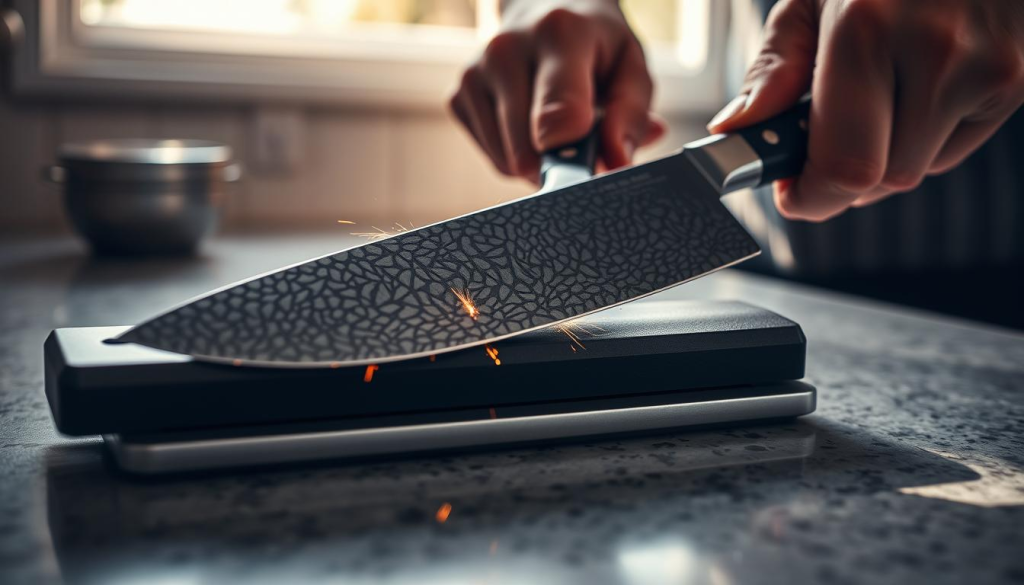
The technique used for honing Shun knives is critical. Hold the honing rod vertically with the tip on a stable surface. Hold your Shun knife at the desired angle, typically around 15-20 degrees for most Shun knives, and draw it down the rod in a smooth, even motion, maintaining light pressure.
- Start with the knife at the base of the rod and move it towards the tip.
- Repeat this process several times on each side of the blade.
- Check the edge regularly to assess your progress.
| Honing Technique Aspect | Description | Benefit |
|---|---|---|
| Angle | 15-20 degrees for most Shun knives | Optimal sharpness |
| Motion | Smooth, even draw down the rod | Consistent edge |
| Pressure | Light pressure | Prevents damage to the blade |
Important Safety Tips
Safety is paramount when honing your Shun knives. Always cut away from your body, and keep your fingers curled under and out of the way of the blade. Regularly cleaning your knife and honing rod can also prevent accidents caused by slipping on debris.
Regular maintenance not only keeps your knives sharp but also ensures a safer cooking environment.
When to Hone Shun Knives
Understanding when to hone your Shun knives is crucial for maintaining their performance and longevity. Regular inspection and honing are necessary to keep your knives in top condition.
Signs Your Knife Needs Honing
Several signs indicate that your Shun knife is due for honing. If you notice that your knife is not cutting as smoothly as it used to, or if it’s leaving behind torn or uneven cuts, it’s likely time to hone the blade. Additionally, if the knife feels dull or is requiring more pressure than usual to cut through ingredients, honing is necessary. Visual inspection can also reveal if the edge is misaligned or has developed nicks.
Recommended Hone Frequency
The frequency of honing depends on how often you use your Shun knives. For chefs or heavy users, honing before or after each use is recommended to maintain optimal sharpness. For less frequent users, honing once a week or once a month may suffice. It’s essential to monitor your knife’s performance and adjust your honing schedule accordingly.
Seasonal Considerations for Honing
Seasonal changes can affect the honing frequency of your Shun knives. During humid summer months, knives may require more frequent honing due to the moisture in the air, which can cause the blade to dull faster. Conversely, in dry winter months, the need for honing might decrease. However, this can vary based on your specific usage and storage conditions.
By being mindful of these factors and regularly inspecting your knives, you can determine the best honing schedule for your Shun knives, ensuring they remain sharp and perform optimally throughout the year.
How to Sharpen Shun Knives
The art of sharpening Shun knives involves selecting the appropriate method and tools. Sharpening is a critical process that restores the knife’s edge, ensuring it remains effective and safe to use.
Choosing a Sharpening Method
When it comes to sharpening Shun knives, there are several methods to choose from, each with its own advantages. The most common methods include using whetstones, electric sharpeners, and sharpening steels. The choice of method depends on personal preference, the level of sharpness desired, and the user’s experience.
Whetstones are considered the traditional and preferred method for sharpening high-quality knives like Shun. They allow for precise control over the sharpening angle and can produce a very sharp edge.
Electric sharpeners offer convenience and ease of use, making them a good option for those who are less experienced or prefer a quicker method.
Overview of Whetstones
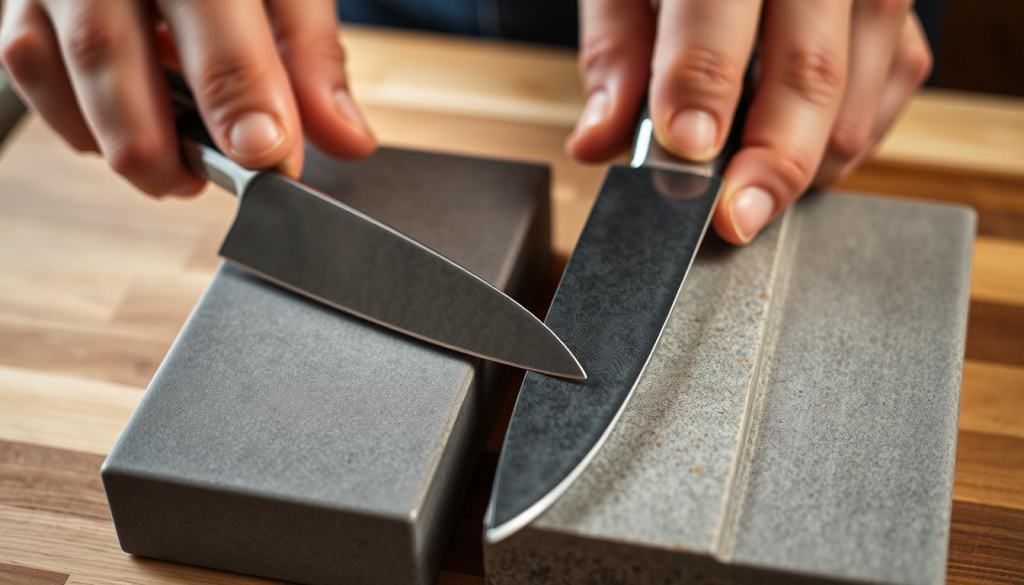
Whetstones are flat, rectangular stones used for sharpening knives. They come in different grits, ranging from coarse to fine, and are used to sharpen and polish the knife’s edge. Using a whetstone requires some skill and practice to achieve the correct sharpening angle.
To use a whetstone effectively, start with a coarse grit to repair the edge, then progress to finer grits for polishing. It’s essential to maintain a consistent angle and apply gentle, even pressure.
Using Electric Sharpeners Safely
Electric sharpeners are designed to simplify the sharpening process. They have pre-set angles and guides to help sharpen the knife correctly. However, it’s crucial to follow the manufacturer’s instructions and take safety precautions to avoid accidents.
- Always read the manual before use.
- Ensure the knife is securely held in place.
- Sharpen in accordance with the manufacturer’s guidelines.
Maintenance Tips for Shun Knives
Shun knives are precision instruments that require careful maintenance to perform at their best. Proper care not only extends the life of your knives but also ensures they continue to deliver exceptional cutting performance.
Proper Cleaning Techniques
Cleaning your Shun knives regularly is vital to prevent the buildup of residue and bacteria. Hand washing with mild soap and drying immediately is recommended. Avoid using abrasive cleaners or putting your knives in the dishwasher, as this can damage the blade and handle.
For tougher residue, a soft sponge or cloth can be used. It’s also a good practice to clean your knives after each use to prevent food particles from drying onto the blade.
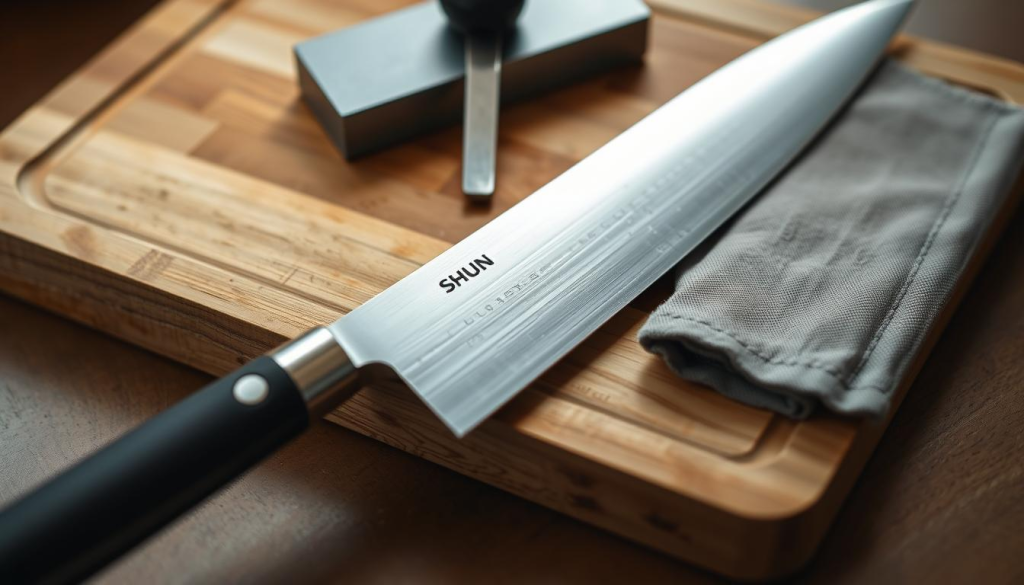
Storing Your Knives Correctly
Proper storage is crucial for maintaining the quality of your Shun knives. Knife blocks or magnetic strips are recommended storage solutions. These options keep the blades protected and prevent them from coming into contact with other utensils or surfaces that could cause damage.
If you prefer to store your knives in a drawer, consider using knife guards or sheaths to protect the blades. This will also help prevent accidents when reaching into the drawer.
Avoiding Common Knife Damages
To avoid damaging your Shun knives, it’s essential to use them correctly. Avoid cutting on hard surfaces like glass, stone, or metal, as these can damage the blade. Instead, opt for wooden or plastic cutting boards, which are gentler on knives.
Additionally, be mindful of the force and angle you apply when cutting. Using excessive force or cutting at the wrong angle can lead to uneven wear or even chips in the blade.
By following these maintenance tips, you can ensure your Shun knives remain in excellent condition, providing you with years of reliable service.
The Right Angle for Honing Shun Knives
The angle at which you hone your Shun knives is crucial for maintaining their exceptional performance. Honing at the correct angle ensures that the blade edge is properly aligned and maintained, which is vital for the knife’s cutting efficiency and longevity.
Importance of Angle Consistency
Consistency in the honing angle is key to achieving a sharp, even edge. Inconsistent angles can lead to uneven wear and potentially damage the knife. To maintain angle consistency, it’s essential to use a honing rod that is designed for your specific Shun knife type.
Ideal Angles for Different Knife Blade Types
Different blade types require slightly different honing angles. For instance, a straight-edge blade typically requires a honing angle of around 16°, which is standard for many high-quality knives like Shun. However, serrated blades may require a different approach, often involving specialized honing tools designed for serrations.
According to expert recommendations, maintaining the correct angle is crucial for effective honing. The recommended angle for Shun knives is typically around 16°, but this can vary based on the specific model and blade type.
Techniques to Maintain Proper Angle
To maintain the proper honing angle, several techniques can be employed. Using a honing guide can be particularly helpful, especially for those new to knife honing. Additionally, practicing the honing motion in front of a mirror or with a consistent, smooth stroke can help in achieving the desired angle.
Regular practice and attention to detail are essential for mastering the correct honing angle. By doing so, you can ensure your Shun knives remain in optimal condition, providing you with precise cutting performance for years to come.
Troubleshooting Common Honing Issues
Troubleshooting common honing issues is essential to maintaining the quality of your Shun knives. Despite your best efforts, you may encounter problems while honing, but understanding how to address these challenges can make a significant difference in the performance and longevity of your knives.
Uneven Blade Edges
Uneven blade edges can be a frustrating issue when honing Shun knives. This problem often arises from inconsistent honing techniques or using the wrong angle. To correct uneven edges, it’s crucial to identify the cause and adjust your technique accordingly.
First, inspect the edge of your knife to determine the extent of the unevenness. If the edge is significantly uneven, you may need to re-hone the entire edge to achieve consistency. Use a honing rod with a fine grit to make subtle adjustments and realign the edge.
Difficulty in Honing
Difficulty in honing can stem from various factors, including the type of honing tool used or the condition of the knife. If you’re experiencing difficulty in honing, check that your honing rod is suitable for your Shun knife’s material.
For instance, if your knife has a particularly hard blade, a diamond-coated honing rod might be more effective than a ceramic one. Additionally, ensure that your knife is clean and free of debris, as this can interfere with the honing process.
Addressing Chips or Nicks
Chips or nicks in your Shun knife’s edge can be challenging to address during honing. The key is to approach the problem with the right technique and tools. For minor chips or nicks, a few careful strokes with a fine-grit whetstone can often repair the damage.
For more significant damage, it may be necessary to use a coarser grit stone to remove the chip or nick before refining the edge with a finer grit. Patience and careful technique are crucial to successfully addressing these issues without causing further damage to the knife.
Professional Services for Shun Knives
When it comes to maintaining the sharpness and longevity of your Shun knives, knowing when to seek professional help can make all the difference. While many owners are comfortable with honing and sharpening their knives, there are instances where professional services are not only beneficial but necessary.
When to Seek Professional Help
If you notice that your Shun knife is difficult to hone or sharpen, or if it has developed significant chips or nicks, it may be time to consult a professional. Additionally, if you’re unsure about the proper technique or feel uncomfortable sharpening your knife yourself, seeking professional help can prevent further damage and ensure your knife is restored to its optimal condition.
Key indicators that you need professional help include:
- A significant decrease in the knife’s performance despite regular honing
- Visible damage to the blade, such as deep nicks or chips
- Lack of confidence in your sharpening or honing abilities
Overview of Knife Sharpening Services
Professional knife sharpening services specialize in restoring knives to their original sharpness. These services typically employ experienced technicians who understand the intricacies of various knife brands, including Shun. By utilizing advanced equipment and techniques, they can address even the most challenging sharpening tasks.
“A good sharpening service can breathe new life into your Shun knives, ensuring they continue to perform at their best.” –
How to Choose a Professional Sharpening Service
When selecting a professional sharpening service for your Shun knives, consider the following factors:
- Experience and Reputation: Look for services with a proven track record and positive customer reviews.
- Specialization: Opt for services that specialize in high-end or Japanese knives, as they are more likely to understand the specific needs of Shun knives.
- Techniques and Equipment: Inquire about the methods and equipment used to ensure they align with your expectations.
By choosing a reputable and skilled sharpening service, you can ensure that your Shun knives receive the care they deserve, maintaining their performance and extending their lifespan.
Enhancing Your Knifework Skills
Enhancing your knifework skills not only improves performance but also prolongs the life of your Shun knives. To achieve this, it’s crucial to practice regularly and be open to learning new techniques.
Practicing Knife Skills
Practicing knife skills is fundamental to becoming proficient with your Shun knives. Start with simple tasks like chopping vegetables or slicing meat, and gradually move on to more complex cuts. Regular practice helps in developing muscle memory, which is key to efficient and safe knife handling.
- Begin with basic cuts and gradually increase complexity.
- Use a cutting board that is appropriate for your knife type.
- Keep your knives well-maintained to ensure optimal performance.
Taking a Knife Skills Class
For those looking to accelerate their learning, taking a knife skills class can be highly beneficial. These classes are usually conducted by experienced chefs or knife experts who can provide personalized feedback and instruction.
- Look for classes that focus on the type of knife you use.
- Check the qualifications of the instructor.
- Consider classes that offer hands-on practice.
Learning from Online Resources
The internet is a rich source of information for learning knife skills. From video tutorials to detailed guides, there are numerous resources available to help you improve.
- Watch video tutorials to understand the technique visually.
- Read guides and blogs from reputable sources.
- Join online forums or communities to ask questions and share experiences.
By combining practice, classes, and online resources, you can significantly enhance your knifework skills, making the most out of your Shun knives.
Conclusion: Keeping Your Shun Knives Sharp
Maintaining the sharpness of your Shun knives is crucial for optimal performance and longevity. Regular honing and sharpening are essential to keep your knives in top condition.
Key Takeaways
Throughout this guide, we’ve discussed the importance of honing Japanese knives, the differences between honing and sharpening, and the techniques for maintaining sharp knives. By following these steps, you can extend the life of your Shun knives and ensure they continue to perform at their best.
Regular Maintenance for Knife Longevity
Regular maintenance is key to maintaining the sharpness and longevity of your Shun knives. By incorporating honing into your routine, you can prevent dulling and damage, ensuring your knives remain sharp and effective.
To maximize knife longevity, it’s also important to store your knives properly, clean them regularly, and avoid common knife damages. By following these tips and maintaining a regular maintenance routine, you can enjoy your Shun knives for years to come.