Maintaining your Shun knives is crucial for their performance and longevity. Shun knives are renowned for their high-quality craftsmanship and are designed to be sharpened multiple times, ensuring a lifetime of use.
Regular sharpening is essential to keep your Shun knives in top condition. This article will guide you through the process of determining the ideal sharpening frequency for your Shun knives, helping you to maintain their edge and overall performance.
Key Takeaways
- Understand the importance of regular sharpening for Shun knives.
- Learn how to determine the ideal sharpening frequency.
- Discover tips for maintaining your Shun knives‘ performance.
- Explore the benefits of proper knife care.
- Find out how to extend the life of your Shun knives.
Understanding the Importance of Knife Sharpness
Sharp knives are not just a preference, but a necessity for efficient and safe cooking. The sharpness of your knives can make a significant difference in your cooking experience, affecting not only the quality of your cuts but also your safety in the kitchen.
Why Sharp Knives Are Essential
Sharp knives are essential for several reasons. Firstly, they require less force to cut through ingredients, reducing the risk of accidents. Secondly, sharp knives make cleaner cuts, which is crucial for presentation and maintaining the integrity of the ingredients. This is particularly important when preparing delicate foods.
Key benefits of sharp knives include:
- Increased safety due to reduced slipping
- Better control over cutting
- Improved precision
Benefits of Using Shun Knives
Shun knives are renowned for their high quality and exceptional sharpness. Using Shun knives can elevate your cooking experience due to their:
| Feature | Benefit |
|---|---|
| High-carbon steel construction | Durable and resistant to corrosion |
| Precision sharpening | Exceptional sharpness and edge retention |
| Ergonomic design | Comfortable handling and reduced fatigue |
Consequences of Dull Knives
Dull knives, on the other hand, can lead to a range of negative consequences, including increased risk of injury, poor cutting performance, and damage to the ingredients being cut. Dull knives require more force, which can cause them to slip and lead to accidents.
The consequences of using dull knives include:
- Increased risk of kitchen accidents
- Poor quality cuts affecting presentation
- More effort required for cutting, leading to fatigue
Signs That Your Shun Knives Need Sharpening
To keep your Shun knives in top condition, it’s essential to identify the signs that indicate they need sharpening. A sharp knife is not only more effective but also safer to use, as it requires less force and pressure.
Common Indicators of Dullness
Several signs can indicate that your Shun knives have become dull and are in need of sharpening. These include:
- Increased difficulty in cutting through ingredients
- A visible decrease in the knife’s performance
- A dull or rounded edge when inspecting the blade
- Tearing or crushing food instead of making clean cuts
Being aware of these indicators can help you determine when it’s time to sharpen your Shun knives.
Test for Sharpness at Home
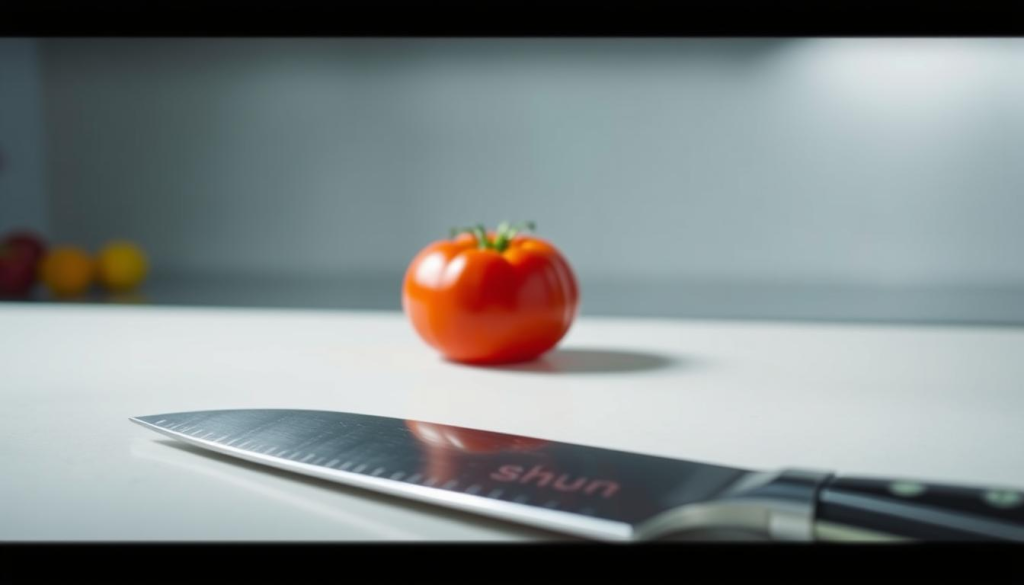
You don’t need professional equipment to test the sharpness of your Shun knives. Simple tests can be performed at home:
- The Paper Test: Hold a piece of paper vertically and try to cut through it with your knife. A sharp knife should cut through cleanly.
- The Thumb Test: Carefully touch the blade with the pad of your thumb (not the tip or edge). A sharp blade will catch or drag slightly on your skin.
By regularly checking your Shun knives using these methods, you can ensure they remain sharp and effective.
Maintaining the sharpness of your Shun knives not only enhances your cooking experience but also prolongs the lifespan of the knives. Regular sharpening is a simple yet effective way to keep your kitchen tools in optimal condition.
Frequency of Sharpening Shun Knives
The sharpening frequency for Shun knives varies significantly between home cooks and professional chefs. Understanding your specific needs is crucial for maintaining the optimal performance of your knives.
General Guidelines for Home Cooks
For home cooks, the frequency of sharpening Shun knives is generally less often than for professional chefs. Typically, home cooks may need to sharpen their knives every 6 to 12 months, depending on usage. If you cook occasionally, your knives may remain sharp for a longer period.
Tip: Regularly honing your knives with a honing steel can help maintain their sharpness between sharpenings.
Professional Chef Recommendations
Professional chefs, on the other hand, require a much higher level of sharpness due to the frequency and intensity of their work. It is recommended that professional chefs sharpen their Shun knives every 1 to 3 months. Some may even need to sharpen them more frequently, depending on their specific kitchen demands.
Factors That Affect Sharpening Frequency
Several factors influence how often you should sharpen your Shun knives, including:
- Usage frequency
- Type of cutting tasks (e.g., chopping hard vegetables vs. slicing meat)
- Cutting surface (e.g., wooden vs. granite boards)
- Storage and maintenance practices
The following table summarizes the key factors and their impact on sharpening frequency:
| Factor | Impact on Sharpening Frequency |
|---|---|
| Frequent Usage | More often (every 1-3 months for professionals) |
| Occasional Usage | Less often (every 6-12 months for home cooks) |
| Cutting Hard Vegetables | Increases sharpening frequency |
| Proper Storage and Maintenance | Decreases sharpening frequency |
By understanding these factors and adjusting your sharpening schedule accordingly, you can ensure that your Shun knives remain in excellent condition, providing you with precise cutting performance whenever you need it.
Types of Shun Knives and Their Care
With a legacy of craftsmanship, Shun offers an array of knives that differ in material, design, and application. Understanding the various types of Shun knives and their specific care requirements is essential for maintaining their performance and longevity.
Different Blades and Their Uses
Shun’s product line includes a variety of knives, each designed for specific tasks. The Classic Chef’s Knife, for instance, is a versatile tool ideal for chopping, slicing, and mincing ingredients. Specialty knives, such as the Nakiri and Santoku, cater to particular cutting techniques, offering precision and ease of use.
The Paring Knife is another essential tool, used for peeling and coring fruit and vegetables, as well as for intricate cutting tasks. For more heavy-duty tasks, the Cleaver is designed to handle tough ingredients, making it a valuable addition to any kitchen.
Material Differences and Maintenance
Shun knives are crafted from high-quality materials, including high-carbon steel and stainless steel. The high-carbon steel blades are known for their sharpness and durability, requiring regular maintenance to prevent rust. Stainless steel knives, on the other hand, offer resistance to corrosion but may require more effort to sharpen.
To maintain your Shun knives, regardless of the material, it’s crucial to clean them promptly after use and store them properly. Regular sharpening and honing will also keep the blades in optimal condition. For high-carbon steel knives, occasional oiling can help prevent rust.
By understanding the unique characteristics of your Shun knives and following the appropriate care and maintenance tips, you can ensure they remain in excellent condition, providing years of reliable service.
Techniques for Sharpening Shun Knives
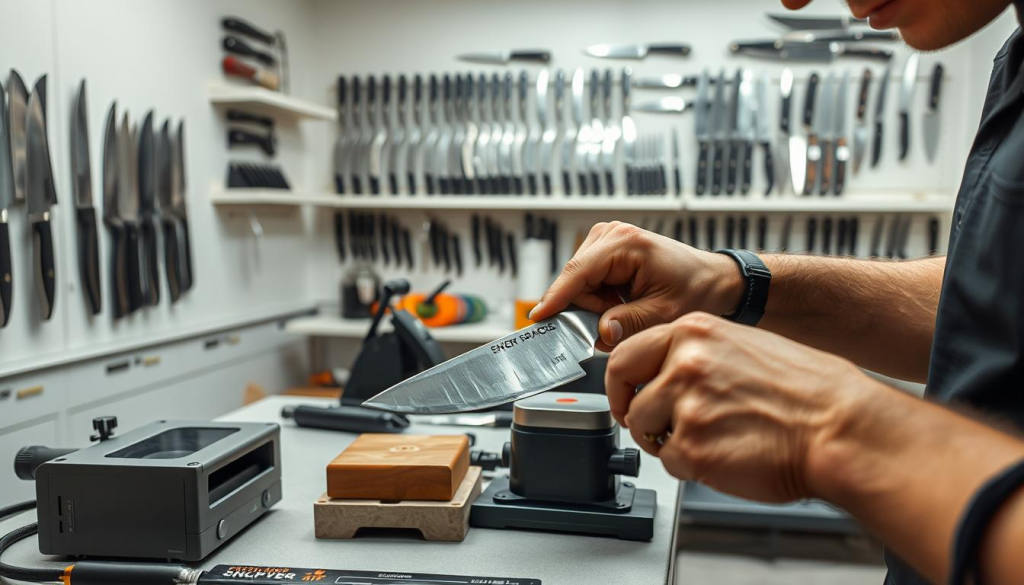
To maintain the exceptional quality of your Shun knives, mastering the sharpening technique is crucial. Sharpening is not just about restoring the edge but also about understanding the tools and methods that work best for your knives.
Using a Whetstone
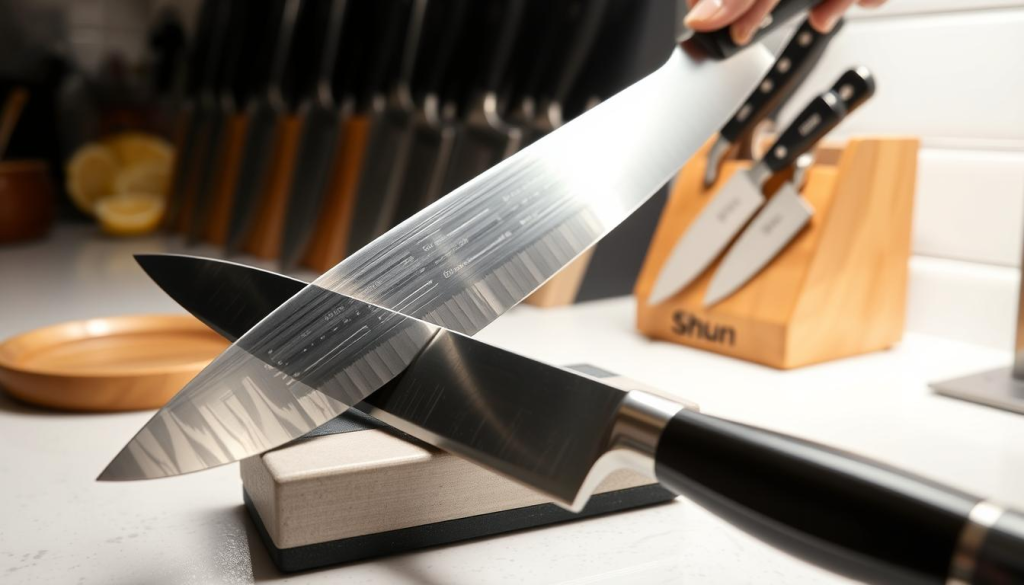
A whetstone is a traditional tool for sharpening knives. It allows for a high degree of control over the sharpening process, making it ideal for Shun knives. To use a whetstone, start by soaking it in water for about 10 minutes. Then, place the whetstone on a stable surface and hold the Shun knife at the desired angle, typically around 15-20 degrees. Gently draw the knife across the stone in a smooth, consistent motion, maintaining the angle throughout the stroke.
Tip: It’s essential to sharpen your knife on both sides to maintain evenness and prevent uneven wear.
Electric Sharpeners: Pros and Cons
Electric sharpeners offer a convenient alternative to whetstones. They are quick and easy to use, making them suitable for those who are new to sharpening or prefer a more straightforward method. However, they can remove more metal than necessary, potentially shortening the lifespan of your knife.
- Pros: Easy to use, quick sharpening, consistent results.
- Cons: May remove too much metal, can be less precise.
Honing vs. Sharpening
It’s crucial to understand the difference between honing and sharpening. Honing involves realigning the edge of the knife to its original position, maintaining its sharpness. Sharpening, on the other hand, involves removing metal to create a new edge. Regular honing can extend the time between sharpenings, keeping your Shun knives in optimal condition.
By mastering these techniques and understanding when to use them, you can ensure your Shun knives remain sharp and perform at their best.
Tools for Maintaining Shun Knife Edge
The longevity and performance of Shun knives depend significantly on the tools used for their maintenance. Proper care ensures that these high-quality knives continue to deliver exceptional cutting performance over their lifespan.
Recommended Tools for Sharpening
To maintain the edge of your Shun knives, you’ll need a few specialized tools. Whetstones are considered the gold standard for sharpening knives. They come in various grits, from coarse to fine, allowing you to repair and hone your knife’s edge with precision.
Another essential tool is the honing steel, which is used to realign the edge of your knife between sharpenings. Regular use of a honing steel can significantly extend the time between sharpenings, keeping your knife performing at its best.
| Tool | Purpose | Benefits |
|---|---|---|
| Whetstone | Sharpening and repairing the knife edge | Precision sharpening, long-lasting edge |
| Honing Steel | Realigning the knife edge | Maintains sharpness, easy to use |
| Electric Sharpener | Convenient sharpening | Quick, easy sharpening, consistent results |
Importance of a Honing Steel
A honing steel is a critical component in your Shun knife care routine. It doesn’t sharpen the knife but realigns the edge, ensuring it remains sharp and effective. Regular honing can prevent the need for frequent sharpening, maintaining your knife’s performance and extending its lifespan.
By incorporating these tools into your knife care routine, you’ll be able to maintain your Shun knives in optimal condition, ensuring they continue to provide the exceptional performance you expect from them.
How to Properly Store Your Shun Knives
Maintaining the excellence of your Shun knives requires careful consideration of their storage. Proper storage not only protects the blades from damage but also maintains their sharpness and overall quality.
Storage Solutions to Prevent Damage
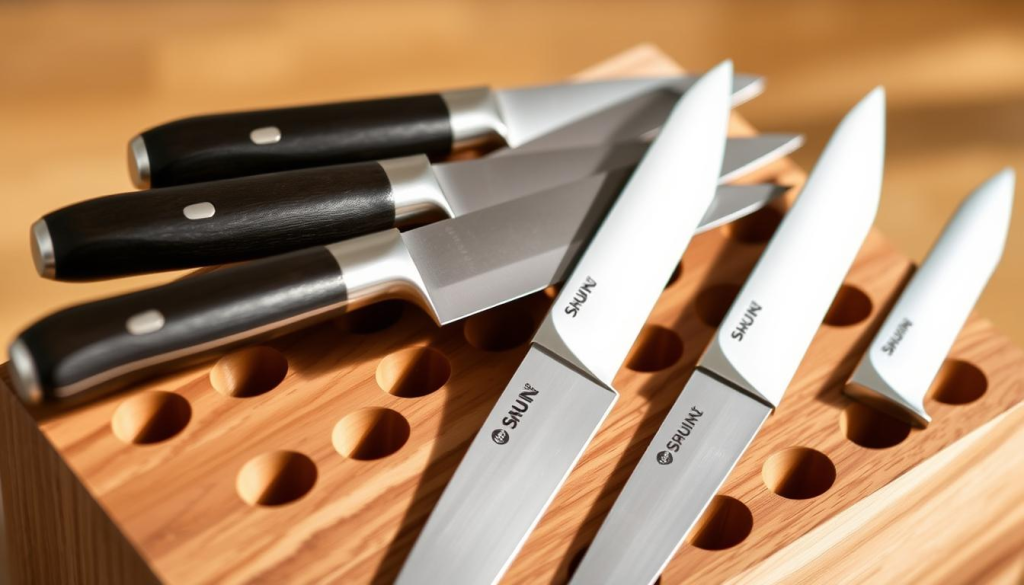
To prevent damage to your Shun knives, it’s essential to store them in a way that protects the blades. One effective method is using a knife block or a magnetic strip. A knife block with individual slots for each knife can keep them organized and prevent them from coming into contact with other utensils or hard surfaces that could cause damage.
Magnetic strips are another excellent option, especially for those with limited drawer space. By mounting the strip on a wall or the side of a cabinet, you can keep your knives within easy reach while keeping them safe.
Importance of Knife Guards and Blocks
Knife guards and blocks play a crucial role in the safe storage of Shun knives. Knife guards are protective covers that fit over the blade, preventing accidental cuts and damage. They are particularly useful for storing knives in drawers.
A knife block not only keeps the knives organized but also protects them from other utensils. When choosing a knife block, look for one made from a durable material that is easy to clean.
- Use a knife block with individual slots to keep knives separate.
- Consider a magnetic strip for wall or cabinet mounting.
- Utilize knife guards for added protection when storing in drawers.
Professional Sharpening Services
When it comes to preserving the longevity and performance of Shun knives, professional sharpening services are an invaluable resource. These services provide expertise and specialized equipment to restore your knives to their optimal sharpness.
When to Consider a Professional Service
If you’re unsure about how to sharpen your Shun knives or if they require a more precise edge, it’s time to consider a professional sharpening service. Additionally, if your knives have been used extensively or have become significantly dull, professionals can rejuvenate them.
- Knives that have been used for a long time without sharpening
- Knives with damaged or chipped blades
- Users who are unsure about sharpening techniques
How to Choose a Reliable Service
Selecting the right professional sharpening service involves several considerations. Look for services that specialize in high-quality knives like Shun and have positive customer reviews.
| Criteria | Description | Importance Level |
|---|---|---|
| Experience | Years of experience in sharpening high-end knives | High |
| Customer Reviews | Feedback from previous customers regarding service quality | High |
| Sharpening Techniques | Methods used for sharpening, including traditional and modern techniques | Medium |
| Turnaround Time | Time taken to complete the sharpening service | Medium |
| Cost | Price charged for the sharpening service | Low |
By considering these factors and choosing a reliable professional sharpening service, you can ensure that your Shun knives are well-maintained and continue to perform optimally.
Best Practices for Knife Maintenance
The longevity and performance of your Shun knives depend on proper care and maintenance. Regular upkeep not only ensures they continue to perform at their best but also extends their lifespan.
Cleaning and Care After Use
After each use, it’s essential to clean your Shun knives thoroughly. Hand washing with mild soap and warm water is recommended. Avoid using abrasive cleaners or putting your knives in the dishwasher, as this can damage the blade and handle.
- Dry your knives immediately after washing to prevent rust.
- Use a soft cloth to dry, paying extra attention to the area where the blade meets the handle.
- For tougher residue, a gentle scrub with a soft sponge can be effective.
Routine Checks To Ensure Longevity
Regularly checking your knives for signs of wear can help you address issues before they become major problems. Inspect the edge for dullness or damage and sharpen as needed.
- Check the alignment of the knife in its storage to prevent uneven wear.
- Use a honing steel regularly to maintain the edge between sharpenings.
- Store your knives properly in a dry place, using a knife block or guard to protect the blades.
By following these best practices for maintenance, you can ensure your Shun knives remain in excellent condition, providing you with years of reliable service.
Conclusion: Enjoying Your Shun Knives
Maintaining sharp Shun knives is crucial to enjoying the cooking experience. By keeping your knives in optimal condition, you can savor the pleasure of cooking with precision and ease.
Key Takeaways
Recapping the sharpening tips, it’s essential to regularly check your knives for dullness and sharpen them as needed. Using the right techniques and tools, such as whetstones or electric sharpeners, will help maintain the edge of your Shun knives.
Cooking with sharp knives not only enhances the culinary experience but also ensures safety in the kitchen. By embracing the joy of cooking with your Shun knives, you’ll appreciate the difference that sharpness makes in your daily cooking routine, making it more enjoyable to prepare meals with these high-quality knives, thus enjoying Shun knives to their fullest potential.