Maintaining the sharpness of your Shun knives is crucial for optimal performance in the kitchen. The frequency of sharpening depends on usage, with professionals requiring more frequent sharpening than home cooks.
The sharpness of your Shun knives can significantly impact your cooking experience. Dull knives can lead to accidents and decreased efficiency.
This article will explore the factors that influence knife sharpening frequency and provide guidance on maintaining your Shun knives.
Key Takeaways
- The frequency of sharpening depends on the usage of Shun knives.
- Professionals need to sharpen their knives more often than home cooks.
- Maintaining sharpness is crucial for kitchen safety and efficiency.
- Regular sharpening can extend the lifespan of your Shun knives.
- Proper sharpening techniques are essential for optimal results.
Understanding the Importance of Knife Sharpening
Maintaining the sharpness of your Shun knives is crucial for both safety and culinary excellence. A sharp knife is safer and more efficient, making cooking easier and more enjoyable. This is because a sharp blade requires less force to cut through ingredients, reducing the risk of accidents.
Why Knife Sharpness Matters
Knife sharpness is essential for precise cutting, which is vital for both presentation and cooking consistency. A sharp knife ensures that ingredients are cut cleanly, preserving their texture and appearance. This precision is particularly important when preparing delicate dishes where the appearance of ingredients can significantly impact the overall presentation.
Benefits of a Sharp Shun Knife
A sharp Shun knife offers several benefits, including improved performance, enhanced safety, and easier maintenance. With a sharp edge, you can achieve more precise cuts, which is crucial for various cooking techniques. Moreover, a sharp knife is more comfortable to use, as it requires less effort and pressure, thereby reducing fatigue during prolonged cooking sessions.
The benefits of maintaining a sharp Shun knife can be summarized in the following table:
| Benefit | Description |
|---|---|
| Improved Performance | Precise cutting for better cooking results |
| Enhanced Safety | Less force required, reducing accident risk |
| Easier Maintenance | A sharp knife is easier to clean and maintain |
How Dull Knives Affect Cooking
Dull knives can significantly affect cooking performance and safety. A dull blade requires more force, which can lead to loss of control, potentially causing accidents. Additionally, dull knives can damage ingredients by tearing or crushing them, rather than making a clean cut. This not only affects the appearance of the dish but can also impact its texture and overall quality.
Signs Your Shun Knife Needs Sharpening
Identifying when your Shun knife needs sharpening is crucial for maintaining its performance and longevity. A sharp knife is not only more effective but also safer to use, as it requires less force and pressure, reducing the risk of accidents.
Common Indicators of Dullness
Several signs indicate that your Shun knife has become dull and is in need of sharpening. These include:
- Difficulty cutting through food, even when applying moderate pressure.
- A “tearing” or “crushing” sensation when cutting, rather than a clean, smooth slice.
- Increased effort required to make cuts, leading to fatigue.
Performance Issues When Cutting
When a Shun knife becomes dull, its performance is significantly impacted. You may notice that:
- The knife drags or sticks to the cutting board.
- Cuts are no longer precise, with the knife veering off course.
- There’s an increased risk of accidents due to the additional force needed.
Visual Cues for Sharpening
Besides performance issues, there are visual cues that indicate a Shun knife needs sharpening. Look for:
- A “rolled edge” or a visible dullness along the blade’s edge.
- Nicks or chips in the blade, which can be a sign of wear and tear.
- A dulling of the knife’s typical shine or luster.
By being aware of these signs and taking prompt action to sharpen your Shun knife, you can maintain its exceptional performance and extend its lifespan. Regular sharpening is a key part of knife maintenance tips that every chef and home cook should follow.
Recommended Sharpening Frequency for Shun Knives
The sharpening frequency for Shun knives varies based on whether you’re a home chef or a professional cook. Understanding how often to sharpen your knives is crucial for maintaining their performance and extending their lifespan.
General Guidelines for Home Chefs
For home chefs, sharpening Shun knives every 1-3 months is typically sufficient, depending on usage. If you cook daily, you may need to sharpen your knives more frequently than someone who cooks only on weekends.
Professional Use Considerations
Professional chefs, on the other hand, may need to sharpen their Shun knives weekly or even daily, as their knives are subjected to heavy use. The high frequency of sharpening is necessary to maintain the knife’s edge and ensure precise cutting.
Factors Influencing Sharpening Frequency
Several factors influence how often you should sharpen your Shun knives, including:
- Usage frequency: The more you use your knives, the more often they need to be sharpened.
- Type of cooking: Cutting through tough or hard foods can dull knives faster.
- Knife maintenance: Regular honing can reduce the need for frequent sharpening.
To better understand the sharpening frequency, let’s look at a comparison table:
| User Type | Sharpening Frequency | Factors to Consider |
|---|---|---|
| Home Chef | Every 1-3 months | Cooking frequency, type of food prepared |
| Professional Chef | Weekly or daily | Heavy usage, need for precision cutting |
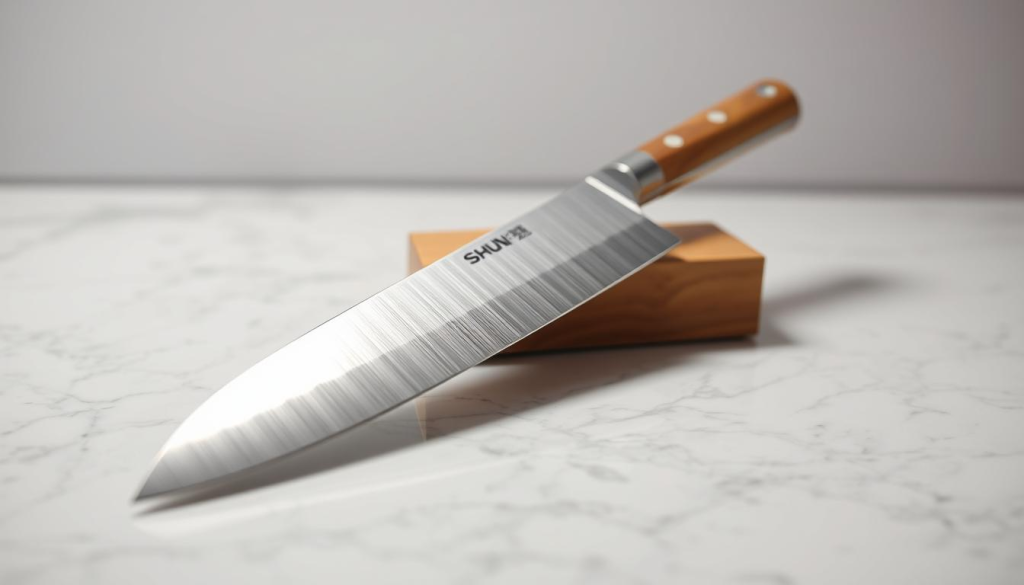
By considering these factors and guidelines, you can determine the best sharpening schedule for your Shun knives, ensuring they remain in top condition and continue to perform optimally.
Tools for Sharpening Shun Knives
The art of sharpening Shun knives involves selecting the appropriate tool from a range of options, including honing rods, whetstones, and electric sharpeners. Understanding the role of each tool is crucial for maintaining the quality and performance of your knives. Establishing a sharpening schedule for Shun knives ensures they remain in top condition.
Honing Rods: Best Practices
Honing rods are a fundamental tool for maintaining the sharpness of your Shun knives. They realign the blade’s edge, ensuring it remains straight and true. To use a honing rod effectively, hold it vertically and swipe the knife down the rod in a smooth, gentle motion. Following best practices for Shun knife care involves regular honing to prevent the need for frequent sharpening.
Whetstones: Step-by-Step Guide
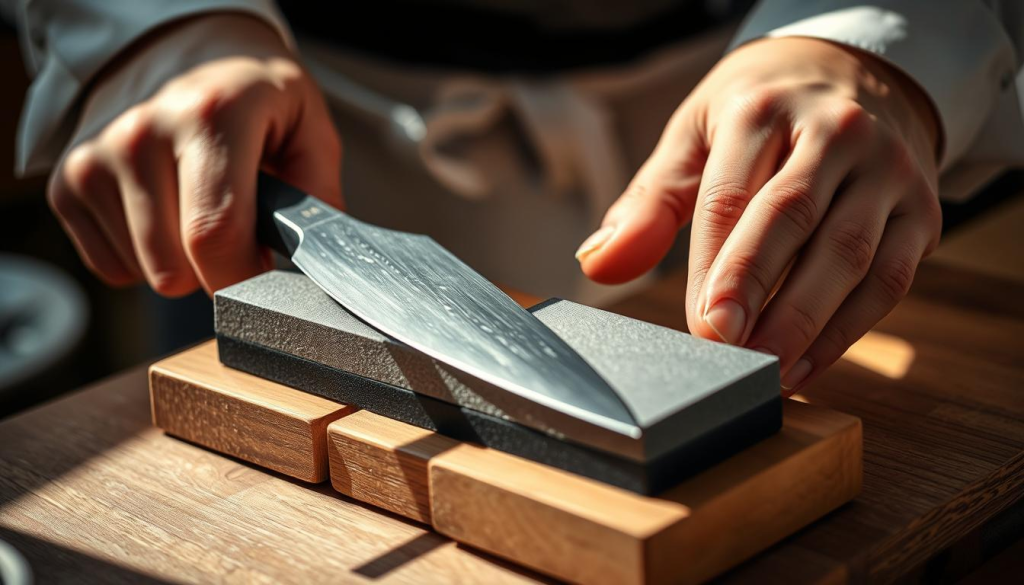
Whetstones offer a more detailed approach to sharpening, allowing for precise control over the sharpening angle. To sharpen your Shun knife on a whetstone, start by soaking the stone in water, then place it on a stable surface. Hold the knife at the desired angle and draw it across the stone in a smooth motion, maintaining consistent pressure. This process requires patience but yields excellent results. Proper caring for Shun knives involves understanding how to use whetstones effectively.
Electric Sharpeners: Pros and Cons
Electric sharpeners provide a convenient and quick method for sharpening Shun knives. They come with preset angles, making it easier to achieve a sharp edge. However, they can remove more metal than necessary, potentially shortening the knife’s lifespan. Weighing the pros and cons is essential to decide if an electric sharpener is right for your Shun knife care routine.
How to Properly Sharpen a Shun Knife
The art of sharpening a Shun knife lies in the details, from preparing your workspace to maintaining the correct angle. Sharpening your Shun knife is not just about running it over a whetstone; it’s about understanding the techniques and tools that make a difference in maintaining Shun knife sharpness.
Preparing Your Workspace
Before you start sharpening, it’s crucial to prepare your workspace. This involves gathering the necessary tools, such as a whetstone, water or sharpening oil, and a cloth for cleaning. Ensure your workspace is stable and free from distractions. A well-prepared workspace is key to effective knife maintenance tips.
Techniques for Using a Whetstone
Using a whetstone is a traditional method for sharpening knives. To start, soak the whetstone in water for about 10-15 minutes. Then, place the whetstone on a stable surface. Hold your Shun knife at the correct angle, typically around 15-20 degrees for most Shun knives, and draw it across the stone in a smooth, consistent motion. Repeat this process several times, checking the edge for sharpness. This technique is vital for maintaining Shun knives.
Maintaining the Right Angle While Sharpening
Maintaining the correct angle is crucial when sharpening your Shun knife. The angle can vary depending on the knife’s intended use, but for most Shun knives, a 15-20 degree angle is recommended. To maintain this angle, you can use a sharpening guide or practice holding the knife freehand. Consistency is key to achieving a sharp edge and prolonging the life of your knife.
By following these steps and practicing regularly, you’ll be able to keep your Shun knife in top condition, ensuring it remains a reliable tool in your kitchen. Remember, the key to effective sharpening lies in the details and consistent practice, making it an essential part of your knife maintenance tips routine.
The Role of Honing in Knife Care
The art of honing plays a significant role in the care of your Shun knives. Honing is often misunderstood as being synonymous with sharpening, but it serves a distinct purpose in maintaining the knife’s edge.
What is Honing?
Honing involves realigning the edge of the blade to maintain its sharpness and effectiveness. Unlike sharpening, which removes metal to create a new edge, honing adjusts the existing edge to ensure it remains straight and true. This process is crucial for maintaining the performance of your Shun knife between sharpenings.
How Often Should You Hone Your Shun Knife?
The frequency of honing depends on how often you use your Shun knife. For regular users, honing before or after each use is recommended to maintain the knife’s edge. For less frequent users, honing once a week is sufficient. Regular honing not only maintains sharpness but also prolongs the intervals between sharpenings.
Honing vs. Sharpening: Key Differences
Understanding the difference between honing and sharpening is crucial for proper knife care. While sharpening removes metal to create a new edge, honing realigns the existing edge. To illustrate the differences, consider the following table:
| Process | Purpose | Effect on Blade |
|---|---|---|
| Honing | Realigns the edge | Maintains sharpness, no metal removal |
| Sharpening | Creates a new edge | Removes metal, reshapes the edge |
By incorporating both honing and sharpening into your knife care routine, you can ensure your Shun knives remain in optimal condition. Regular honing, in particular, is a simple yet effective way to maintain the sharpness and extend the life of your knives.
Professional Services for Knife Sharpening
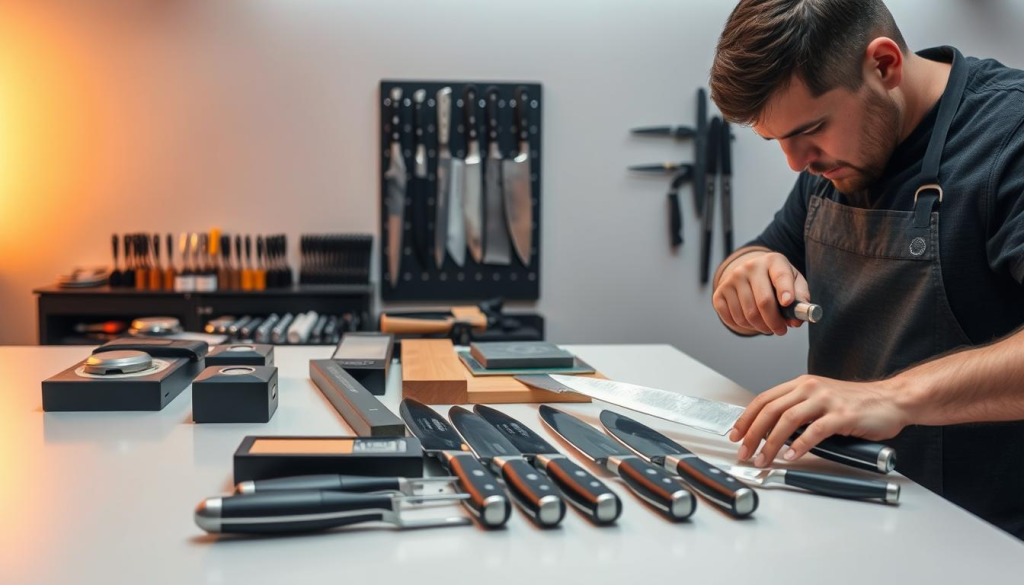
Professional knife sharpening services provide a convenient and precise way to keep your Shun knives in top condition. For many, the thought of sharpening a high-quality knife like those from Shun can be daunting, and that’s where these services come in handy.
When to Seek a Professional
If you’re unsure about how to sharpen your Shun knife or if it’s particularly dull, it might be time to seek a professional sharpening service. Additionally, if you’ve tried sharpening it yourself and aren’t satisfied with the results, a professional can provide the expertise needed to restore your knife to its optimal sharpness.
Professional sharpening is also a good option if you’re looking for a precise edge for specific tasks, such as filleting fish or slicing meat thinly. The frequency at which you should seek professional sharpening depends on your usage, but as a general rule, if you use your Shun knives daily, you might need to have them professionally sharpened every few months.
What to Expect from a Sharpening Service
When you send your Shun knives to a professional sharpening service, you can expect a high level of care and precision. These services typically use specialized equipment to sharpen knives to a very fine edge, often better than what can be achieved at home.
A reputable service will also inspect your knives for any damage and provide guidance on how to maintain them. They might offer different sharpening options, such as a standard edge or a more specialized edge for specific tasks, allowing you to choose the best sharpening schedule for your Shun knives based on your needs.
By utilizing a professional sharpening service, you’re not only ensuring your knives are sharpened correctly but also extending their lifespan and maintaining their performance. This is an essential part of maintaining Shun knives and ensuring they continue to serve you well over time.
Caring for Your Shun Knives
Maintaining your Shun knives properly ensures they remain sharp and functional. Proper care includes regular cleaning, storage, and maintenance to preserve the sharpness and longevity of the knives.
Maintenance Tips to Extend Lifespan
To extend the lifespan of your Shun knives, it’s crucial to adopt a regular maintenance routine. This includes honing your knives regularly to maintain their sharpness and inspecting them for any signs of wear.
- Regularly hone your knives to maintain sharpness
- Inspect knives for signs of wear
- Avoid using abrasive cleaners or scourers
Proper Storage Solutions
Proper storage is vital for maintaining the quality of your Shun knives. Store them in a dry place, away from other utensils that could cause damage.
| Storage Method | Benefits |
|---|---|
| Knife Block | Protects knives from damage, keeps them organized |
| Magnetic Strip | Saves space, easy to access knives |
| Knife Roll | Portable, protects knives during transport |
Cleaning Techniques That Preserve Sharpness
Cleaning your Shun knives properly is essential to preserve their sharpness. Avoid using a dishwasher, as the high heat and harsh detergents can damage the knives.
Hand washing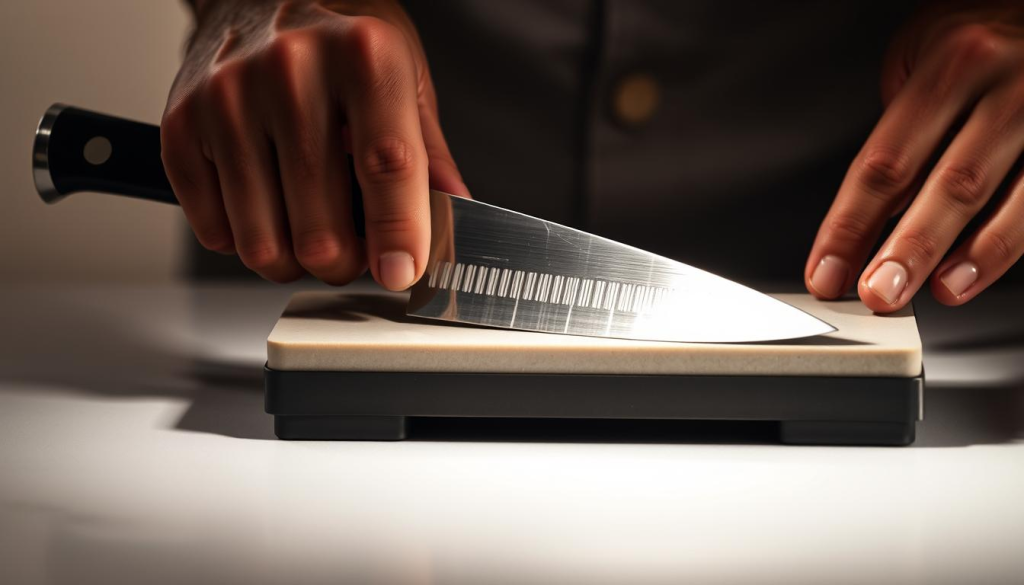
- Wash knives by hand with mild soap
- Dry knives immediately to prevent rust
- Avoid using abrasive materials that can damage the blade
Frequently Asked Questions about Knife Sharpening
Many home chefs and professional cooks alike often wonder about the best practices for sharpening their Shun knives. Sharpening is an essential skill that not only maintains the effectiveness of your knives but also enhances your overall cooking experience.
How Do I Know If My Knife is Sharp Enough?
Determining if your Shun knife is sharp enough involves a few simple tests. One common method is the “cutting paper test”. Hold a piece of paper vertically and try to cut it with your knife. A sharp knife should cut through the paper smoothly. Another method is to check the knife’s edge visually; a sharp edge is typically very fine and not easily visible to the naked eye.
As Shun suggests, “A sharp knife is not only more effective but also safer, as it requires less force to cut through ingredients.”
Can I Damage My Shun Knife While Sharpening?
Yes, it’s possible to damage your Shun knife while sharpening if you’re not careful. Using the wrong sharpening angle or applying too much pressure can damage the blade. It’s also crucial to use the right sharpening tool; a high-quality whetstone designed for your Shun knife’s material is recommended.
“The key to sharpening your knife is patience and the right technique. Rushing through the process can lead to damage.” –
What Type of Whetstone Should I Use for Shun Knives?
For Shun knives, which are known for their high-carbon stainless steel, a water stone or a combination stone (coarse and fine grit) is typically recommended. The coarse grit is used to repair or reshape the edge, while the fine grit is used for honing and polishing.
- Start with a coarse grit (about 1000) to repair the edge.
- Progress to a finer grit (6000 or higher) for polishing.
- Always check the manufacturer’s recommendations for the best whetstone type.
By understanding these FAQs, you’ll be better equipped to maintain your Shun knives and ensure they remain in top condition for your culinary needs.
Conclusion: Keeping Your Shun Knives in Top Shape
Maintaining your Shun knives is crucial for optimal performance and longevity. Regular maintenance, proper sharpening, and care are essential for keeping these high-quality knives in top condition.
Key Takeaways
To keep your Shun knives sharp and durable, it’s vital to understand the importance of knife sharpening, recognize when your knives need sharpening, and use the right tools for the job. Proper sharpening techniques, combined with regular honing, will significantly extend the lifespan of your knives.
Maintaining Excellence
Caring for Shun knives involves more than just sharpening; it includes proper storage, cleaning, and maintenance. By following the guidelines outlined in this article, you can ensure your Shun knives remain in excellent condition, providing you with precise cutting performance for years to come. Effective Shun knives maintenance is a combination of regular care and attention to detail, ultimately enhancing your overall cooking experience.