Maintaining the sharpness of your Shun knives is crucial for any chef or home cook. One essential tool in achieving this is honing steel. Honing steel realigns the edge of the blade, ensuring it remains sharp and effective.
Using the right honing steel for your Shun knives can make a significant difference in their performance and longevity. In this article, we’ll explore the importance of kitchen knife sharpening and provide guidance on how to sharpen your Shun knives like a professional.
Key Takeaways
- Understand the importance of honing steel for Shun knives
- Learn how to choose the right honing steel for your needs
- Discover the proper technique for sharpening Shun knives
- Maintain the longevity of your Shun knives
- Improve your kitchen knife sharpening skills
What is Honing Steel and Why Use It?
Honing steel is an essential tool for anyone looking to keep their Shun knives in top condition. It is a long, rod-shaped tool used to maintain and realign the edge of a knife.
Definition of Honing Steel
A honing steel, also known as a sharpening steel or sharpening rod, is typically made from a hard material such as steel or ceramic. Its primary function is to hone the edge of a knife, realignment of the blade’s microscopic teeth, thereby maintaining its sharpness.
The Difference Between Honing and Sharpening
Many people confuse honing with sharpening, but they serve different purposes. Sharpening involves removing metal to create a new edge, whereas honing realigns the existing edge without removing significant amounts of metal. Regular honing can extend the period between sharpening, keeping your knives in optimal condition.
Benefits of Using Honing Steel
Using a honing steel offers several benefits, including maintaining the knife’s edge, improving its performance, and prolonging its lifespan. Regular use of a honing steel can also enhance safety by ensuring that your knives are always sharp and less likely to slip.
| Benefits | Description |
|---|---|
| Maintains Edge | Keeps the knife’s edge aligned and sharp |
| Improves Performance | Enhances the knife’s cutting ability |
| Prolongs Lifespan | Reduces the need for frequent sharpening |
To visualize the process, here’s an image of a chef using a honing steel:
By incorporating a honing steel into your knife maintenance routine, you can ensure that your Shun knives remain in excellent condition, providing you with precise cutting performance and safety.
Features of Shun Knives
With a legacy of excellence, Shun knives embody the pinnacle of Japanese knife-making artistry. These knives are not just tools; they are a blend of tradition, craftsmanship, and innovation.
High-Quality Materials
Shun knives are crafted from high-quality materials that ensure durability and performance. The use of premium high-carbon steel allows for a sharp edge that lasts, making them ideal for precise cutting tasks. Additionally, the ergonomic design of the handles, often made from beautiful, durable materials, provides comfort and control during use.
Unique Blade Design
The unique blade design of Shun knives is a hallmark of their exceptional quality. Featuring a VG-MAX steel core, these knives offer superior sharpness and edge retention. The blades are carefully crafted to provide a perfect balance between hardness and flexibility, making them suitable for a wide range of cutting tasks.
Benefits of Using Shun Knives
Using Shun knives can significantly enhance your cooking experience. Their precision cutting capabilities allow for more efficient food preparation, while their balanced design reduces fatigue during extended use. Moreover, the durability of Shun knives means they remain a valuable asset in your kitchen for years to come, making them a worthwhile investment in your culinary journey.
For those who value shun knife care and shun knife maintenance, these knives not only perform exceptionally but also retain their beauty over time. Regular kitchen knife sharpening is simplified with Shun knives, ensuring they remain in optimal condition.
How to Properly Use Honing Steel
To keep your Shun knives in top condition, it’s crucial to learn the correct technique for using a honing steel. A honing steel, also known as a sharpening steel, is a tool used to maintain the sharpness of your knives. Unlike sharpening, which removes metal to create a new edge, honing realigns the existing edge, keeping your knives sharp and extending their lifespan.
The Correct Angle
Maintaining the correct angle is vital when using a honing steel. For Shun knives, the recommended angle is between 15 to 20 degrees. To achieve this, hold the honing steel vertically and the knife at the desired angle. It’s essential to be precise, as holding the knife at too shallow or too steep an angle can reduce the effectiveness of the honing process.
The Right Technique
The technique involves smoothly drawing the knife down the length of the honing steel, maintaining the chosen angle. Start at the heel (the back of the blade) and move towards the tip. Repeat this process several times on each side of the blade, alternating sides to maintain evenness. The motion should be smooth and light, with the steel doing the work.
How Often to Hone Your Knives
The frequency of honing depends on the usage of your knives. For professional chefs, honing before each use is common, while home cooks may need to hone their knives less frequently. A good rule of thumb is to hone your knives every few days if used daily, or after every few uses if used less often.
| Step | Action | Frequency |
|---|---|---|
| 1 | Hold the honing steel vertically | Every use |
| 2 | Place the knife at the correct angle (15-20 degrees) | Every use |
| 3 | Draw the knife down the steel, from heel to tip | 3-5 times per side |
| 4 | Alternate sides | Every use |
| 5 | Check sharpness and repeat as necessary | After every few uses |
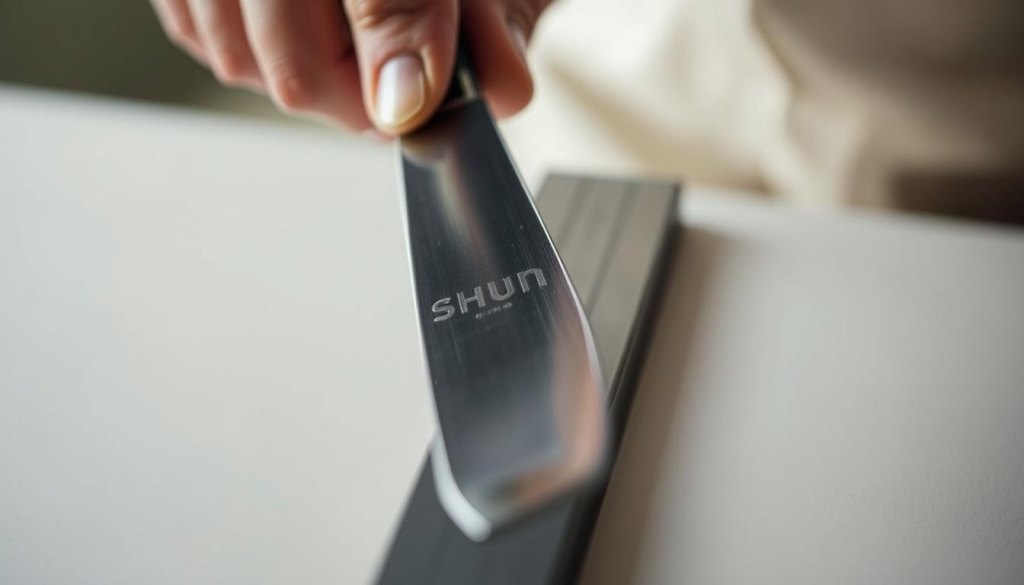
Using a honing steel regularly will keep your Shun knives sharp and in good condition. Remember, the key is consistency and the correct technique.
Choosing the Best Honing Steel for Shun Knives
To ensure your Shun knives remain sharp and effective, choosing the best honing steel is essential. The right honing steel can significantly enhance the performance and longevity of your knives.
Material Options for Honing Steel
Honing steels are made from various materials, each with its own advantages. Diamond-coated steels are highly effective for sharpening and maintaining the edge of your Shun knives. They are durable and can be used on hard steel. Ceramic honing steels are another option, known for their ability to hone knives without scratching them. They are particularly gentle on fine-edged knives.
Steel honing steels, often made from hardened steel, are traditional and widely used. They come in different grades and can be very effective for maintaining the sharpness of your Shun knives.
Length and Size Considerations
The length of the honing steel is an important consideration. It should be at least as long as the blade of your knife. For most kitchen knives, a honing steel that is 10-12 inches long is sufficient. The diameter can vary, but a thicker steel can be more stable and easier to use.
Brands to Consider
Several brands are renowned for producing high-quality honing steels suitable for Shun knives. Wüsthof and Splendid are well-known for their diamond-coated and ceramic honing steels, respectively. Shun themselves also offer a range of honing steels designed specifically for their knives, ensuring compatibility and optimal performance.
When choosing a honing steel, consider the material, size, and brand reputation to ensure you’re getting a product that will effectively maintain your Shun knives.
Maintenance Tips for Your Honing Steel
Maintaining your honing steel is a simple yet vital task for any kitchen enthusiast. A well-cared-for honing steel ensures that your Shun knives remain sharp and perform optimally. In this section, we’ll explore the essential maintenance tips to keep your honing steel in top condition.
Cleaning Your Honing Steel
Cleaning your honing steel regularly is crucial for its effectiveness. Use a soft cloth to wipe down the steel after each use to remove any debris or residue. For more thorough cleaning, mix mild soap with warm water, and gently scrub the steel with a soft-bristled brush. Rinse thoroughly and dry with a clean towel to prevent rust.
It’s also important to avoid using harsh chemicals or abrasive materials that could damage the honing steel’s surface. Regular cleaning not only maintains the steel’s effectiveness but also prolongs its lifespan.
Storing Your Honing Steel Correctly
Proper storage is key to maintaining your honing steel. Store it in a dry place, away from moisture that could cause rust. Many honing steels come with a protective cover or stand; use these to keep the steel clean and prevent accidental damage.
If your honing steel doesn’t come with a cover, consider investing in a protective case or storing it in a designated knife block or drawer. This not only protects the steel but also keeps it organized and within easy reach.
| Maintenance Task | Frequency | Tips |
|---|---|---|
| Cleaning | After each use | Use a soft cloth; mild soap and water for deeper cleaning |
| Storage | Ongoing | Store in a dry place; use a protective cover or case |
| Inspection | Regularly | Check for damage or wear; replace as needed |
By following these simple maintenance tips, you can ensure your honing steel remains in excellent condition, helping you to keep your Shun knives sharp and ready for use. Regular maintenance not only enhances performance but also contributes to a safer and more enjoyable cooking experience.
Recognizing When to Hone Your Shun Knives
Understanding when to hone your Shun knives can significantly enhance your cooking experience. Regular honing maintains the knife’s edge, ensuring it remains sharp and effective.
Signs Your Knife Needs Honing
There are several indicators that your Shun knife needs honing. If you notice any of the following signs, it’s time to use your honing steel:
- The knife is not cutting as smoothly as it used to.
- The edge of the knife appears dull or uneven.
- You find yourself applying more pressure than usual while cutting.
These signs suggest that the knife’s edge has become misaligned or has developed nicks, which can be corrected by honing.
How to Test Sharpness
Testing the sharpness of your Shun knife is straightforward. Here are a few methods:
- The Paper Test: Hold a sheet of paper vertically and try to cut it with the knife. A sharp knife will cut through cleanly.
- The Cutting Test: Attempt to slice through a vegetable or fruit. A sharp knife will make a smooth cut without tearing the material.
Regularly testing your knife’s sharpness will help you determine when it needs honing, ensuring it remains in optimal condition.
To further illustrate the importance of maintaining your Shun knives, consider the following comparison:
| Characteristics | Sharp Knife | Dull Knife |
|---|---|---|
| Cutting Performance | Smooth, effortless cuts | Tearing, requires more force |
| Safety | Less risk of accidents due to less force required | Higher risk of accidents due to increased force and loss of control |
| Maintenance | Regular honing maintains sharpness | Frequent sharpening required to restore edge |
By recognizing when to hone your Shun knives and maintaining their sharpness, you can enjoy a more efficient and safer cooking experience.
Common Mistakes When Using Honing Steel
The key to effectively using a honing steel lies in avoiding common mistakes. Many users, even experienced chefs, often fall into bad habits that can lead to poorly sharpened knives. Understanding these mistakes is crucial to maintaining the quality and sharpness of your Shun knives.
Using Incorrect Angles
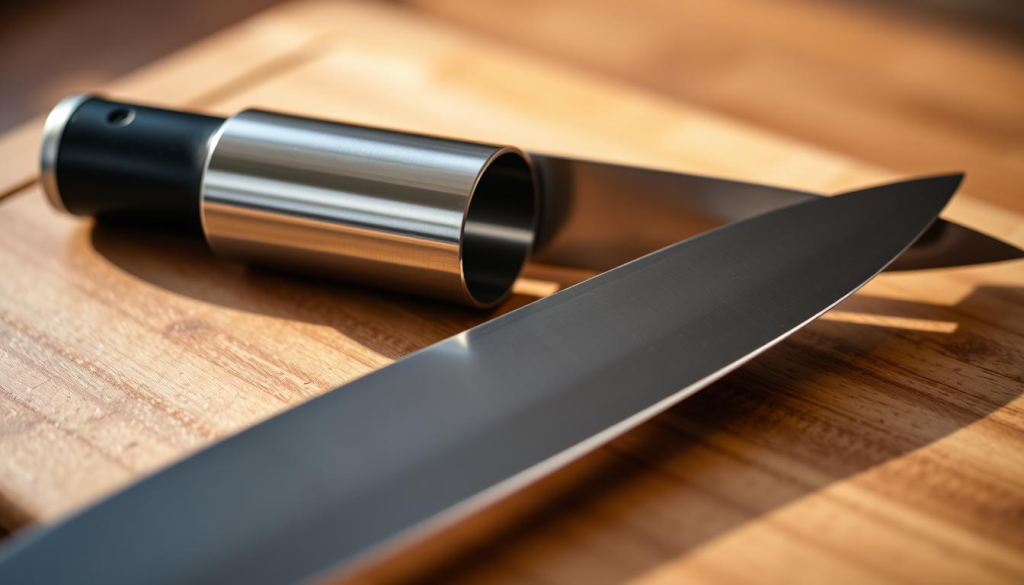
One of the most common mistakes when using a honing steel is holding the knife at the wrong angle. The ideal angle for honing a knife is between 15 to 20 degrees. Holding the knife at too steep an angle can damage the blade, while too shallow an angle can fail to effectively hone the edge.
To achieve the correct angle, it’s helpful to practice with a consistent motion. You can also use an angle guide to ensure precision. Consistency is key when it comes to maintaining your knives.
Not Applying Enough Pressure
Another mistake is not applying sufficient pressure when drawing the knife across the honing steel. While it’s essential not to press too hard, which can damage the blade, a light touch is often not enough to effectively hone the knife.
The correct technique involves applying gentle but firm pressure, allowing the steel to do the work. It’s also important to maintain a smooth, consistent motion along the length of the steel. Here are some tips to improve your technique:
- Start at the base of the blade and draw the knife towards you in a smooth motion.
- Repeat this process several times on each side of the blade.
- Check the sharpness of your knife regularly to gauge your progress.
By avoiding these common mistakes and practicing regularly, you can keep your Shun knives in optimal condition. Remember, the goal of using a honing steel is not just to maintain sharpness but also to realign the edge of the blade, ensuring your knives perform at their best.
Alternatives to Honing Steel
For those looking beyond honing steel, several other sharpening tools can help keep your Shun knives in top condition. While honing steel is effective for maintaining sharpness, exploring alternative sharpening methods can provide a more tailored approach to knife care.
Other Sharpening Tools
Several alternatives to honing steel are available, each with its unique benefits. Sharpening stones, for instance, offer a versatile and effective way to sharpen knives. They come in various grits, allowing for a range of sharpening tasks from coarse sharpening to fine honing.
Electric sharpeners are another option, providing a quick and easy way to sharpen knives. These devices are particularly useful for those who are not comfortable sharpening by hand or need to sharpen multiple knives regularly.
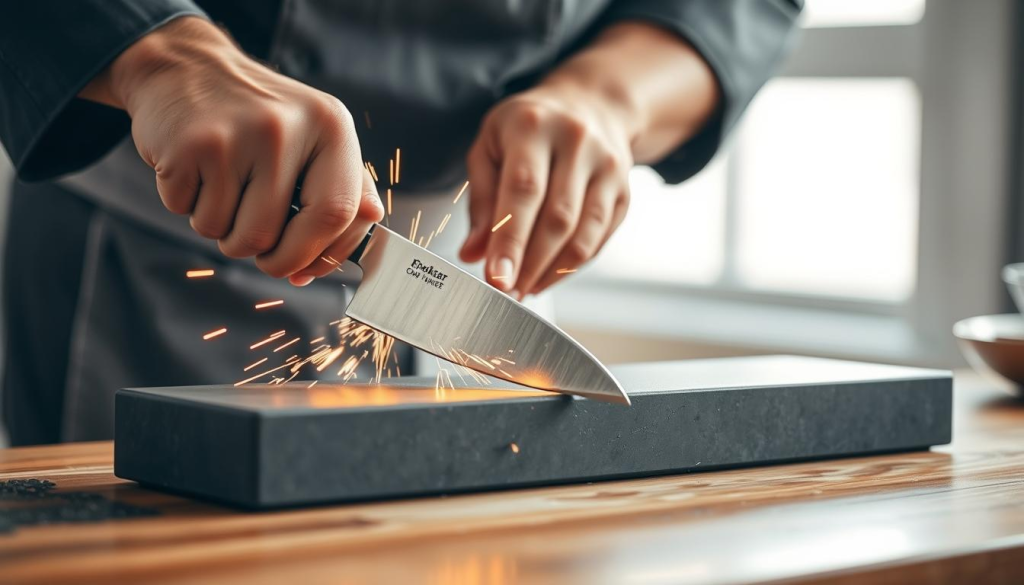
When to Use a Sharpening Stone
Sharpening stones are particularly useful when your knife requires more than just a minor adjustment. If your Shun knife is dull or has become damaged, a sharpening stone can help restore its edge. The choice of grit is crucial: coarse grits (around 1000) are used for repairing damaged edges, while finer grits (6000 and above) are ideal for polishing and honing.
Using a sharpening stone effectively requires some practice. It’s essential to maintain the correct angle and apply consistent pressure. For Shun knives, which are known for their high-quality steel, a water stone or an oil stone can be used, depending on personal preference.
In conclusion, while honing steel remains a staple for maintaining knife sharpness, exploring alternative sharpening tools like sharpening stones and electric sharpeners can enhance your kitchen knife sharpening routine. By understanding when to use these tools, you can keep your Shun knives performing at their best.
Caring for Your Shun Knives
The longevity and performance of your Shun knives depend heavily on how well you care for them. Proper maintenance not only ensures they continue to cut well but also preserves their beauty and functionality over time.
Proper Cleaning Techniques
Cleaning your Shun knives is a crucial step in their maintenance. It’s recommended to hand wash them with mild soap and dry them immediately to prevent water spots. Avoid using a dishwasher, as the high heat and harsh detergents can damage the knife’s material and compromise its sharpness.
For tougher residue, a soft sponge or cloth can be used. However, be gentle to avoid scratching the blade. After washing, drying your knives thoroughly will prevent rust and maintain their appearance.
Storage Solutions for Longevity
How you store your Shun knives is just as important as how you clean them. Using a knife block or a magnetic strip is advisable as it keeps the knives organized and prevents them from coming into contact with other utensils that could cause damage.
If you prefer to store your knives in a drawer, consider using knife guards or sheaths to protect the blades from dulling or getting damaged. This also helps in preventing accidents when reaching into the drawer.
- Keep your knives away from moisture.
- Store them in a way that they are not touching each other.
- Regularly clean the storage area to prevent the buildup of debris.
By following these simple care and maintenance tips, you can ensure your Shun knives remain in excellent condition, providing you with years of reliable service.
Conclusion: The Importance of Honing Your Knives
Honing your Shun knives is crucial for maintaining their peak performance and ensuring safety in the kitchen. By incorporating a honing steel into your routine, you can realign the blade’s edge, keeping it sharp and precise.
Maximizing Knife Efficiency and Safety
Regular honing with a high-quality honing steel for Shun knives enhances the knife’s cutting ability, making tasks easier and more efficient. Moreover, a sharp knife is safer, as it requires less force, reducing the risk of accidents. This practice is a key aspect of Shun knife care.
Investing in Your Kitchen’s Future
Investing time in properly maintaining your Shun knives through regular honing and professional knife sharpening when needed, not only prolongs their lifespan but also elevates your cooking experience. By doing so, you’re ensuring that your kitchen tools continue to perform at their best, making every culinary task a pleasure.
By understanding the importance of honing and incorporating it into your kitchen routine, you’ll be able to enjoy the full potential of your Shun knives, making cooking more enjoyable and efficient.