Recent Posts

Sakai Takayuki 210mm Gyuto: The Ultimate Kitchen Companion


I have always been fascinated by the world of high-quality kitchen knives, and the premium quality knife that stands out to me is the Sakai Takayuki 210mm Gyuto. This exceptional knife is not just a tool; it’s an extension of one’s culinary creativity, offering precision, durability, and a touch of traditional Japanese craftsmanship.

As I explore the features of this knife, I am impressed by its ability to deliver outstanding performance. With a price range of $178.00 to $190.00, it’s an investment worth considering for anyone serious about cooking. The Sakai Takayuki 210mm Gyuto is available online from different retailers, making it easily accessible to chefs and home cooks alike.

Key Takeaways

  • A premium quality knife that offers precision and durability.
  • An extension of one’s culinary creativity.
  • Priced between $178.00 and $190.00.
  • Available online from various retailers.
  • A valuable addition to any kitchen arsenal.

Introduction to Sakai Takayuki Knives

As I explore the world of Japanese kitchen knives, I’m drawn to the exceptional craftsmanship of Sakai Takayuki knives. These knives are not just tools; they are a testament to the rich legacy of Japanese knife-making.

A Legacy of Craftsmanship

The craftsmanship that goes into making Sakai Takayuki knives is truly remarkable. Each knife is a result of meticulous attention to detail and a deep understanding of traditional Japanese techniques. The artisans behind these knives have honed their skills over generations, ensuring that every Sakai Takayuki knife meets the highest standards of quality and performance.

Traditional Japanese craftsmanship is at the heart of every Sakai Takayuki knife. From the selection of high-quality materials to the precise forging and sharpening processes, every step is carried out with the utmost care. This dedication to craftsmanship is what sets Sakai Takayuki knives apart from others in the market.

“A good knife is not just a tool, it’s a partner in the kitchen, and Sakai Takayuki knives are among the best.”

History of the Sakai Region

The Sakai region has a long history of producing some of the world’s finest knives. The region’s unique combination of geographical and cultural factors has contributed to its reputation as a hub for Japanese knife-making. For centuries, craftsmen in Sakai have been perfecting their techniques, passing down their knowledge from generation to generation.

The history of the Sakai region is deeply intertwined with the history of Japanese sword-making. Many of the techniques used in crafting swords were adapted for knife-making, resulting in the high-quality knives that Sakai is known for today. The Sakai Takayuki 210mm Gyuto is a prime example of this heritage, combining traditional techniques with modern design principles to create a truly exceptional kitchen knife.

What is a Gyuto Knife?

I have found that the Gyuto knife is an indispensable asset in any kitchen, offering a unique blend of functionality and craftsmanship. A Gyuto knife is a type of Japanese chef’s knife used for various kitchen tasks, making it a versatile tool for both professional chefs and home cooks.

Definition and Features

The Gyuto knife is characterized by its sharp edge and balanced design, which make it ideal for tasks such as chopping vegetables and slicing meat. Its sharpness and precision are due to the high-quality materials used in its construction. The blade is typically made from high-carbon steel, known for its durability and ability to hold a sharp edge.

The ergonomic design of the handle is another key feature, providing comfort and reducing fatigue during extended use. The balance between the blade and handle is crucial, allowing for smooth, precise movements.

Differences from Other Chef Knives

Unlike other chef knives, the Gyuto knife has a unique combination of characteristics that set it apart. Its Japanese origin brings a level of craftsmanship and attention to detail that is hard to find elsewhere. The Gyuto’s versatility is also a distinguishing factor, as it can be used for a wide range of kitchen tasks, from delicate slicing to chopping through tougher ingredients.

  • The Gyuto knife’s sharpness and edge retention are superior to many Western-style chef knives.
  • Its balanced design makes it suitable for various cutting techniques.
  • The use of high-quality materials ensures durability and longevity.

Benefits of the Sakai Takayuki 210mm Gyuto

With its high carbon steel blade, the Sakai Takayuki 210mm Gyuto stands out for its versatility and sharpness in various kitchen tasks. This knife has become an essential tool in my kitchen, and for good reason.

Versatility in the Kitchen

The Sakai Takayuki 210mm Gyuto is incredibly versatile, handling tasks from chopping vegetables to slicing meat with ease. Its 210mm blade length provides the perfect balance between maneuverability and cutting capability. Whether you’re preparing a delicate sauce or chopping through tough ingredients, this knife performs admirably.

One of the key benefits of this knife is its ability to handle a variety of kitchen tasks without faltering. From mincing garlic to slicing through a tender roast, the Sakai Takayuki 210mm Gyuto makes quick work of even the most demanding tasks.

Task Performance
Chopping Vegetables Excellent
Slicing Meat Very Good
Mincing Herbs Excellent

Precision and Sharpness

The high carbon steel blade is a standout feature of the Sakai Takayuki 210mm Gyuto, providing exceptional sharpness that lasts. I’ve found that this knife retains its edge even after repeated use, making it a reliable choice for daily cooking tasks.

The precision offered by this knife is unmatched, allowing for clean cuts and minimal waste. Whether you’re a professional chef or an avid home cook, the Sakai Takayuki 210mm Gyuto’s precision and sharpness make it an invaluable asset in the kitchen.

Key Features of the Sakai Takayuki 210mm Gyuto

As a handcrafted knife, the Sakai Takayuki 210mm Gyuto offers an unparalleled cooking experience. Every detail, from its blade to its handle, is meticulously crafted to provide a superior tool for any chef.
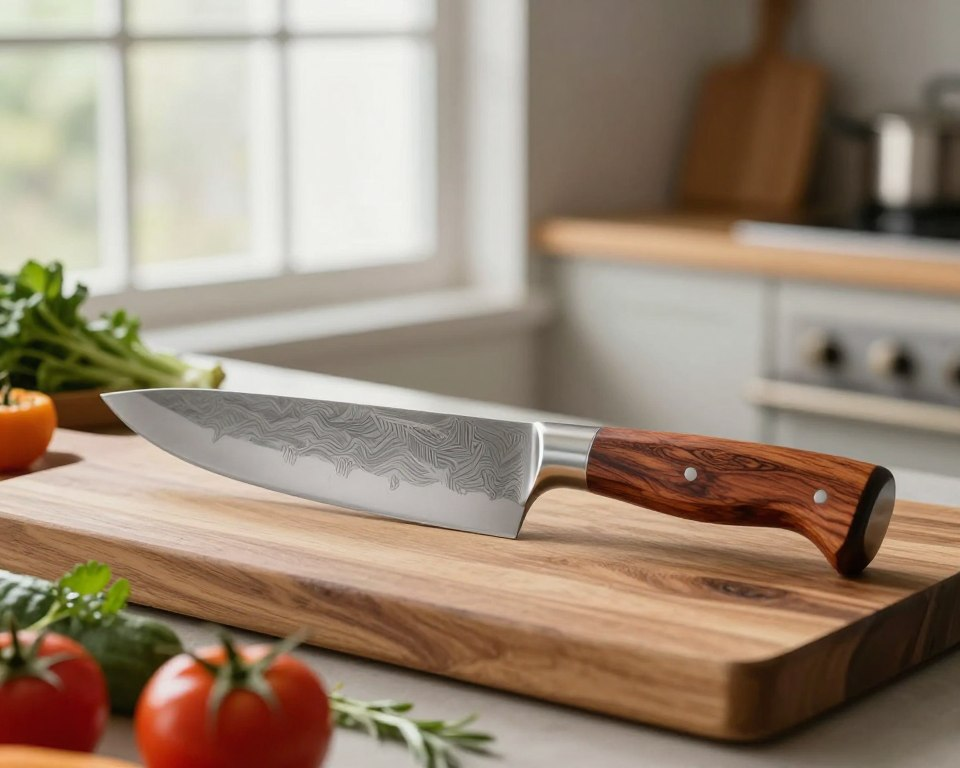
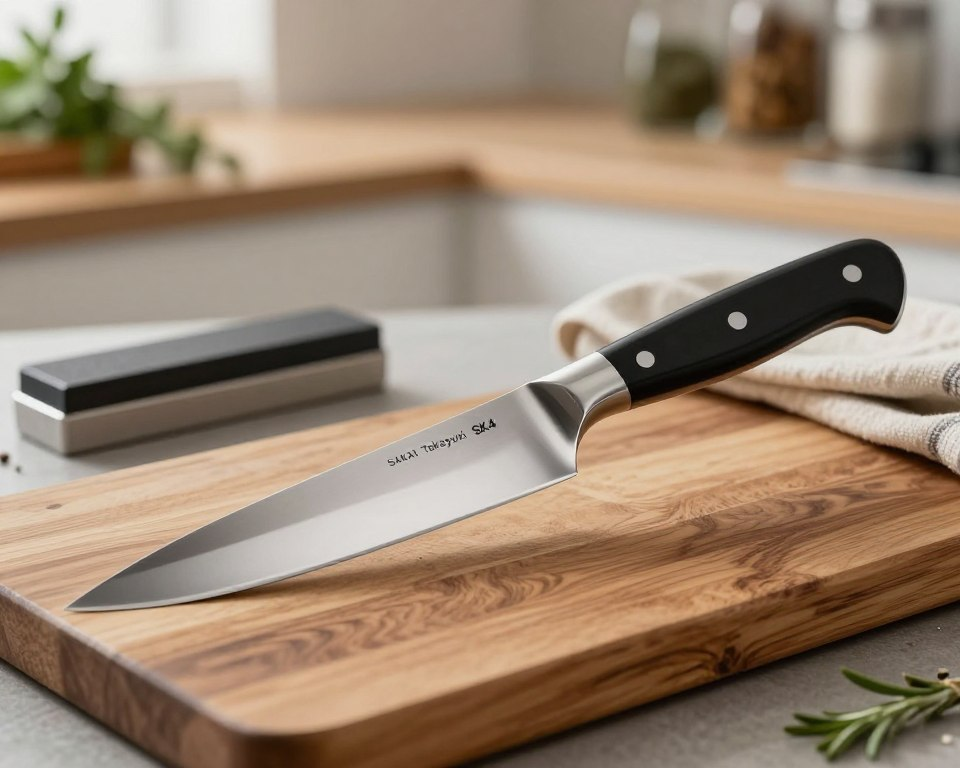
A beautifully handcrafted Sakai Takayuki 210mm Gyuto knife, showcasing its elegant blade with a polished finish and distinctive Damascus pattern, rests on a rustic wooden cutting board. The knife's handle, made from rich rosewood, exhibits fine craftsmanship with intricate detailing and a seamless transition to the blade. In the foreground, fresh ingredients like vibrant vegetables and aromatic herbs create a colorful tableau, emphasizing the knife’s culinary purpose. The middle ground features soft, diffused natural light from a nearby window, creating gentle shadows that enhance the textures of the wood and metal. The background remains slightly blurred, filled with hints of a cozy kitchen setting, adding warmth and inviting atmosphere, reflecting the passion behind the art of cooking.

Blade Material and Construction

The blade of the Sakai Takayuki 210mm Gyuto is made from high-quality materials, ensuring durability and sharpness. The precision in its construction is evident in its performance, making it a reliable choice for various kitchen tasks.

The craftsmanship that goes into the blade’s construction involves traditional techniques, combined with modern technology to achieve a perfect balance between form and function.

Handle Design and Comfort

The handle of the Sakai Takayuki 210mm Gyuto is designed with comfort in mind, allowing for extended use without fatigue. The ergonomic design fits well in the hand, providing a secure grip even during demanding tasks.

The attention to detail in the handle’s design complements the blade’s quality, making the entire knife a joy to use. Whether you’re a professional chef or an avid home cook, the comfort and balance of this knife are sure to enhance your cooking experience.

How to Properly Use the Gyuto Knife

Using a Sakai Takayuki 210mm Gyuto effectively requires a combination of the right grip and cutting technique. To fully utilize this Japanese kitchen knife, one must understand the nuances of its design and how to harness its capabilities.

Chopping Techniques

The Sakai Takayuki 210mm Gyuto is designed for precision and versatility, making it ideal for various chopping tasks. To maximize its potential, it’s crucial to master different chopping techniques.

  • Rocking Motion: This technique involves gently rocking the knife back and forth while cutting through ingredients. It’s particularly useful for chopping herbs or slicing through tougher vegetables.
  • Slicing: For slicing, maintain a smooth, even motion, applying gentle pressure. The sharp edge of the Sakai Takayuki 210mm Gyuto ensures clean cuts with minimal effort.
  • Dicing: To dice ingredients efficiently, use a controlled, downward motion. The Gyuto’s design allows for precise cuts, making it easier to achieve uniform dice.

Maintaining Proper Grip

A proper grip is fundamental to using the Gyuto knife effectively. It enhances control and reduces the risk of accidents.

  1. Pinch Grip: Hold the blade between your thumb and index finger, with your other fingers wrapped around the handle. This grip provides excellent control over the knife’s movements.
  2. Handle Grip: For more comfort during extended use, consider a handle grip where you wrap your hand around the handle, with your thumb on the blade’s spine or on the handle itself, depending on the design.

By mastering both the chopping techniques and maintaining a proper grip, you can significantly enhance your cooking experience with the Sakai Takayuki 210mm Gyuto.

Care and Maintenance Tips

The longevity of your high carbon steel blade depends on how well you care for it. As a professional kitchen knife, the Sakai Takayuki 210mm Gyuto requires regular attention to maintain its performance and extend its lifespan.

Sharpening Techniques

Regular sharpening is crucial to maintaining the edge of your Gyuto knife. I recommend using a whetstone to sharpen the blade at a 20-degree angle, ensuring a precise edge. Consistent sharpening will keep your knife performing optimally.

“A sharp knife is a safe knife,” as many chefs say, and it’s true. Dull knives are more likely to cause accidents because they require more force to cut. By sharpening your Sakai Takayuki 210mm Gyuto regularly, you’ll not only maintain its effectiveness but also enhance your kitchen safety.

Cleaning and Storage Recommendations

Cleaning your high carbon steel blade is straightforward: simply wash it by hand with mild soap and dry it thoroughly. Avoid putting your Gyuto knife in the dishwasher, as the high heat and harsh detergents can damage the blade.

For storage, I suggest using a protective cover or storing the knife in a dry place to prevent rust. Proper storage is key to maintaining the condition of your knife. Consider using a knife block or magnetic strip to keep your Gyuto secure and within easy reach.
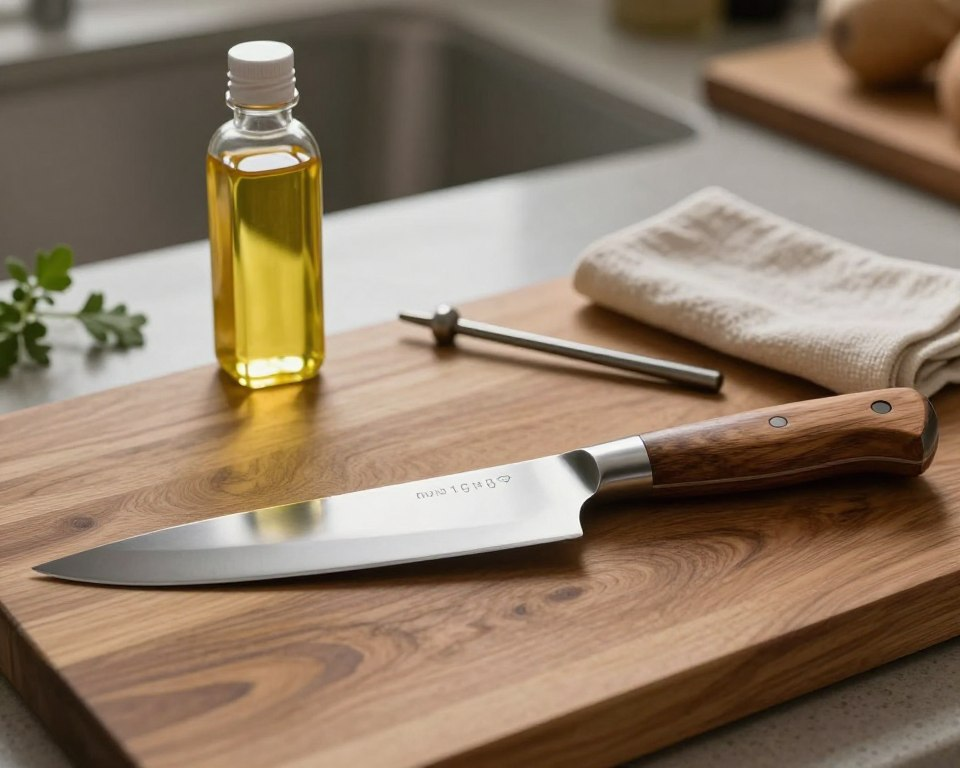
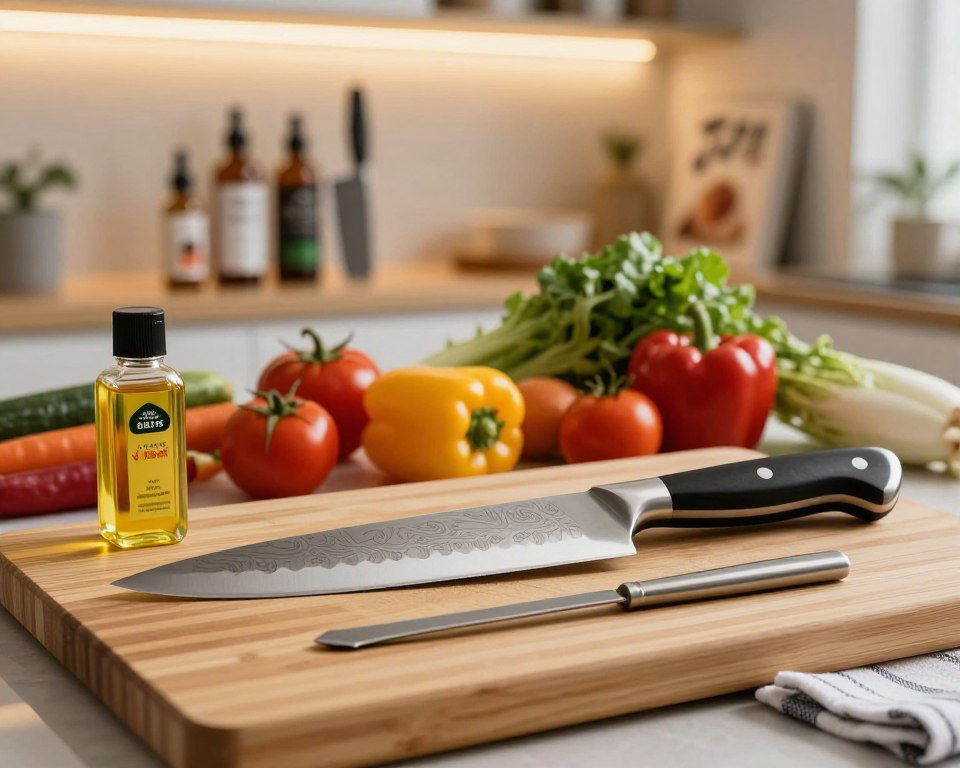
A beautifully arranged composition focusing on high carbon steel blade care. In the foreground, a pristine 210mm Gyuto knife with a polished blade and elegant wooden handle, resting on a wooden cutting board. A soft, warm light gently illuminates the knife, highlighting its gleaming surface and fine details. In the middle, tools for maintenance are displayed: an oil bottle for blade protection, a small honing rod, and a soft cloth. The background features a blurred kitchen environment, with subtle hints of herbs and a cutting board. The overall mood is calm and inviting, reflecting an artisanal touch. This scene captures the essence of careful maintenance and appreciation for high-quality kitchen tools.

By following these care and maintenance tips, you’ll be able to enjoy your Sakai Takayuki 210mm Gyuto for years to come. Remember, a well-maintained knife is not only a pleasure to use but also a vital tool in your kitchen.

“The difference between a good knife and a great knife is not just in its initial sharpness, but in how well it retains that sharpness over time.”

Comparing the Sakai Takayuki to Other Brands

In the realm of high-quality kitchen knives, the Sakai Takayuki 210mm Gyuto is a notable contender, but how does it compare to other premium brands? When evaluating the best chef knife for your needs, several factors come into play, including craftsmanship, materials, and performance.

Similarities and Differences

The Sakai Takayuki 210mm Gyuto shares some similarities with other high-end chef knives, such as exceptional sharpness and a durable construction. However, its traditional Japanese craftsmanship sets it apart. Unlike some brands that prioritize mass production techniques, Sakai Takayuki knives are crafted with meticulous attention to detail, ensuring a level of quality that is hard to match.

Here’s a comparison of the Sakai Takayuki 210mm Gyuto with other renowned chef knives:

Knife Brand Blade Material Handle Material Price Range
Sakai Takayuki High-Carbon Stainless Steel Ergonomic Wood $200-$300
Shun High-Carbon Stainless Steel Pakkawood $250-$400
Global Cromova 18 Stainless Steel Stainless Steel with Molded Handle $150-$250

Why Choose Sakai Takayuki?

Choosing the Sakai Takayuki 210mm Gyuto as your best chef knife comes down to its unique blend of traditional craftsmanship and modern functionality. The knife’s precision-forged blade and ergonomic design make it an indispensable tool in any kitchen. Moreover, the brand’s commitment to quality and heritage provides a level of assurance that is invaluable to serious culinary enthusiasts.

In conclusion, while there are many excellent chef knives on the market, the Sakai Takayuki 210mm Gyuto stands out due to its exceptional craftsmanship and performance. Whether you’re a professional chef or an avid home cook, this knife is sure to elevate your cooking experience.

Customer Reviews and Testimonials

Customer testimonials provide valuable insights into the performance of the Sakai Takayuki 210mm Gyuto in real-world kitchen settings. Both home cooks and professional chefs have shared their experiences, highlighting the knife’s capabilities and durability.

User Experiences

Many users have praised the handcrafted knife quality of the Sakai Takayuki 210mm Gyuto, noting its exceptional sharpness and balance. One user commented, “This knife has become an indispensable tool in my kitchen. The sharp blade makes chopping and slicing effortless.”

“I’ve never felt such precision and comfort in a knife. It’s truly a game-changer for any chef.”

— Chef Emily, San Francisco

Users have also appreciated the knife’s versatility, using it for a variety of tasks from chopping vegetables to slicing meat.

Feature User Rating Comments
Sharpness 4.8/5 Exceptional cutting performance
Balance 4.7/5 Comfortable to hold and use
Durability 4.9/5 High-quality materials withstand heavy use

Professional Chef Endorsements

Professional chefs have also endorsed the Sakai Takayuki 210mm Gyuto, praising its sharp blade and ergonomic design. “This knife is a work of art,” said Chef James from New York. “The craftsmanship is evident, and it performs flawlessly under pressure.”

The endorsements from professional chefs underscore the knife’s ability to meet the demands of a fast-paced kitchen environment. Its precision and reliability make it a valuable asset for any culinary professional.

Where to Buy the Sakai Takayuki 210mm Gyuto

If you’re in the market for the Sakai Takayuki 210mm Gyuto, you’ll be pleased to know it’s available from several retailers, offering a range of purchasing options to suit different preferences.

Online Retailers

For those who prefer the convenience of shopping from home, the Sakai Takayuki 210mm Gyuto is available from various online retailers. These platforms often provide competitive pricing, customer reviews, and detailed product descriptions to help inform your purchasing decision.

Some popular online retailers include:

  • Amazon
  • Specialty knife websites
  • Online kitchen supply stores

When shopping online, it’s a good idea to check the seller’s ratings and reviews to ensure you’re buying a premium quality knife from a reputable source.

Specialty Kitchen Stores

For a more hands-on experience, consider visiting specialty kitchen stores. These retailers often carry a selection of high-end knives, including the Sakai Takayuki 210mm Gyuto, allowing you to handle the knife before making a purchase.

Store Type Benefits
Specialty Kitchen Stores Hands-on experience, expert advice
Online Retailers Convenience, competitive pricing, customer reviews

Whether you choose to shop online or in-store, purchasing a Sakai Takayuki 210mm Gyuto is an investment in a high-quality japanese kitchen knife that will enhance your cooking experience.

Conclusion: Elevate Your Cooking Experience

The Sakai Takayuki 210mm Gyuto is more than just a kitchen knife; it’s a tool that can elevate one’s cooking experience. By investing in a knife of this caliber, cooks can explore new culinary heights.

Investing in Excellence

Investing in a high-quality knife like the Sakai Takayuki 210mm Gyuto can significantly enhance one’s cooking. The precision, durability, and craftsmanship of this best chef knife make it an invaluable asset for anyone passionate about cooking.

Exploring Culinary Possibilities

I encourage cooks to explore the possibilities that this exceptional knife offers, enhancing both their technique and their appreciation for the culinary arts. With the Sakai Takayuki 210mm Gyuto, home cooks and professional chefs alike can refine their skills and unlock new flavors.

FAQ

What is the Sakai Takayuki 210mm Gyuto made of?

The Sakai Takayuki 210mm Gyuto is made of high carbon steel, a material known for its durability and ability to retain sharpness.

What is a Gyuto knife used for?

A Gyuto knife is a versatile kitchen tool used for various tasks such as chopping, slicing, and mincing ingredients, making it an essential tool for both professional chefs and home cooks.

How do I maintain the sharpness of my Sakai Takayuki 210mm Gyuto?

To maintain the sharpness, regular sharpening is recommended. It’s also important to clean and store the knife properly to prevent damage and rust.

Can I purchase the Sakai Takayuki 210mm Gyuto online?

Yes, the Sakai Takayuki 210mm Gyuto is available for purchase through online retailers, offering the convenience of shopping from home.

What sets Sakai Takayuki knives apart from other brands?

Sakai Takayuki knives are distinguished by their traditional Japanese craftsmanship, attention to detail, and commitment to quality, making them a compelling choice for those seeking a premium kitchen knife.

How do I properly care for my Sakai Takayuki 210mm Gyuto?

Proper care involves regular sharpening, cleaning with care to avoid damaging the blade, and storing it in a dry place or using a protective cover to prevent rust.

Is the Sakai Takayuki 210mm Gyuto suitable for professional chefs?

Yes, the Sakai Takayuki 210mm Gyuto is highly regarded by professional chefs due to its sharp blade, balanced design, and handcrafted quality, making it a valuable tool in any professional kitchen.

What is the price range of the Sakai Takayuki 210mm Gyuto?

The price range of the Sakai Takayuki 210mm Gyuto is between 8.00 and 0.00, making it a valuable investment for anyone serious about cooking.
Sakai Takayuki 180mm Gyuto: A Versatile Japanese Chef’s Knife


I recently had the opportunity to work with the Sakai Takayuki 180mm Gyuto, a high-quality Japanese chef’s knife that has garnered attention for its exceptional sharpness and craftsmanship. Priced at $169.00, this knife is an investment for both professional chefs and home cooks looking to elevate their culinary skills.

The Sakai Takayuki 180mm Gyuto is designed to provide a balanced and precise cutting experience. Its versatility makes it suitable for a variety of kitchen tasks, from chopping vegetables to slicing meat. With its outstanding performance and durability, it’s no wonder this knife has become a favorite among culinary enthusiasts.

Key Takeaways

  • Exceptional sharpness for precise cutting
  • Balanced design for comfortable handling
  • Versatile for various kitchen tasks
  • High-quality craftsmanship
  • Priced at $169.00, making it a valuable investment for chefs

Introduction to Sakai Takayuki Knives

For over 600 years, Sakai Takayuki has been perfecting the art of knife-making, creating tools that are both functional and beautiful. This long history is a testament to the brand’s dedication to its craft.

The Rich History of Sakai Takayuki

Sakai Takayuki’s history is deeply rooted in Japanese culture, with a tradition of knife-making that dates back centuries. The brand’s commitment to quality and excellence has been consistent throughout its history, making it a trusted name among chefs and culinary enthusiasts.

The significance of Sakai Takayuki’s history lies not just in its longevity but in its ability to adapt and evolve while maintaining traditional techniques. This blend of tradition and innovation is a hallmark of the brand.

Craftsmanship Behind Every Knife

Each Sakai Takayuki knife is a masterpiece of craftsmanship, with every detail carefully considered to ensure maximum performance. The 180mm Gyuto, for example, is hand-sharpened to achieve a razor-sharp edge that is both durable and precise.

The craftsmanship behind Sakai Takayuki knives involves a combination of traditional techniques and modern technology, resulting in a product that is both a work of art and a highly functional tool. Some key aspects of this craftsmanship include:

  • Hand-sharpening to ensure maximum sharpness
  • Careful selection of materials for durability and performance
  • Attention to detail in every aspect of the knife’s design

The result is a knife that not only performs exceptionally but also feels balanced and comfortable in the hand, making it a joy to use for any culinary task.

What is a 180mm Gyuto Knife?

In the world of Japanese knives, the Sakai Takayuki 180mm Gyuto stands out for its exceptional craftsmanship. This type of knife is a versatile tool designed for various kitchen tasks, making it a favorite among professional chefs and home cooks alike.

Understanding the Gyuto Style

The Gyuto style is a Japanese interpretation of the traditional Western chef’s knife. It is designed to be versatile, capable of handling tasks from chopping vegetables to slicing meat. The Sakai Takayuki 180mm Gyuto is particularly noted for its sharpness and balanced design, making it an excellent choice for those who value precision.

Ideal Uses of a 180mm Knife

A 180mm Gyuto knife is ideal for a variety of kitchen tasks. Its length and sharpness make it perfect for chopping vegetables, slicing meat, and mincing herbs. The balance of the knife also allows for comfortable use over extended periods, reducing fatigue during long cooking sessions.

The best Sakai Takayuki 180 knife is not just a tool; it’s an extension of the chef’s skill, providing the precision and control needed for intricate culinary preparations.

Key Features of Sakai Takayuki 180mm Gyuto

For those seeking a high-quality Gyuto knife, the Sakai Takayuki 180mm model offers an unbeatable blend of sharpness, durability, and comfort. This exceptional knife is designed to meet the demands of professional chefs and home cooks alike.

Blade Material and Sharpness

The Sakai Takayuki 180mm Gyuto features a 33-layer Damascus steel blade, renowned for its exceptional sharpness and durability. This high-carbon steel construction ensures that the blade remains sharp for an extended period, making it ideal for daily use in the kitchen.

The Damascus steel pattern not only adds to the knife’s aesthetic appeal but also indicates the high quality of the blade. The layering process involved in creating Damascus steel enhances the knife’s overall performance and longevity.

Handle Design and Comfort

The handle of the Sakai Takayuki 180mm Gyuto is crafted from mahogany wood, providing a comfortable grip and a touch of elegance. The ergonomic design ensures that the knife fits well in the hand, reducing fatigue during extended use.

The mahogany wood used for the handle is not only aesthetically pleasing but also durable, capable of withstanding the rigors of frequent use in a busy kitchen environment.

Weight and Balance

One of the standout features of the Sakai Takayuki 180mm Gyuto is its excellent weight and balance. The knife is carefully crafted to ensure that it is neither too heavy nor too light, making it perfect for a variety of cutting tasks.

The balanced design allows for smooth, precise cuts, enhancing the overall cooking experience. Whether you’re chopping vegetables or slicing meat, the Sakai Takayuki 180mm Gyuto performs admirably.

How to Maintain Your Sakai Takayuki Knife

To keep your Sakai Takayuki knife in top condition, regular maintenance is essential. Proper care ensures that the knife remains sharp and continues to perform optimally in the kitchen.

Sharpening Tips and Techniques

Sharpening is a critical aspect of maintaining your Sakai Takayuki 180mm Gyuto knife. Regular sharpening keeps the blade in optimal condition. Here are some tips:

  • Use a whetstone: A whetstone is ideal for sharpening Japanese knives. Start with a coarse grit (about 1000) and progress to finer grits (up to 6000 or 8000) for a polished edge.
  • Maintain the correct angle: Hold the knife at the correct sharpening angle, typically around 15 degrees for Japanese knives.
  • Sharpen regularly: Regular sharpening prevents the blade from becoming too dull.

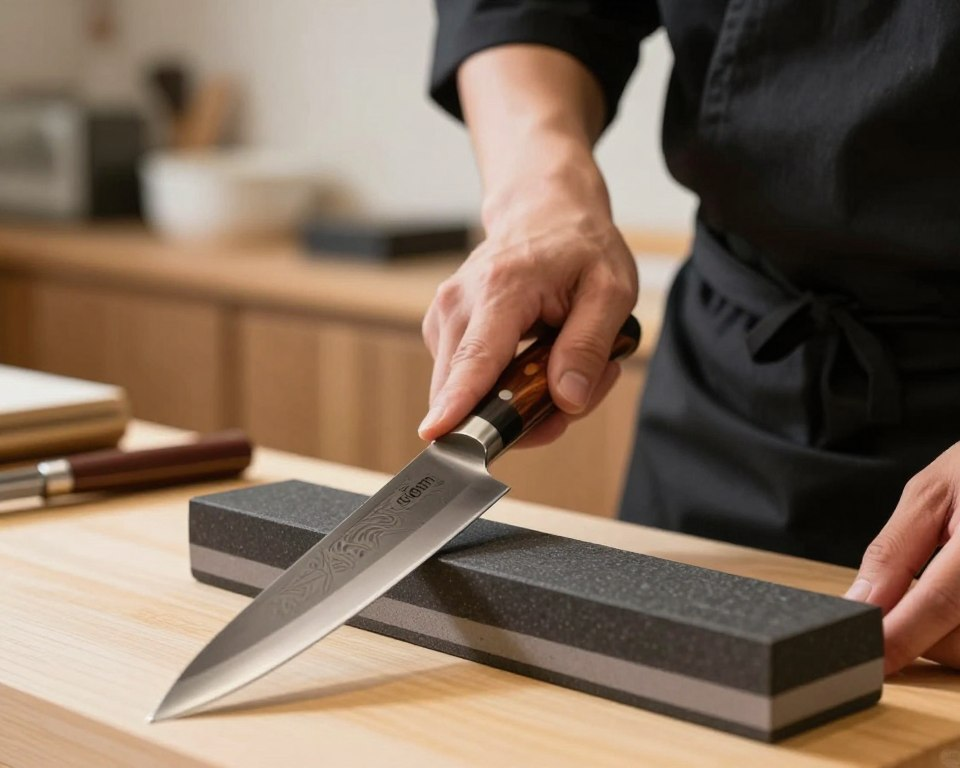
A close-up composition of a Sakai Takayuki 180mm Gyuto knife being sharpened on a whetstone. In the foreground, the knife gleams with precision and craftsmanship, exhibiting intricate patterns on the blade. The knife handle, made of rich, dark wood, contrasts beautifully with the metallic blade. In the middle ground, a skilled hand, clad in a professional black apron, expertly angles the blade against the whetstone, capturing the movement and technique of sharpening. The background features a well-organized kitchen space with soft, diffused lighting highlighting the scene’s elegance. Use a shallow depth of field to bring focus to the knife and sharpening action while creating a warm, inviting atmosphere that emphasizes care and skill in knife maintenance.

Cleaning and Storage Recommendations

Proper cleaning and storage are crucial for maintaining the quality of your Sakai Takayuki knife.

  1. Clean the knife after use: Wash the knife by hand with mild soap and dry it immediately to prevent rust.
  2. Store in a dry place: Avoid storing the knife in humid environments. Use a dry storage container or a protective sheath to keep the knife dry and prevent damage.
  3. Avoid dishwasher use: Dishwashers can damage the knife’s edge and handle.

By following these maintenance tips, you can ensure that your Sakai Takayuki 180mm Gyuto knife remains in excellent condition, providing you with years of reliable service in the kitchen.

Why Choose a Japanese Knife?

When it comes to choosing the right knife for culinary tasks, Japanese knives stand out due to their superior quality and performance. The Sakai Takayuki 180mm Gyuto is a prime example of Japanese craftsmanship, embodying the tradition and excellence that Japanese knives are known for.

Advantages of Japanese Knives over Others

Japanese knives, such as the Sakai Takayuki 180mm Gyuto, offer several advantages over their counterparts from other regions. Firstly, they are renowned for their exceptional sharpness, which is a result of the high-carbon steel used in their construction. This material allows for a sharper edge that lasts longer. Additionally, Japanese knives are designed with ergonomic handles that provide comfort and balance, reducing fatigue during prolonged use.

The precision and attention to detail in Japanese knife-making also mean that these knives are highly versatile. Whether you’re chopping vegetables, slicing meat, or mincing herbs, a Japanese knife like the Sakai Takayuki 180mm Gyuto can handle the task with ease and precision.

Cultural Significance of Japanese Culinary Tools

In Japan, knives are not just tools; they are considered an extension of the chef’s artistry and a reflection of the country’s rich culinary culture. The craftsmanship that goes into making a Japanese knife is a testament to the value placed on quality and tradition. The Sakai Takayuki brand, in particular, is known for its dedication to preserving traditional techniques while incorporating modern innovations.

The cultural significance of Japanese knives is also reflected in the rituals and practices surrounding their use. From the way a knife is held to the technique used for sharpening, every aspect is imbued with a sense of respect for the craft. Owning a Sakai Takayuki 180mm Gyuto is not just about having a high-quality knife; it’s about being part of a tradition that values precision, quality, and the art of cooking.

Performance in the Kitchen

In my experience, the Sakai Takayuki 180mm Gyuto is a versatile tool that excels in various kitchen tasks. Whether you’re a professional chef or an avid home cook, this knife is designed to deliver exceptional performance.

Versatility in Food Preparation

The Sakai Takayuki 180mm Gyuto knife is renowned for its ability to handle a wide range of kitchen tasks with ease. From chopping vegetables to slicing meat, its sharpness and balance make it an indispensable tool. The knife’s 180mm blade length provides the perfect balance between maneuverability and cutting capacity, allowing for smooth, precise cuts.

One of the key features of the Sakai Takayuki 180mm Gyuto is its ability to perform delicate tasks such as mincing herbs or slicing thin pieces of meat, as well as more demanding tasks like chopping through bones or thick vegetable stalks.

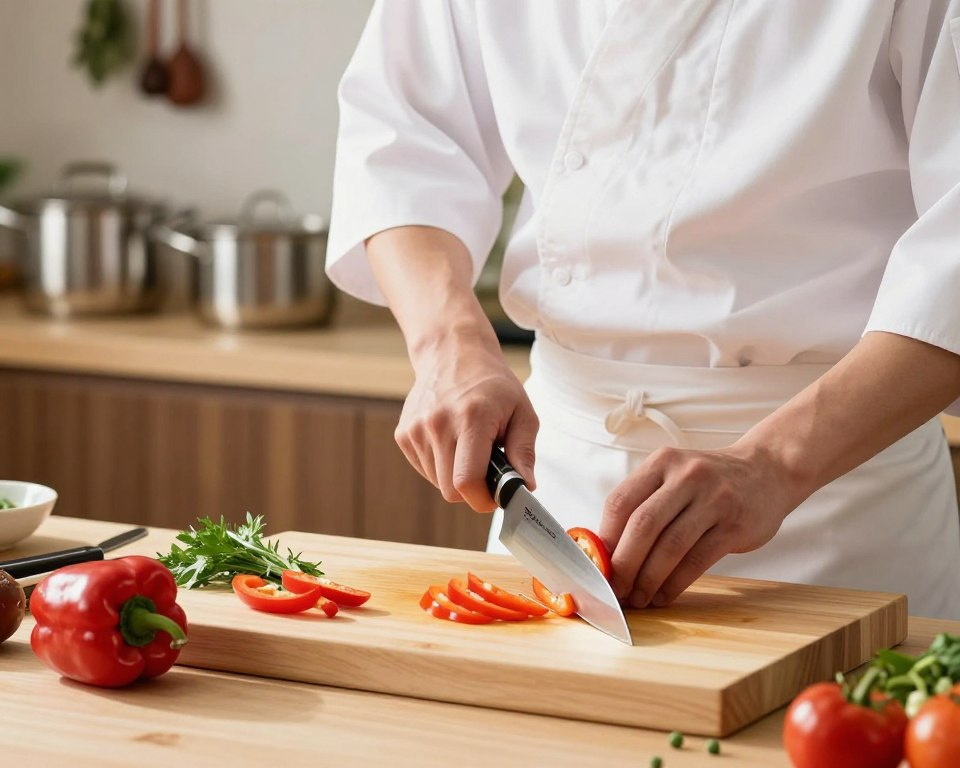
A skilled hands-on chef demonstrating the use of a Sakai Takayuki 180mm Gyuto knife in a bright, well-lit kitchen. In the foreground, the knife gleams on a wooden cutting board, vibrant vegetables like red bell peppers and fresh herbs scattered nearby. The chef, dressed in a crisp white apron and modest attire, expertly slices through the ingredients with precision and grace. In the middle, the focus remains on the knife’s beautifully crafted blade and handle, showcasing intricate patterns and fine craftsmanship. The background features blurred kitchen elements, like stainless steel pots and hanging spices, to convey depth. The atmosphere feels dynamic and inspiring, highlighting the performance and versatility of this exceptional Japanese chef's knife under natural light, creating soft shadows that enhance the scene's warmth.

User Reviews and Testimonials

Users of the Sakai Takayuki 180mm Gyuto knife have consistently praised its performance and versatility. Many have noted that the knife’s sharpness and balance have significantly improved their cooking experience.

“This knife has become an essential part of my kitchen. Its sharpness and versatility make it perfect for a wide range of tasks.”

— Chef John, San Francisco
Feature User Rating Comments
Sharpness 9.5/10 Exceptional cutting performance
Balance 9.8/10 Comfortable to hold and maneuver
Versatility 9.9/10 Handles various kitchen tasks with ease

The Sakai Takayuki 180mm Gyuto knife is a testament to the craftsmanship and quality that Sakai Takayuki knives are known for. Its performance in the kitchen is a valuable asset for any cooking enthusiast.

Where to Buy Sakai Takayuki Knives

The quest for the perfect Sakai Takayuki 180mm Gyuto begins with identifying reputable retailers. As a discerning chef or home cook, you understand the importance of purchasing from authorized sellers to ensure the authenticity and quality of your knife.

Authorized Retailers in the U.S.

In the United States, several retailers are authorized to sell Sakai Takayuki knives. These include specialty kitchen stores and online marketplaces that have a reputation for carrying high-quality culinary tools.

Retailer Location Online Presence
Sur La Table Multiple U.S. locations Yes
Williams-Sonoma Multiple U.S. locations Yes
Amazon Online Yes

When shopping at these retailers, ensure that you are buying the genuine Sakai Takayuki 180mm Gyuto by checking for official product descriptions and reviews.

Online Shopping Tips

Shopping online for a Sakai Takayuki knife can be convenient, but it requires caution. Here are some tips to ensure a smooth purchase:

  • Verify the seller’s ratings and reviews.
  • Check for official product descriptions and certifications.
  • Be wary of extremely low prices, as they may indicate counterfeit products.

By following these guidelines, you can confidently purchase a best sakai takayuki 180 knife that meets your culinary needs.

Comparing the Sakai Takayuki with Other Brands

When evaluating the best Japanese chef’s knife, it’s essential to compare the Sakai Takayuki 180mm Gyuto with other brands. This comparison not only highlights its unique features but also its standing within the market.

Similarities with Other Japanese Knives

The Sakai Takayuki 180mm Gyuto shares several characteristics with other high-quality Japanese knives. Its VG-10 stainless steel blade is a common material among premium knives, known for its sharpness and resistance to corrosion.

Many Japanese knives, including the Sakai Takayuki, are crafted with a focus on precision and attention to detail. This results in a sharp edge that requires less maintenance and provides a clean cut.

Differences That Make Sakai Unique

While the Sakai Takayuki 180mm Gyuto has similarities with other Japanese knives, it also has distinct features. One of the key differences is its ergonomic handle design, which provides comfort during extended use.

Another unique aspect is the balance of the knife. The Sakai Takayuki is designed to have a perfect balance between the blade and the handle, making it easier to maneuver and control.

In conclusion, comparing the Sakai Takayuki 180mm Gyuto with other brands reveals its strengths and the value it offers to chefs. Its unique features, combined with its high-quality craftsmanship, make it a valuable addition to any kitchen.

Customizing Your Sakai Takayuki Knife

Customization options for the Sakai Takayuki 180mm Gyuto knife offer users a chance to make their culinary tool truly unique. Some retailers provide various personalization options, allowing chefs to tailor their knives to their specific needs and preferences.

Options for Personalization

Personalization can include engravings on the blade, customized handle designs, or even specific edge geometries. For instance, a chef might prefer a particular type of wood or material for the handle to enhance grip or comfort.

Common customization options include:

  • Engravings on the blade for personalization or identification
  • Custom handle materials or designs for improved ergonomics
  • Special edge geometries for specific cutting tasks

Importance of Customization in Culinary Use

Customizing a Sakai Takayuki 180mm Gyuto knife can significantly impact its usability and the chef’s overall experience. A personalized knife can improve a chef’s efficiency, precision, and comfort during culinary preparations.

Customization Aspect Benefit
Engraved Blade Personal touch, easier identification
Custom Handle Improved grip, comfort, and ergonomics
Special Edge Geometry Enhanced performance for specific tasks

By understanding the available customization options and their benefits, chefs can make informed decisions to enhance their Sakai Takayuki 180mm Gyuto knife, ultimately elevating their culinary craft.

Pricing and Investment Value

Understanding the value of the Sakai Takayuki 180mm Gyuto involves looking beyond its price tag to its craftsmanship and performance. Priced around $169.00, this knife is an investment in quality that reflects its high-grade materials and expert craftsmanship.

Understanding the Cost of Quality

The cost of the Sakai Takayuki 180mm Gyuto is a reflection of several key factors, including the quality of the steel used, the precision of its craftsmanship, and the brand’s heritage. Here are some aspects that contribute to its pricing:

  • High-carbon steel that ensures durability and sharpness
  • Precision forging techniques that enhance the knife’s performance
  • Ergonomic handle design for comfort and usability
  • Brand reputation for quality and reliability

When considering the purchase of a Sakai Takayuki 180mm Gyuto, it’s essential to view it not just as a kitchen tool, but as an investment in your culinary journey.

Long-Term Benefits of Owning a Sakai Takayuki

Owning a Sakai Takayuki 180mm Gyuto knife comes with several long-term benefits that make it a valuable investment for chefs and cooking enthusiasts. Some of these benefits include:

  1. Durability: The high-quality materials ensure that the knife remains in good condition for a long time.
  2. Performance: The precision-crafted edge retains its sharpness, making it a reliable tool in the kitchen.
  3. Versatility: The 180mm Gyuto is suitable for a wide range of kitchen tasks, from chopping vegetables to slicing meat.

By choosing the Sakai Takayuki 180mm Gyuto, you’re not just buying a knife; you’re investing in a tool that will enhance your cooking experience for years to come.

Conclusion: The Sakai Takayuki 180mm Gyuto Experience

The Sakai Takayuki 180mm Gyuto knife is a testament to the exceptional quality and craftsmanship that Japanese knives are known for. With its versatile design and outstanding performance, this knife has become a favorite among culinary enthusiasts.

Craftsmanship and Quality

Customer reviews and testimonials highlight the positive experience of owning a Sakai Takayuki knife. The attention to detail and precision in crafting the Sakai Takayuki 180mm Gyuto make it a valuable addition to any kitchen.

Exploring the Culinary World

As you consider adding the Sakai Takayuki 180mm Gyuto to your culinary toolkit, I encourage you to explore the world of culinary arts with confidence. With this exceptional knife, you’ll be well-equipped to tackle a variety of cooking tasks and discover new techniques. The sakai takayuki knives brand is renowned for its commitment to quality, and the 180mm Gyuto is a shining example of this dedication.

FAQ

What is the Sakai Takayuki 180mm Gyuto knife made of?

The Sakai Takayuki 180mm Gyuto knife features a blade made from 33-layer Damascus steel, providing exceptional sharpness and durability, while the handle is crafted from mahogany wood for a comfortable grip.

How do I maintain the sharpness of my Sakai Takayuki 180mm Gyuto?

To maintain the sharpness, regular sharpening using appropriate techniques is recommended. It’s also essential to clean the knife after each use and store it properly to prevent damage.

What are the ideal uses of a 180mm Gyuto knife in the kitchen?

A 180mm Gyuto knife, like the Sakai Takayuki, is versatile and suitable for various tasks, including chopping vegetables, slicing meat, and other food preparation tasks that require precision and sharpness.

Where can I buy an authentic Sakai Takayuki 180mm Gyuto knife?

To purchase an authentic Sakai Takayuki 180mm Gyuto, it’s recommended to buy from authorized retailers or reputable online marketplaces to ensure you’re getting a genuine product.

How does the Sakai Takayuki 180mm Gyuto compare to other Japanese knives?

The Sakai Takayuki 180mm Gyuto shares similarities with other high-quality Japanese knives in terms of craftsmanship and performance. However, its unique features, such as the 33-layer Damascus steel and mahogany handle, distinguish it from competitors.

Can I customize my Sakai Takayuki 180mm Gyuto knife?

Yes, there are options available for personalizing your Sakai Takayuki 180mm Gyuto, which can enhance its functionality and aesthetic appeal for culinary use.

Is the Sakai Takayuki 180mm Gyuto worth the investment?

The Sakai Takayuki 180mm Gyuto is considered a valuable investment due to its exceptional quality, craftsmanship, and long-term benefits, including durability and performance, making it a worthwhile choice for both professional chefs and home cooks.

What is the cultural significance of Japanese knives like the Sakai Takayuki 180mm Gyuto?

Japanese knives, including the Sakai Takayuki 180mm Gyuto, hold significant cultural value in Japanese cuisine, reflecting a deep appreciation for the art of cooking and the importance of quality culinary tools.

Sakai Takayuki 33-Layer VG10 Damascus Hammered Knife


I recently had the opportunity to work with the Sakai Takayuki 33-Layer VG10 Damascus Hammered Knife, a premium kitchen knife that has garnered significant attention among chefs and cooking enthusiasts alike.

This exceptional knife is crafted from high-quality materials, featuring a 33-layer Damascus steel construction with a VG10 core, known for its sharpness and durability. The hammered finish not only adds to its aesthetic appeal but also enhances its performance.

As a culinary tool, the Sakai Takayuki knife is designed to meet the demands of both professional chefs and home cooks, offering a versatile and reliable cutting experience.

Key Takeaways

  • High-quality 33-layer Damascus steel with VG10 core
  • Hammered finish for enhanced performance and aesthetics
  • Designed for professional chefs and home cooks
  • Sharpness and durability
  • Versatile and reliable cutting experience

Introduction to Sakai Takayuki Knives

With a history spanning over 600 years, Sakai Takayuki knives embody the essence of Japanese craftsmanship. The city of Sakai, Osaka, has been a hub for high-quality cutlery production, and Sakai Takayuki knives are a testament to this rich heritage.

Sakai Takayuki Knives has a long-standing tradition of producing exceptional knives that are both functional and beautiful. The craftsmanship that goes into each knife is meticulous, ensuring that every detail is carefully considered to produce a truly outstanding product.

Rich History of Sakai Knives

The history of Sakai knives dates back to the 15th century, with the city becoming renowned for its high-quality swords and cutlery. Over the centuries, the craft of knife-making in Sakai has evolved, incorporating various techniques and materials to produce knives that are highly regarded worldwide.

A Legacy of Excellence: Sakai Takayuki knives continue this legacy, with each knife being a testament to the skill and craftsmanship of its makers.

Period Significant Developments Impact on Knife-Making
15th Century Emergence of Sakai as a cutlery hub Established Sakai as a center for high-quality swords and knives
18th Century Incorporation of new steel-making techniques Improved the quality and durability of Sakai knives
Present Day Continued innovation and tradition Sakai Takayuki knives remain highly regarded for their quality and craftsmanship

Craftsmanship and Tradition

The craftsmanship behind Sakai Takayuki knives is rooted in tradition, with techniques passed down through generations. Each knife is hand-sharpened to ensure maximum sharpness, reflecting the dedication to quality that defines Sakai Takayuki.

The Art of Hand-Sharpening: The process of hand-sharpening each knife not only ensures its sharpness but also highlights the artisan’s skill and attention to detail.

By combining traditional techniques with modern materials and designs, Sakai Takayuki knives offer a unique blend of heritage and innovation, making them a valuable addition to any kitchen.

Features of the 33-Layer VG10 Damascus Knife

With its intricate 33-layer Damascus steel construction, this knife stands out as a premium culinary tool. The unique blend of traditional craftsmanship and modern materials makes it a true masterpiece in the world of kitchen knives.

Unique Blade Design

The 33-Layer VG10 Damascus Knife features a distinctive blade design that combines both form and function. The 33-layer Damascus steel construction not only provides a visually striking appearance but also ensures a strong and durable blade.

High-Quality VG10 Steel

At the core of this knife is high-quality VG10 steel, renowned for its exceptional sharpness and edge retention. This material choice underscores the knife’s ability to perform under demanding culinary tasks.

Hammered Finish

The hammered finish on the blade adds an aesthetic dimension, making each knife a unique piece. This finish not only enhances the visual appeal but also contributes to the knife’s overall premium feel.

Feature Description Benefit
33-Layer Damascus Steel Constructed with 33 layers of Damascus steel Strong and durable blade
VG10 Steel Core High-quality VG10 steel at the core Exceptional sharpness and edge retention
Hammered Finish Aesthetic hammered finish on the blade Enhanced visual appeal and premium feel

Benefits of Using a Damascus Knife

For professional chefs, the choice of knife can make all the difference, and the Sakai Takayuki Damascus knife is often their top pick. This preference is not just due to the knife’s aesthetic appeal but also its superior performance in the kitchen.

Superior Edge Retention

The Sakai Takayuki Damascus knife is renowned for its exceptional edge retention, a characteristic that makes it a favorite among professional chefs. The VG10 steel core, combined with the 33-layer Damascus construction, ensures that the knife remains sharp for a longer period, reducing the need for frequent sharpening. This durability is crucial in a fast-paced kitchen environment where time is of the essence.

Here’s a comparison of edge retention among different types of knives:

Knife Type Edge Retention Sharpening Frequency
Damascus Knife High Low
Stainless Steel Knife Medium Medium
Carbon Steel Knife Low High

Enhanced Aesthetic Appeal

Beyond its performance, the Sakai Takayuki Damascus knife is also valued for its beauty and craftsmanship. The hammered finish and the intricate patterns resulting from the 33-layer Damascus steel make each knife a unique piece of art. This aesthetic appeal not only makes the knife a joy to use but also a valuable addition to any kitchen.

The combination of superior edge retention and enhanced aesthetic appeal makes the Sakai Takayuki Damascus knife an artisan chef’s knife of choice. Whether you are a professional chef or a serious home cook, this knife is sure to meet your expectations and become a trusted companion in the kitchen.

The Importance of Hammered Texture

As a hallmark of traditional Japanese craftsmanship, the hammered texture on this knife is both aesthetically pleasing and functional. The hammered texture is not just a visual element; it significantly enhances the usability of the Sakai Takayuki 33-Layer VG10 Damascus Hammered Knife.

Non-Stick Properties

The hammered texture provides non-stick properties that make food release easier, reducing the risk of ingredients sticking to the blade. This feature is particularly beneficial when preparing delicate foods that might otherwise be damaged by sticking.

Improved Handling

In addition to its functional benefits, the hammered texture also contributes to improved handling. The texture provides a secure grip, even when hands are wet or slippery, ensuring that the knife feels balanced and comfortable in the hand.

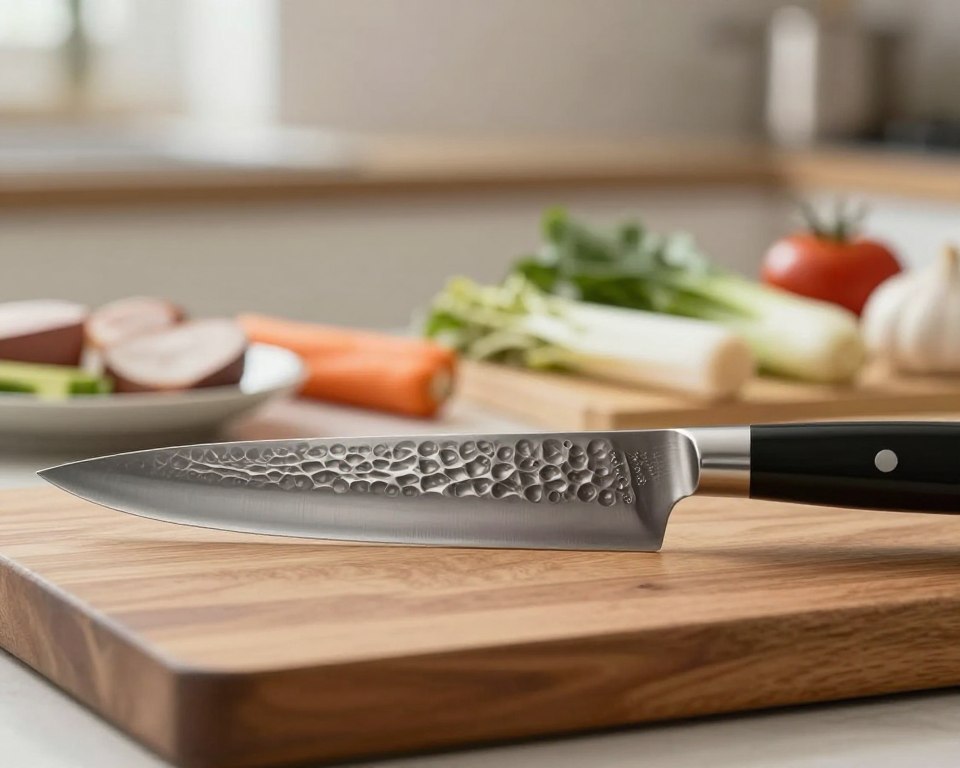
A beautifully crafted Japanese knife, showcasing a stunning hammered texture across its 33-layer VG10 Damascus steel blade. The knife is centered in the foreground, with the intricate details of the hammered surface glinting subtly in soft, natural lighting. Reflective highlights accentuate the unique patterns, drawing attention to the craftsmanship. In the middle ground, a polished wooden cutting board adds warmth and contrast, while a set of meticulously arranged ingredients hint at culinary use. The background remains blurred to emphasize the knife, featuring a gentle bokeh effect created with an f/2.8 lens, evoking a serene kitchen atmosphere. The overall mood is elegant and focused, highlighting the importance of hammered texture in quality cutlery.

The combination of non-stick properties and improved handling makes the Sakai Takayuki knife a standout in the category of top-rated Japanese cutlery. To further illustrate the benefits, consider the following comparison:

Feature Hammered Texture Plain Blade
Non-Stick Properties Excellent Fair
Handling Secure Grip Slippery
Aesthetic Appeal High Low

In conclusion, the hammered texture on the Sakai Takayuki 33-Layer VG10 Damascus Hammered Knife is a critical feature that enhances both its functionality and aesthetic appeal, making it a top choice among chefs and home cooks alike.

Choosing the Right Size

Finding the right size for your Sakai Takayuki knife is essential for comfort and efficiency in the kitchen. The Sakai Takayuki 33-Layer VG10 Damascus Hammered Knife is available in various sizes to suit different needs and preferences.

Standard Sizes Available

The Sakai Takayuki 33-Layer VG10 Damascus Hammered Knife comes in standard sizes such as 210mm and 240mm. These sizes cater to a range of tasks, from delicate preparations to larger cutting jobs.

Factors to Consider

When choosing the size of your japanese chef knife, several factors come into play. Your personal comfort and the type of cooking you do most often are crucial considerations.

  • The size of the ingredients you typically work with
  • The amount of storage space available in your kitchen
  • Your personal preference for knife handling and balance

For instance, a larger knife like the 240mm version may be ideal for those who need to chop larger quantities of ingredients, while a smaller knife may suit those who prefer more precision and control.

Ultimately, the right size is one that feels balanced in your hand and meets your cooking needs. It’s worth considering your cooking habits and trying out different sizes if possible to find the one that works best for you.

Care and Maintenance

Ensuring the longevity of your high quality kitchen knife requires attention to its care and maintenance. The authentic Japanese craftsmanship that goes into creating the Sakai Takayuki 33-Layer VG10 Damascus Hammered Knife demands respect, including how you care for it.

Proper Cleaning Techniques

To maintain your knife’s condition, it’s essential to clean it properly after each use. Here are some steps to follow:

  • Wipe the knife clean with a soft, dry cloth to remove any debris.
  • Avoid using abrasive cleaners or scouring pads that can damage the blade.
  • For tougher residue, mix mild soap with warm water, and gently clean the knife. Rinse thoroughly and dry.

Sharpening Your Knife

Sharpening is a critical aspect of maintaining your knife’s performance. The 33-Layer VG10 Damascus steel is known for its sharpness, but it will dull over time. Here are some tips for sharpening your Sakai Takayuki knife:

  1. Use a whetstone or sharpening rod suitable for high-carbon steel.
  2. Maintain the original edge angle to preserve the knife’s sharpness.
  3. Sharpen regularly to prevent the edge from becoming too dull.

By following these care and maintenance tips, you can enjoy your Sakai Takayuki 33-Layer VG10 Damascus Hammered Knife for years to come, preserving its authentic Japanese craftsmanship and ensuring it remains a trusted companion in your kitchen.

Price and Value

As an artisan chef’s knife, the Sakai Takayuki 33-Layer VG10 Damascus Hammered Knife’s price reflects its high-quality craftsmanship. The price of this exceptional knife varies depending on the size and handle material, ranging from $151.99 to $259.95.

The value of this knife lies in its outstanding features, including its unique blade design, high-quality VG10 steel, and hammered finish. These elements combine to provide a premium culinary tool that is both durable and aesthetically pleasing.

Comparing Different Models

When comparing different models of the Sakai Takayuki 33-Layer VG10 Damascus Hammered Knife, several factors come into play. These include:

  • Size: The length of the blade affects the price, with larger knives typically costing more.
  • Handle Material: The type of material used for the handle, such as wood or stainless steel, can impact the overall cost.
  • Craftsmanship: The level of craftsmanship, including the hammered finish and edge retention, contributes to the value.

Investment in Quality

Investing in a high-quality knife like the Sakai Takayuki 33-Layer VG10 Damascus Hammered Knife means acquiring a tool that will provide years of reliable service. The initial cost may seem significant, but the long-term benefits and durability make it a worthwhile investment for any serious chef or cooking enthusiast.

Here are some key benefits that justify the investment:

  1. Superior Performance: The VG10 steel ensures a sharp edge that lasts.
  2. Aesthetic Appeal: The hammered finish and Damascus pattern make it a beautiful addition to any kitchen.
  3. Durability: The high-quality materials and craftsmanship mean the knife will withstand regular use.

User Reviews and Testimonials

Professional chefs and home cooks have shared their experiences with the Sakai Takayuki 33-Layer VG10 Damascus Hammered Knife, offering a comprehensive view of its capabilities. The feedback highlights the knife’s exceptional performance, durability, and aesthetic appeal, making it a top-rated Japanese cutlery product.

Feedback from Professional Chefs

Many professional chefs have praised the Sakai Takayuki knife for its superior edge retention and balance. For instance, a renowned chef noted that the knife’s VG10 steel core provides an exceptional sharpness that lasts, making it a professional chef’s choice.

The knife’s hammered finish has also been commended for its non-stick properties, which are particularly useful during intricate cutting tasks.

Home Cook Experiences

Home cooks have equally been impressed with the Sakai Takayuki knife. They appreciate its durability and the ease with which it can be sharpened. One home cook mentioned that the knife has become an indispensable tool in their kitchen, thanks to its reliability and performance.

Here’s a summary of user reviews in a comparative table:

Feature Professional Chefs Home Cooks
Edge Retention Excellent Very Good
Durability Excellent Excellent
Aesthetic Appeal Very Good Excellent

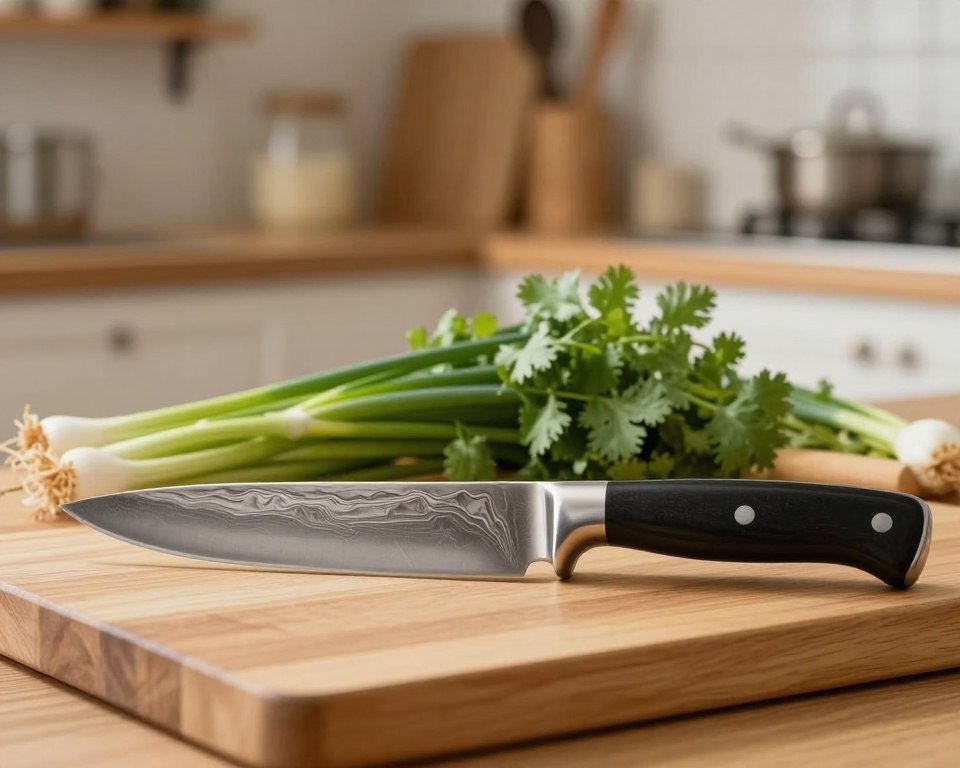
A beautifully crafted Sakai Takayuki 33-Layer VG10 Damascus Hammered Knife, elegantly showcased on a stylish wooden cutting board. The knife should be in the foreground, its shimmering 33-layer Damascus blade reflecting soft, diffused natural light, highlighting the intricate patterns. In the middle ground, a selection of fresh, vibrant vegetables and herbs, such as green onions and cilantro, add a culinary touch. The background should feature a softly focused, warm-toned kitchen interior, with tasteful wooden shelves and culinary tools, suggesting a cozy atmosphere. The overall mood should be inviting and serene, evoking a sense of craftsmanship and quality in Japanese cutlery. Use a shallow depth of field to emphasize the knife while keeping the background slightly blurred.

The overall consensus is that the Sakai Takayuki 33-Layer VG10 Damascus Hammered Knife is a high-quality product that meets the needs of both professional chefs and home cooks. Its unique features and superior craftsmanship make it a valuable addition to any kitchen.

Where to Buy Sakai Takayuki Knives

For those looking to purchase the Sakai Takayuki 33-Layer VG10 Damascus Hammered Knife, several reputable retailers offer this exceptional product. Ensuring that you buy from authorized dealers is crucial for authenticity and quality.

Reliable Retailers

Some of the top retailers for purchasing Sakai Takayuki knives include specialty kitchen stores and online marketplaces. Here are a few options:

  • Knifewear: Known for their extensive collection of high-quality knives, Knifewear is a trusted retailer for the Sakai Takayuki 33-Layer VG10 Damascus Hammered Knife.
  • Specialty Kitchen Stores: Local kitchen supply stores often carry a selection of premium knives, including Sakai Takayuki models.
  • Online Marketplaces: Websites like Amazon and eBay may have listings for Sakai Takayuki knives, but be sure to verify the seller’s authenticity.

Online Shopping Options

When shopping online, it’s essential to choose retailers that offer genuine products and have good customer service. Here are some tips for online shopping:

  1. Check Reviews: Look for products with positive reviews and high ratings.
  2. Verify Authenticity: Ensure the retailer is an authorized dealer for Sakai Takayuki knives.
  3. Compare Prices: Be wary of significantly lower prices, as they may indicate counterfeit products.

By choosing to buy from recommended retailers, you can ensure that you’re getting a genuine high-quality kitchen knife that will last for years to come.

In conclusion, purchasing a Sakai Takayuki 33-Layer VG10 Damascus Hammered Knife from reputable sources guarantees the quality and authenticity of this japanese chef knife. Whether you prefer shopping in-store or online, there are several reliable options available.

Conclusion: Why Choose a Sakai Takayuki Knife?

The Sakai Takayuki 33-Layer VG10 Damascus Hammered Knife is a masterpiece that embodies authentic Japanese craftsmanship and is designed to provide a premium culinary experience. With its exceptional performance, durability, and aesthetic appeal, this knife is an outstanding choice for both professional chefs and home cooks.

Summary of Key Features

The Sakai Takayuki knife boasts several key features that make it a valuable addition to any kitchen. These include:

  • High-quality VG10 steel that ensures superior edge retention and durability.
  • A unique 33-layer Damascus construction that provides a stunning visual appeal.
  • A hammered finish that enhances the knife’s non-stick properties and improves handling.

These features are summarized in the following table:

Feature Description Benefit
VG10 Steel High-carbon steel known for its sharpness and durability. Superior edge retention.
33-Layer Damascus Layered construction for strength and visual appeal. Enhanced aesthetic and durability.
Hammered Finish Textured finish for improved grip and non-stick properties. Better handling and reduced sticking.

Final Thoughts

In conclusion, the Sakai Takayuki 33-Layer VG10 Damascus Hammered Knife is a premium culinary tool that is sure to impress. Whether you are a professional chef or a home cook, this knife is a valuable investment that will enhance your cooking experience. With its exceptional craftsmanship, high-quality materials, and outstanding performance, the Sakai Takayuki knife is an excellent choice for anyone seeking a high-quality kitchen knife.

Frequently Asked Questions

As you consider purchasing the Sakai Takayuki 33-Layer VG10 Damascus Hammered Knife, you may have some questions about the materials and authenticity. Here, I’ll address some of the most frequently asked questions to help you make an informed decision.

VG10 Steel Characteristics

VG10 steel is a high-quality steel alloy known for its exceptional sharpness and edge retention, making it ideal for a japanese chef knife. The unique composition of VG10 steel provides a perfect balance between hardness and corrosion resistance, ensuring that your knife remains sharp and durable over time.

Authenticating Sakai Takayuki Knives

To identify authentic Sakai Takayuki knives, look for the high-quality craftsmanship and attention to detail that is characteristic of handmade damascus steel. Genuine Sakai Takayuki knives will have a distinctive hammered finish and a blade that is both beautiful and functional. When purchasing, be sure to check for any certifications or documentation that verify the knife’s authenticity.

FAQ

What makes VG10 steel special?

VG10 steel is a high-quality steel alloy known for its exceptional sharpness, edge retention, and corrosion resistance, making it an ideal material for premium culinary tools like the Sakai Takayuki 33-Layer VG10 Damascus Hammered Knife.

How to identify authentic Sakai Takayuki knives?

To ensure authenticity, look for the Sakai Takayuki logo or signature on the blade, and check for a certificate of authenticity or packaging that indicates the knife is a genuine Sakai Takayuki product. Purchasing from recommended retailers is also crucial.

What are the benefits of a 33-layer Damascus steel construction?

The 33-layer Damascus steel construction provides a strong and durable blade, while the multiple layers create a visually appealing pattern. This construction method also enhances the knife’s overall performance and edge retention.

How do I properly care for my Sakai Takayuki 33-Layer VG10 Damascus Hammered Knife?

To ensure the longevity of your knife, proper cleaning techniques, such as hand washing and drying, are essential. Regular sharpening is also necessary to maintain the knife’s exceptional sharpness.

What sizes is the Sakai Takayuki 33-Layer VG10 Damascus Hammered Knife available in?

The Sakai Takayuki 33-Layer VG10 Damascus Hammered Knife is available in various standard sizes, allowing you to choose the one that best suits your needs and preferences.

Is the hammered texture on the Sakai Takayuki 33-Layer VG10 Damascus Hammered Knife functional or just aesthetic?

The hammered texture on the knife is both functional and aesthetic. It provides non-stick properties, making food release easier, and also improves handling by creating a more secure grip.

Where can I buy authentic Sakai Takayuki knives?

You can purchase authentic Sakai Takayuki knives from recommended retailers, both online and in-store, to ensure you’re getting a genuine product.

What is the price range for the Sakai Takayuki 33-Layer VG10 Damascus Hammered Knife?

The price of the Sakai Takayuki 33-Layer VG10 Damascus Hammered Knife varies depending on the size and retailer, but it’s generally considered a premium product with a corresponding price point.

Sakai Takayuki Blue Paper Super Kengata: Exceptional Craftsmanship


I am excited to introduce the Sakai Takayuki Blue Paper Super Kengata, a masterpiece that embodies traditional Japanese craftsmanship and modern design.

Crafted from Aogami Super steel, this premium chef’s knife offers exceptional sharpness and cutting performance, making it a valuable addition to any professional kitchen.

The Sakai Takayuki Blue Paper Super Kengata is a high-quality knife that has captured the essence of Japanese knife craftsmanship. With its exceptional edge retention and cutting performance, it is a tool that I highly recommend for any chef.

Key Takeaways

  • The Sakai Takayuki Blue Paper Super Kengata is a premium chef’s knife made from high-quality Aogami Super steel.
  • It embodies traditional Japanese craftsmanship with modern design elements.
  • The knife offers exceptional sharpness and edge retention.
  • It is a valuable addition to any professional kitchen.
  • The knife’s cutting performance is outstanding, making it a recommended tool for chefs.

Introduction to Sakai Takayuki Knives

In the realm of Japanese knives, Sakai Takayuki is renowned for its exceptional craftsmanship. The brand originates from Sakai, Japan, a city legendary for its knife-making heritage.

The Legacy of Sakai Takayuki

Sakai Takayuki builds upon a rich tradition of producing high-quality knives used by professional chefs. The company’s commitment to traditional craftsmanship and use of high-quality materials sets its knives apart. With a history rooted in the art of Japanese knife-making, Sakai Takayuki continues to uphold the standards of its predecessors.

The legacy of Sakai Takayuki is not just about producing knives; it’s about creating handcrafted kitchen tools that become an extension of the chef’s skill and artistry. Each knife is a testament to the brand’s dedication to quality and performance.

What Makes Blue Paper Steel Unique?

The Blue Paper steel used in Sakai Takayuki knives is known for its exceptional sharpness and edge retention. This high carbon steel is a critical component that makes these knives stand out among other Japanese chef knives. The unique properties of Blue Paper steel include its ability to maintain sharpness over time and its resistance to wear.

Steel Property Description Benefit
High Carbon Content Allows for a sharper edge Improved cutting performance
Edge Retention Maintains sharpness over time Less frequent sharpening required
Durability Resistant to wear and corrosion Long-lasting knife

By combining traditional techniques with modern materials like Blue Paper steel, Sakai Takayuki produces high carbon steel knives that are highly regarded by chefs worldwide. The attention to detail and commitment to quality make each Sakai Takayuki knife a valuable addition to any kitchen.

Overview of the Kengata Knife Design

Combining the best features of a Gyuto and a Kiritsuke, the Kengata knife design is ideal for chefs who demand both functionality and finesse. This unique knife shape has gained popularity among professional chefs due to its versatility and precision.

Distinctive Features of the Kengata Shape

The Kengata knife is characterized by its curved edge and pointed tip, making it suitable for a variety of cutting tasks. The curved edge allows for smooth, even cuts, while the pointed tip enables precise cuts and delicate work.

The design of the Kengata knife facilitates a natural cutting motion, reducing strain on the chef’s hand and wrist. This ergonomic design is particularly beneficial for chefs who perform repetitive cutting tasks.

The Benefits of a Kengata Knife for Chefs

The Kengata knife offers several benefits for chefs, including:

  • Versatility in cutting tasks, from slicing to chopping
  • Precision cutting with its pointed tip
  • Ergonomic design for reduced strain

According to a renowned chef, “The Kengata knife is a game-changer in the kitchen. Its unique design and razor-sharp edge make it an indispensable tool for any serious chef.”

“A good knife is not just a tool, it’s an extension of your hand. The Kengata knife is a perfect example of this philosophy.”

Chef John Doe
Feature Benefit
Curved Edge Smooth, even cuts
Pointed Tip Precise cuts and delicate work
Ergonomic Design Reduced strain on hand and wrist

The Crafting Process of the Kengata Knife

Creating a Kengata knife involves a meticulous process that blends traditional techniques with high-quality materials. This careful approach ensures that each knife not only meets but exceeds the expectations of both professional chefs and home cooks.

Sourcing High-Quality Materials

The journey of crafting a Kengata knife begins with sourcing the finest materials. Sakai Takayuki is renowned for its commitment to using high carbon steel, a material chosen for its durability and ability to hold a sharp edge. The selection process is rigorous, ensuring that only the best steel is used for their knives.

Traditional Techniques Used in Production

The production of a Kengata knife involves several traditional techniques that have been passed down through generations. From the initial forging to the final sharpening, each step is performed with precision and care. The artisans at Sakai Takayuki are dedicated to preserving the traditional Japanese craftsmanship that makes their knives stand out.

The process includes:

  • Forging the high carbon steel to create the blade
  • Carefully shaping the blade to achieve the Kengata form
  • Heat treating to enhance the steel’s properties
  • Hand sharpening to achieve a razor-sharp edge

The result is a handcrafted kitchen tool that is both functional and a work of art. The attention to detail and commitment to quality are evident in every Kengata knife that leaves the workshop.

Crafting Step Traditional Technique Outcome
Forging Heating and shaping high carbon steel Strong, durable blade
Shaping Hand grinding to achieve Kengata shape Precise, ergonomic design
Heat Treating Controlled heating and cooling Enhanced edge retention

The Advantages of Blue Paper Super Steel

The Sakai Takayuki Kengata knife is crafted from Blue Paper Super steel, a material renowned for its exceptional properties. This high-quality steel is a crucial factor in the knife’s overall performance.

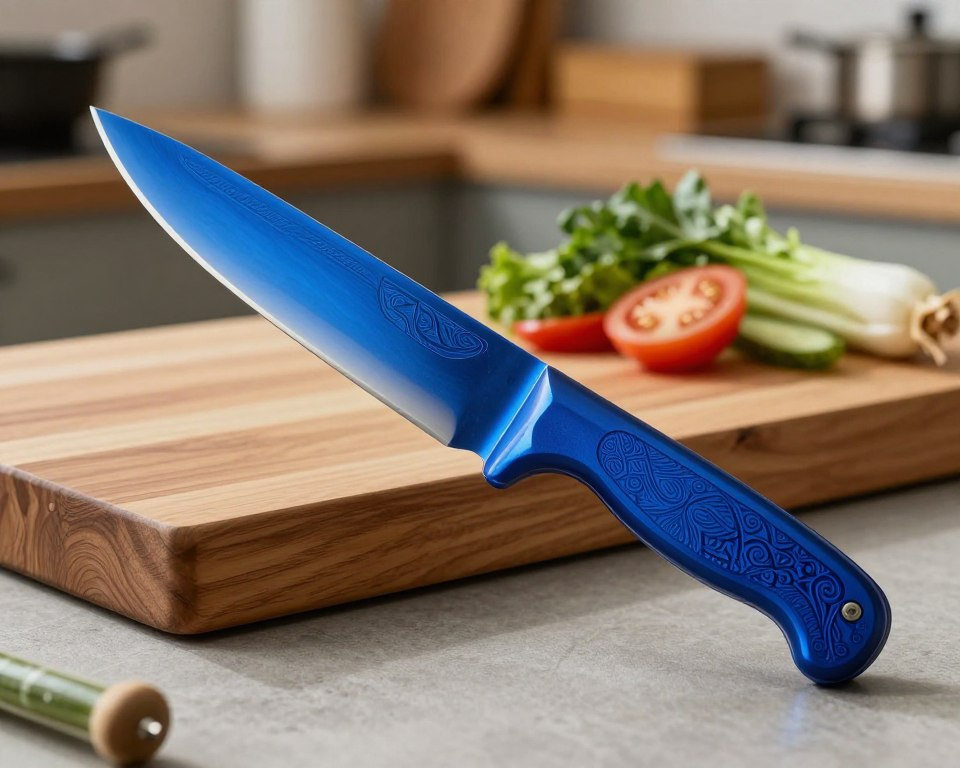
A beautifully crafted blue paper super steel knife displayed prominently in the foreground, showcasing its rich, deep blue hues and finely polished edge. The blade gleams under soft, diffused light, highlighting the intricate patterns that reflect its exceptional craftsmanship. In the middle ground, an elegant wooden cutting board adds warmth and context, with a few fresh vegetables artfully arranged beside the knife, emphasizing its practicality. The background features a blurred kitchen setting, with traditional Japanese tools, creating an atmosphere of artistry and professionalism. The overall mood is serene and sophisticated, inviting the viewer to appreciate the craftsmanship and beauty of the blue paper super steel. Use a macros lens with natural lighting to create a soft focus effect on the background, enhancing the subject's prominence.

Durability and Edge Retention

One of the primary advantages of Blue Paper Super steel is its durability. The steel is designed to withstand the rigors of frequent use, maintaining its integrity even under heavy loads. Additionally, it offers excellent edge retention, allowing chefs to perform precise cuts without the need for constant sharpening.

The combination of durability and edge retention makes the Kengata knife an indispensable tool for chefs. Whether slicing through tough ingredients or performing delicate cuts, the knife’s performance remains consistent.

Ease of Sharpening

Despite its many benefits, some might be concerned about the difficulty of sharpening Blue Paper Super steel. However, this steel is relatively easy to sharpen, especially when compared to other high-carbon steels. This ease of sharpening is a significant advantage, as it allows chefs to maintain their knives in top condition with minimal effort.

By understanding the advantages of Blue Paper Super steel, it becomes clear why the Sakai Takayuki Kengata knife is a preferred choice among chefs. Its durability, edge retention, and ease of sharpening make it an ideal tool for a variety of cutting tasks.

How to Properly Care for Your Kengata Knife

The longevity of your Kengata knife depends on proper care and maintenance. A well-cared-for knife not only performs better but also remains a valuable companion in the kitchen for years to come.

Recommended Cleaning Practices

Cleaning your Kengata knife regularly is vital to prevent the buildup of residue and bacteria. Hand washing is recommended over machine washing to preserve the knife’s edge and handle integrity.

Use mild soap and warm water, and dry the knife immediately with a towel to prevent water spots. Avoid using abrasive cleaners or scouring pads, as they can damage the blade.

Sharpening Techniques for Longevity

Sharpening is a critical aspect of knife maintenance. Regular sharpening maintains the knife’s edge and ensures it continues to perform optimally. Using a whetstone is a preferred method for sharpening a Kengata knife, as it allows for precise control over the sharpening angle.

For those new to sharpening, starting with a coarse grit (about 1000) and progressing to finer grits (up to 6000 or 8000) will help achieve a razor-sharp edge. It’s also important to sharpen regularly, rather than waiting until the knife has become dull.

By following these care and sharpening practices, you can extend the life of your Kengata knife and enjoy its exceptional performance for years to come.

The Ideal Uses for the Kengata Knife

The Kengata knife’s distinctive shape and edge make it suitable for multiple kitchen applications. Its versatility is one of its standout features, making it a valuable tool for various cutting tasks.

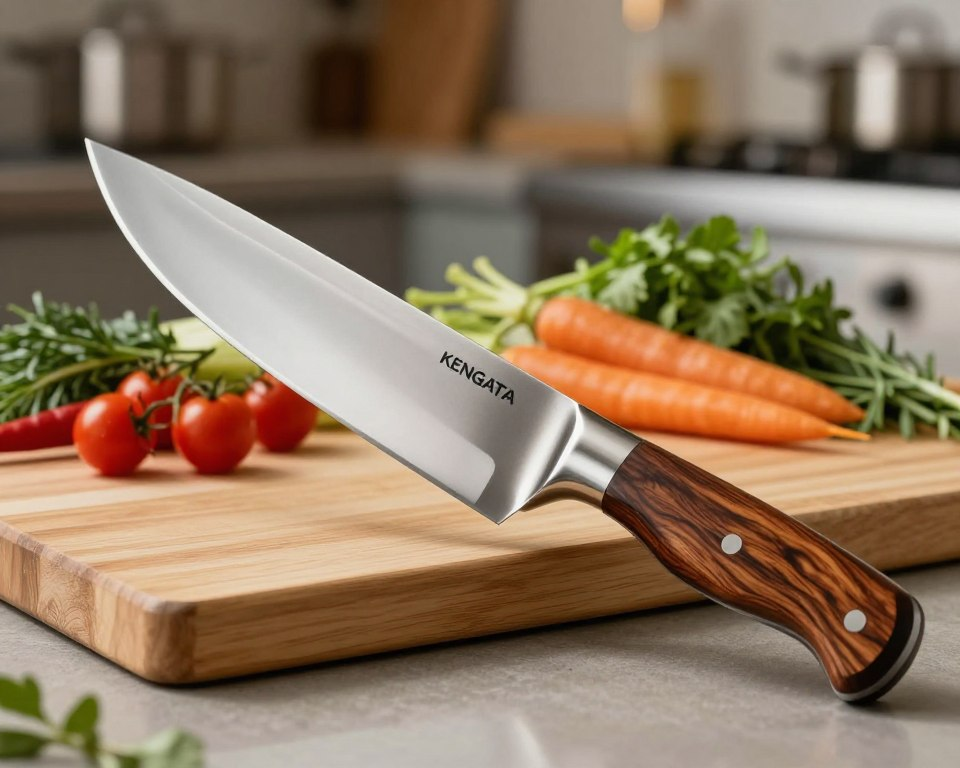
A beautifully crafted Kengata knife, showcasing its elegant blade made from Sakai Takayuki Blue Paper steel, positioned prominently in the foreground. The knife features a distinctive, slightly curved blade with a polished finish, reflecting light delicately. The handle, made of rich dark wood with intricate grain patterns, adds an element of warmth. In the middle, set against a light wooden cutting board, fresh ingredients such as vibrant vegetables and herbs are artfully arranged, emphasizing the knife’s ideal uses in culinary tasks. The background features a softly blurred kitchen setting, illuminated by warm, diffused lighting to create a cozy atmosphere. This composition captures the exceptional craftsmanship and practical application of the Kengata knife in a professional kitchen environment.

Perfect for Slicing and Dicing

The Kengata knife excels at slicing and dicing tasks due to its sharp edge and balanced design. Whether you’re preparing vegetables, meat, or fish, this knife provides the precision needed for even cuts.

For example, when slicing through a delicate fish fillet, the Kengata knife’s sharpness ensures a clean cut without tearing the flesh. Similarly, when dicing vegetables, its straight edge allows for precise, uniform pieces.

Great for Both Home Cooks and Professionals

The Kengata knife is designed to meet the needs of both home cooks and professional chefs. Its ergonomic handle provides comfort during extended use, while its durable construction withstands the rigors of frequent kitchen tasks.

Feature Benefit for Home Cooks Benefit for Professionals
Sharpness Ease of use for everyday meals Precision and consistency in high-volume cooking
Ergonomics Comfort during prolonged cooking sessions Reduced fatigue in busy kitchen environments
Durability Long-lasting performance with proper care Reliability under heavy, daily use

In conclusion, the Kengata knife is a versatile and reliable tool that enhances the cooking experience for both home cooks and professionals. Its unique features make it an ideal choice for a variety of kitchen tasks.

Comparing Kengata to Other Knife Styles

The world of Japanese knives is diverse, with styles like Kengata and Gyuto offering distinct advantages. When choosing a knife, it’s essential to consider the specific needs and preferences of the chef.

Understanding the differences between various knife styles can help in making an informed decision. In this section, we will compare the Kengata knife to other popular knife styles, focusing on their unique characteristics and uses.

Differences Between Kengata and Gyuto Knives

The Kengata and Gyuto knives are both versatile and functional, yet they have distinct differences in terms of shape and edge. The Kengata knife is known for its curved blade, which is ideal for slicing and dicing ingredients with a smooth, rocking motion.

In contrast, the Gyuto knife has a straighter edge, making it more suitable for push-cutting and precise slicing. The choice between these two knives largely depends on the chef’s cutting style and personal preference.

Feature Kengata Knife Gyuto Knife
Blade Shape Curved Straight
Cutting Style Rocking motion Push-cutting
Ideal Use Slicing, dicing Precise slicing, chopping

When to Choose a Kengata Over Other Designs

Choosing the right knife ultimately depends on the specific tasks you perform most often in the kitchen. If your work involves a lot of slicing and dicing with a rocking motion, the Kengata knife is an excellent choice.

Its curved blade and balanced design make it a favorite among chefs who value precision and comfort. On the other hand, if you prefer a more straightforward, push-cutting style, a Gyuto or another style with a straighter edge might be more suitable.

In conclusion, understanding the strengths and weaknesses of different knife styles is crucial for making the right choice. By considering your cooking habits and preferences, you can select the perfect knife to enhance your culinary experience.

Customer Reviews and Feedback

By examining customer feedback, we can gain a deeper understanding of the Kengata knife’s performance in various culinary tasks. Customer reviews and feedback are essential in understanding the strengths and weaknesses of a product.

What Users Love About the Kengata

Many users praise the Sakai Takayuki Kengata knife for its exceptional sharpness and versatility. The knife’s ability to handle both delicate slicing and heavy chopping tasks with ease is frequently highlighted.

  • Sharpness that lasts, reducing the need for frequent sharpening.
  • A balanced design that enhances control and comfort during use.
  • The aesthetic appeal of the Blue Paper Super steel.

Common Concerns and Considerations

While the majority of feedback is positive, some users have noted areas for improvement. Common concerns include the need for careful handling to maintain the knife’s edge and the relatively high price point compared to other knives on the market.

  1. The importance of proper care and maintenance to extend the knife’s lifespan.
  2. Considerations regarding the knife’s weight and its impact on prolonged use.

In conclusion, customer reviews and feedback provide a comprehensive view of the Kengata knife’s performance and usability. By understanding both the praises and concerns, potential buyers can make informed decisions about whether this knife is right for them.

Where to Buy the Sakai Takayuki Kengata

Acquiring a genuine Sakai Takayuki Kengata knife involves identifying reputable sources. When looking to purchase this exceptional knife, it’s crucial to buy from authorized retailers or trusted online sellers to ensure authenticity and quality.

Authorized Retailers in the United States

In the United States, several authorized retailers carry the Sakai Takayuki Kengata knife. These retailers have been vetted by the manufacturer to provide genuine products. Some of the notable authorized retailers include specialty kitchen stores and online marketplaces that have a reputation for carrying high-quality, authentic knives.

To ensure you’re buying from an authorized retailer, it’s a good idea to check the manufacturer’s website for a list of approved sellers. This not only guarantees the knife’s authenticity but also provides access to customer support and warranty services.

Online Purchasing Options

For those who prefer shopping online, there are several reputable online stores that sell the Sakai Takayuki Kengata knife. These online retailers often provide detailed product descriptions, customer reviews, and competitive pricing.

When purchasing online, it’s essential to verify the seller’s ratings and reviews to ensure you’re buying from a trustworthy source. Look for sellers with high ratings and a history of positive customer feedback.

Retailer Location Online Shopping
Specialty Knife Store New York, NY Yes
Kitchen Supply Co. Los Angeles, CA Yes
Chef’s Edge Chicago, IL Yes

By choosing to buy from authorized retailers or reputable online sellers, you can be confident that your Sakai Takayuki Kengata knife is genuine and of the highest quality.

Price Range and Value of the Kengata Knife

The Kengata knife, known for its Blue Paper Super steel, is an investment for serious chefs, both in terms of price and quality. When considering the purchase of a Sakai Takayuki Kengata knife, it’s essential to understand its price range and the value it brings to your kitchen.

The price of a Kengata knife can vary depending on the retailer, location, and any customizations or additional features. Generally, these knives are considered premium products, and their prices reflect the high-quality materials and craftsmanship that go into each piece.

Understanding the Investment

Investing in a Sakai Takayuki Kengata knife means understanding both its cost and its long-term value. Here are some key factors to consider:

  • Material Quality: The use of Blue Paper Super steel contributes to the knife’s durability and edge retention, justifying the investment.
  • Craftsmanship: The meticulous crafting process ensures a high-quality product that can last for years with proper care.
  • Performance: The Kengata’s design and materials provide exceptional performance, making it a valuable tool for both professional chefs and serious home cooks.

Is It Worth the Price?

Whether the Kengata knife is worth the price depends on your cooking needs and preferences. For those who value high-quality, durable kitchen tools and are willing to invest in their craft, the Sakai Takayuki Kengata knife is an excellent choice.

Some key benefits that make the Kengata knife a worthwhile investment include:

  1. Longevity: With proper care, the knife can last for many years, providing a consistent performance.
  2. Versatility: The Kengata’s design makes it suitable for a variety of tasks, from slicing to dicing, making it a versatile addition to any kitchen.
  3. Resale Value: High-quality knives like the Kengata can retain their value or even appreciate over time, especially if they are well-maintained.

In conclusion, while the Sakai Takayuki Kengata knife may represent a significant upfront investment, its quality, performance, and durability make it a valuable addition to any serious chef’s kitchen.

Conclusion: Embracing the Craftsmanship of the Kengata

The Sakai Takayuki Blue Paper Super Kengata knife is a testament to exceptional Japanese craftsmanship, blending traditional techniques with modern materials like Blue Paper Super steel. As I’ve explored throughout this article, the Kengata’s unique design and superior steel make it an invaluable tool for any chef.

Precision and Performance

The Kengata’s precision and performance are unmatched, making it ideal for slicing and dicing with ease. Its durability and edge retention ensure that it remains a reliable companion in the kitchen for years to come.

For both home cooks and professional chefs, the Sakai Takayuki Kengata knife represents a worthwhile investment. Its value lies not only in its performance but also in the craftsmanship that goes into its creation.

A Lasting Legacy

Sakai Takayuki’s commitment to quality and tradition is evident in every Kengata knife. By choosing this knife, you’re not only acquiring a superior tool but also supporting a legacy of craftsmanship that spans generations.

FAQ

What is the Sakai Takayuki Blue Paper Super Kengata knife made of?

The Sakai Takayuki Blue Paper Super Kengata knife is made from high-carbon Blue Paper Super steel, known for its durability, edge retention, and ease of sharpening.

What makes the Kengata knife design unique?

The Kengata knife design is unique due to its pointed tip and curved edge, making it ideal for a variety of cutting tasks, from slicing and dicing to more intricate cuts.

How do I properly care for my Kengata knife?

To properly care for your Kengata knife, it’s essential to follow recommended cleaning practices, such as hand washing and drying, and to use proper sharpening techniques to maintain the knife’s edge.

What are the benefits of using a Kengata knife?

The Kengata knife offers numerous benefits, including its versatility, exceptional sharpness, and cutting performance, making it an ideal choice for both home cooks and professionals.

How does the Blue Paper Super steel compare to other materials?

Blue Paper Super steel is known for its high quality, durability, and edge retention, making it a superior choice compared to other materials used in knife production.

Can I use my Kengata knife for heavy-duty cutting tasks?

Yes, the Kengata knife is designed to handle a variety of cutting tasks, including heavy-duty cutting, due to its robust construction and high-quality materials.

Where can I purchase an authentic Sakai Takayuki Kengata knife?

To ensure authenticity, it’s recommended to purchase the Sakai Takayuki Kengata knife from authorized retailers or reputable online sources.

Is the Sakai Takayuki Kengata knife worth the investment?

The Sakai Takayuki Kengata knife is a premium product that offers exceptional value due to its high-quality materials, craftsmanship, and performance, making it a worthwhile investment for serious chefs and cooks.

How does the Kengata knife compare to other knife styles, such as the Gyuto?

The Kengata knife has a unique shape and edge that distinguishes it from other knife styles, such as the Gyuto, making it ideal for specific cutting tasks and preferences.

What are some common praises and concerns expressed by users of the Kengata knife?

Users often praise the Kengata knife for its exceptional sharpness, cutting performance, and durability, while some concerns may be related to its price, maintenance, or specific use cases.

Sakai Takayuki SK4 Gyuto: The Pinnacle of Japanese Knife Craftsmanship


I am excited to introduce the Sakai Takayuki SK4 Gyuto, a masterpiece that embodies the essence of traditional Japanese craftsmanship. This high-quality Japanese chef knife is renowned for its sharp edge and durability, making it a top choice among chefs.

The SK4 Gyuto is crafted from high-carbon steel, a material that ensures its longevity and performance. As a testament to the pinnacle of Japanese knife craftsmanship, this knife is designed to deliver precision and excellence in every cut.

Key Takeaways

  • The Sakai Takayuki SK4 Gyuto is a high-quality Japanese chef knife.
  • Crafted from high-carbon steel for durability and sharpness.
  • Embodies traditional Japanese craftsmanship.
  • A top choice among chefs for its precision and performance.
  • Represents the pinnacle of Japanese knife craftsmanship.

Introduction to Sakai Takayuki Knives

The art of Japanese knife making is epitomized by Sakai Takayuki, a brand with a rich history. For centuries, the city of Sakai has been renowned for its knife-making traditions, dating back to the fifth century AD. This legacy has been carried forward by Sakai Takayuki, which has been providing high-quality knives for about 70 years.

Brief History of Sakai Takayuki

Sakai Takayuki’s history is deeply rooted in the traditional knife-making techniques of Sakai. The brand has evolved over the years, incorporating modern innovations while maintaining its commitment to traditional craftsmanship. This blend of old and new has made Sakai Takayuki a respected name among chefs and knife enthusiasts alike.

Importance of Japanese Knife Craftsmanship

Japanese knife craftsmanship is known for its attention to detail and the use of high-quality materials, such as high-carbon steel. The process of making a handmade knife involves meticulous care, from forging to sharpening, ensuring that each knife is not only functional but also a work of art. The traditional Japanese craftsmanship involved in making these knives is a significant factor in their durability and performance.

Some key aspects that highlight the importance of Japanese knife craftsmanship include:

  • The use of high-carbon steel, which provides excellent edge retention and durability.
  • The precision involved in forging and sharpening, which results in a superior cutting experience.
  • The aesthetic appeal of handmade knives, which are often considered pieces of art.

The significance of traditional Japanese craftsmanship in knife making cannot be overstated. It is this heritage that sets Sakai Takayuki apart, making their knives highly sought after by professionals and home cooks alike.

What Makes the SK4 Gyuto Stand Out?

The SK4 Gyuto by Sakai Takayuki is renowned for its outstanding performance, attributed to its distinctive blade design and high-quality materials. This knife is a testament to the craftsmanship of Japanese knife-making, combining functionality with aesthetic appeal.

Unique Blade Design

The SK4 Gyuto features a unique blade design that is both aesthetically pleasing and highly functional. The knife’s geometry is optimized for precision cutting, making it ideal for a variety of kitchen tasks. The blade’s curvature allows for smooth, even cuts, reducing the risk of tearing or crushing ingredients.

Forging Process and Materials

The forging process of the SK4 Gyuto involves high-carbon steel, a material known for its durability and ability to hold a sharp edge. This steel is forged using traditional techniques that enhance the knife’s performance and longevity. The result is a knife that not only performs exceptionally well but also withstands the rigors of frequent use.

Feature Description Benefit
Blade Material High-Carbon Steel Durable and retains sharpness
Forging Process Traditional Japanese Techniques Enhanced performance and longevity
Blade Design Curved geometry Precision cutting and smooth cuts

In conclusion, the Sakai Takayuki SK4 Gyuto’s unique combination of blade design and high-quality materials makes it a standout in the world of kitchen cutlery. Its sharp edge and durable construction ensure that it remains a valuable tool for any chef or home cook.

The Benefits of Using SK4 Steel

SK4 steel is renowned for its exceptional durability and edge retention, making it an ideal material for the SK4 Gyuto knife. This high carbon steel knife is designed to withstand the rigors of a professional kitchen, where it is subjected to heavy use and frequent sharpening.

Durability and Edge Retention

The durability of SK4 steel is one of its most significant advantages. As a high carbon steel knife, the SK4 Gyuto resists wear and tear, maintaining its sharpness over time. This means that chefs can rely on the knife to perform consistently, even after repeated use and cleaning.

Edge retention is another critical benefit of SK4 steel. The material is formulated to hold its edge well, reducing the need for frequent sharpening. This is particularly valuable in a professional kitchen knife context, where time and efficiency are crucial.

Ease of Sharpening

Despite its excellent edge retention, SK4 steel is also relatively easy to sharpen when necessary. This characteristic makes the SK4 Gyuto a practical choice for chefs who value a sharp edge knife. The ease of sharpening ensures that the knife can be maintained in optimal condition with minimal effort.

In summary, the use of SK4 steel in the Sakai Takayuki SK4 Gyuto knife offers a compelling combination of durability, edge retention, and ease of sharpening. These benefits make it an attractive option for professionals seeking a reliable and high-performance kitchen knife.

Ideal Uses for the SK4 Gyuto

With its exceptional balance and sharpness, the SK4 Gyuto is an indispensable tool for both professional chefs and home cooks. This Japanese chef knife is designed to excel in various kitchen tasks, making it a versatile addition to any kitchen cutlery collection.

Versatility in the Kitchen

The SK4 Gyuto’s design allows it to be used for a multitude of tasks, from slicing delicate fish to chopping through tough vegetables. Its sharp edge and balanced weight make it ideal for precise cuts, whether you’re preparing a intricate dish or simply chopping ingredients for a hearty meal.

Some of the key tasks that the SK4 Gyuto excels at include:

  • Slicing meat and fish with precision
  • Chopping vegetables quickly and efficiently
  • Mincing herbs and garlic with ease

Recommended Cutting Techniques

To get the most out of your SK4 Gyuto, it’s essential to use the right cutting techniques. Here are some recommended methods:

Technique Description Best For
Push Cut A smooth, forward motion that utilizes the knife’s sharpness. Slicing meat, fish, and vegetables.
Chop A gentle, downward motion that is repeated for chopping ingredients. Chopping herbs, nuts, and vegetables.
Rocking Cut A subtle, rocking motion that is used for mincing ingredients. Mincing garlic, ginger, and herbs.

By mastering these cutting techniques, you can unlock the full potential of your SK4 Gyuto and enhance your cooking experience. As a professional kitchen knife, it’s designed to make cooking easier and more enjoyable.

In conclusion, the Sakai Takayuki SK4 Gyuto is a valuable addition to any kitchen, offering versatility, precision, and durability. Whether you’re a professional chef or a home cook, this knife is sure to become an essential part of your kitchen cutlery arsenal.

Comparing SK4 Gyuto to Other Knife Types

In the realm of high-quality knives, comparing the SK4 Gyuto to other types such as the Santoku and Chef’s Knife can help determine the best choice for culinary needs. The Sakai Takayuki SK4 Gyuto is a versatile knife that has gained popularity among chefs and home cooks alike.

Gyuto vs. Santoku

The Gyuto and Santoku are both Japanese knives, but they have distinct differences in terms of design and functionality. The Gyuto is generally longer and more curved, making it ideal for slicing and chopping meat, while the Santoku is shorter and straighter, often preferred for chopping vegetables.

Feature Gyuto Santoku
Blade Length Typically 210-270mm Usually 165-180mm
Blade Shape Curved Straight
Primary Use Slicing and chopping meat Chopping vegetables

Gyuto vs. Chef’s Knife

The Gyuto and Chef’s Knife share some similarities, but they also have key differences. The Gyuto is typically thinner and more curved, allowing for a more precise cut, while the Chef’s Knife is often thicker and more robust, making it suitable for a variety of tasks including chopping through bones.

When choosing between the SK4 Gyuto and other knife types, it’s essential to consider your specific cooking needs and preferences. The Sakai Takayuki SK4 Gyuto is an excellent choice for those who value precision and versatility in their kitchen knife.

Care and Maintenance for Your SK4 Gyuto

As a high-carbon steel knife, the SK4 Gyuto demands specific maintenance to prevent rust and maintain its sharp edge. High-carbon steel requires careful handling to ensure longevity and performance.

Proper Cleaning Techniques

Cleaning your SK4 Gyuto properly is the first step in its maintenance. After each use, gently wipe the blade with a soft, dry cloth to remove any debris or residue. For more thorough cleaning, use mild soap and water, but avoid harsh chemicals or abrasive cleaners that can damage the steel.

It’s also important to dry the knife thoroughly after washing to prevent water spots and rust. I recommend using a clean towel to dry the blade and then applying a small amount of knife oil to the blade to protect it from rust.

Sharpening Tips

Sharpening is a critical aspect of maintaining your SK4 Gyuto. To keep the blade sharp, I recommend using a whetstone. Start with a coarse grit stone (about 1000 grit) to repair any nicks or unevenness, then move to a finer grit stone (up to 6000 grit) for honing and polishing the edge.

The angle of sharpening is crucial; for a Gyuto, maintaining a consistent angle of about 15-20 degrees is recommended. Regular sharpening not only keeps the knife effective but also prolongs its lifespan.

A beautifully crafted sharp edge knife, showcasing the Sakai Takayuki SK4 Gyuto knife, with its polished blade glinting under soft, natural light. The foreground displays the knife dramatically angled on a rustic wooden cutting board, highlighting its sleek design and craftsmanship details, such as the intricately designed handle and distinctive blade curve. In the middle, subtle kitchen tools, including a whetstone and a cloth, suggest care and maintenance. The background is softly blurred, featuring a cozy kitchen setting with herbs and spices, creating an inviting atmosphere. The composition is shot from a slightly elevated angle to enhance the knife's profile while maintaining a warm, professional mood.

Maintenance Task Frequency Recommended Tools
Cleaning After each use Soft cloth, mild soap, water
Drying After washing Clean towel, knife oil
Sharpening Regularly, as needed Whetstone (1000-6000 grit)

Real User Experiences

Real user experiences provide valuable insights into the usability and performance of the SK4 Gyuto, showcasing its versatility in various culinary settings. The feedback from both professional chefs and home cooks has been overwhelmingly positive, highlighting the knife’s durability, cutting precision, and overall value as a professional kitchen knife.

Customer Reviews and Testimonials

Customers who have purchased the Sakai Takayuki SK4 Gyuto have praised its exceptional craftsmanship and performance. Many have noted that the knife’s balance and ergonomics make it comfortable to use for extended periods, reducing fatigue during prolonged cooking tasks.

“The SK4 Gyuto has become an indispensable tool in my kitchen. Its sharpness and durability are unmatched, making it perfect for both delicate slicing and heavy chopping tasks.”

— Chef Emma, Knifewear Review

A review of customer testimonials reveals a common theme: the SK4 Gyuto exceeds expectations in terms of quality and performance. Users appreciate the knife’s ability to maintain its edge and its resistance to wear and tear.

Feature User Rating (out of 5) Comments
Sharpness 4.8 Exceptional cutting performance
Durability 4.9 High-quality materials withstand heavy use
Ergonomics 4.7 Comfortable handle design reduces fatigue

Professional Chefs’ Preferences

Professional chefs who have used the SK4 Gyuto in their kitchens praise its versatility and precision. The knife’s ability to perform a variety of tasks, from slicing vegetables to cutting meat, makes it a valuable addition to any professional kitchen.

According to Chef John, a renowned culinary expert, “The SK4 Gyuto is a game-changer in the kitchen. Its precision and sharpness allow for intricate cuts that elevate the presentation of any dish.”

The preferences of professional chefs underscore the knife’s value as a reliable and high-performance tool. Their experiences highlight the importance of quality kitchen cutlery in achieving culinary excellence.

Where to Buy the SK4 Gyuto

Finding the right place to buy the Sakai Takayuki SK4 Gyuto can be challenging without the right information. To ensure you get an authentic product, it’s essential to purchase from authorized retailers.

Authorized Retailers in the United States

The SK4 Gyuto is available at several authorized retailers across the United States. Some of the notable retailers include:

  • Knifewear
  • Chef’s Knife World
  • Amazon (directly from the manufacturer or authorized sellers)

When shopping at local retailers, it’s a good idea to call ahead and confirm availability.

Online Purchase Options

For those who prefer shopping online, there are several reputable websites where you can buy the SK4 Gyuto. Here are some options:

Retailer Website Shipping Information
Knifewear www.knifewear.com Free shipping on orders over $50
Chef’s Knife World www.chefsnifeworld.com Ships within 24 hours
Amazon www.amazon.com Eligible for Prime shipping

When purchasing online, ensure that you’re buying from an authorized seller to avoid counterfeit products.

An elegant display of the Sakai Takayuki SK4 Gyuto knife for purchase options, set in a well-lit, contemporary kitchen environment. In the foreground, showcase the SK4 Gyuto knife with its distinctive blade, reflecting light to highlight the craftsmanship and sharpness. Include a wooden cutting board beneath the knife, surrounded by fresh vegetables and herbs, emphasizing its culinary purpose. In the middle ground, feature a wooden knife block displaying various other high-quality knives, creating a sense of variety in purchasing options. In the background, softly blurred shelves lined with Japanese knife boxes, adding authenticity to the setting. Warm, natural lighting permeates the space, evoking a welcoming atmosphere, perfect for cooking enthusiasts.

By buying from these authorized retailers, you can be confident that you’re getting a genuine Sakai Takayuki SK4 Gyuto, backed by the manufacturer’s warranty and customer support.

Pricing and Value of the SK4 Gyuto

With its exceptional quality and performance, the SK4 Gyuto is priced as a valuable asset for any serious chef. The price reflects the high level of craftsmanship and the quality of materials used in its construction.

Understanding the Investment

The SK4 Gyuto, made from high carbon steel, is not just a knife; it’s an investment in your kitchen. According to Knifewear, a reputable source in the industry, “The SK4 Gyuto is an investment in quality, with a price that reflects its craftsmanship and materials.” This investment is justified by its durability and the edge retention it offers, making it a valuable tool for professional chefs.

Key Features Justifying the Investment:

  • High-quality high carbon steel
  • Handmade craftsmanship
  • Durability and edge retention

As a professional kitchen knife, the SK4 Gyuto stands out due to its handmade nature, ensuring a level of quality that is hard to find in mass-produced knives.

Long-Term Value Compared to Alternatives

When comparing the SK4 Gyuto to other knives on the market, its long-term value becomes apparent. While it may be more expensive upfront, its durability means it needs to be replaced less often, making it a cost-effective option in the long run.

Knife Type Initial Cost Long-Term Cost
SK4 Gyuto Higher Lower
Mass-produced Gyuto Lower Higher

As noted by a professional chef, “Investing in a high-quality knife like the SK4 Gyuto has been a game-changer for my kitchen. It’s a testament to the value of investing in quality over opting for the cheapest option available.”

“The SK4 Gyuto is an investment in quality, with a price that reflects its craftsmanship and materials.”

Knifewear, YuiSenri

The value of the SK4 Gyuto is not just in its price but in the quality it brings to the kitchen. As a handmade knife, it represents a pinnacle of Japanese knife craftsmanship, making it a worthwhile investment for any serious chef.

Frequently Asked Questions About SK4 Gyuto

Having spent years working with various knives, I’ve compiled a list of frequently asked questions about the Sakai Takayuki SK4 Gyuto, addressing both new users and seasoned professionals.

Common Queries for New Users

New users often inquire about the sharp edge retention of the SK4 Gyuto. It’s known that high-carbon steel, like that used in the SK4 Gyuto, holds its edge well but requires regular maintenance to keep it sharp.

Another common question pertains to the handling of the knife. The ergonomic design of the SK4 Gyuto handle is crafted to fit comfortably in most users’ hands, making it suitable for both professional chefs and home cooks.

  • Is the SK4 Gyuto suitable for left-handed users? Yes, the knife is designed to be ambidextrous.
  • Can the SK4 Gyuto be used for chopping bones? While it’s a versatile knife, it’s not recommended for chopping bones due to the potential for damage.

Maintenance and Handling Queries

Maintenance is a critical aspect of owning a high-quality knife like the SK4 Gyuto. Users often ask about the best practices for cleaning and sharpening the knife.

To keep your SK4 Gyuto in optimal condition, it’s recommended to hand wash it with mild soap and dry it immediately. For sharpening, a whetstone is preferred, as it allows for precise control over the edge.

Some users also inquire about storage. A wooden knife block or a magnetic strip is ideal for storing the SK4 Gyuto, as it protects the edge and keeps the knife within easy reach.

Conclusion: Is the SK4 Gyuto Right for You?

The Sakai Takayuki SK4 Gyuto is a high-quality Japanese chef knife that has garnered attention among professional chefs and serious home cooks alike. With its unique blade design and exceptional forging process, this knife stands out as one of the best chef knives available.

As discussed, the SK4 Gyuto’s durability and edge retention make it a valuable addition to any kitchen. Its versatility allows for a range of cutting techniques, from precise slicing to chopping. Whether you’re a seasoned chef or an avid home cook, this knife is designed to meet your needs.

Assessing the Knife’s Quality and Usefulness

The SK4 Gyuto’s quality is evident in its construction and performance. According to Knifewear, this knife is suitable for both professional chefs and serious home cooks, offering a level of precision and reliability that is hard to match. When considering the long-term value and comparing it to other alternatives, the SK4 Gyuto emerges as a top contender among Japanese chef knives.

In conclusion, if you’re in the market for a high-quality chef knife that combines traditional craftsmanship with modern functionality, the Sakai Takayuki SK4 Gyuto is certainly worth considering. Its reputation as one of the best chef knives is well-deserved, making it a worthwhile investment for anyone looking to elevate their cooking experience.

FAQ

What is the Sakai Takayuki SK4 Gyuto made of?

The Sakai Takayuki SK4 Gyuto is made from high-carbon steel, a material known for its durability and ability to hold a sharp edge, making it ideal for a professional kitchen knife.

How do I maintain the sharpness of my SK4 Gyuto?

To maintain the sharpness of your SK4 Gyuto, regular sharpening is necessary. I recommend using a whetstone or a sharpening steel to keep the blade in optimal condition, a crucial aspect of caring for a handmade knife.

Is the SK4 Gyuto suitable for slicing and chopping vegetables?

Yes, the SK4 Gyuto is highly versatile and excels at slicing and chopping vegetables, making it a valuable addition to any kitchen cutlery collection. Its sharp edge and balanced design make it perfect for various cutting tasks.

How does the SK4 Gyuto compare to other chef knives?

The SK4 Gyuto stands out from other chef knives due to its unique blade design and the use of high-carbon steel, which provides superior durability and edge retention, characteristics that define a high-quality Japanese chef knife.

Can I use the SK4 Gyuto for cutting meat?

Absolutely, the SK4 Gyuto is designed to handle a variety of cutting tasks, including cutting meat. Its sharpness and the strength of the high-carbon steel make it well-suited for this purpose, making it a great kitchen knife for any task.

How should I clean my SK4 Gyuto?

Cleaning your SK4 Gyuto is straightforward. Simply wash it by hand with mild soap and dry it immediately to prevent rust, a crucial step in maintaining a high carbon steel knife.

Is the SK4 Gyuto a good choice for professional chefs?

Yes, the SK4 Gyuto is a popular choice among professional chefs due to its exceptional performance, durability, and the quality of its craftsmanship, embodying the spirit of traditional Japanese craftsmanship.

Where can I purchase an authentic SK4 Gyuto?

To ensure you are buying an authentic SK4 Gyuto, I recommend purchasing from authorized retailers or reputable online sellers that specialize in kitchen cutlery and professional kitchen knives.

What is the expected lifespan of an SK4 Gyuto?

With proper care and maintenance, an SK4 Gyuto can last for many years, making it a valuable investment for both home cooks and professional chefs, and a testament to the quality of a well-crafted sharp edge knife.

How does the SK4 steel affect the knife’s performance?

The SK4 steel used in the Gyuto knife provides excellent durability and edge retention, contributing to its overall performance and making it one of the best chef knives available.

Sakai Takayuki Damascus Nakiri: The Ultimate Cutting Tool


I recently had the opportunity to work with the Sakai Takayuki Damascus Nakiri knife, and I was impressed by its exceptional quality and performance. This premium cutting tool is designed for culinary enthusiasts who demand precision and durability in their kitchen utensils.

The Sakai Takayuki Damascus Nakiri features a high-carbon Damascus steel blade with a unique pattern, providing a sharp cutting edge that makes slicing and dicing vegetables a breeze. The ergonomic handle is designed for comfort, allowing for extended use without fatigue.

As a culinary enthusiast, I appreciate the craftsmanship and history behind the Sakai Takayuki brand, known for producing high-quality Japanese kitchen knives. This knife is a testament to the brand’s commitment to excellence.

Key Takeaways

  • High-carbon Damascus steel blade for exceptional sharpness
  • Ergonomic handle design for comfort and reduced fatigue
  • Crafted with precision and attention to detail
  • Ideal for slicing and dicing vegetables with ease
  • A premium addition to any kitchen, reflecting the quality of Japanese kitchen knives

What is a Nakiri Knife?

The Nakiri knife, a staple in Japanese cuisine, is designed for precision cutting of vegetables, making it a valuable tool in any kitchen. As a type of Japanese knife, it is specifically crafted for cutting and preparing vegetables with ease and accuracy.

Definition and Purpose

A Nakiri knife is characterized by its rectangular blade with a straight edge and a flat profile. This unique design allows for smooth, even cuts, making it ideal for slicing, chopping, and mincing a variety of vegetables. The primary purpose of a Nakiri knife is to facilitate efficient and precise vegetable preparation, a crucial aspect of many culinary traditions.

The Shape and Design Features

The Nakiri knife’s distinctive shape and design features contribute to its functionality. The straight edge enables users to make clean, straight cuts, while the flat profile allows for easy scooping and transferring of chopped vegetables. The blade’s rectangular shape also makes it easier to maintain and sharpen.

The craftsmanship that goes into creating a Nakiri knife, such as those made from high-quality damascus steel, enhances its durability and cutting performance. The use of handmade cutlery techniques ensures that each knife is not only functional but also a work of art.

Essential Uses in the Kitchen

Nakiri knives are versatile tools that can be used for a variety of tasks in the kitchen. Some of the essential uses include:

  • Slicing vegetables thinly and evenly
  • Chopping vegetables for salads and stir-fries
  • Mincing herbs and other ingredients

The following table highlights some key benefits of using a Nakiri knife:

Feature Benefit
Straight Edge Clean, straight cuts
Flat Profile Easy scooping and transferring
Rectangular Shape Easy maintenance and sharpening

Overview of Sakai Takayuki Brand

For those who value professional kitchen tools, Sakai Takayuki is a brand that stands out for its exceptional craftsmanship. As a renowned Japanese knife brand, Sakai Takayuki has a rich history that dates back to the traditional knife-making techniques of Japan.

History and Heritage of Sakai Takayuki

Sakai Takayuki’s history is deeply rooted in the art of Japanese sword-making, which has been refined over centuries. The brand’s founders were inspired by the traditional methods and techniques used in Japanese sword production, adapting these skills to create high-quality knives. This heritage is evident in every knife produced by Sakai Takayuki, from the selection of materials to the final product.

The brand’s commitment to preserving traditional techniques while incorporating modern innovations has resulted in a unique blend of old and new. This blend is reflected in the brand’s chef’s collection, which includes a variety of knives designed to meet the needs of both professional chefs and home cooks.

Craftsmanship and Quality Standards

Sakai Takayuki is known for its rigorous quality standards, ensuring that every knife meets the highest expectations. The craftsmanship involved in producing each knife is meticulous, with attention to detail at every stage of production. From forging to sharpening, every process is carried out with precision and care.

  • High-carbon steel is used for its durability and ability to hold a sharp edge.
  • Damascus steel patterns are crafted to create visually stunning designs.
  • Handles are designed for comfort and balance, making them suitable for extended use.

The result is a knife that not only performs exceptionally but also becomes a trusted companion in the kitchen. As part of their professional kitchen tools, Sakai Takayuki knives are designed to withstand the demands of frequent use while maintaining their quality and performance.

The Unique Features of Damascus Steel

In the world of high-end knives, Damascus steel stands out for its distinctive features. The craftsmanship that goes into creating a Damascus steel knife is truly exceptional, making it a prized possession among chefs and knife enthusiasts alike.

What is Damascus Steel?

Damascus steel is a type of steel known for its unique pattern and high quality. It is made by layering different types of steel to create a strong and durable blade. This process, known as pattern welding, involves folding and hammering the steel multiple times to achieve the desired pattern and strength.

The result is a blade that not only performs exceptionally well but also has a beautiful, distinctive pattern. The layering process creates a unique visual effect that is both aesthetically pleasing and indicative of the knife’s quality.

Benefits of Using Damascus Steel Knives

Using a Damascus steel knife, such as the Sakai Takayuki Damascus Nakiri, offers several benefits. The primary advantages include exceptional sharpness, durability, and resistance to corrosion. The layered steel construction helps to distribute the force of cutting evenly, reducing the likelihood of the blade chipping or breaking.

Additionally, Damascus steel knives are known for their ability to hold a sharp edge, making them ideal for precise cutting tasks. The aesthetic appeal of the Damascus pattern also adds an element of sophistication to any kitchen.

  • Exceptional sharpness and cutting performance
  • Durable and resistant to corrosion
  • Aesthetically pleasing with a unique pattern

Advantages of the Sakai Takayuki Damascus Nakiri

With its high-carbon Damascus steel blade, the Sakai Takayuki Damascus Nakiri knife offers unparalleled cutting performance. This knife is designed to provide exceptional results in the kitchen, making it a valuable tool for both professional chefs and home cooks.

Exceptional Cutting Performance

The Sakai Takayuki Damascus Nakiri knife is engineered for precision cutting. Its high-carbon Damascus steel blade ensures a sharp edge that lasts, allowing for smooth and effortless slicing of vegetables.

  • Sharpness that stays longer
  • Precision cutting for detailed work
  • Effortless slicing through tough vegetables

Ergonomic Design for Comfort

The ergonomic design of the Sakai Takayuki Damascus Nakiri knife ensures comfort during extended use. The handle is crafted to fit comfortably in the hand, reducing fatigue and improving control.

Key features of the ergonomic design include:

  1. Comfortable handle material
  2. Balanced weight distribution
  3. Precise control for intricate cuts

Durability and Longevity

The durability of the Sakai Takayuki Damascus Nakiri knife is one of its standout features. The high-quality Damascus steel is resistant to corrosion and wear, ensuring that the knife remains in excellent condition over time.

Investing in a Sakai Takayuki Damascus Nakiri knife means investing in a long-term kitchen companion.

Comparing Nakiri with Other Knife Types

As part of a chef’s collection, Nakiri knives offer distinct advantages over other knife types, but how do they compare to Chef’s and Santoku knives? The Nakiri knife, known for its straight blade and sharp edge, is designed specifically for cutting vegetables. In contrast, other knives like Chef’s and Santoku knives are more versatile, used for a variety of tasks in the kitchen.

Nakiri vs. Chef’s Knife

The Chef’s knife is a multipurpose tool, used for chopping, slicing, and mincing ingredients. While it can be used to cut vegetables, its curved blade is not as efficient as the straight edge of a Nakiri knife for this specific task. According to culinary experts, “A Nakiri knife is ideal for vegetable preparation due to its flat, straight edge that allows for smooth, even cuts.”

In terms of design, the Nakiri knife has a thinner, more delicate blade compared to the thicker, more robust Chef’s knife. This difference in design affects their usage; the Nakiri is perfect for precise cuts, while the Chef’s knife is better suited for tasks that require more force, like chopping through bones or thick vegetable stalks.

Nakiri vs. Santoku Knife

The Santoku knife, originating from Japan, is another popular choice among chefs. It is often described as a hybrid between the Nakiri and Chef’s knives, offering a balance between the precision of a Nakiri and the versatility of a Chef’s knife. The Santoku knife has a straighter edge than a Chef’s knife but is not as flat as a Nakiri knife, making it suitable for a variety of cutting tasks.

When comparing the Nakiri to the Santoku, the key difference lies in their edge design and the tasks they are suited for. While both can be used for cutting vegetables, the Nakiri’s flat edge makes it superior for pushing cuts, whereas the Santoku’s slightly curved edge allows for a rocking motion, useful for chopping.

In conclusion, when choosing between a Nakiri, Chef’s, or Santoku knife, it’s essential to consider the specific needs of your kitchen and the types of tasks you perform most frequently. As part of a well-rounded handmade cutlery collection, each of these knives has its unique strengths and can complement each other in a chef’s arsenal.

“The right knife can make all the difference in cooking. For vegetable preparation, a Nakiri is unparalleled.”

Tips for Proper Knife Care

To keep your Sakai Takayuki Damascus Nakiri knife in top condition, it’s essential to follow a few simple care tips. Proper care and maintenance not only extend the life of your professional kitchen tools but also ensure they continue to perform optimally.

Cleaning and Maintenance

Cleaning your Nakiri knife is a straightforward process that requires some care. After each use, gently wash the knife with mild soap and dry it thoroughly to prevent water spots. Avoid using abrasive cleaners or scouring pads, as they can damage the artisanal knife craftsmanship. For tougher residue, a soft sponge or cloth can be used.

  • Wash the knife immediately after use to prevent food residue from drying onto the blade.
  • Dry the knife thoroughly, paying extra attention to the area between the blade and the handle.
  • Store the knife in a dry place, such as a knife block or on a magnetic strip, to prevent rust.

A beautifully arranged kitchen setting showcasing knife care tips. In the foreground, a polished Damascus Nakiri knife rests elegantly on a bamboo cutting board, with small, meticulously arranged items like mineral oil, a honing steel, and a microfiber cloth nearby. The middle ground features a vibrant array of fresh vegetables, symbolizing the knife's purpose. In the background, soft-lit shelves display knife care products and a few cookbooks, creating a cozy, organized atmosphere. The lighting is warm and inviting, highlighting the gleam of the knife's blade, while a shallow depth of field focuses on the knife and care items, adding a sense of intimacy and professionalism to the scene.

Sharpening Techniques

Sharpening is a critical aspect of maintaining your Nakiri knife’s performance. Regular sharpening keeps the blade in optimal condition, ensuring precise cuts and reducing the risk of accidents. Here are some sharpening techniques to follow:

  1. Use a whetstone: Start with a coarse grit (about 1000) to repair any nicks or unevenness, then move to a finer grit (6000 or higher) for polishing.
  2. Maintain the correct angle: For a Nakiri knife, the ideal sharpening angle is around 10-15 degrees per side.
  3. Check your progress: After sharpening, inspect the blade for any remaining dull spots or imperfections.

By following these knife care tips, you can enjoy your Sakai Takayuki Damascus Nakiri knife for years to come, maintaining its exceptional cutting performance and artisanal craftsmanship.

How to Choose the Right Nakiri Knife

As a culinary enthusiast, I’ve learned that the right Nakiri knife can elevate your cooking experience, and here’s how to choose it. Choosing the right Nakiri knife involves considering several key factors that will impact your cooking performance and overall satisfaction with the tool.

The Nakiri knife, a staple in Japanese kitchens, is designed for cutting vegetables with precision and ease. When selecting a Nakiri knife, it’s essential to consider factors that will affect its performance and your comfort while using it.

Factors to Consider

When choosing a Nakiri knife, several factors come into play. These include:

  • Blade Material: The material of the blade affects its durability, sharpness, and maintenance. Damascus steel, for instance, is renowned for its strength and aesthetic appeal.
  • Blade Size: The size of the blade should be appropriate for the tasks you intend to perform. Larger blades are better for bigger vegetables, while smaller blades offer more precision.
  • Handle Design: The design of the handle impacts comfort and control. Look for handles that fit comfortably in your hand and provide a secure grip.
  • Balance: The balance of the knife, referring to the distribution of weight between the blade and handle, affects its maneuverability.

Ideal Blade Sizes and Weights

The ideal blade size and weight for a Nakiri knife depend on personal preference and the specific tasks you plan to use it for. Generally, Nakiri knives range from 165mm to 180mm in length.

A 165mm Nakiri knife is ideal for most home cooks, offering a good balance between precision and the ability to handle larger vegetables. For more professional or heavy-duty use, a 180mm blade may be more suitable.

The weight of the knife is also a consideration. Heavier knives can provide more power for chopping, but may cause fatigue over time. Lighter knives offer more agility but may require more effort.

Real-Life Applications of the Nakiri Knife

Crafted with precision, the Sakai Takayuki Damascus Nakiri knife is tailored for slicing vegetables and creating visually appealing dishes. Its high-quality Damascus steel and ergonomic design make it an essential tool in the kitchen.

The Nakiri knife’s primary function is to slice vegetables with precision. The straight edge of the blade allows for smooth, even cuts, making it ideal for preparing ingredients for a variety of dishes. Whether you’re slicing delicate herbs or chopping robust vegetables, the Nakiri knife’s sharpness and balance ensure a seamless experience.

Slicing Vegetables with Precision

The Nakiri knife excels at slicing vegetables due to its straight edge and balanced weight. This makes it perfect for tasks such as:

  • Slicing carrots into thin rounds
  • Chopping bell peppers into uniform pieces
  • Mincing fresh herbs for garnishes

Using a Nakiri knife for these tasks not only improves the presentation of your dishes but also enhances the overall cooking experience.

A Sakai Takayuki Damascus Nakiri knife with a beautifully patterned blade, expertly slicing through a colorful array of fresh vegetables, including crisp bell peppers, vibrant carrots, and leafy greens. In the foreground, the knife gleams under soft, natural lighting, capturing the intricate Damascus finish. The background features a rustic wooden cutting board that adds a warm touch to the scene, while a subtle kitchen environment suggests homey sophistication. The angle is slightly elevated, highlighting the knife’s precision and the vibrant colors of the vegetables as they are being effortlessly cut. The overall mood is one of culinary artistry and mastery, inviting viewers to appreciate the beauty and functionality of this ultimate cutting tool. The composition is balanced and focuses solely on the knife and vegetables, free of any text or distractions.

Creative Food Presentation

Beyond its functional uses, the Nakiri knife is also a tool for creativity in the kitchen. Its precision allows chefs to craft visually appealing dishes, making it a valuable asset for:

  • Creating intricate vegetable designs
  • Preparing uniform slices for salads and garnishes
  • Enhancing the overall presentation of culinary creations

The handmade cutlery craftsmanship of the Sakai Takayuki Damascus Nakiri knife ensures that it will be a reliable companion in your culinary endeavors, combining functionality with artistry.

Customer Reviews and Feedback

As a premium addition to any chef’s collection, the Sakai Takayuki Damascus Nakiri knife has been praised by users for its cutting-edge features. Customer reviews and feedback provide valuable insights into the performance and quality of this knife, highlighting its strengths and benefits.

Insights from Home Cooks

Home cooks have praised the Sakai Takayuki Damascus Nakiri knife for its ease of use and versatility in the kitchen. Many have noted that the knife’s sharpness and balance make it ideal for everyday cooking tasks, such as chopping vegetables and slicing meat.

A common theme among home cook reviews is the knife’s ability to make meal preparation more efficient and enjoyable. The ergonomic design of the handle is also frequently praised for its comfort during extended use.

Professional Chef Endorsements

Professional chefs have endorsed the Sakai Takayuki Damascus Nakiri knife for its exceptional cutting performance and durability. The knife’s high-carbon Damascus steel construction is particularly appreciated for its ability to retain sharpness and resist corrosion.

Many professional chefs have noted that the Sakai Takayuki Damascus Nakiri knife is a valuable addition to their professional kitchen tools, enhancing their ability to prepare dishes with precision and finesse.

Feature Home Cooks’ Feedback Professional Chefs’ Feedback
Sharpness Easy to chop vegetables Excellent for precise cuts
Ergonomics Comfortable handle Reduces fatigue during long cooking sessions
Durability Resistant to everyday wear Maintains sharpness over time

In conclusion, the Sakai Takayuki Damascus Nakiri knife has received widespread acclaim from both home cooks and professional chefs. Its exceptional performance, durability, and ergonomic design make it a valuable addition to any chef’s collection.

Where to Buy Sakai Takayuki Damascus Nakiri Knives

The Sakai Takayuki Damascus Nakiri knife is available from various retailers and online stores, showcasing the artisanal knife craftsmanship that Sakai Takayuki is known for. When looking to purchase this premium knife, consider trusted retailers that specialize in high-end kitchenware.

Reliable Sources

Reliable sources for the Sakai Takayuki Damascus Nakiri include specialty kitchen stores and reputable online marketplaces. These sources often provide detailed product descriptions, customer reviews, and competitive pricing, making it easier to make an informed purchasing decision.

Price Comparison

Prices for the Sakai Takayuki Damascus Nakiri knife can vary depending on the seller, location, and availability. Comparing prices across different retailers can help you find the best value for your investment in this exceptional sakai takayuki damascus nakiri knife.

FAQ

What is a Nakiri knife, and what is it used for?

A Nakiri knife is a type of Japanese knife designed specifically for cutting and preparing vegetables. Its unique shape and design features make it perfect for slicing, chopping, and mincing a variety of vegetables.

What makes Sakai Takayuki a respected brand in the world of Japanese knives?

Sakai Takayuki is a respected brand due to its commitment to quality and craftsmanship, producing knives that are both functional and beautiful, with a history dating back to traditional Japanese knife-making techniques.

What are the benefits of using a Damascus steel knife like the Sakai Takayuki Damascus Nakiri?

Damascus steel knives, like the Sakai Takayuki Damascus Nakiri, offer exceptional quality, durability, and a distinctive pattern. The layering process involved in creating Damascus steel produces a strong and durable blade.

How do I care for and maintain my Sakai Takayuki Damascus Nakiri knife?

To ensure the longevity and performance of your Sakai Takayuki Damascus Nakiri knife, proper care and maintenance are crucial. This includes cleaning and maintaining the knife, as well as sharpening techniques to keep the blade in optimal condition.

What factors should I consider when choosing a Nakiri knife?

When selecting a Nakiri knife, consider factors such as blade size, material, and handle design to make an informed decision. Ideal blade sizes and weights also vary depending on personal preference and specific kitchen tasks.

Can I use a Nakiri knife for tasks other than cutting vegetables?

While the Nakiri knife is a specialized tool designed for cutting vegetables, it can be used for other tasks in the kitchen. However, other types of knives, such as Chef’s knives and Santoku knives, may be more versatile and suitable for various tasks.

Where can I purchase the Sakai Takayuki Damascus Nakiri knife?

The Sakai Takayuki Damascus Nakiri knife is available at trusted retailers and online stores. You can compare prices and value to make an informed purchasing decision.

What are the advantages of the Sakai Takayuki Damascus Nakiri knife’s ergonomic design?

The ergonomic design of the Sakai Takayuki Damascus Nakiri knife provides comfort and reduces fatigue during extended kitchen use, allowing for precise cutting and control.

How does the Sakai Takayuki Damascus Nakiri knife perform in terms of cutting precision?

The Sakai Takayuki Damascus Nakiri knife is designed to provide exceptional cutting performance, with its high-carbon Damascus steel blade and sharp edge allowing for precise slicing and dicing of vegetables.