A sharp and well-maintained chef’s knife is every home cook’s best friend. It’s the kitchen’s true hero, capable of transforming ordinary meals into culinary masterpieces.
Having the perfect knife angle is crucial for precise cuts, making a significant difference in cooking experiences. A well-maintained knife not only enhances the cooking process but also ensures safety and efficiency.
Key Takeaways
- Maintaining the perfect knife angle is crucial for precise cuts.
- A sharp chef’s knife elevates cooking experiences.
- A well-maintained knife ensures safety and efficiency in the kitchen.
- The right knife angle transforms ordinary meals into culinary masterpieces.
- A sharp knife is a kitchen’s true hero.
Understanding the Importance of Knife Angle
Understanding the importance of knife angle is essential for achieving precise cuts in cooking. The angle at which you sharpen your knife plays a significant role in its performance and longevity.
What is Knife Angle?
The knife angle refers to the angle at which the blade of the knife is positioned relative to the sharpening surface, such as a sharpening stone or whetstone. This angle is critical because it determines the sharpness and durability of the blade’s edge. A smaller angle results in a sharper blade, ideal for precision cuts, while a larger angle produces a more robust edge, better suited for heavy-duty tasks.
Why Knife Angle Matters in Cooking
The blade edge angle is crucial in cooking as it directly affects the knife’s performance. A well-sharpened knife with the correct angle enhances cutting efficiency, making food preparation easier and safer. Different cooking tasks require different knife angles; for instance, a smaller angle is preferable for slicing vegetables, while a larger angle may be better for chopping through bones.
Moreover, maintaining the correct knife angle during sharpening ensures the longevity of the blade. A consistent angle helps in evenly wearing down the blade, thereby extending its lifespan. Understanding and applying the appropriate knife sharpening technique is vital for both professional chefs and home cooks to achieve the desired results in their culinary endeavors.
The Ideal Chef Knife Angle for Different Cuts
Achieving the perfect cut starts with understanding the ideal chef knife angle for various tasks. The angle at which you hold your knife can significantly affect the outcome of your cuts, whether you’re slicing vegetables, chopping herbs, or preparing meat.
Slicing Vegetables
When it comes to slicing vegetables, a sharp knife with the right angle is crucial. For most European kitchen knives, a grinding angle of about 15 degrees per side is considered ideal. This angle provides a good balance between sharpness and durability, making it suitable for slicing through a variety of vegetables.
Chopping Herbs
Chopping herbs requires a slightly different approach. A more acute angle, typically between 10 to 15 degrees, is often preferred for chopping herbs because it allows for a cleaner cut and helps preserve the delicate flavor and texture of the herbs.
Preparing Meat
Preparing meat involves a bit more force and a slightly different technique. A knife angle of around 20 degrees is often recommended for cutting through meat, as it provides enough strength to make a clean cut without tearing the meat.
The following table summarizes the ideal knife angles for different cutting tasks:
| Cutting Task | Ideal Knife Angle (degrees) |
|---|---|
| Slicing Vegetables | 15 |
| Chopping Herbs | 10-15 |
| Preparing Meat | 20 |
Understanding and applying the optimal cutting angle for your specific task can significantly enhance your kitchen knife skills. Practice makes perfect, so it’s essential to experiment with different angles to find what works best for you.
Common Knife Angles and Their Uses
The angle at which you sharpen your knife can significantly impact its performance in various kitchen tasks. Professional chefs understand that different knife angles are suited for different types of cuts, making it essential to grasp these nuances for optimal cooking results.
15-Degree Angle for Precision
A 15-degree angle is ideal for tasks that require precision, such as filleting fish or slicing delicate meats. This angle provides a razor-sharp edge, allowing for clean cuts with minimal effort. However, it’s worth noting that a 15-degree angle may not be as durable as other angles and may require more frequent sharpening.
20-Degree Angle for Versatility
A 20-degree sharpening angle is a solid starting point for most kitchen knives, offering a balance between sharpness and durability. This angle is versatile enough to handle a variety of tasks, from chopping vegetables to slicing meat, making it a popular choice among chefs.
25-Degree Angle for Heavier Tasks
For heavier tasks, such as chopping through bones or thick vegetables, a 25-degree angle is more appropriate. This angle provides a stronger edge that can withstand the rigors of demanding kitchen tasks, though it may not be as sharp as a 15 or 20-degree angle.
To illustrate the differences between these angles, consider the following table:
| Angle | Use Case | Sharpness | Durability |
|---|---|---|---|
| 15-Degree | Filleting, slicing delicate meats | Very Sharp | Less Durable |
| 20-Degree | General kitchen tasks | Sharp | Moderately Durable |
| 25-Degree | Chopping through bones, thick vegetables | Sharp | Very Durable |
By understanding the applications of different knife angles, chefs can improve their blade maintenance tips and adopt professional chef techniques that enhance their cooking experience.
How to Achieve the Perfect Knife Angle
Knife sharpening is an art that requires precision, and the angle is a critical factor. Achieving the perfect knife sharpening technique involves understanding the importance of the angle and how to maintain it. A well-sharpened knife not only makes cooking easier but also safer.
For those new to knife sharpening, the process can seem daunting. However, with the right tools and techniques, anyone can master the skill. The key is to start with the basics and practice regularly.
Using a Sharpening Stone
One of the most traditional and effective methods for sharpening a knife is using a sharpening stone. To achieve the perfect knife honing angle, start by holding the knife perpendicular to the stone. Then, lower the knife to the desired angle, typically around 20 degrees for a chef’s knife.
For those sharpening by hand on whetstones, finding a 20-degree angle is relatively straightforward. It’s essential to maintain consistent pressure and move the knife smoothly across the stone to achieve an even edge.
Angle Guides: Pros and Cons
Angle guides are tools designed to help maintain the correct sharpening angle. They can be particularly useful for beginners or those struggling to achieve consistency. The primary advantage of using an angle guide is that it reduces the risk of sharpening at the wrong angle, which can damage the knife.
However, some professionals prefer not to use angle guides, as they can limit flexibility and the ability to adjust the angle subtly during the sharpening process. Ultimately, whether to use an angle guide depends on personal preference and sharpening style.
Experimenting with different sharpening techniques and tools will help you find what works best for you. With practice, achieving the perfect knife angle becomes second nature, enhancing your overall cooking experience.
Maintaining Your Knife’s Edge
Maintaining a sharp knife edge is crucial for precise cuts in cooking. A dull knife can lead to accidents and decreased performance in the kitchen. Regular sharpening and honing are key to keeping your chef knife in optimal condition.
To maintain your knife’s edge, it’s essential to understand the difference between sharpening and honing. Sharpening involves removing metal to create a new edge, while honing realigns the existing edge. Both processes are vital for maintaining your knife’s performance.
Regular Sharpening Techniques
Sharpening your knife regularly is crucial for maintaining its edge. There are several sharpening techniques, including using a sharpening stone or a whetstone. The key is to maintain the correct angle, typically between 15 to 20 degrees, depending on the knife’s intended use.
Tips for sharpening:
- Start with a coarse grit stone to repair the edge.
- Progress to a finer grit stone to polish the edge.
- Use a consistent angle guide to maintain the desired angle.
Honing Your Knife
Honing is a process that realigns the knife’s edge, keeping it sharp and maintaining its performance. Using a honing steel regularly can significantly extend the time between sharpening sessions.
Best practices for honing:
- Use a honing steel with a diamond or ceramic coating for effectiveness.
- Hone your knife before each use to maintain the edge.
- Use light pressure and smooth strokes to avoid damaging the blade.
By incorporating regular sharpening and honing into your kitchen routine, you’ll be able to maintain your knife’s edge and ensure it continues to perform optimally.
The Role of Knife Design in Angle
Knife design, including the shape of the blade and the handle, significantly influences the ideal sharpening angle. A well-designed knife not only enhances performance but also ensures safety and comfort during use.
Blade Shape and Its Impact
The shape of a knife’s blade is crucial in determining its optimal sharpening angle. Different blade shapes are designed for specific tasks, such as slicing, chopping, or mincing. For instance, a knife with a straight-edge blade may require a more acute angle for precision cutting, whereas a serrated blade might need a slightly different angle to maintain its effectiveness.
Blade geometry plays a significant role in how a knife performs. A blade with a more pronounced curve may be ideal for rocking motions used in chopping, while a straight blade is better suited for push-pull slicing motions. Understanding the intended use of your knife helps in determining the optimal blade edge angle.
Comfort and Control: Handle Matters
The design of the handle is equally important as it affects the user’s comfort and control over the knife. A handle that fits comfortably in the hand allows for more precise control, which is crucial when aiming for a specific chef knife angle. The material and shape of the handle can influence the user’s ability to maintain a consistent angle during sharpening and use.
Ergonomic handles that are designed to reduce fatigue and improve grip can make a significant difference in a chef’s ability to achieve precise cuts. The balance between the blade and handle also plays a role in how naturally the knife feels in the hand, further impacting the user’s ability to maintain the optimal angle.
Safety Tips for Using a Chef Knife
Safety should always be the top priority when working with sharp objects like a chef knife. Handling a chef knife requires a combination of skill, attention to detail, and adherence to safety practices to minimize the risk of injury.
Proper Grip Techniques
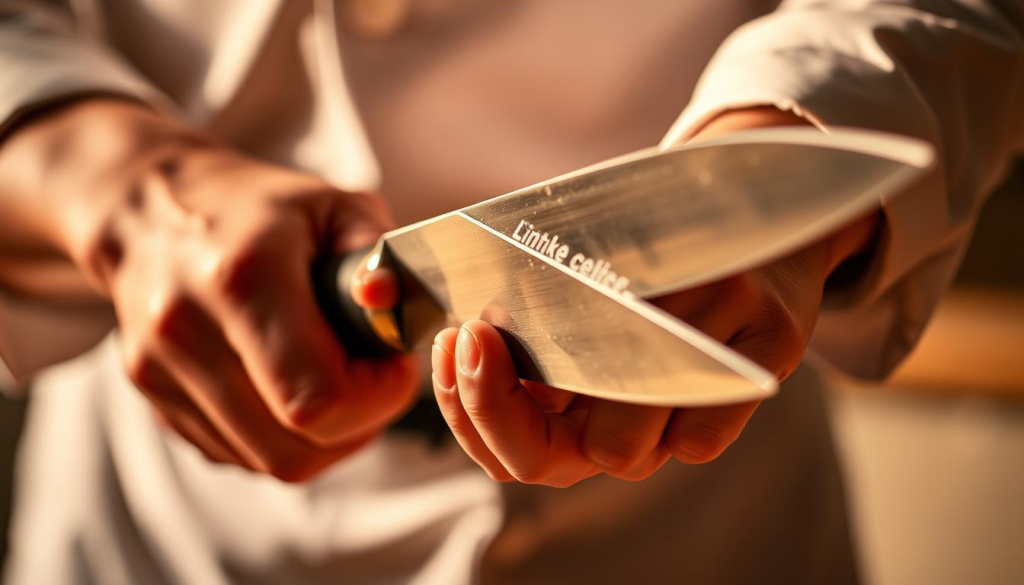
A proper grip is fundamental to safe and effective knife handling. There are several grip techniques, but the most common among professional chefs is the “pinch grip.” This involves pinching the blade between your thumb and index finger, with your other fingers wrapped around the handle. This grip provides control and stability, reducing the likelihood of accidents.
Key elements of a proper grip include:
- Firm but not overly tight hold on the handle
- Thumb and index finger pinching the blade for control
- Fingers curled under and out of the way of the blade
Safe Cutting Practices
Safe cutting practices are just as important as a proper grip. Always cut away from your body, keeping your fingers curled under and out of the blade’s path. Use a stable, flat surface for cutting, and ensure that the cutting board is secure and won’t move during use.
Additional safety tips include:
| Practice | Description | Benefit |
|---|---|---|
| Cutting away from the body | Prevents accidental cuts to the body | Reduces risk of injury |
| Using a stable cutting surface | Ensures the cutting board doesn’t move during use | Improves control and safety |
| Keeping fingers curled under | Protects fingers from the blade | Minimizes risk of cuts |
By combining proper grip techniques with safe cutting practices, you can significantly reduce the risk of accidents when using a chef knife. Regular practice and attention to these details will help you develop the skills and instincts needed for safe and effective knife handling.
Choosing the Right Chef Knife
Understanding the factors that influence the choice of a chef knife is key to optimal performance. The right chef knife can enhance your cooking experience by providing the optimal cutting angle, which is crucial for precise cuts and effective knife sharpening technique.
When it comes to selecting a chef knife, two critical factors to consider are the material and size of the knife.
Material Options: Steel vs. Ceramic
The material of your chef knife significantly affects its durability, sharpness, and overall performance. The two most common materials used for chef knives are steel and ceramic.
- Steel Knives: Known for their durability and ease of sharpening, steel knives are a popular choice among chefs. They can be made from various types of steel, such as stainless steel or high-carbon steel, each offering different benefits in terms of rust resistance and sharpness retention.
- Ceramic Knives: Ceramic knives are made from zirconium oxide and are known for their sharpness and resistance to corrosion. They are lightweight and maintain their sharpness well, but can be brittle and prone to chipping.
Size Matters: Length and Weight
The size of your chef knife, including its length and weight, plays a significant role in its usability and the optimal cutting angle it can achieve.
- Length: Chef knives come in various lengths, typically ranging from 8 to 12 inches. The length you choose should be based on your comfort and the tasks you perform most often. A longer knife can be more versatile, but may be more challenging to maneuver for those with smaller hands.
- Weight: The weight of the knife affects its balance and control. A well-balanced knife with a comfortable weight can reduce fatigue during extended use. Heavier knives can provide more power for chopping, but may be more tiring to use.
By considering these factors and choosing a knife that suits your needs, you can achieve a more optimal cutting angle and improve your overall knife sharpening technique.
Testing Your Knife Skills
To become proficient in the kitchen, it’s essential to test and refine your knife skills regularly. Achieving the perfect knife honing angle is crucial for precise cuts and efficient cooking.
Exercises to Improve Your Angle
Improving your knife skills requires consistent practice. Start with simple exercises like slicing through vegetables or chopping herbs to develop your technique. Focus on maintaining a consistent knife angle to achieve uniform cuts.
- Slice through a variety of vegetables to practice different cutting techniques.
- Chop herbs to improve your precision and control.
- Practice cutting on a stable surface to maintain safety.
Feedback from Experienced Chefs
Seeking feedback from experienced chefs can significantly enhance your knife skills. They can provide valuable insights into your technique, including your blade maintenance habits and how to improve your knife honing angle.
Consider taking a cooking class or working in a professional kitchen to gain hands-on experience and receive constructive feedback on your skills.
Conclusion: Finding Your Perfect Knife Angle
Mastering the perfect chef knife angle is a crucial step in elevating your kitchen knife skills and enhancing your overall cooking experience. By understanding the importance of knife angle and practicing different techniques, you can achieve precision cuts that make a significant difference in your culinary creations.
Precision in Cooking
Achieving the ideal chef knife angle allows for more precise cuts, which is essential for both presentation and cooking consistency. Whether you’re slicing vegetables, chopping herbs, or preparing meat, the right angle ensures that your ingredients are prepared evenly, impacting the overall quality of your dishes.
Experimenting with Angles
As you continue to hone your kitchen knife skills, don’t be afraid to experiment with different chef knife angles to find what works best for you. The versatility of using various angles can help you tackle a wide range of cooking tasks with confidence and precision.