Sharpening your Shun knives is an art that requires precision and the right technique to achieve a razor-sharp edge. The correct sharpening angle is crucial for optimal performance and to maintain the longevity of your blades.
Finding the perfect angle for Shun knives can be challenging, but with expert tips, you can sharpen your knives like a pro. The key is to understand the optimal sharpening angle that works best for your specific knife.
Key Takeaways
- Understand the importance of the correct sharpening angle for Shun knives.
- Learn expert tips for sharpening Shun knives like a professional.
- Discover the optimal sharpening angle for your specific Shun knife.
- Improve your sharpening technique for better performance.
- Maintain the longevity of your Shun knives with proper sharpening.
Understanding the Importance of Knife Angle
To sharpen your Shun knives effectively, it’s essential to comprehend the role of the knife angle. The angle at which you sharpen your knife significantly impacts its performance and longevity.
What is Knife Angle?
The knife angle refers to the angle between the blade and the sharpening stone. When sharpening, it’s critical to make sure the knife is sharpened at the correct angle, typically around 16° for many high-quality knives, including Shun.
Why Angle Matters for Performance
The angle at which a knife is sharpened affects its sharpness, durability, and overall performance. A correct angle ensures that the knife is sharpened evenly and effectively, maintaining its cutting efficiency and prolonging its lifespan.
| Angle | Sharpness | Durability |
|---|---|---|
| Too Acute | Very Sharp | Less Durable |
| Too Obtuse | Less Sharp | More Durable |
| Optimal (16°) | Sharp | Durable |
Understanding and maintaining the optimal knife sharpener angle is crucial for Shun knife maintenance. It ensures that your knives remain in top condition, providing the best possible cutting performance.
Recommended Angle for Shun Knives
To get the most out of your Shun knives, it’s crucial to sharpen them at the recommended angle. Shun knives are designed to perform optimally when sharpened at a specific angle, which is a key factor in their cutting performance and longevity.
The recommended angle for sharpening Shun knives is typically 16°. This angle is not arbitrary; it’s the result of careful design and engineering to ensure that the knife cuts efficiently and effectively. Sharpening at this angle helps maintain the knife’s edge and prevents unnecessary wear.
Standard Sharpening Angles
For most Shun knives, a 16° angle is standard. This applies to a wide range of their products, from chef’s knives to paring knives. The consistency in sharpening angle across their product line simplifies the sharpening process for users.
Variations by Knife Type
While 16° is the standard, there are variations depending on the specific type of knife and its intended use. For example, some specialty knives might require a slightly different angle to optimize their performance. It’s essential to consult the manufacturer’s guidelines for specific recommendations.
| Knife Type | Recommended Sharpening Angle |
|---|---|
| Chef’s Knife | 16° |
| Paring Knife | 16° |
| Specialty Knives | Varies (check manufacturer’s guide) |
Understanding these nuances is crucial for maintaining your Shun knives. Whether you’re a professional chef or an avid home cook, sharpening your knives correctly is vital for their performance and longevity.
Tools Needed for Sharpening Shun Knives
Achieving a professional knife sharpening angle for your Shun knives starts with the right equipment. Sharpening your knives effectively requires more than just technique; it demands the correct tools to maintain the precise knife sharpening angle that Shun knives are known for.
Best Sharpening Stones
The foundation of sharpening any high-quality knife, including Shun knives, lies in using the best sharpening stones. These stones come in various grits, from coarse to fine, and are essential for establishing and maintaining the optimal sharpening angle. For Shun knives, it’s recommended to start with a medium-grit stone (around 1000 grit) to repair the edge, then progress to finer grits (up to 6000 or 8000 grit) for polishing and refining the edge.
Choosing the right sharpening stone is crucial. Water stones and oil stones are the most common types. Water stones are known for their ability to sharpen quickly and are typically used with water as a lubricant. Oil stones, on the other hand, use oil and are prized for their ability to produce a highly polished edge.
“To hone, align the flat side of the blade with the 16° angle guide on the hand guard of your Shun honing steel.”
Using a Honing Steel
A honing steel is not a sharpening tool per se, but rather a tool used to maintain the edge of your knife between sharpenings. It realigns the microscopic teeth of the blade, ensuring that the knife remains sharp and performs optimally. To use a honing steel effectively, hold it vertically with the tip on a stable surface. Then, draw the knife down the steel at the same angle you wish to maintain, typically around 16° for Shun knives.
Regular honing not only keeps your knife sharp but also helps in maintaining the precise angle that is crucial for the knife’s performance. It’s a simple process that can be done frequently, unlike sharpening, which removes metal from the blade.
Preparing Your Workspace
Sharpening your Shun knives requires more than just the right tools; it demands a properly set up workspace. A well-organized workspace not only enhances your sharpening experience but also ensures safety and efficiency. Before you begin, make sure you have a clean, stable, and distraction-free area.
Setting Up a Safe Sharpening Area
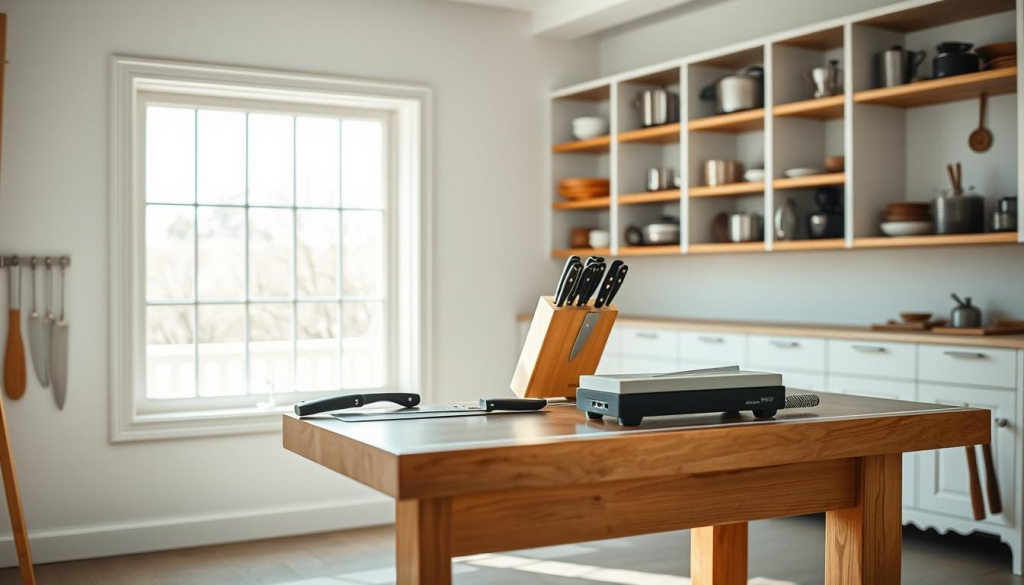
To set up a safe sharpening area, start by clearing a flat surface, such as a countertop or table. Ensure the surface is stable and won’t move around while you’re sharpening. It’s also crucial to have good lighting; natural light is ideal, but if that’s not possible, invest in a high-quality lamp.
Safety Tips:
- Keep children and pets away from the sharpening area.
- Ensure the area is well-ventilated.
- Avoid distractions like TV or loud music.
Essential Materials to Have On Hand
Having the right materials within reach can make the sharpening process smoother. Here are some essentials to have on hand:
- A sharpening stone or whetstone suitable for Shun knives.
- A honing steel for maintaining the knife’s edge between sharpening sessions.
- A cloth or towel for cleaning the knife.
- A container of water for cooling the knife and sharpening stone.
As recommended by experts, before using your Shun knives for the first time, clean them with hot water to remove any manufacturing residue. This simple step ensures your knives are ready for use and helps maintain their quality over time.
“A sharp knife is a safe knife, and a well-maintained workspace is the first step towards achieving that sharpness.”
By following these guidelines, you’ll be well on your way to creating an ideal workspace for sharpening your Shun knives, ensuring you achieve the perfect angle and maintain your knives effectively.
How to Determine Your Knife’s Current Angle
Knowing the current angle of your Shun knife is vital for optimal sharpening results. To achieve the best knife sharpening angle, you first need to determine the existing angle of your knife.
There are two effective methods to determine your knife’s current angle: using a protractor and performing the paper test. Both methods provide a straightforward way to assess the angle and make necessary adjustments for sharpening.
Using a Protractor
A protractor is a precise tool for measuring angles. To use a protractor to determine your knife’s angle, follow these steps:
- Place the protractor on a flat surface.
- Align the blade of your knife with the protractor’s edge, ensuring it’s flat against the surface.
- Read the angle measurement on the protractor where the knife’s bevel intersects.
- Take note of the angle to adjust your sharpening technique accordingly.
The Paper Test
The paper test is a simple, practical method to estimate your knife’s angle. Here’s how to perform it:
- Hold a sheet of paper firmly on a flat surface.
- Slowly draw the knife across the paper, moving it in the direction you normally use for cutting.
- Observe the angle at which the knife starts to cut the paper effectively. This can give you an indication of its current sharpness and angle.
- Adjust your sharpening angle based on the performance of the knife on the paper.
By using either a protractor or the paper test, you can effectively determine your Shun knife’s current angle and adjust it to achieve the knife sharpener angle that works best for you.
Sharpening Techniques for Shun Knives
The art of sharpening Shun knives involves understanding various techniques and tools. Sharpening is not just about maintaining the knife’s edge but also about enhancing its performance. A well-sharpened knife is a joy to use and makes cooking more efficient.
Traditional vs. Electric Sharpeners
When it comes to sharpening Shun knives, you have the option of using traditional sharpening stones or electric sharpeners. Traditional sharpening stones offer control and precision, allowing you to manually adjust the sharpening angle. This method is preferred by many professionals as it provides a high level of customization.
On the other hand, electric sharpeners are convenient and easy to use. They are particularly useful for those who are new to sharpening knives or prefer a quick method. However, they may not offer the same level of precision as traditional methods.
Manual Sharpening Methods
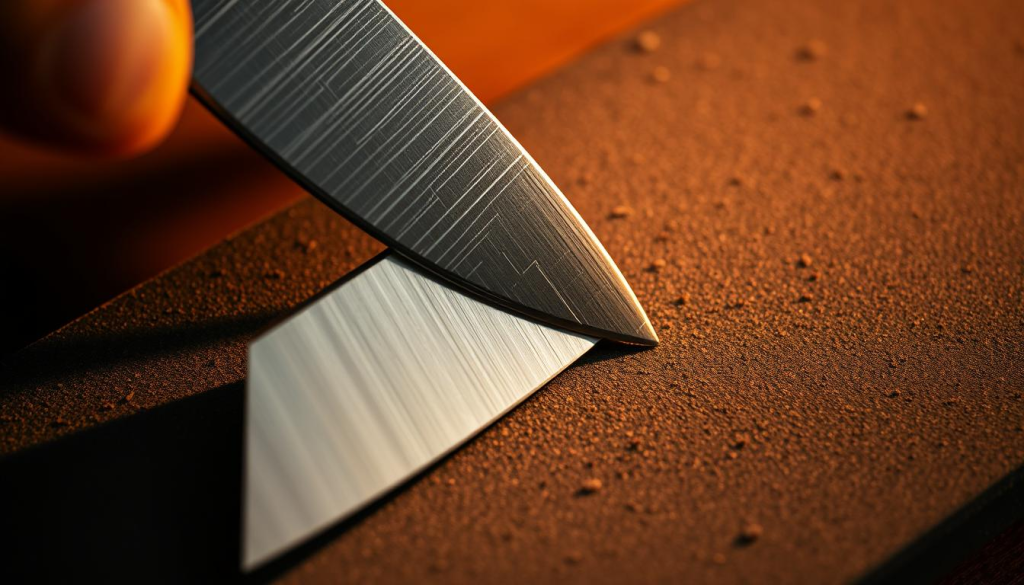
Manual sharpening methods, such as using a whetstone, are highly recommended for Shun knives. The Shun 3-Piece Sharpening Set is a great tool for this purpose, as it includes a base that helps maintain the correct sharpening angle. Learning to use a whetstone effectively can significantly improve your knife sharpening skills.
To sharpen your Shun knife manually, start by preparing your whetstone. Soak it in water for about 10-15 minutes before use. Then, place your knife on the stone at the desired angle and gently draw it across the stone in a smooth motion. Repeat this process several times, checking the edge of your knife regularly.
By mastering manual sharpening techniques, you can achieve a precise knife sharpening angle that enhances the performance of your Shun knives.
Step-by-Step Guide to Sharpening
To get the perfect angle for your Shun knives, follow this step-by-step sharpening guide. Sharpening your Shun knives is a straightforward process that requires some preparation and the right technique.
Preparing the Knife
Before you start sharpening, it’s essential to prepare your knife and sharpening stone. Begin by soaking your whetstone in water for about 10 minutes. This step is crucial as it ensures the stone is properly saturated, allowing for a smoother sharpening process.
Next, inspect your Shun knife for any debris or residue. Clean the knife with mild soap and dry it thoroughly. This preparation helps prevent any unwanted particles from interfering with the sharpening process.
Sharpening Process Overview
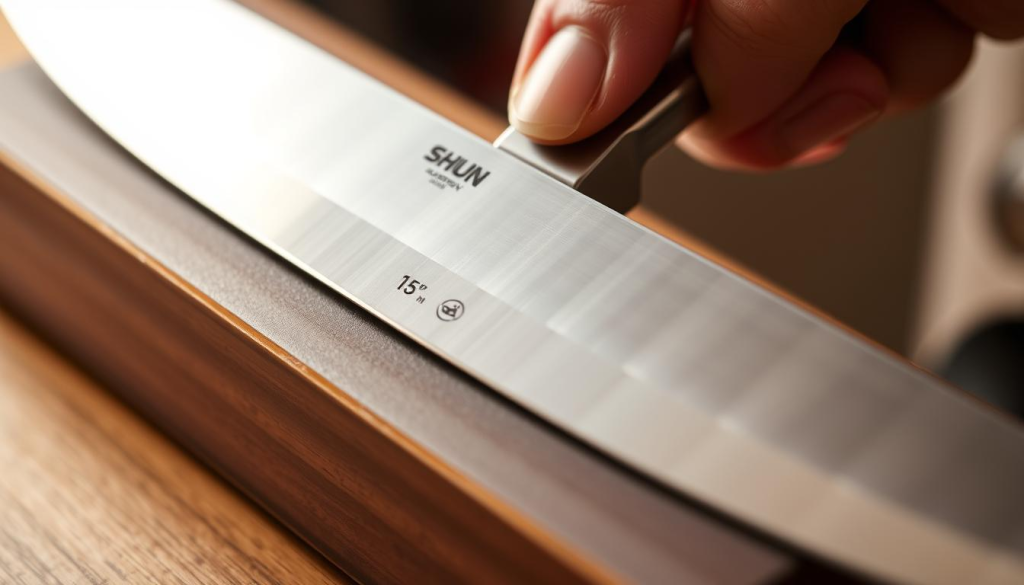
The sharpening process involves holding your Shun knife at the correct angle and drawing it across the whetstone. For Shun knives, maintaining the optimal blade angle is crucial for achieving a sharp edge.
To sharpen, place the knife on the stone with the edge facing away from you. Hold the knife at the desired angle, typically around 16 degrees for Shun knives, and gently draw it across the stone. Repeat this process several times, checking your progress and adjusting as necessary.
It’s essential to maintain a consistent angle for Shun knives throughout the sharpening process. This consistency ensures an even sharpening and prevents uneven wear on the blade.
By following these steps and maintaining the correct Shun knife blade angle, you’ll be able to achieve a razor-sharp edge on your knives. Regular sharpening not only improves performance but also extends the life of your Shun knives.
Maintaining the Right Angle
The key to sharpening your Shun knives effectively lies in maintaining the optimal angle. This ensures that your knives remain sharp and perform at their best. Maintaining the right angle is not just about the sharpening process itself, but also about how you position your hands and the techniques you use.
Hand Positioning Tips
Proper hand positioning is crucial for maintaining the optimal knife sharpener angle. To achieve this, you need to be mindful of how you’re holding both the knife and the sharpening tool. For instance, when using a honing steel, hold it vertically with the tip resting on your chopping board. This provides a stable base that helps you maintain the correct angle as you sharpen your knife.
It’s also important to keep your hands steady and move the knife smoothly along the steel. Practice makes perfect, so take your time to get comfortable with this motion. Here are some additional tips to keep in mind:
- Keep your sharpening stone or steel stable and secure.
- Move the knife, not the sharpening stone or steel.
- Use light pressure; applying too much pressure can damage the knife.
Common Mistakes to Avoid
Even experienced cooks can make mistakes when sharpening their knives. One common error is not maintaining a consistent angle, which can lead to uneven sharpening. Another mistake is using too much pressure, which can damage the edge of the knife. To avoid these pitfalls, it’s essential to be patient and take your time when sharpening.
Here are some additional mistakes to watch out for:
- Not checking the knife’s angle before sharpening.
- Using a sharpening tool that’s not suitable for your knife.
- Sharpening too frequently, which can wear down the knife unnecessarily.
By being aware of these common mistakes and taking steps to avoid them, you can maintain the optimal optimal sharpening angle for your Shun knives and keep them in top condition.
Honing Your Knife Between Sharpening
Honing is a vital step in Shun knife maintenance that ensures your knife remains sharp and effective. While sharpening removes metal to create a new edge, honing realigns the existing edge, maintaining the knife’s sharpness.
What is Honing?
Honing involves using a honing steel to realign the microscopic teeth on the blade’s edge. This process straightens out any rolled or bent edges, ensuring the knife cuts smoothly and efficiently. According to experts, honing straightens out a rolled edge, which is a common issue that can make a knife appear dull.
Unlike sharpening, which is done less frequently, honing can be performed regularly between sharpening sessions. It’s a quick and simple process that can significantly extend the life of your Shun knife’s edge.
When to Hone Your Knife
You should hone your Shun knife before or after each use, depending on how frequently you use it. If you notice your knife is not cutting as smoothly as it should, it’s likely time to hone it. Regular honing maintains the optimal sharpening angle guide for Shun knives, ensuring they perform at their best.
To incorporate honing into your routine, consider honing your knife every few days if you use it daily. For less frequent use, hone it before its next use to ensure it’s ready when you need it.
Recognizing When Your Knife Needs Sharpening
Recognizing the signs that your Shun knife needs sharpening can elevate your cooking experience. A sharp knife is not just a tool; it’s a crucial element in preparing meals with precision and safety.
Signs of a Dull Knife
If you notice reduced performance or micro corrosion on the edge or blade, it’s time to sharpen your knife. A dull knife requires more force, increasing the risk of accidents. Signs include:
- Tearing or ripping food instead of cutting cleanly
- Increased pressure needed to make cuts
- A visible dull edge or corrosion
As noted by experts, “A dull knife is more dangerous than a sharp one because it requires more force, increasing the likelihood of losing control.”
“A dull knife is more dangerous than a sharp one.”
Testing Your Knife’s Sharpness
To determine if your Shun knife needs sharpening, you can perform a simple test. Try cutting through a piece of paper or a tomato. If the knife glides through smoothly, it’s sharp. If it struggles or tears the material, it’s likely dull.
Maintaining the precise knife sharpening angle is crucial for achieving a sharp edge. Professionals often recommend a specific professional knife sharpening angle for different types of knives.
By regularly checking your knife’s sharpness and sharpening it when necessary, you can ensure optimal performance and extend the life of your Shun knife.
Safe Knife Handling Practices
Safe handling of Shun knives is essential to prevent accidents and maintain their longevity. Proper handling techniques not only ensure your safety in the kitchen but also contribute to the overall performance and lifespan of your knives.
How to Hold Your Shun Knife Properly
Holding a Shun knife correctly is fundamental to safe and effective use. The pinch grip, where you hold the blade between your thumb and index finger, is recommended. This grip provides control over the knife and helps prevent accidents.
When holding your Shun knife, ensure your grip is firm but not overly tight. Your thumb and index finger should be on either side of the blade, with your other fingers wrapped around the handle. Always keep your fingers curled under and out of the blade’s path.
Always wipe the knife with a towel or cloth from the blade’s back towards the edge to maintain cleanliness and safety.
Storing Your Knives Safely
Proper storage is crucial for maintaining the safety and quality of your Shun knives. Using a knife block or a magnetic strip is recommended.
When storing your knives, ensure they are clean and dry. A knife block with slots can keep your knives organized and within reach while protecting the blades. Alternatively, a magnetic strip mounted on a wall or under a cabinet can store your knives safely.
| Practice | Description | Benefit |
|---|---|---|
| Pinch Grip | Hold the blade between thumb and index finger | Control and Safety |
| Proper Storage | Use a knife block or magnetic strip | Protects Blades and Prevents Accidents |
| Cleaning | Wipe from back towards the edge | Maintains Sharpness and Safety |
By following these safe handling practices, you can enjoy using your Shun knives while maintaining their performance and longevity.
FAQs About Shun Knife Sharpening
Sharpening your Shun knives can seem daunting, but understanding the basics can make a significant difference. Here, we address some frequently asked questions to help you maintain your knives effectively.
Sharpening Frequency
Sharpening removes metal from the blade, so it’s essential to sharpen your knife only when necessary. The frequency depends on usage, but a general rule is to sharpen when you notice a decrease in performance. For most users, this means sharpening every few months.
Using the Right Sharpener
When it comes to sharpening your Shun knife, using the right sharpener is crucial. While a regular sharpener might seem like a convenient option, it’s not recommended as it may not provide the precise knife sharpener angle required for optimal performance. Instead, opt for a sharpener specifically designed for high-carbon knives like Shun, ensuring the best knife sharpening angle is maintained. For a detailed sharpening angle guide for Shun knives, refer to the manufacturer’s guidelines or consult with a professional.