Every home cook knows that a sharp and well-maintained chef’s knife is the backbone of a great kitchen. It’s not just about cutting ingredients; it’s about creating culinary masterpieces with precision and ease.
The blade angle of a chef’s knife plays a crucial role in its performance. A well-crafted blade angle ensures effortless slicing, making a significant difference in cooking experiences. Understanding the importance of this angle is key to unlocking the full potential of your knife.
Key Takeaways
- The right blade angle is crucial for effortless slicing and precision.
- A well-maintained chef’s knife elevates cooking experiences.
- The optimal blade angle enhances the durability of the knife.
- Understanding blade angle importance improves cooking techniques.
- A sharp knife with the perfect blade angle is a kitchen essential.
Understanding the Importance of Blade Angle
For chefs and cooking enthusiasts, grasping the concept of blade angle is vital for achieving optimal slicing results. The blade angle, which is the angle between the blade and the sharpening stone, significantly influences a knife’s sharpness and durability.
What is Blade Angle?
The blade angle refers to the angle at which the blade is sharpened relative to the sharpening stone. A steeper angle results in a sharper edge, but it is also more prone to chipping and dulling. Conversely, a more obtuse angle produces a duller edge that is more durable.
How Blade Angle Affects Performance
The performance of a knife is directly related to its blade angle. For instance, Japanese knives, which typically have a more acute angle (around 10-15 degrees per side), are renowned for their sharpness and are ideal for precise cutting tasks. In contrast, Western knives, with a wider angle (around 20-25 degrees per side), are more durable and better suited for heavy-duty chopping.
The Role of Knife Geometry
Knife geometry, including the blade angle, plays a crucial role in determining the overall performance of a knife. The geometry affects how the knife interacts with the material being cut, influencing both the cutting efficiency and the longevity of the edge.
| Knife Type | Typical Blade Angle (per side) | Characteristics |
|---|---|---|
| Japanese Knives | 10-15 degrees | Sharp, precise, prone to chipping |
| Western Knives | 20-25 degrees | Durable, less sharp, suitable for heavy-duty tasks |
Understanding the importance of blade angle and knife geometry can help chefs and cooks choose the right knife for their needs and maintain their knives effectively.
Common Blade Angles Explained
The precision of a chef knife is largely dependent on its blade angle. The blade angle, which is the angle between the blade’s bevel and the knife’s centerline, significantly affects a knife’s performance and usability.
Japanese Knives vs. Western Knives
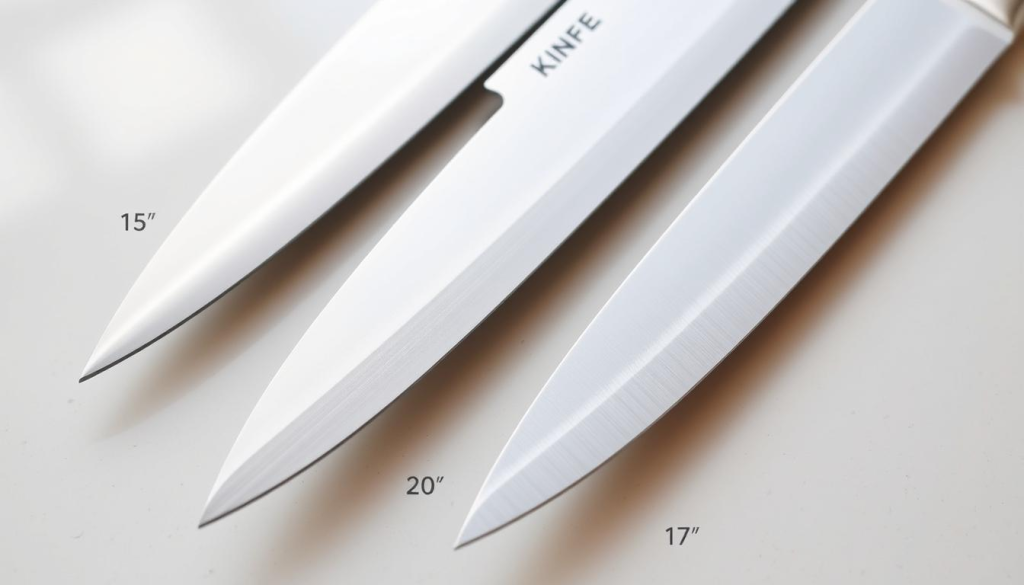
One of the primary distinctions in blade angles is between Japanese and Western-style knives. Japanese knives typically have a more acute angle, ranging from 10 to 15 degrees, which allows for sharper cuts and is ideal for delicate ingredients. In contrast, Western-style knives usually have a wider angle, between 15 to 20 degrees, making them more durable and suitable for heavier tasks.
Popular Blade Angles for Chef Knives
Different blade angles are suited for various tasks. For instance, a blade angle of 20 degrees is common among brands like Wusthof, Zwilling, and Dalstrong, offering a balance between sharpness and durability. For more precise cutting, a narrower angle may be preferred, while a wider angle can provide additional strength.
| Knife Type | Blade Angle (degrees) | Characteristics |
|---|---|---|
| Japanese Chef Knife | 10-15 | Sharp, precise, ideal for delicate cuts |
| Western Chef Knife | 15-20 | Durable, versatile, suitable for heavy-duty tasks |
| Specialty Knife | Varies | Designed for specific tasks, such as filleting or chopping |
Specialty Knives and Their Angles
Specialty knives, designed for specific tasks like filleting or chopping, often have unique blade angles tailored to their intended use. For example, a fillet knife may have a very acute angle for smooth, precise cuts through fish.
Understanding the ideal blade angle for your chef knife can significantly enhance your cutting experience. Whether you’re preparing delicate dishes or chopping through tougher ingredients, the right blade angle can make all the difference.
Factors Affecting Your Choice of Blade Angle
The choice of blade angle is not a one-size-fits-all decision; it depends on several key factors that influence the performance and durability of your chef knife. Understanding these factors is crucial for making an informed decision that suits your cooking needs.
Type of Food Preparation
The type of food you prepare most often plays a significant role in determining the ideal blade angle. For instance, if you’re frequently cutting through tough or hard foods, a slightly higher angle might be preferable for added durability. On the other hand, if your work involves delicate slicing, a lower angle can provide the sharpness needed for precise cuts.
- Dense foods: Higher angles (around 20-22 degrees) for durability.
- Delicate foods: Lower angles (around 15-17 degrees) for sharpness.
Personal Cutting Style
Your personal cutting style is another critical factor. If you’re someone who applies a lot of pressure while cutting, you’ll benefit from a more durable edge, which means a slightly higher blade angle. Conversely, if you use a light touch, you can opt for a sharper edge with a lower angle.
It’s also worth considering your comfort level with sharpening and maintaining your knife. A more acute angle may require more frequent sharpening, which could be a factor in your decision.
Knife Material and Design
The material and design of your knife also influence the optimal blade angle. For example, knives made from harder materials can maintain a sharper edge at a lower angle, while softer materials might require a slightly higher angle to prevent excessive wear.
When choosing a blade angle, it’s essential to consider the interplay between these factors. By understanding how the type of food preparation, your personal cutting style, and the knife’s material and design interact, you can make a more informed decision that enhances your cooking experience.
How to Measure Blade Angle Accurately
The blade angle of a chef knife is a critical factor that determines its slicing efficiency. Measuring this angle accurately is essential for optimal performance and longevity of the knife.
Tools for Measuring Knife Angles
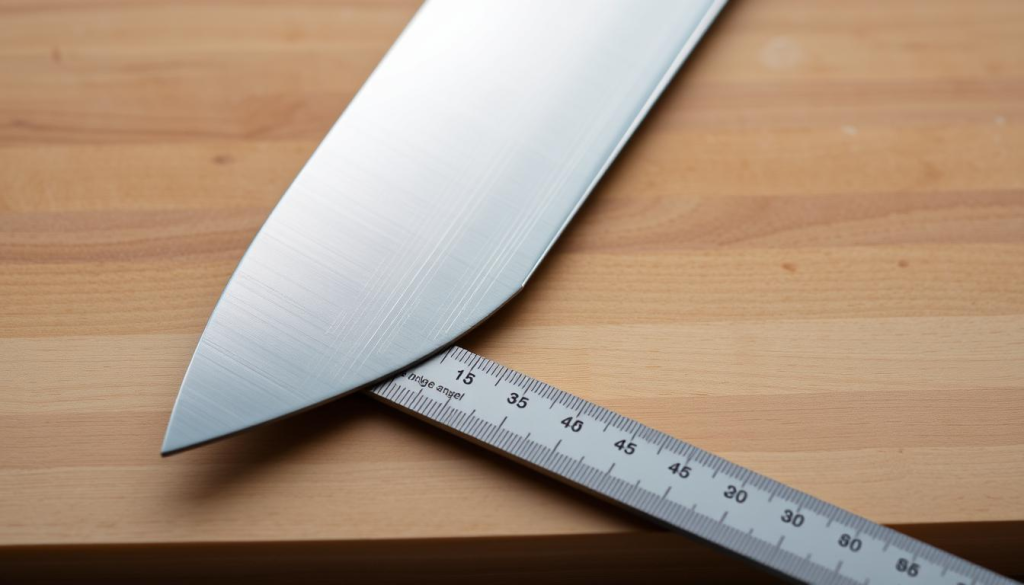
To measure the blade angle accurately, you will need the right tools. A digital angle measurer or a protractor can be used for this purpose. These tools provide a precise measurement of the angle between the blade and the sharpening stone.
Another useful tool is a Sharpie. By coloring the bevel of the blade with a Sharpie and then sharpening it, you can visually identify the correct angle as the Sharpie marks are worn off during the sharpening process.
Step-by-Step Measurement Process
Here’s a step-by-step guide to measuring the blade angle:
- Place the knife on a flat surface.
- Position the digital angle measurer or protractor against the blade.
- Take note of the angle reading.
- Repeat the process on the other side of the blade to ensure symmetry.
Tips for Ensuring Precision
To ensure precision when measuring the blade angle, follow these tips:
- Use a high-quality digital angle measurer for accurate readings.
- Ensure the knife is clean and dry before measurement.
- Take multiple readings to confirm consistency.
| Tool | Description | Precision Level |
|---|---|---|
| Digital Angle Measurer | Electronic tool for precise angle measurement | High |
| Protractor | Manual tool for measuring angles | Medium |
| Sharpie | Visual aid for identifying sharpening angle | Low |
The Impact of Blade Angle on Sharpness
Achieving the perfect cut starts with understanding how the blade angle impacts the sharpness of your knife. The sharpness of a knife is not just about how it feels when cutting, but it’s also about the angle that makes it effective.
How Angle Influences Edge Retention
The angle of a knife’s blade directly affects its edge retention. A lower blade angle (below 20 degrees) provides extraordinary sharpness, making it ideal for delicate tasks such as slicing vegetables or filleting fish. However, this comes with a trade-off: lower durability. On the other hand, a higher angle (above 25 degrees) results in a more durable edge but may compromise on sharpness.
For most kitchen tasks, a 20-degree sharpening angle is considered a great starting point. This angle offers a balance between sharpness and durability, making it suitable for a variety of cutting tasks.
https://www.youtube.com/watch?v=wFs1HDl9AQk
Balancing Sharpness and Durability
Finding the right balance between sharpness and durability is crucial for a chef knife. While a sharper knife is more effective, it’s also more prone to damage. The key is to identify the optimal angle that meets your specific needs.
For instance, if you’re primarily involved in fine dining or precision cutting, a lower angle might be more suitable. Conversely, if you’re handling tougher ingredients or using your knife for chopping, a slightly higher angle could be more beneficial.
Maintaining the Optimal Angle
Maintaining the optimal blade angle is essential for ensuring the longevity and performance of your knife. Regular sharpening and proper storage are critical practices. It’s also important to understand the type of steel used in your knife, as this can affect how well it holds its edge.
- Regularly sharpen your knife to maintain the optimal angle.
- Store your knife properly to prevent damage.
- Consider the type of steel used in your knife when determining maintenance needs.
Adjusting Your Knife’s Blade Angle
To get the most out of your chef knife, understanding how to adjust its blade angle is essential. The blade angle is a critical factor that influences the knife’s performance, sharpness, and durability. Adjusting this angle can help tailor the knife to your specific needs, whether you’re a professional chef or a home cook.
When to Change the Angle
Knowing when to adjust your knife’s blade angle is crucial. If you find that your knife is not performing as well as it used to, or if you’ve changed your cutting style, it might be time to reprofile the edge. Additionally, if you’re switching between different types of cuisine that require specific cutting techniques, adjusting the blade angle can be beneficial.
Signs that your knife needs an angle adjustment include:
- Difficulty in slicing through certain materials
- Increased effort required for cutting
- Visible wear or damage on the blade edge
Techniques for Reprofiling Edges
Reprofiling the edge of your knife involves changing the angle at which the blade is sharpened. This can be done using various sharpening tools, such as whetstones or sharpening steels. The key is to maintain consistency in the angle to achieve a sharp, even edge.
A simple technique for reprofiling involves:
- Selecting the appropriate sharpening tool
- Setting the desired angle
- Sharpening the blade with smooth, consistent strokes
Professional vs. At-Home Adjustments
While some chefs prefer to have their knives adjusted by professionals, others are comfortable doing it themselves at home. Professional sharpening services can provide precise adjustments and are particularly useful for high-end or specialty knives.
| Adjustment Type | Pros | Cons |
|---|---|---|
| Professional | High precision, expertise | Cost, reliance on service |
| At-Home | Convenience, cost-effective | Requires skill, potential for error |
If you’re happy with your knife’s performance before it needed sharpening, matching the existing angle is a great option. Experiment by slightly raising or lowering the angle until you discover the perfect fit for your needs.
Choosing the Right Chef Knife for Your Needs
Finding the perfect chef knife involves more than just aesthetics; it’s about understanding the blade angle for kitchen knives and how it impacts your cooking experience. The blade angle is a critical factor that determines the knife’s performance, sharpness, and durability.
Factors to Consider When Selecting a Knife
When choosing a chef knife, several factors come into play. The type of cuisine you prepare most often, your personal cutting style, and the knife’s material and design all influence your decision. For instance, if you primarily prepare Japanese cuisine, a knife with a more acute blade angle might be preferable.
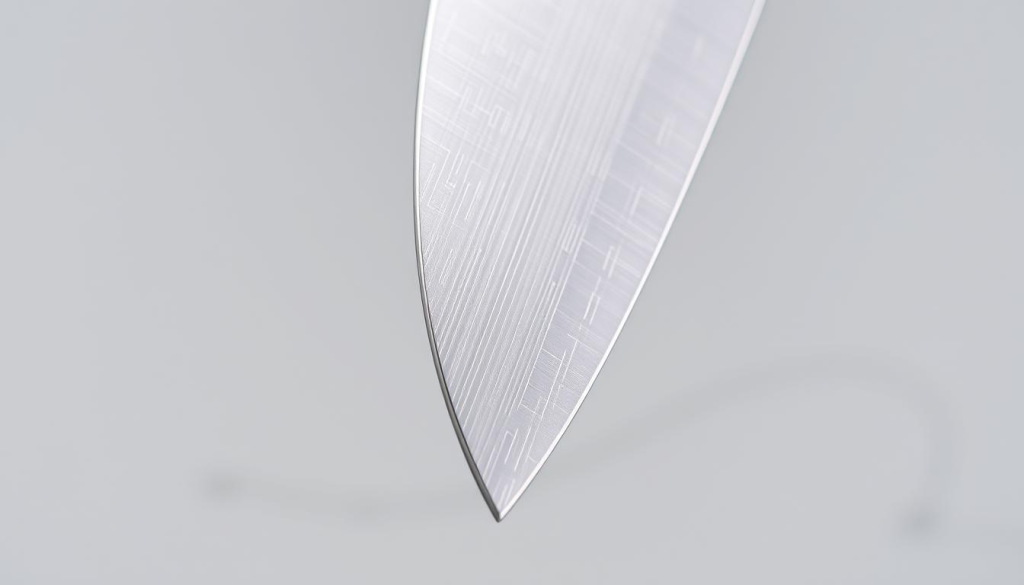
The importance of blade angle in chef knives cannot be overstated. A knife with the appropriate blade angle will make chopping, slicing, and dicing easier and more efficient. For example, a chef knife with a 15-degree edge angle per side is ideal for delicate tasks, while a 20-degree angle is more durable for heavy-duty chopping.
Comparisons of Different Knife Brands
Different knife brands offer varying blade angles and geometries. For example, Misen knives combine a 15-degree edge angle with AUS10 high-carbon steel, providing both sharpness and durability. Understanding these differences is key to selecting the right knife for your needs.
| Brand | Blade Angle | Material | Best For |
|---|---|---|---|
| Misen | 15 degrees | AUS10 high-carbon steel | Precision cutting |
| Wüsthof | 20 degrees | High-carbon stainless steel | Heavy-duty chopping |
| Shun | 16 degrees | High-carbon steel | Delicate slicing |
Recommendations Based on Cooking Style
If you’re a home cook who values versatility, a knife with a balanced blade angle (around 18-20 degrees) would be suitable. For professional chefs or those who specialize in specific cuisines, a knife tailored to those needs might be more appropriate.
Understanding chef knife blade geometry is essential for making an informed decision. Whether you’re chopping vegetables, slicing meat, or mincing herbs, the right blade angle enhances your performance and reduces fatigue.
Maintaining Your Knife’s Ideal Blade Angle
A well-maintained blade angle is key to ensuring your knife remains sharp and efficient. The chef knife blade angle plays a significant role in the overall performance of the knife, affecting both its sharpness and durability.
To maintain the ideal blade angle, it’s essential to understand the proper techniques for sharpening and caring for your knife. A sharp knife is not only more effective but also safer to use, as it requires less force and is less likely to slip.
Sharpening Techniques for Different Angles
Different blade angles require specific sharpening techniques. For instance, a 20-degree blade angle is common for many Western knives, while a 15-degree angle is typical for Japanese knives. Both angles require careful sharpening to maintain their effectiveness.
When sharpening, it’s crucial to maintain the original blade angle to ensure optimal performance. Using a sharpening stone or whetstone can help achieve the correct angle. For a best blade angle for slicing, maintaining a consistent angle is key.
Best Practices for Knife Care
Caring for your knife involves more than just sharpening. It’s also about storing it properly, cleaning it after use, and avoiding cutting on hard surfaces. These practices help maintain the ideal blade angle for cutting ingredients and extend the life of your knife.
- Store your knife in a dry place, away from other utensils that could damage it.
- Clean your knife immediately after use to prevent residue from hardening on the blade.
- Avoid cutting on hard surfaces like stone or metal, as this can damage the edge.
Common Mistakes to Avoid
One common mistake is using the wrong sharpening technique, which can alter the blade angle and affect the knife’s performance. Another mistake is not sharpening regularly, leading to a dull knife that requires more force to cut, increasing the risk of accidents.
By avoiding these mistakes and following best practices, you can maintain your knife’s ideal blade angle and ensure it remains a valuable tool in your kitchen.
Conclusion: Finding Your Perfect Blade Angle
Understanding the optimal blade angle for your chef knife is crucial for effortless slicing and precise cutting. By grasping the importance of blade angle in chef knives, you can significantly enhance your cooking experience.
Key Takeaways
The type of food preparation, personal cutting style, and knife material are critical factors in determining the ideal blade angle. Measuring and adjusting the blade angle accurately is vital for achieving the desired sharpness and durability.
Experimenting with Your Blade Angle
To find the perfect blade angle, it’s essential to experiment and personalize it according to your needs. Learning how to choose the right blade angle can make a significant difference in your cooking.
Enhancing Your Cooking Experience
Using the right blade angle can elevate your cooking to a new level. With a properly angled knife, you’ll be able to slice, dice, and chop with precision, making cooking more enjoyable and efficient.