Cooking is an art that requires precision, skill, and the right tools. High-quality Japanese knives have become a staple in kitchens worldwide, celebrated for their exceptional craftsmanship and sharpness.
These authentic Japanese kitchen knives are designed to provide versatility and precision, making them a valuable addition to any kitchen. Whether you’re a professional chef or a home cook, using the right knife can elevate your cooking experience.
Key Takeaways
- Exceptional craftsmanship and sharpness of Japanese knives
- Versatility in cooking with high-quality knives
- Elevate your cooking experience with the right tools
- A valuable addition to any kitchen, for professionals and home cooks alike
- Precision and skill in cooking with authentic Japanese knives
What Makes Japanese Chef Knives Unique?
The uniqueness of Japanese chef knives lies in their rich history, meticulous craftsmanship, and high-quality materials. These knives are not just tools for cooking; they embody the spirit of Japanese culinary art.
Craftsmanship and Tradition
Japanese chef knives are often handmade using traditional techniques that have been passed down through generations. Artisans spend years perfecting their craft, ensuring that each knife meets the highest standards of quality and performance. The process involves careful selection of materials, precise forging, and meticulous sharpening.
High-Quality Materials
The excellence of Japanese chef knives is largely attributed to the high-quality materials used in their construction. Common materials include:
- Carbon steel, known for its sharpness and edge retention
- Stainless steel, valued for its durability and resistance to corrosion
- Damascus steel, prized for its distinctive pattern and exceptional performance
Each material has its unique benefits, and the choice often depends on the intended use and personal preference.
Blade Design and Functionality
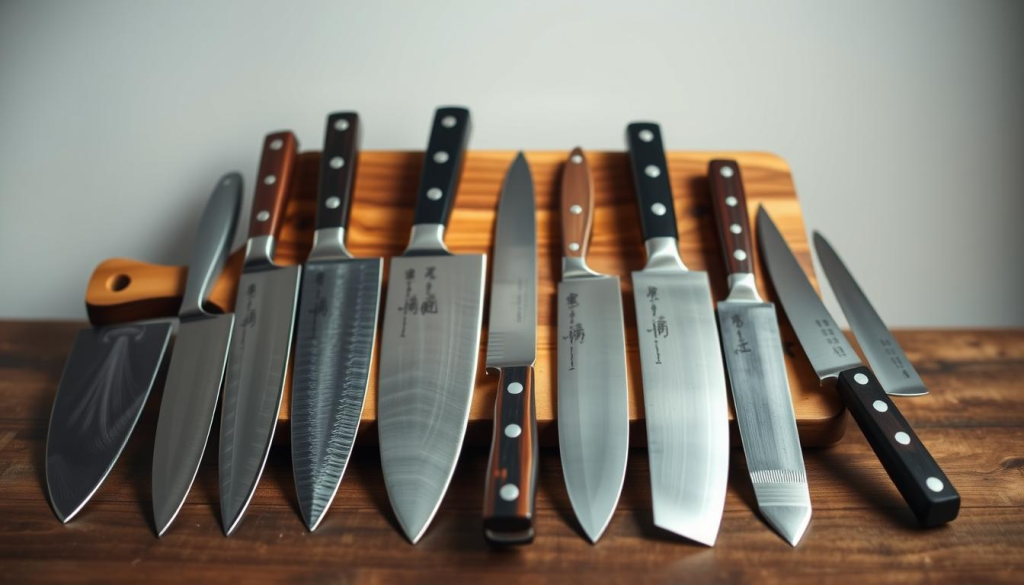
The design and functionality of Japanese chef knives are tailored to specific culinary tasks. For instance, the Santoku knife is versatile and ideal for chopping, slicing, and mincing, while the Gyuto knife is designed for more precise cutting and is often compared to the Western chef’s knife. The Nakiri knife is specialized for vegetable preparation, showcasing the diversity and specialization in Japanese knife design.
In conclusion, the uniqueness of Japanese chef knives stems from their exceptional craftsmanship, high-quality materials, and thoughtful design. Whether you’re a professional chef or a home cook, understanding these aspects can help you appreciate and choose the best Japanese chef knives for your needs.
Types of Japanese Chef Knives
For those who appreciate the art of cooking, understanding the different types of Japanese chef knives is essential. Japanese cuisine is known for its emphasis on precision and detail, and the right chef knife is at the heart of this culinary tradition.
Santoku Knives
Santoku knives are versatile, all-purpose knives that have become a staple in many kitchens. The name “Santoku” translates to “three virtues,” referring to the knife’s ability to handle three primary tasks: slicing, dicing, and mincing. These knives are typically lighter and more balanced than their Western counterparts, making them ideal for precise cutting.
Gyuto Knives
Gyuto knives are often considered the Japanese equivalent of a Western chef’s knife. They are designed for heavy-duty chopping and slicing and are available in various lengths to suit different cutting styles. Gyuto knives are known for their sharpness and are a favorite among professional chefs for their ability to handle a wide range of kitchen tasks.
Nakiri Knives
Nakiri knives are specialized vegetable knives that are designed for pushing and slicing vegetables with ease. They have a straight edge and a flat profile, which allows for efficient chopping and minimal waste. Nakiri knives are a great addition to any kitchen that frequently prepares vegetable dishes.
When choosing a Japanese chef knife, it’s essential to consider the specific tasks you’ll be using it for. Top-rated Japanese chef knives, such as those from renowned Japanese knife brands like Kanetsune, Shun, and Miyabi, offer a range of options to suit different cooking styles.
| Knife Type | Primary Use | Notable Features |
|---|---|---|
| Santoku | All-purpose cutting | Lightweight, balanced, precise |
| Gyuto | Heavy-duty chopping and slicing | Sharp, versatile, available in various lengths |
| Nakiri | Vegetable preparation | Straight edge, flat profile, efficient chopping |
Understanding the different types of Japanese chef knives can significantly enhance your cooking experience. Whether you’re preparing a simple meal or an elaborate dish, having the right knife can make all the difference.
Choosing the Right Chef Knife for Your Kitchen
Finding the ideal Japanese chef knife involves considering several key factors that can significantly impact your cooking experience. Whether you’re a professional chef or an avid home cook, the right knife can make a substantial difference.
Consider Your Cooking Style
Your cooking style plays a crucial role in determining the most suitable Japanese chef knife for your needs. For instance, if you frequently chop vegetables, a Nakiri knife with its straight edge might be ideal. On the other hand, if you’re more into preparing meat dishes, a Gyuto knife could be more appropriate due to its versatility and curved shape.
- If you often work with vegetables, consider a Nakiri or Santoku knife.
- For meat preparation, a Gyuto knife is typically recommended.
- If you enjoy sushi making, a Yanagiba or Deba knife might be the way to go.
Knife Size and Weight
The size and weight of the knife are also critical factors. A larger knife might be more effective for certain tasks, but it could be cumbersome for others. Similarly, a heavier knife can provide more cutting power, but it may lead to fatigue during extended use.
When choosing a knife, consider the balance between size and weight. A well-balanced knife feels comfortable in your hand and allows for smooth, controlled movements.
Handle Material Preference
The material of the handle can greatly affect your comfort and control while using the knife. Common materials include wood, plastic, and metal. Some handles are designed to be ergonomic, providing a comfortable grip even during prolonged use.
- Wooden handles offer a traditional feel and can be very comfortable.
- Plastic or resin handles are durable and easy to clean.
- Metal handles can be very durable but may become slippery.
Ultimately, the best handle material is one that feels comfortable in your hand and suits your cooking style.
The Importance of Knife Maintenance
To keep your high-quality Japanese knives in top condition, regular maintenance is essential. Proper care not only extends the life of your knife but also ensures it continues to perform optimally.
Regular Sharpening Techniques
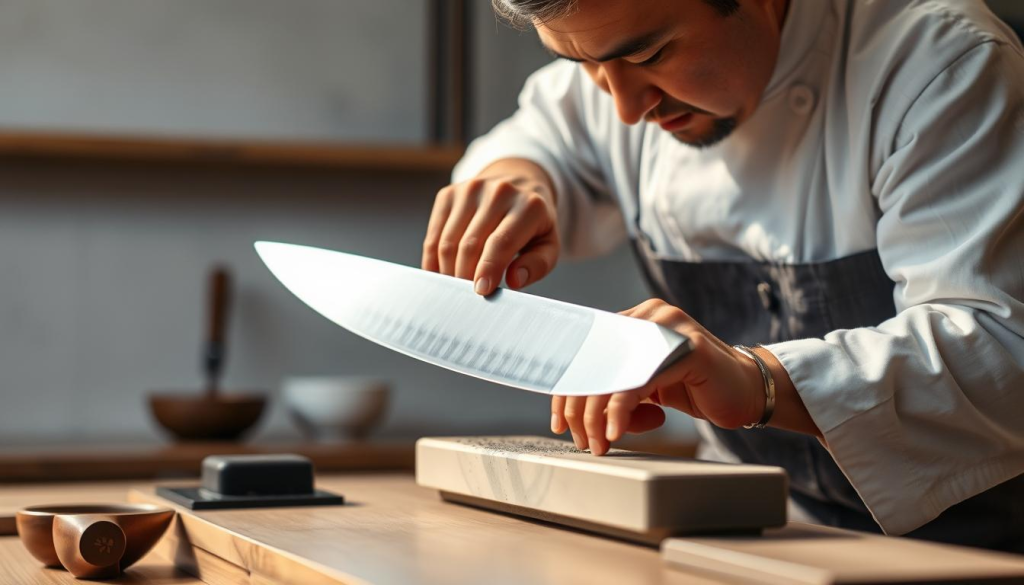
Regular sharpening is a critical aspect of maintaining your professional chef knives from Japan. A dull knife is not only less effective but also more dangerous, as it requires more force to cut, increasing the risk of accidents.
To sharpen your knife, you can use a whetstone, which is a traditional method preferred by many chefs. Start with a coarse grit stone to repair any damage to the edge, then move to a finer grit to polish and sharpen the blade.
Proper Cleaning Practices
Cleaning your traditional Japanese knife craftsmanship is straightforward but must be done carefully. Avoid using a dishwasher, as the high heat and harsh detergents can damage the blade and handle.
Instead, wash your knife by hand with mild soap and dry it immediately to prevent rust. For carbon steel knives, apply a small amount of oil to the blade after cleaning to protect it from moisture.
Storage Solutions
Proper storage is vital to maintaining your knife’s condition. Store your knife in a dry place, away from other utensils that could cause damage.
A knife block or a magnetic strip is ideal for storing your high-quality Japanese knives. If you prefer to store your knife in a drawer, use a protective sheath or a knife roll to prevent it from coming into contact with other items.
How to Care for Your Japanese Chef Knives
To ensure your Japanese chef knives remain in top condition, proper care is crucial. Handmade Japanese chef knives, in particular, require attention to detail to maintain their quality and longevity.
Avoiding Rust and Damage
One of the primary concerns with Japanese chef knives is avoiding rust and damage. Rust can easily form on carbon steel blades if they are not properly dried after use. To prevent this, it’s essential to dry your knives thoroughly, especially after washing. Additionally, storing your knives in a dry place can help prevent rust.
Avoiding damage also means being mindful of how you handle and store your knives. Using a knife block or magnetic strip can help keep your knives organized and prevent them from coming into contact with other utensils that might cause damage.
Oiling the Blade
Oiling the blade is another critical step in maintaining your Japanese chef knives. Using a food-safe oil can help protect the blade from rust. Apply a small amount of oil to the blade and gently rub it in with a soft cloth. This will help maintain the blade’s condition and ensure it remains in good working order.
For handmade Japanese chef knives, it’s recommended to oil the blade regularly, especially if you live in a humid environment. Regular oiling can help extend the life of your knife and keep it performing well.
Using a Whetstone
Sharpening your Japanese chef knives is essential to maintaining their performance. Using a whetstone is a traditional method for sharpening these knives. To use a whetstone, start by soaking it in water for about 10-15 minutes. Then, holding the knife at the correct angle, gently draw it across the stone in a smooth motion.
The following table outlines the basic steps for sharpening a Japanese chef knife with a whetstone:
| Step | Description |
|---|---|
| 1 | Soak the whetstone in water for 10-15 minutes. |
| 2 | Position the knife on the whetstone at the desired angle. |
| 3 | Gently draw the knife across the whetstone in a smooth motion. |
| 4 | Repeat the process on the other side of the blade. |
By following these steps and regularly maintaining your Japanese chef knives, you can ensure they remain in excellent condition and continue to perform well. Whether you’re using a best Japanese chef knife or a specific Japanese knife brand, proper care is key to their longevity.
The Role of Forging in Japanese Knives
Forging plays a crucial role in the craftsmanship of Japanese knives, impacting their quality and performance. The process of forging involves heating and shaping metal to create a blade that is both durable and sharp.
Traditional vs. Modern Forging Methods
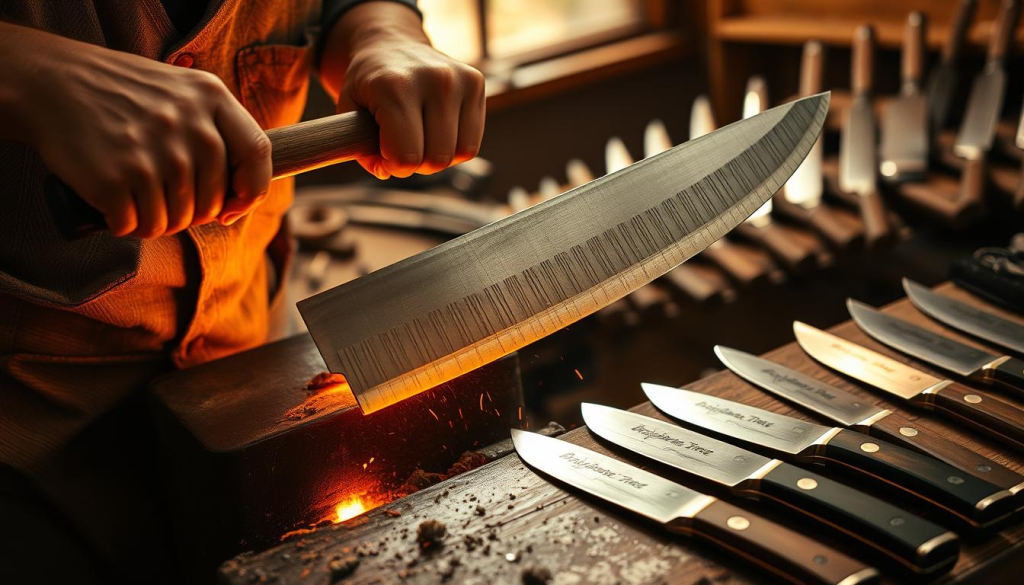
Traditional forging methods involve hand-forging techniques passed down through generations. These methods allow for a high level of precision and control, resulting in a blade that is tailored to specific needs. Modern forging methods, on the other hand, often incorporate machinery to streamline the process. While this can make knives more accessible, it can also compromise on the unique qualities that make hand-forged knives special.
Hand-forging allows artisans to imbue each knife with a level of craftsmanship that is hard to replicate with modern machinery. The heat and hammering process used in traditional forging techniques can create a blade with a more complex structure, enhancing its cutting performance and durability.
Benefits of Hand-Forged Knives
Hand-forged knives offer several benefits, including improved sharpness and durability. The process of folding and hammering the steel multiple times removes impurities, resulting in a cleaner, sharper edge. Additionally, hand-forged knives often have a unique aesthetic, with visible hammer marks and a distinctive finish that reflects the artisan’s skill.
For professional chefs and home cooks alike, a hand-forged knife from Japan represents a commitment to quality and tradition. These knives are not just tools; they are a connection to a centuries-old craft that values precision, durability, and beauty.
Understanding the Different Steel Types
The steel used in Japanese chef knives varies, with different types offering unique benefits and characteristics that cater to various cooking needs. Japanese knives are made from various steel types, including carbon steel, stainless steel, and Damascus steel, each offering distinct advantages.
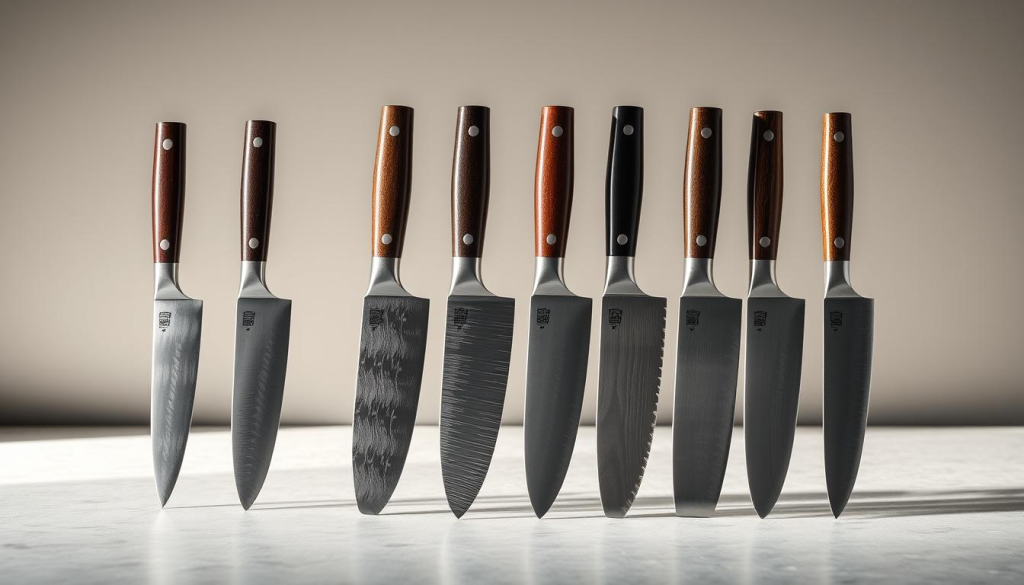
When selecting a Japanese chef knife, understanding the type of steel used is crucial. The steel type affects the knife’s sharpness, durability, and resistance to corrosion.
Carbon Steel vs. Stainless Steel
Carbon steel and stainless steel are two of the most common types of steel used in Japanese knives. Carbon steel is known for its sharpness and ability to hold an edge, making it a favorite among chefs who value precision. However, it requires more maintenance as it can rust if not properly cared for.
Stainless steel, on the other hand, offers excellent resistance to corrosion, making it ideal for chefs who cook with acidic ingredients or in humid environments. While it may not hold an edge as well as carbon steel, advancements in metallurgy have significantly improved its performance.
- Carbon Steel: Sharpness, edge retention, requires maintenance
- Stainless Steel: Corrosion resistance, durability, easier maintenance
Damascus Steel Explained
Damascus steel is a type of steel known for its distinctive pattern and exceptional quality. It is made by layering different types of steel to create a strong, durable, and visually appealing blade. Damascus steel knives are prized for their beauty and performance, often featuring intricate patterns that are both functional and aesthetically pleasing.
The benefits of Damascus steel include:
- Exceptional sharpness and edge retention
- Aesthetic appeal due to the unique patterns
- Durability and strength from the layered construction
Understanding the different steel types used in Japanese chef knives can help you make an informed decision when choosing a knife that suits your cooking style and preferences. Whether you opt for carbon steel, stainless steel, or Damascus steel, each type has its unique advantages that can enhance your culinary experience.
Brand Spotlight: Top Japanese Knife Makers
In the realm of handmade Japanese chef knives, certain brands have distinguished themselves through their dedication to traditional craftsmanship and modern innovation. These brands have not only captured the hearts of professional chefs but also of home cooks who value quality and precision in their kitchen tools.
Kanetsune
Kanetsune is a revered name among Japanese knife brands, known for producing some of the best Japanese chef knives that combine traditional techniques with modern materials. Their knives are celebrated for their sharpness and durability.
Shun
Shun is another prominent brand in the world of Japanese chef knives, recognized for its high-quality craftsmanship and attention to detail. Shun knives are often praised for their beautiful Damascus patterns and exceptional cutting performance.
Miyabi
Miyabi, a brand under the Zwilling J.A. Henckels group, is renowned for its innovative approach to knife making. Miyabi knives are appreciated for their unique blend of Japanese tradition and German engineering, resulting in some of the most sought-after handmade Japanese chef knives.
When comparing these top brands, several factors come into play, including materials, craftsmanship, and edge retention. The following table provides a summary of key characteristics for each brand:
| Brand | Notable Feature | Material |
|---|---|---|
| Kanetsune | Traditional craftsmanship | High-carbon steel |
| Shun | Damascus pattern | High-carbon stainless steel |
| Miyabi | Innovative design | Micro-carbide steel |
Each of these Japanese knife brands brings something unique to the table, catering to different preferences and cooking styles. Whether you’re a professional chef or an avid home cook, investing in a high-quality knife from one of these esteemed brands can elevate your cooking experience.
Popular Features in Japanese Chef Knives
Authentic Japanese kitchen knives boast several popular features that enhance their performance and aesthetic appeal. These characteristics not only reflect the traditional craftsmanship of Japanese knives but also cater to the needs of professional chefs and home cooks alike.
Tsuchime (Hammered Finish)
The tsuchime finish is a traditional Japanese technique that involves hammering the blade to create a textured surface. This finish is not only visually appealing but also helps to reduce the knife’s contact with food, making it easier to slice through ingredients smoothly.
Tsuchime is particularly popular among chefs who value both form and function in their knives. The hammered finish also adds to the knife’s durability by creating a surface that is less prone to sticking.
Wa Handles vs. Western Handles
Japanese chef knives often come with either wa handles or Western handles. Wa handles are traditional Japanese handles made from materials like wood or bamboo, offering a comfortable grip and a classic look. Western handles, on the other hand, are typically made from stainless steel or synthetic materials and are designed for durability and ease of maintenance.
The choice between wa and Western handles largely depends on personal preference and cooking style. Many chefs appreciate the balance and feel of wa handles, while others prefer the durability of Western handles.
Edge Geometry
The edge geometry of a Japanese chef knife is crucial to its performance. Different edge geometries are designed for specific cutting tasks, such as slicing, chopping, or mincing. A straight edge is ideal for precise cuts, while a curved edge allows for a smooth rocking motion, making it perfect for chopping and mincing.
Understanding the edge geometry of your knife can significantly enhance your cutting technique and overall cooking experience. Japanese knives are known for their sharpness and precision, making them an essential tool for any serious cook.
Pricing Factors for Chef Knives from Japan
From budget-friendly to luxurious, the pricing of Japanese chef knives is influenced by several key factors. Understanding these factors can help you navigate the market and find the perfect knife for your needs.
Entry-Level vs. High-End Options
Japanese chef knives span a wide price range, catering to both beginners and seasoned professionals. Entry-level knives are typically made with less expensive materials and manufacturing processes, making them more accessible to new cooks. In contrast, high-end knives are crafted with premium materials and precise techniques, justifying their higher prices.
The main differences between entry-level and high-end knives lie in their materials, craftsmanship, and brand reputation. High-end knives often feature high-carbon stainless steel, intricate handle designs, and are sometimes hand-forged, contributing to their higher cost.
| Feature | Entry-Level Knives | High-End Knives |
|---|---|---|
| Materials | Less expensive stainless steel | High-carbon stainless steel |
| Craftsmanship | Machine-made | Hand-forged or precision-made |
| Brand Reputation | Less known brands | Renowned brands like Shun, Miyabi |
Specialty Knives and Their Value
Specialty knives, such as those with unique edge geometries or decorative finishes, can command higher prices due to their exclusivity and the skill required to produce them. For instance, knives with a tsuchime (hammered) finish or those made with Damascus steel are prized for their aesthetic appeal and performance.
When considering a specialty knife, evaluate its value based on your cooking needs and the knife’s craftsmanship. While these knives can be more expensive, they often provide a unique cooking experience and can be a valuable addition to your kitchen.
Investing in a Japanese chef knife is not just about the price; it’s about the quality, durability, and the joy of cooking it brings. Whether you’re a professional chef or a home cook, there’s a Japanese knife out there that’s right for you.
Enhancing Your Culinary Skills with Quality Tools
Elevate your cooking with the precision and craftsmanship of authentic Japanese kitchen knives. A good knife is fundamental to improving culinary skills, and handmade Japanese chef knives are renowned for their quality.
A high-quality knife improves precision by allowing for more accurate cuts, which is crucial for both presentation and cooking technique. With a professional chef knife from Japan, tasks like chopping, slicing, and dicing become more efficient and precise.
How a Good Knife Improves Precision
The balance, weight, and sharpness of a well-crafted knife contribute to its ability to make precise cuts. This precision is essential for achieving consistent results in cooking, as it ensures that ingredients are prepared uniformly.
The Impact on Cooking Enjoyment
Using a high-quality knife can also enhance the overall enjoyment of cooking. When the task of preparing ingredients becomes easier and more efficient, it can make the cooking process more enjoyable and less frustrating.
Cooks who invest in handmade Japanese chef knives often report a significant improvement in their cooking experience. The right knife can make a substantial difference in both the quality of the dishes prepared and the pleasure derived from cooking.
Where to Buy Japanese Chef Knives in the U.S.
Finding the right Japanese chef knife can be a challenge, but knowing where to look makes all the difference. In the U.S., you can find high-quality Japanese chef knives at various retailers, both online and in-store.
Reliable Sources
Some top retailers specialize in kitchenware and carry a selection of renowned japanese knife brands. These stores often provide detailed product information, allowing you to make an informed decision when purchasing the best japanese chef knives for your needs.
Online Options
For those who prefer shopping online, there are numerous websites that offer a wide range of chef knives from japan. When shopping online, look for retailers that provide clear product descriptions, customer reviews, and a secure payment process.
Purchasing Tips
When buying a Japanese chef knife, consider the blade material, edge geometry, and handle comfort. Ensure the retailer offers a warranty or return policy, and check for authenticity to avoid counterfeit products.