
I often visit the Great White North for hunting or work. I always make sure I am aware of the legalities regarding sharp tools. Remaining educated is my top priority whenever I cross the border with gear.
I believe that being prepared helps prevent accidental encounters with the police or border agents. Understanding canadian knife regulations is essential for every visitor or local resident. Compliance ensures tranquility throughout any outdoor adventure or professional project.
I want to help you grasp the legalities effectively. Following these standards ensures your trip remains stress-free while you enjoy your favorite outdoor hobbies in the woods. Using these items for daily tasks requires specific knowledge to avoid serious penalties or confiscation in this territory.
Key Takeaways
- Review rules before traveling across the northern border.
- Avoid carrying prohibited cutting tools to prevent delays.
- Learn how to transport your gear safely and legally.
- Stay compliant with local statutes for all sharp instruments.
- Protect yourself from legal issues by knowing the limits.
- Differentiate between utility folders and forbidden weapons.
Overview of Knife Laws in Canada
Navigating the legal landscape of knife ownership in Canada can be challenging due to its intricacies. The country’s laws regarding knives are not as straightforward as one might expect, and understanding them is crucial for compliance.
Definition of a Knife in Canadian Law
In Canada, the legal definition of a knife is broad and encompasses various types of blades. According to Canadian law, a knife is considered a weapon if it is used or intended for use as a weapon. However, not all knives are treated equally under the law; the context and type of knife play significant roles in determining its legality.
The Canadian Criminal Code provides the framework for understanding what constitutes a prohibited weapon, including certain types of knives. For instance, knives with specific features such as automatic opening mechanisms or those designed to be used as weapons are subject to legal restrictions.
Importance of Understanding Local Regulations
Understanding local regulations regarding knife laws is vital because these laws can vary significantly across different provinces and even municipalities within Canada. What is legal in one region may be prohibited in another, making it essential for individuals to familiarize themselves with local laws to avoid legal issues.
For example, some municipalities may have bylaws that restrict the carrying of certain types of knives in public spaces or during specific events. Being aware of these regulations can help individuals avoid unintentionally violating the law.
Key considerations include:
- Understanding the legal definition of a knife and how it applies to different types of blades.
- Familiarizing oneself with local regulations and bylaws regarding knife possession and carry.
- Being aware of the context in which a knife is considered a weapon.
By staying informed about Canada’s knife laws and local regulations, individuals can ensure they are in compliance with the law and avoid potential legal complications.
Types of Knives and Their Legal Status
The legality of knives in Canada varies significantly depending on the type and context of use. Understanding these differences is crucial for compliance with Canadian law.
Many types of knives are completely legal to own and use in Canada, such as hunting knives, fixed-blade knives, and kitchen knives. However, the legality can change based on the context, such as carrying them in public or using them in certain situations.
Folding Knives: What You Should Know
Folding knives are generally legal in Canada, but their legality can depend on the blade length and mechanism. According to Canadian law, a folding knife with a blade that can be opened with a centrifugal motion or a flick of the wrist may be considered a prohibited weapon if it’s used or intended for use as a weapon.
As stated by the Canadian government, “the legality of a knife is determined by its design and intended use.”
“A knife is considered a prohibited weapon if it is designed to be used as a weapon or if it is used in a way that is likely to cause harm to others.”
Fixed-Blade Knives: The Legal Standing
Fixed-blade knives are legal to own and use in Canada for various purposes such as hunting, camping, or kitchen use. However, carrying them in public requires a valid reason, as they can be considered a weapon.
Other Knife Variants and Restrictions
Other types of knives, such as switchblades or gravity knives, are subject to specific restrictions under Canadian law. These knives are often considered prohibited weapons due to their design and potential for quick deployment.
When it comes to blade length restrictions in Canada, there isn’t a specific length that dictates legality across all contexts. However, the overall length and the type of knife can influence its legality, especially in public places.
For instance, carrying a large fixed-blade knife in a public place without a reasonable excuse could lead to legal issues. It’s essential to understand the Canada weapon laws to avoid any potential problems.
General Rules About Carrying Knives
The laws surrounding knife carry in Canada are nuanced, requiring a closer look at what is permissible. In Canada, you can carry a legal knife in public, but there are conditions to be aware of.
Primarily, it’s essential to understand that carrying a knife for self-defense is not considered a valid reason and is against the law. The purpose of carrying a knife should be for utility or as part of your profession, such as for camping, fishing, or as a chef.
Open Carry vs. Concealed Carry
When it comes to carrying knives, the distinction between open carry and concealed carry is significant. Open carry refers to carrying a knife openly, where it is visible to others. While this is generally allowed for legal knives, it’s crucial to be mindful of the context and potential perceptions.
Concealed carry, on the other hand, means carrying a knife in a way that it is not visible. The laws regarding concealed carry are more restrictive, and it’s generally advised to avoid carrying a knife in a concealed manner unless it’s for a legitimate purpose and done in a manner that is not perceived as threatening.
Purpose of Carry: Self-Defense vs. Utility
The purpose behind carrying a knife is a critical factor in determining its legality. As mentioned, carrying a knife for self-defense is not a valid reason and can lead to legal consequences. However, carrying a knife for utility purposes, such as for work, outdoor activities, or everyday carry for tasks, is generally acceptable.
It’s also worth noting that even when carrying a knife for utility, it should be done in a manner that is not threatening to others. Being aware of your surroundings and how others might perceive your actions is key to avoiding legal issues.
In summary, while carrying a legal knife in Canada is permissible under certain conditions, it’s vital to be aware of the nuances of the law, including the distinction between open and concealed carry, and to ensure that the purpose of carrying is legitimate and not perceived as threatening.
The Legal Test: Prohibited Knives Explained
Prohibited knives in Canada are defined by specific characteristics and uses, as outlined in the country’s legislation. The Canadian government has established clear guidelines to help citizens understand what types of knives are considered prohibited.
Definition and Examples of Prohibited Knives
Canadian law prohibits certain types of knives that are considered dangerous or have limited utility. These include switchblades, butterfly knives, push daggers, gravity knives, and knives disguised as other objects. Each of these types has distinct features that make them fall under the prohibited category.
For instance, switchblades are knives that open automatically with a spring mechanism. Butterfly knives, on the other hand, are characterized by their folding design and the ability to be opened with a flipping motion. Push daggers are designed for stabbing and have a handle that fits in the palm of the hand.
Consequences of Carrying Prohibited Knives
Carrying a prohibited knife in Canada can lead to serious legal consequences. If you’re found carrying a knife that is classified as prohibited, you could face fines or imprisonment. The severity of the penalty often depends on the circumstances of the case and whether it’s a first-time offense.
It’s crucial for individuals to understand the laws regarding prohibited knives to avoid unintentionally breaking the law. If you’re a knife enthusiast or simply someone who carries a knife for utility purposes, being informed about the legal status of your knife is essential.
Regional Variations in Knife Laws
Canada’s knife laws are not uniform, varying significantly across different provinces and territories. This diversity in legislation means that what is permissible in one region may be prohibited in another, making it essential for individuals to understand the specific laws in their area.
Knife Laws in Ontario
In Ontario, the laws governing knives are generally aligned with federal regulations, but there are specific nuances. For instance, while the Criminal Code of Canada sets out prohibited weapons, Ontario’s laws may impose additional restrictions on carrying knives in certain contexts, such as in public events or schools.
It’s crucial for residents and visitors in Ontario to be aware of these regulations to avoid any legal issues. The legal age to carry a knife in Canada is not uniformly defined across the country, but in Ontario, individuals must be aware of the context in which they are carrying a knife.
Regulations in British Columbia
British Columbia has its own set of regulations regarding knives, which, while largely consistent with federal law, include specific provisions. For example, certain types of knives may be restricted in public places or during specific events.
Understanding these regulations is vital for compliance. British Columbia’s laws emphasize the importance of responsible knife ownership and use.
Alberta’s Unique Knife Laws
Alberta is known for having some of the more permissive knife laws in Canada. However, this does not mean there are no restrictions. Alberta law still prohibits certain types of knives and has specific rules regarding the carrying of knives in public.
It’s essential for individuals in Alberta to familiarize themselves with the local laws to ensure they are in compliance. This includes understanding the context in which knives can be carried and used.
In conclusion, while Canada has federal laws governing knives, the regional variations in knife laws across provinces like Ontario, British Columbia, and Alberta necessitate a thorough understanding of local regulations. By being informed, individuals can ensure they are complying with the law and avoiding potential legal issues.
The Role of the Criminal Code of Canada
To comprehend the intricacies of knife laws in Canada, one must examine the Criminal Code.
The Criminal Code of Canada is the cornerstone of the country’s legal framework regarding knife possession and use. It outlines what constitutes a legal or illegal knife, providing clarity for both law enforcement and the general public.
Understanding Section 84: Prohibited Weapons
Section 84 of the Criminal Code is particularly relevant as it defines prohibited weapons, including certain types of knives. The Code defines a prohibited weapon as “a knife that has a blade that opens automatically by gravity or centrifugal force or by hand pressure applied to a button, spring or other device attached to or in the handle of the knife.”
This definition is crucial for understanding what types of knives are considered illegal under Canadian law. It highlights the importance of the mechanism by which a knife is opened, rather than just its presence or utility.
Implications for Knife Owners and Enthusiasts
For knife owners and enthusiasts, understanding the implications of the Criminal Code is vital. It not only affects what knives one can legally possess but also how they can be carried and used.
| Knife Type | Legal Status | Implications |
|---|---|---|
| Folding Knives with Automatic Opening | Prohibited | Possession is illegal; can result in fines or imprisonment. |
| Fixed-Blade Knives | Generally Legal | Can be possessed and carried for utility purposes, but carrying with intent to harm is illegal. |
| Switchblades | Prohibited | Illegal to possess or sell; considered a prohibited weapon. |
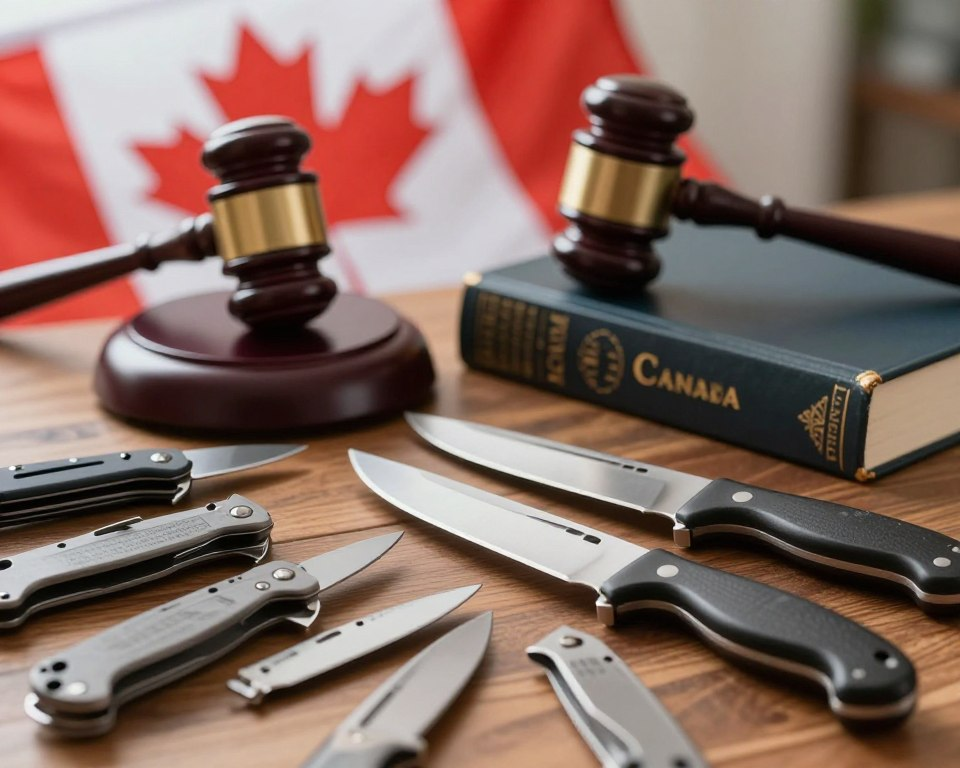
As a knife owner or enthusiast in Canada, it’s essential to be aware of these regulations to avoid legal repercussions. The law aims to balance individual rights with public safety, and understanding this balance is key to responsible knife ownership.
Knife Laws at Public Events
Public events in Canada have specific rules regarding the carrying of knives. As someone interested in understanding these laws, I find it essential to delve into the details of what is allowed and what is not at various public gatherings.
When it comes to festivals and concerts, the rules can be quite stringent. Generally, carrying knives at such events is discouraged, and in many cases, prohibited. For instance, some provinces won’t allow carrying knives in places like bars or pubs, which are often venues for live music or other events. Different cities may have even stricter rules than more rural areas, so it’s crucial to check local regulations before attending any event.
Carrying Knives at Festivals and Concerts
At festivals and concerts, the primary concern is safety. Event organizers often have the authority to decide what items are allowed into the venue.It’s advisable to check with the event organizers or the venue management beforehand to understand their specific rules regarding knives.Some events may have metal detectors or bag checks, which can further restrict what you can bring in.
In my experience, understanding these rules can save a lot of trouble. For example, if you’re planning to attend a music festival, it’s a good idea to leave your knives at home unless you’re sure they’re allowed.
Regulations During Sports Events and Gatherings
Sports events and gatherings have their own set of rules regarding knives.Typically, carrying knives is not allowed at indoor sports events, and outdoor events may have specific restrictions based on the type of event and the venue. For instance, events that involve alcohol, like those held in or near bars or pubs, may have stricter knife carry laws.
To give you a clearer picture, here’s a table summarizing some common regulations at different types of public events:
| Event Type | Typical Knife Carry Regulations | Notes |
|---|---|---|
| Festivals | Generally prohibited | Check with event organizers |
| Concerts | Often prohibited, metal detectors may be used | Venue-specific rules apply |
| Sports Events | Typically not allowed indoors, varies outdoors | Depends on venue and event type |
By understanding these regulations, you can better navigate the complexities of Canada’s knife laws at public events. Always check the specific rules for the event you plan to attend to ensure you’re complying with the law.
Buying and Selling Knives in Canada
Buying and selling knives in Canada involves navigating a complex legal landscape that varies by province and municipality. As I explore the intricacies of Canadian knife legislation, it becomes clear that understanding these laws is crucial for both buyers and sellers.
The legal age to buy a knife in Canada is not federally mandated, but some provinces and municipalities have their own regulations. For instance, while there’s no nationwide minimum age, certain local laws might restrict the sale of knives to minors.
Legal Considerations When Purchasing
When purchasing a knife in Canada, it’s essential to be aware of the local laws regarding the types of knives that can be bought and sold. Prohibited knives, as defined by the Criminal Code of Canada, cannot be legally purchased or owned. Buyers should ensure that the knife they intend to purchase is not classified as prohibited.
As stated by the Canadian government, “The Criminal Code prohibits certain types of knives that are considered to be inherently dangerous or have no legitimate purpose other than to cause harm.”
“The law aims to balance public safety with the rights of individuals to possess and use knives for legitimate purposes.”
E-commerce and Knife Sales Regulations
The rise of e-commerce has changed how knives are sold in Canada. Online sellers must comply with Canadian laws and regulations regarding the sale and shipment of knives. This includes ensuring that the knives sold are not prohibited and that age restrictions are adhered to, where applicable.
Sellers should also be aware of the regulations surrounding the shipping of knives. Carriers may have their own policies regarding the transport of knives, and sellers must comply with these to avoid any issues.

In conclusion, buying and selling knives in Canada requires a thorough understanding of the legal landscape. By being informed about local regulations, prohibited knives, and e-commerce laws, both buyers and sellers can ensure they are complying with Canadian law.
Traveling with Knives: Dos and Don’ts
Whether you’re a knife enthusiast or just need a knife for utility purposes, understanding the laws around traveling with knives in Canada is crucial. Traveling with knives can be tricky, as laws vary not just between countries but also within Canada, across different provinces and territories.
Before you pack your knives for a trip, it’s essential to familiarize yourself with the regulations to avoid any legal issues or confiscation of your knives. Canada’s knife laws are specific, and ignorance of these laws is not a valid defense if you’re caught carrying a prohibited knife.
Air Travel Restrictions for Knives
When it comes to air travel, the regulations are strict. The Canadian Air Transport Security Authority (CATSA) has clear guidelines on what can and cannot be carried onto a plane. Generally, knives are not allowed in carry-on luggage, with some exceptions for certain types of pocket knives or utility knives that meet specific criteria.
However, even if a knife is allowed in checked luggage, it’s crucial to check with your airline for their specific policies regarding knives in luggage. Some airlines may have additional restrictions beyond the legal requirements.
Traveling by Car or Public Transit
Traveling by car or public transit within Canada has different rules compared to air travel. When driving, you’re generally allowed to transport knives as long as they are not prohibited under Canadian law and are being transported for a legitimate purpose, such as camping or fishing.
However, it’s still important to be cautious. Knives that are legal within Canada might still be confiscated at the border if they fall into a grey area regarding importation laws. When using public transit, it’s a good idea to check with the transit authority for their policies on carrying knives.
To avoid any issues, it’s always best to err on the side of caution. If you’re unsure about the legality of carrying a particular knife, consider alternative arrangements, such as shipping the item or purchasing it at your destination.
Understanding and complying with Canada’s knife laws and weapon laws not only helps you avoid legal trouble but also contributes to a safer and more respectful community.
Knife Ownership Rights and Responsibilities
Understanding Canadian knife laws is crucial for responsible knife ownership. As a knife owner, being aware of the laws and regulations surrounding knife possession can help you avoid legal trouble.
To exercise your right to own a knife, it’s essential to know the restrictions and regulations in your area. Familiarize yourself with local laws, such as those in Ontario, British Columbia, or Alberta, as they may differ.
Best Practices for Knife Enthusiasts
When carrying a knife, always consider the purpose and ensure it’s not prohibited under Canadian knife regulations. Be mindful of knife possession laws, especially in public places or during events.
Accessing Legal Resources
For further guidance, consult the Criminal Code of Canada and local authorities for information on knife laws. Staying informed will help you navigate the complexities of knife ownership and use.
By being aware of your rights and responsibilities as a knife owner, you can enjoy your hobby while respecting the law and public safety.