We all know that a dull blade makes kitchen work feel like a frustrating chore. Achieving the right arcos knife angle is a total game-changer for anyone who loves to cook at home. When we maintain our tools properly, we ensure every single slice is smooth and safe.
Finding the precise knife sharpening angle allows us to glide through tough vegetables and delicate meats with absolute ease. This small adjustment improves our speed and accuracy in the kitchen significantly. By focusing on these technical details, we transform our daily culinary experience into something truly professional.
Our passion for cooking grows when our equipment responds perfectly to every movement we make. Consistent maintenance is the secret to unlocking the full potential of high-quality steel. We believe that mastering these skills helps us prepare better meals for our families every day.
Key Takeaways
- Correct maintenance significantly improves cutting precision and control.
- Proper tilting ensures better safety and reduces the risk of accidents.
- Efficient tools save substantial preparation time during busy weeknights.
- Regular care extends the overall longevity of your premium equipment.
- Edge sharpness directly impacts the final texture and presentation of food.
- Sharp edges help reduce physical strain on your hands and wrists.
Understanding the Importance of Knife Angles
Understanding the importance of the knife angle is essential for any chef or home cook. The angle at which a knife is sharpened significantly affects its cutting performance and longevity. A proper knife sharpening angle ensures that the blade cuts smoothly and efficiently, reducing the risk of accidents and improving overall kitchen performance.
The Multi-Angle Knife Sharpener by Arcos is a great example of a tool that highlights the importance of sharpening angles, offering four different angles for various knife types. This versatility allows users to achieve the perfect proper knife sharpening angle for their specific knives, whether they are chef’s knives, paring knives, or specialty knives.
Why Knife Angle Matters
The angle of a knife’s edge determines how it interacts with the material it is cutting. A knife sharpened to the correct angle will cut more efficiently, requiring less force and reducing the risk of the blade slipping and causing injury. Moreover, a proper angle helps in maintaining the knife’s edge, prolonging its lifespan.
For instance, a knife with too acute an angle may be sharper initially but will lose its edge more quickly, especially when cutting hard materials. On the other hand, a knife with too obtuse an angle will be more durable but may not cut as cleanly or efficiently.
Benefits of Proper Knife Angles
Maintaining the correct knife sharpening angle offers several benefits, including enhanced cutting precision, reduced fatigue, and a prolonged knife lifespan. When a knife is sharpened correctly, it glides through ingredients with ease, making cooking more enjoyable and less labor-intensive.
The benefits of a proper knife angle can be summarized in the following table:
| Benefit | Description |
|---|---|
| Enhanced Cutting Precision | A proper angle ensures clean cuts and reduces the risk of accidents. |
| Reduced Fatigue | Less force is required to cut through ingredients, making cooking less tiring. |
| Prolonged Knife Lifespan | A correctly sharpened knife retains its edge longer, reducing the need for frequent sharpening. |
By understanding and maintaining the ideal knife sharpening angle, cooks can significantly improve their kitchen experience. Whether you’re a professional chef or an avid home cook, the importance of the proper knife angle cannot be overstated.
What is the Ideal Arcos Knife Angle?
Understanding the ideal angle for your Arcos knife can significantly enhance your cutting experience. The ideal Arcos knife angle varies depending on the type of knife and its intended use. For instance, fine-edge knives and Japanese knives require a more acute angle, typically around 20°, while chef’s knives usually require an angle of 30°.
Recommended Angles for Different Knives
Different knives have different ideal angles based on their design and purpose. According to the Arcos Multi-Angle Knife Sharpener product page, the recommended angles are as follows:
| Knife Type | Recommended Angle |
|---|---|
| Fine-edge knives | 20° |
| Small knives | 25° |
| Chef’s knives | 30° |
| Boning knives or larger knives | 35° |
These angles are designed to optimize the performance of each type of knife, ensuring that they cut efficiently and effectively.
Factors Influencing Knife Angle Selection
Several factors influence the selection of the ideal sharpening angle for your Arcos knife. These include the knife’s material, blade length, and intended use. For example, knives made from harder materials may require a slightly different angle than those made from softer materials. Similarly, knives used for specific tasks, such as filleting or chopping, may have different ideal angles.
Key factors to consider:
- Knife material
- Blade length
- Intended use
By considering these factors and referring to the recommended angles for different knives, you can determine the ideal angle for your Arcos knife and achieve optimal performance.
How to Determine Your Knife Angle
Achieving the perfect Arcos knife blade angle is essential for optimal cutting results. We understand that determining the correct angle can be challenging, but with the right techniques and tools, you can sharpen your knives with precision.
Measuring Techniques for Precision
To measure the angle of your knife accurately, you can use various techniques. One common method involves using a protractor or an angle gauge. These tools allow you to measure the angle between the blade and the sharpening stone, ensuring that you achieve the desired best angle for knife sharpening.
Another technique is to use a sharpening guide that comes with some sharpening systems. These guides are designed to hold the knife at a specific angle, making it easier to sharpen the blade consistently.
Tools for Angle Measurement
Several tools can help you measure and maintain the correct knife angle. The Arcos Multi-Angle Knife Sharpener is one such tool that features an ergonomic adjustment wheel for one-handed angle selection. This makes it easier to determine and maintain the correct angle, even for those who are new to knife sharpening.
| Tool | Description | Benefits |
|---|---|---|
| Protractor/Angle Gauge | Measures the angle between the blade and sharpening stone | High precision, versatile |
| Sharpening Guide | Holds the knife at a specific angle during sharpening | Consistency, ease of use |
| Arcos Multi-Angle Knife Sharpener | Features adjustable angles and ergonomic design | Ease of use, precision, ergonomic |
By using these tools and techniques, we can ensure that our Arcos knives are sharpened to the correct angle, enhancing their performance and longevity.
Maintaining Your Arcos Knife’s Angle
To keep your Arcos knife performing optimally, regular maintenance is key. Maintaining the ideal angle of your Arcos knife requires attention to detail and the right sharpening technique.
Sharpening Your Knife Correctly
Sharpening your Arcos knife correctly involves using the appropriate tools and technique. The Arcos Multi-Angle Knife Sharpener is designed to help you achieve the perfect edge. We recommend starting with the COARSE slot to restore the edge and then finishing in the FINE slot for a smooth finish.
Using the correct sharpening technique is crucial for maintaining the proper knife sharpening angle. This not only ensures your knife cuts effectively but also prolongs its lifespan.
Common Mistakes When Sharpening
Several common mistakes can occur when sharpening your Arcos knife, including applying too much pressure, sharpening at the wrong angle, and not maintaining the knife regularly. Avoiding these mistakes is essential to maintaining the optimal angle of your Arcos knives.
- Applying too much pressure can damage the blade.
- Sharpening at the wrong angle can lead to poor performance.
- Irregular maintenance can result in a dull knife.
By being aware of these potential pitfalls, you can take steps to prevent them and keep your Arcos knife in top condition.
Differences in Knife Angles for Various Uses
Different knives are designed for specific tasks, and their sharpening angles play a crucial role in their effectiveness. The angle at which a knife is sharpened can significantly impact its performance, making it essential to understand the ideal angles for various types of knives.
When it comes to kitchen knives, the sharpening angle is critical for achieving the desired cutting performance. For instance, chef knives and paring knives, though both essential in any kitchen, have different requirements when it comes to their sharpening angles.
Chef Knives vs. Paring Knives
Chef knives, being versatile and used for a variety of tasks from chopping to slicing, typically require a sharpening angle of around 30° to 35°. This angle provides a good balance between sharpness and durability, allowing the knife to handle various kitchen tasks effectively.
On the other hand, paring knives, which are used for more delicate tasks such as peeling and coring fruit and vegetables, often require a more acute angle, typically between 20° to 25°. This sharper angle enables the knife to make precise cuts and is ideal for the detailed work that paring knives are designed for.
Specialty Knives and Their Angles
Specialty knives, such as boning knives, fillet knives, and santoku knives, each have their own recommended sharpening angles based on their specific uses. For example, a boning knife might require a slightly more acute angle than a chef’s knife to facilitate precise removal of bones from meat.
Understanding these differences is crucial for achieving optimal performance from your knives. The table below summarizes the typical sharpening angles for various types of knives:
| Knife Type | Typical Sharpening Angle |
|---|---|
| Chef Knife | 30° – 35° |
| Paring Knife | 20° – 25° |
| Boning Knife | 25° – 30° |
| Fillet Knife | 15° – 20° |
“The sharpening angle of a knife is not a one-size-fits-all proposition. Different knives are designed for different tasks, and their angles should be adjusted accordingly to maximize their performance.”
By understanding and applying the correct sharpening angles for your knives, you can significantly enhance their performance and longevity. Whether you’re a professional chef or an avid home cook, mastering the art of knife sharpening is a skill that will greatly benefit your cooking endeavors.
The Role of Blade Material in Angle Performance
Blade material plays a pivotal role in determining the ideal sharpening angle for precise cuts. The type of material used in the construction of a knife blade significantly influences its performance and maintenance requirements.
When selecting a knife, understanding the characteristics of its blade material is crucial. Different materials have distinct properties that affect how well the knife retains its sharpness and how it responds to sharpening. We will explore the differences between common blade materials and their impact on the sharpening angle.
Comparing Stainless Steel and Carbon Steel
Two of the most common materials used in knife construction are stainless steel and carbon steel. Stainless steel is known for its resistance to corrosion and durability, making it a popular choice for knives that are exposed to harsh environments. However, it can be more challenging to sharpen than carbon steel.
Carbon steel, on the other hand, is prized for its ability to hold a sharp edge and is generally easier to sharpen. However, it requires more maintenance as it can rust if not properly cared for. The choice between stainless steel and carbon steel affects the ideal sharpening angle and the knife’s overall performance.
| Material | Sharpness Retention | Corrosion Resistance | Sharpening Difficulty |
|---|---|---|---|
| Stainless Steel | Good | Excellent | Challenging |
| Carbon Steel | Excellent | Poor | Moderate |
How Material Affects Sharpness Retention
The material of the blade directly impacts its ability to retain sharpness. Carbon steel knives, for instance, are known for their sharpness and can be sharpened to a finer edge, which is ideal for precise cutting tasks. In contrast, stainless steel knives, while durable, may not hold their edge as well as carbon steel but offer the advantage of being more resistant to corrosion.
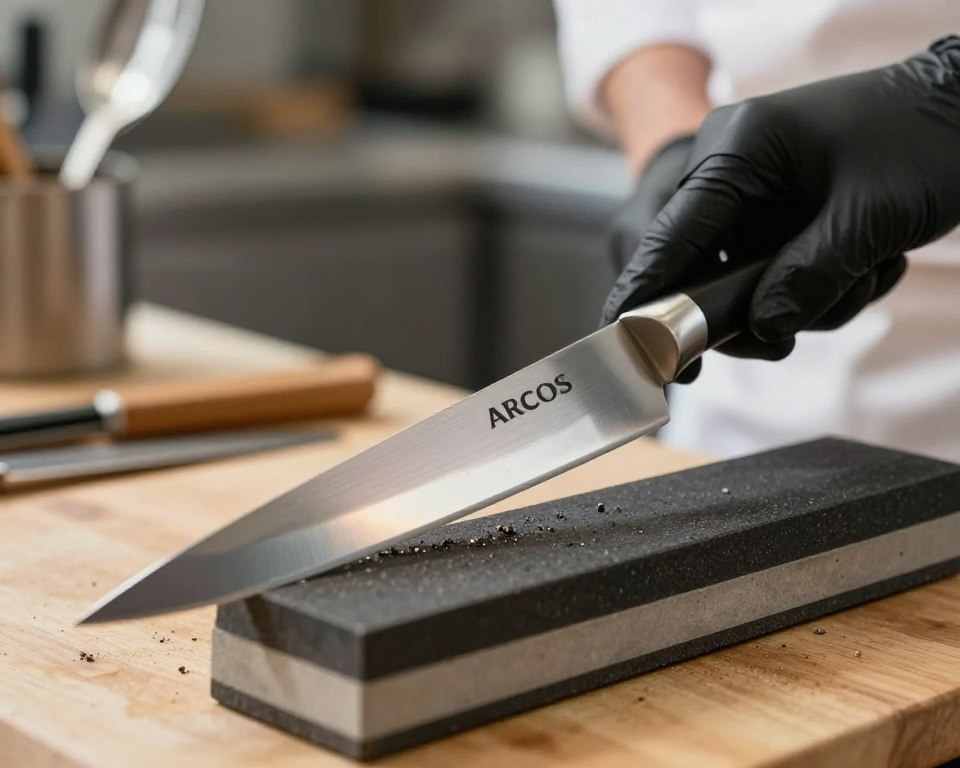
Understanding the properties of different blade materials helps in choosing the right sharpening angle and maintenance routine for your Arcos knives. By considering the material’s characteristics, you can optimize your knife’s performance and extend its lifespan.
Tips for Achieving the Perfect Knife Angle
The art of achieving the perfect Arcos knife angle involves a combination of technique, practice, and the right tools. We will explore various tips and techniques to help both beginners and experienced users master the ideal knife angle for precise cuts.
Practical Techniques for Beginners
For those new to knife sharpening, starting with simple and effective techniques is crucial.
- Using a Sharpening Guide: A sharpening guide can help maintain the correct angle, ensuring consistency and reducing the risk of damaging the blade.
- Practicing with a Dull Knife: Beginners can practice sharpening a dull knife, gradually improving their skills and building confidence.
We recommend starting with a coarse grit stone and progressing to finer grits for a polished edge.
By following these steps, beginners can develop the necessary skills to achieve a sharp, precise edge on their Arcos knives.
Advanced Techniques for Experienced Users
Experienced users can refine their skills by exploring advanced sharpening techniques.
- Freehand Sharpening: Mastering freehand sharpening allows for greater flexibility and precision, enabling users to adjust the angle subtly based on the task.
- Using Different Sharpening Stones: Experimenting with various sharpening stones can help in understanding how different materials and grits affect the sharpening process.
By incorporating these techniques into their routine, experienced users can achieve a more precise and efficient sharpening process.
Troubleshooting Common Knife Angle Issues
Troubleshooting knife angle issues is essential for maintaining optimal cutting performance. When the Arcos knife blade angle is not correctly maintained, it can lead to a variety of problems that affect the knife’s efficiency and longevity.
Understanding the signs of incorrect knife angles is the first step towards resolving these issues. Here, we will explore the indicators that suggest a problem with your knife’s angle and provide guidance on how to correct them.
Indicators of Incorrect Angles
Several signs can indicate that your knife’s angle is not correct. These include:
- Poor cutting performance, such as tearing or crushing food instead of cleanly slicing it.
- Uneven wear on the blade, which can be observed as uneven sharpening or excessive wear on one side.
- Difficulty sharpening the knife, as an incorrect angle can make the sharpening process more challenging.
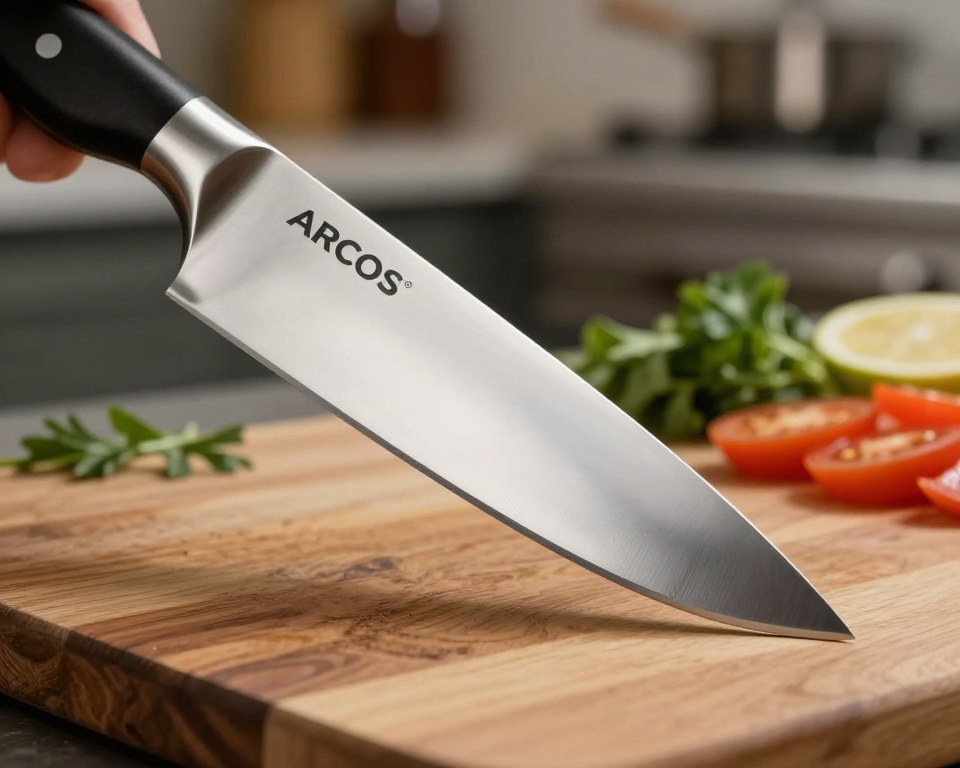
As noted by a renowned chef, “A good knife is like a good friend; it should always be sharp and ready to help you in the kitchen.” Maintaining the proper knife sharpening angle is crucial for achieving this.
How to Fix an Improperly Sharpened Knife
Fixing an improperly sharpened knife involves reassessing the sharpening angle and technique. Here are some steps to follow:
- Re-evaluate your sharpening technique to ensure you are maintaining the correct angle.
- Use a sharpening tool or stone that is appropriate for your knife type.
- Practice sharpening with a consistent and controlled motion.
By following these steps and being mindful of the proper knife sharpening angle, you can restore your knife’s performance and extend its lifespan.
“The angle of the knife is crucial for its performance. A correct angle ensures a sharp knife that cuts efficiently and safely.”
The Connection Between Angle and Cutting Technique
Understanding the connection between knife angle and cutting technique can significantly enhance our culinary skills. The angle at which we hold and sharpen our knives directly impacts our ability to perform various cutting tasks efficiently. In this section, we will explore how different knife angles influence our cutting style and provide best practices for various cutting methods.
When it comes to cutting, the angle of the knife is not just about sharpness; it’s also about control and precision. A knife that is sharpened to the correct angle for a specific task can make a significant difference in the outcome.
How Angle Influences Cutting Style
The angle of the knife influences the cutting style by determining the ease with which the knife glides through the material being cut. For instance, a more acute angle is ideal for slicing delicate foods, while a slightly more obtuse angle is better suited for chopping through tougher ingredients.
Key factors influenced by knife angle include:
- Precision: A sharper angle allows for more precise cuts.
- Control: The angle affects how easily the knife can be controlled during cutting.
- Effort: The right angle reduces the effort needed to cut through various materials.
Best Practices for Different Cutting Methods
Different cutting methods require adjustments in knife angle and technique. Here are some best practices for common cutting tasks:
| Cutting Method | Recommended Angle | Technique Tip |
|---|---|---|
| Slicing | 15-20 degrees | Use a smooth, gentle motion. |
| Chopping | 20-25 degrees | Apply gentle pressure, increasing as needed. |
| Dicing | 20-25 degrees | Use a rocking motion for even cuts. |
By understanding and applying the appropriate knife angle for different cutting tasks, we can improve our efficiency and precision in the kitchen. Whether you’re using an Arcos knife or another high-quality brand, mastering the knife sharpening angle is key to enhancing your cutting technique.
Caring for Your Knives After Achieving the Right Angle
After mastering the arcos knife sharpening technique and achieving a precise knife sharpening angle, maintaining your knives is crucial for optimal performance. Proper care extends the life of your knives and ensures they continue to deliver precise cuts.
Best Practices for Cleaning and Storage
Cleaning your Arcos knives immediately after use and storing them in a dry place is essential. The Arcos Multi-Angle Knife Sharpener comes with a recycled paper bag with a zip closure, highlighting the importance of proper storage. This attention to detail reflects the brand’s commitment to quality and durability.
Tips for Preserving the Angle
Regularly checking and maintaining the sharpening angle of your knives is vital. By incorporating a regular maintenance routine, you can preserve the precise knife sharpening angle achieved through the arcos knife sharpening technique. This not only ensures your knives remain sharp but also enhances their overall performance.